
Coron · Philippines · Wreck
Kogyo Maru
A bulldozer and cement bags still in the cargo holds
Area photo: Ray in Manila · CC BY 2.0
A 158 m Japanese naval supply ship attacked by aircraft from US Task Force 38 on 24 September 1944 and now lying at 34 m in Coron Bay. She went down loaded with construction materials for a runway, and the bulldozer, cement bags and mixer still sitting in her six holds are what most divers come to see. The depth keeps the dive short and firmly in advanced territory.
Where it is and how deep
11.9778° N, 120.0478° EApproximate position — the dashed circle shows where the site lies; your operator's briefing has the mooring.
The dive
The wreck lies at 34 m, which sets the shape of the dive before you leave the boat: a working range of roughly 25 to 34 m, a short bottom time and a plan agreed on the surface. She is a 158 m ship, so a single dive covers a section of her rather than the whole hull, and with visibility on the wreck usually running 10 to 20 m you read one part of her at a time.
The cargo holds are the reason to be here. She was carrying construction materials for a runway when she was sunk, and a bulldozer, cement bags and a mixer are still evident inside her, which is unusual even in a bay full of loaded supply ships. There are six holds and the swim-throughs are easy by wreck-diving standards, but this is still an overhead environment at depth, so going inside means wreck training, a torch and finning that does not stir the deck.
Outside the hull the ship reads as a reef. Hard and soft coral and sponges have grown over the plating, groupers hold around the structure and barracuda pass over it, with batfish, lionfish, pufferfish and scorpionfish on the steel, nudibranchs in the growth and turtles turning up on the shallower sections. That upper structure is where the safety stop and the last minutes of the dive are usually spent, watching the fish work over a ship that has been on the bottom since 1944.
The wreck
- Vessel
- Kogyo Maru
- Type
- Imperial Japanese Navy auxiliary supply ship
- Length
- 158 m (518 ft)
- Sunk
- 1944
- Cause
- Attacked by aircraft from US Task Force 38
- Lies
- On the bottom of Coron Bay at 34 m, her six holds still loaded
The Kogyo Maru was an Imperial Japanese Navy auxiliary supply ship attacked by US Task Force 38 on 24 September 1944, the day that raid put nine of the ten Japanese ships the bay is now dived for on the bottom. She was carrying a load of construction materials for a runway when she went down, and that cargo is still in her: a bulldozer, cement bags and a mixer remain evident in her hold, which makes her one of the few wrecks in the bay where the war work is still legible.
Marine life and season
- Groupers
- Barracuda
- Nudibranchs
- Sea turtles
| Jan | Feb | Mar | Apr | May | Jun | Jul | Aug | Sep | Oct | Nov | Dec |
|---|---|---|---|---|---|---|---|---|---|---|---|
| Prime | Prime | Prime | Prime | Fair | Fair | Fair | Fair | Fair | Fair | Fair | Prime |
Season follows Coron: Dry December to April brings glassy seas and the best visibility; in the wet months bad weather sometimes stops diving.
Know before you go
- At 34 m the no-decompression limit, not the air supply, ends the dive; agree the turn depth and time before you drop.
- Six holds are open but they are an overhead environment at depth; penetration needs wreck training, a torch and a planned way out.
- Current on the wreck is rated medium, so make the descent on the line and check the drift before leaving it.
Questions divers ask
How deep is the Kogyo Maru?+
The wreck lies at 34 m, with the working range on most dives running from about 25 m down to the bottom. That depth is why an advanced certification is recommended and why bottom times here are short.
What is still inside the Kogyo Maru?+
She sank carrying construction materials for a runway, and a bulldozer, cement bags and a mixer are still evident in her hold. Reaching them means entering an overhead environment at depth, which calls for wreck training and a torch.
Sources
- Kogyo Maru dive site — Divezone
- Kogyo Maru — Scubago
- Coron Bay — Wikipedia
More dive sites in Coron
Wreck
A 35-ton seaplane crane on a warship lying on her side at 35 m
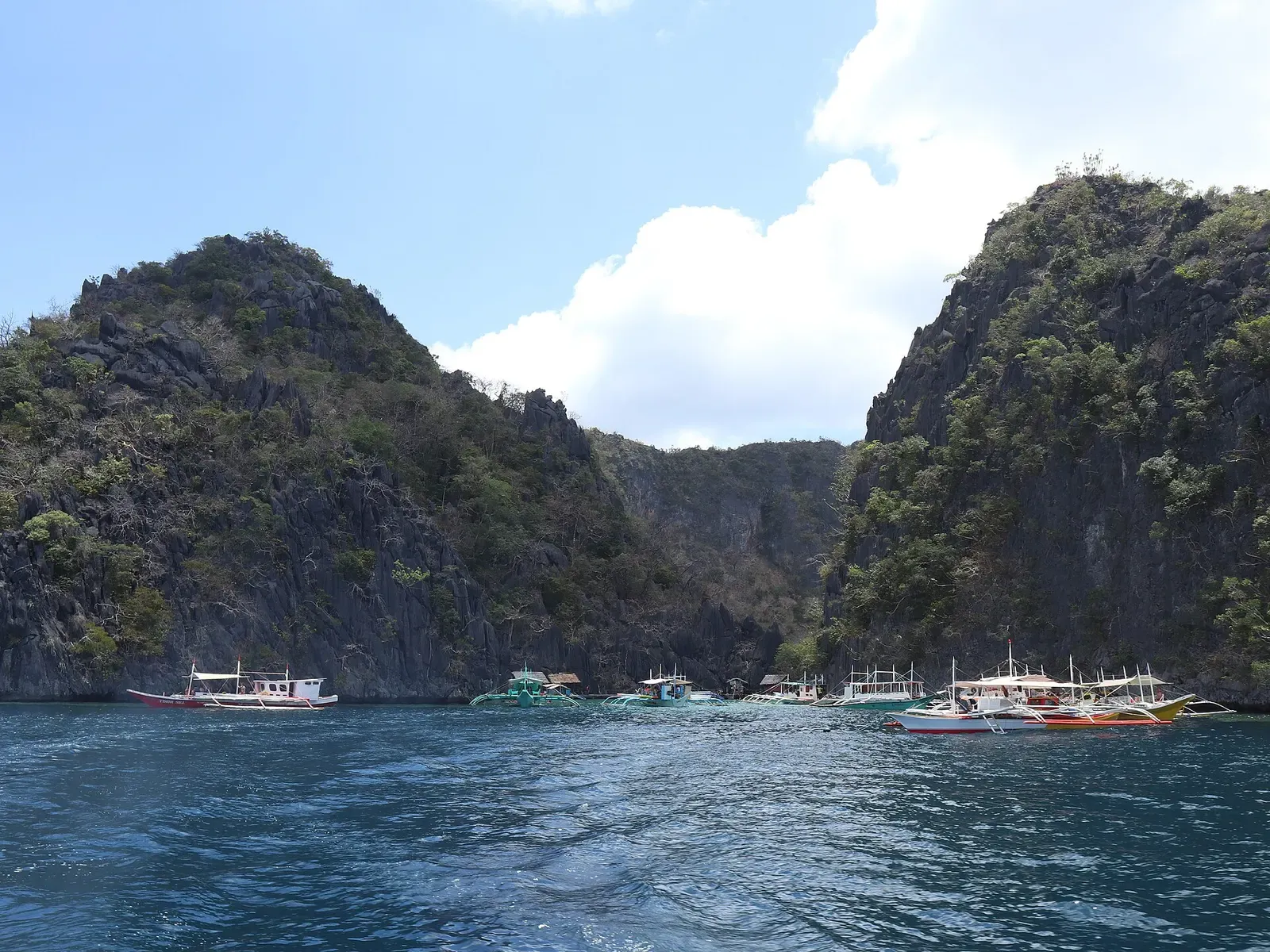
Fresh water over salt, and 38 degrees below the thermocline
Reef
A channel drift at 1 to 3 knots between two wrecks
Cave & cavern
A fallen tree lit by daylight inside a cavern under Coron Island
Coral garden
Very large sea fans among soft-coral gardens
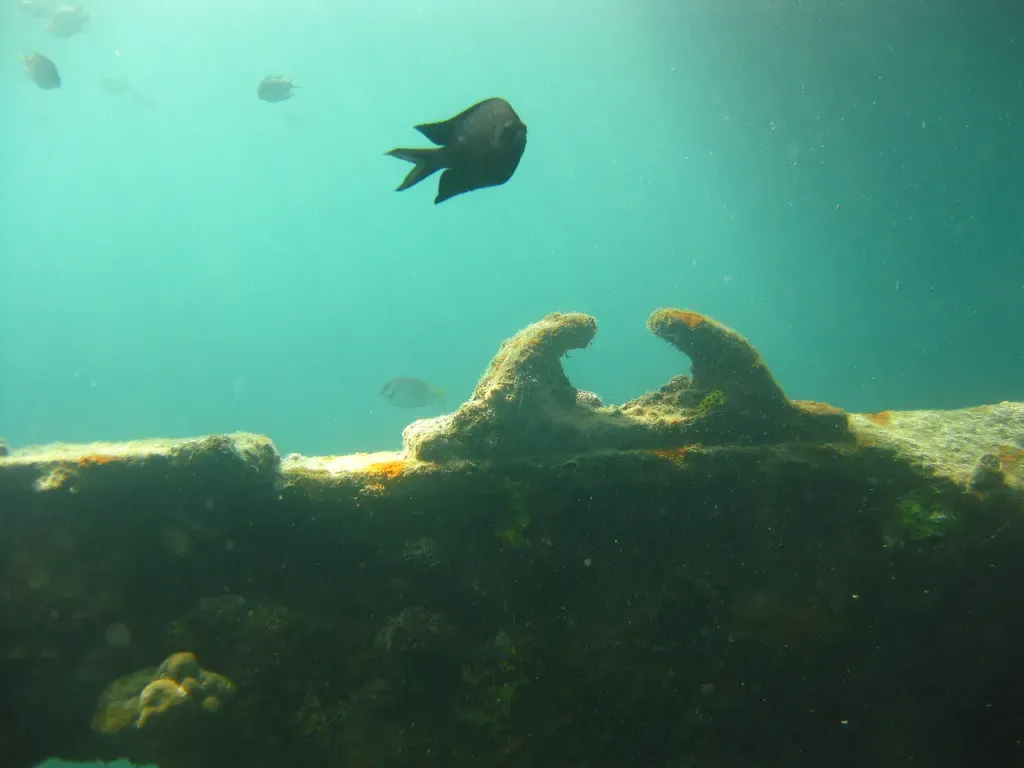
A 35 m gunboat in 3 to 19 m, open to any certification
Wreck
A 145 m provisions ship with its deck areas at 28 to 35 m
Wreck
Japanese staff cars and trucks still parked in the cargo holds
Similar dives elsewhere
Wreck
Cement Wreck
Labuan & Brunei Wrecks · Malaysia
MV Tung Hwang: a 92 m freighter standing upright off Labuan from 8 m to 32 m
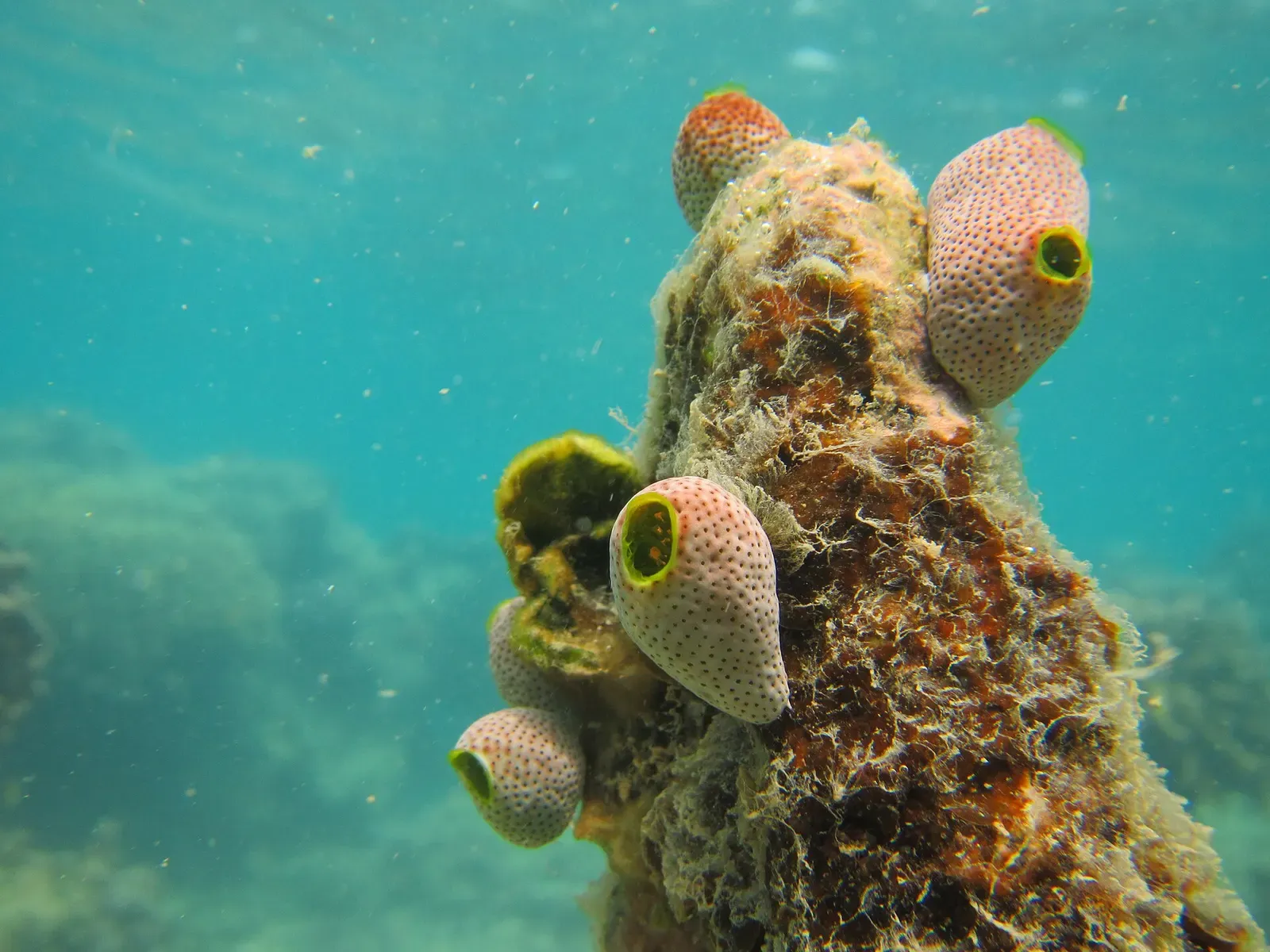
A fish-filled wreck at 30 m below a patchy coral slope

A two-seat aircraft sunk on sand at 20 m, with a wall beyond
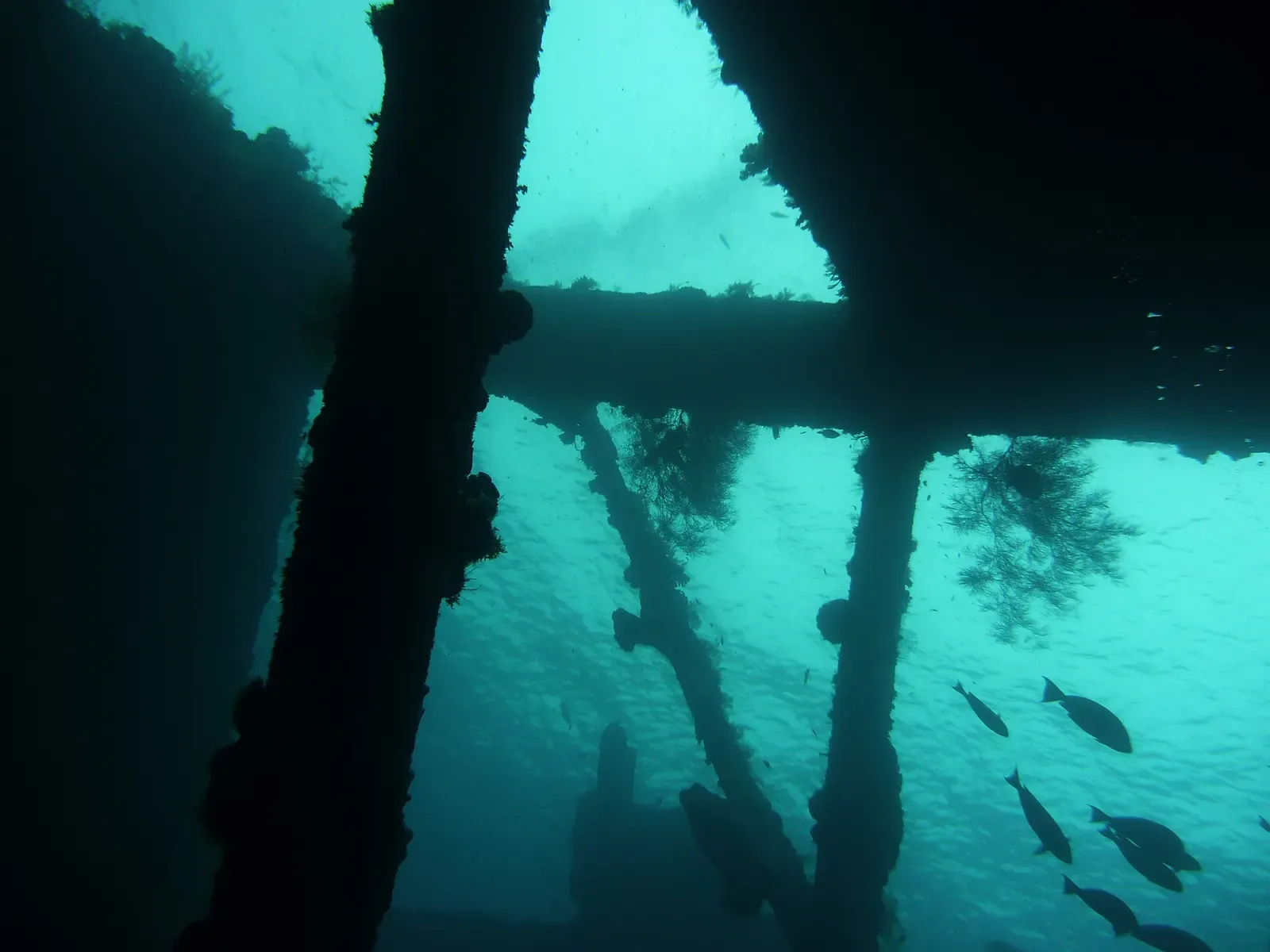
A 125 m cargo ship on a sand slope 30 m off the beach