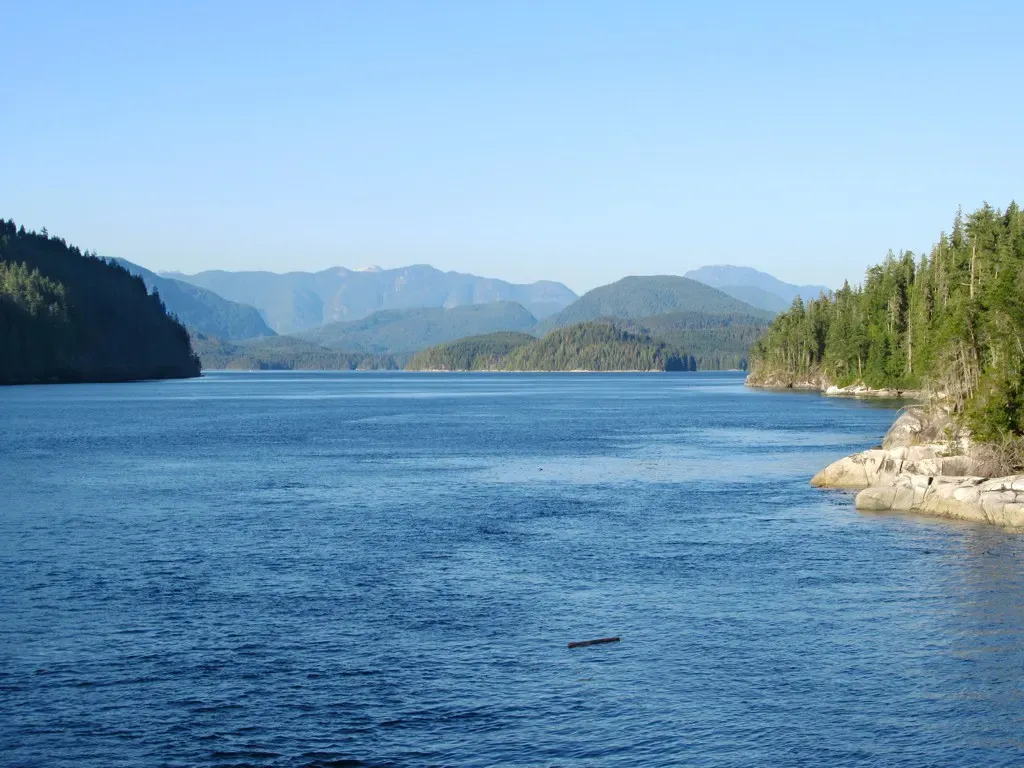
Discovery Passage runs between Campbell River and neighbouring Quadra Island, and its diving is driven by current: the flow through Seymour Narrows at the north end runs up to 15.4 knots. Charter boats visit walls covered in giant tube worms at Steep Island, the wolf eel dens of Whiskey Point and the sunken destroyer escort HMCS Columbia, mostly between 9 and 30 m.
About diving in Discovery Passage & Campbell River
Diving here is boat diving out of Campbell River, and most sites lie very close to town on the 40 km (25 mile) passage. The day is set by the tide table rather than the clock: the main sites can only be dived safely during slack intervals, so charters time each drop to the turn of the tide and keep the boat live during the dive. The HMCS Columbia is the exception, sheltered from the main flow and diveable at any time of day. Even at slack the water can move hard: a diver on April Point was carried off the wall by the current and picked up five minutes later over 91 m (300 ft) of water.
The terrain is rock walls and tiered boulder slopes rather than reef. At Whiskey Point clean, current-swept rock steps down from 9 to 27 m (30 to 90 ft). Anemones, sponges, tube worms and other invertebrates compete for space on the rock and wait for the current to bring food. Cracks and crevices shelter wolf eels, large lingcod, tiger rockfish and giant Pacific octopus. The Columbia, a 112 m (366 ft) hull, lies at a 35° list to port with its bow at 37 m (120 ft). Constant upwellings keep visibility from dropping much below 9 m (30 ft).
The area suits divers comfortable with strong current, precise timing and live-boat pickups, though charters can tailor dives to skill levels from beginner to advanced. Wreck divers should plan to stay outside the Columbia, since shifting debris inside the ship makes penetration unwise and lifting silt can cut visibility to zero. The colour here comes from invertebrates more than fish, and fish stocks can be thin.
Best time to dive Discovery Passage & Campbell River
| Jan | Feb | Mar | Apr | May | Jun | Jul | Aug | Sep | Oct | Nov | Dec |
|---|---|---|---|---|---|---|---|---|---|---|---|
| Prime | Prime | Good | Good | Good | Good | Good | Fair | Good | Good | Good | Prime |
Winter brings the clearest water, at times beyond 30 m; August visibility can turn murky, and September trades calmer seas for clearer water.
Dive types & marine life
A wolf eel is a good chance at Whiskey Point, where a couple of dens are known. Harbour seals live in Gowlland Harbour and often come to investigate divers. Giant Pacific octopus are elusive and not guaranteed on any given dive. Nudibranchs and Puget Sound king crabs turn up on the walls and boulder piles.
- Wall
- Drift
- Wreck
- Night
- Octopus & cuttlefish
- Seals & sea lions
- Nudibranchs
Best dive sites in Discovery Passage & Campbell River
- 1
Steep Island
Popular current dive on a wall of giant tube worms, an advanced dive to 30 m (100 ft).
- 2
Row N Be Damned
Drift dive where boulders and ledges at 15–30 m (50–100 ft) are thick with strawberry anemones and sponges.
- 3
Whiskey Point
Current dive at The Rock, famous for its wolf eel dens and best drifted from a boat.
- 4
HMCS Columbia
Destroyer escort sunk as an artificial reef in 1996, a dive for advanced divers only.
- 5
April Point
Wall dive with basket stars, cloud sponges, Puget Sound king crabs and lingcod.
- 6
Grouse Island
Island site with wolf eels, octopus and Puget Sound king crabs wherever divers enter the water.
- 7
Ferry Wreck
Easy wreck dive off May Island, with octopus around the hull and along a shallow wall.
- 8
Argonaut Wharf
Night dive on a wharf covered in plumose anemones, with decorator crabs and cabezon.
Site guides
Wall
Green copper-stained bluffs above a sheer wall and boulder pile
Wreck
A 112 m destroyer escort that can be dived when the passage is running
Wall
A cliff decorated with giant northern tube worms between 18 and 30 m
How to get to Discovery Passage & Campbell River
Campbell River Regional Airport (CYBL) serves the town. By road, take the BC Ferries crossing from Horseshoe Bay or Tsawwassen to Nanaimo, about 1.5 hours, then drive the Island Highway north for under 2 hours. A 10-minute ferry links Campbell River with Quadra Island. Dive charters leave from Campbell River.
Photos from Discovery Passage & Campbell River
D-Stanley · CC BY 2.0
Dive videos
Discovery Passage Campbell River · Trisha Stovel on YouTube
Diving Discovery Passage Campbell River | Powerful Seymour Narrows Currents Explained · Be Sea Adventures on YouTube
Questions divers ask
What certification do Discovery Passage dives need?+
Steep Island and the HMCS Columbia are advanced dives, and every current site is dived at slack. Charters tailor dives to skill levels from beginner to advanced.
Why are dives timed to slack tide?+
Current through Seymour Narrows at the north end of the passage reaches 15.4 knots, and even near slack it can sweep a diver off a wall. Boats time each dive to the turn of the tide.
When is the best time to dive Campbell River?+
Winter brings the best visibility, at times beyond 30 m (100 ft). August visibility can be poor, while September is clearer but brings fewer calm, sunny days.
Can divers go inside the HMCS Columbia?+
Penetration is not recommended because debris shifts inside the ship. The hull lists 35° to port, with the bow at 37 m (120 ft).
How do I get to Campbell River for diving?+
Fly into Campbell River Regional Airport (CYBL), or take the ferry to Nanaimo and drive under 2 hours north. Quadra Island is a 10-minute ferry ride across the passage.
Sources
- Beaver Aquatics - Campbell River — Oceanfix.ca Ventures Ltd.
- Beaver Aquatics - Diving — Oceanfix.ca Ventures Ltd.
- Abyssal Diving Charters — Abyssal Diving
- World-Class Diving - Campbell River — Abyssal Diving
- Discovery Passage, BC: September 2015 — Emerald Diving
- Campbell River Average Sea Temperatures — SeaTemperature.org
- Campbell River — Wikivoyage
Photo credits
- Calm blue channel between forested shores with a pale rock point on the right and layered mountains in the distance under a clear sky by D-Stanley, CC BY 2.0, via Openverse
- A flock of brown waterbirds on a pebble spit, with blue water and a forested island shore with rocky bluffs across the channel by D-Stanley, CC BY 2.0, via Openverse
Embed
Run a dive centre, club or blog? Embed this map of 5 dive sites near Discovery Passage & Campbell River on your own page.
Similar destinations
Cold Water
A sea lion colony at Norris Rocks and summer sixgill sharks off Flora Islet

Sweden's only cold-water coral reefs, inside its first marine national park
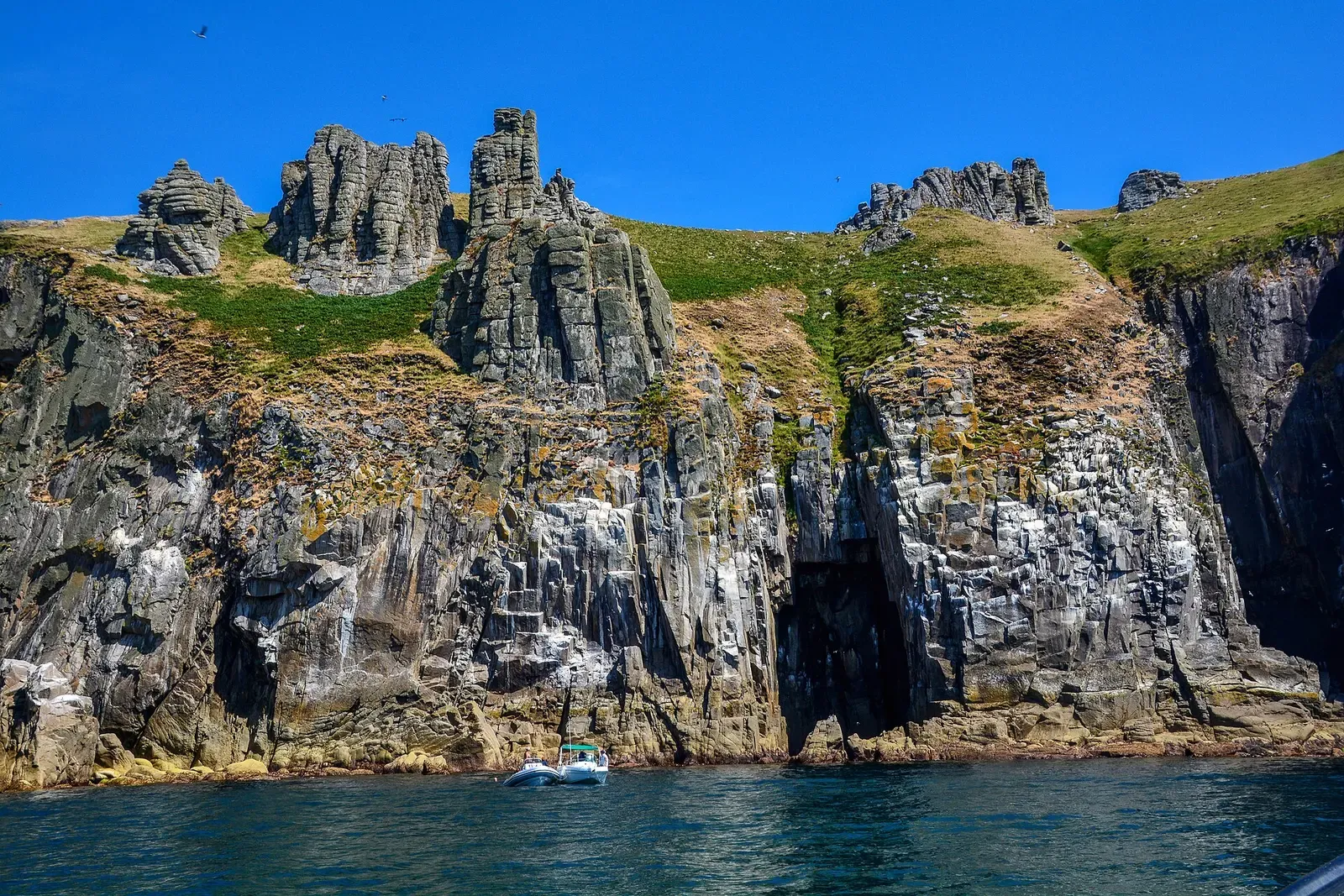
England's first marine reserve, and its grey seals follow divers around
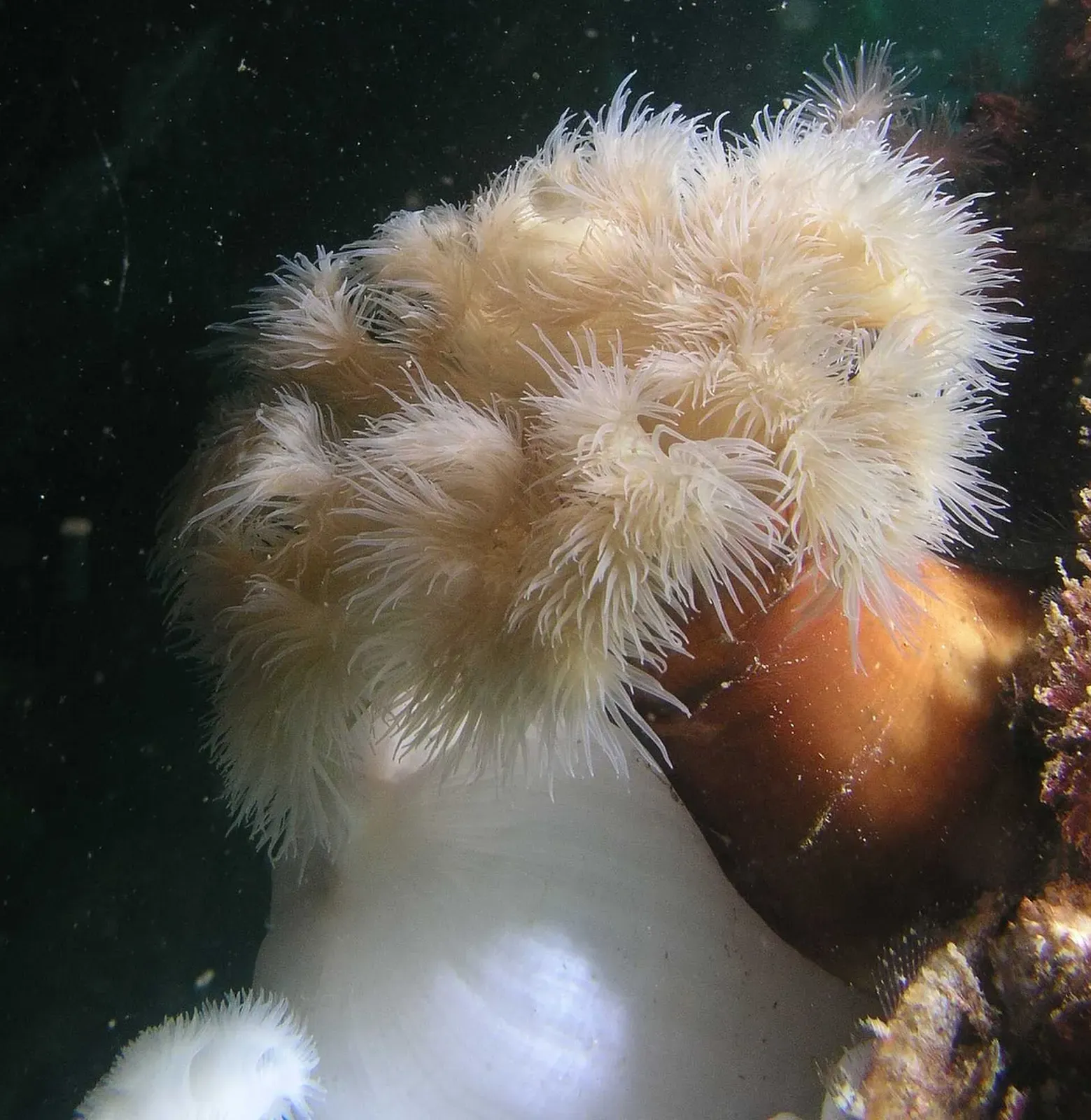
Cold-water walls, wrecks and wolf eels in Puget Sound and Hood Canal