
Djibouti · Djibouti · Wreck
Le Faon Wreck (MV Priamos)
A 135-metre cargo ship turned artificial reef, on her port side
Area photo: CNE CNA C6F · Public domain
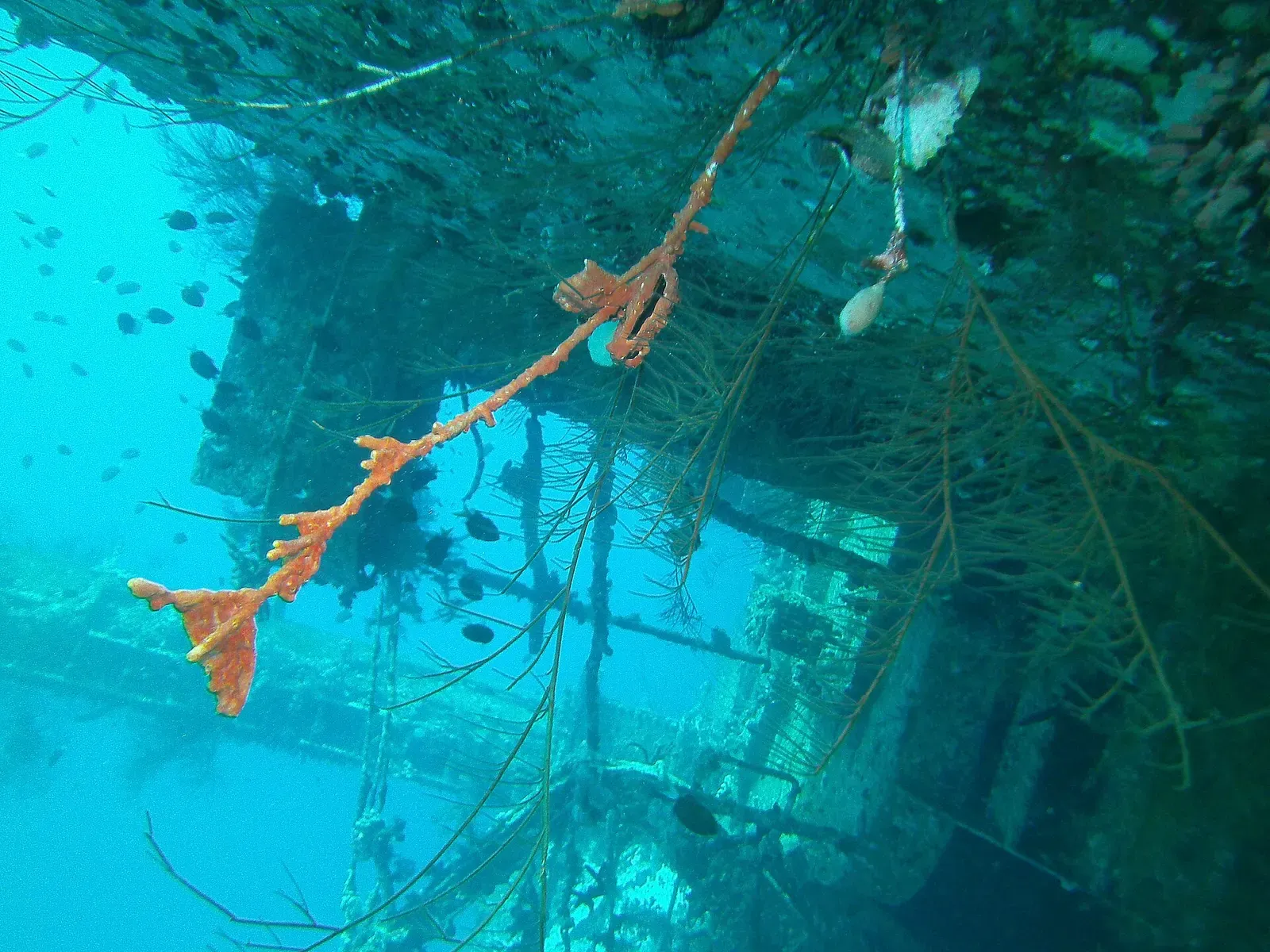
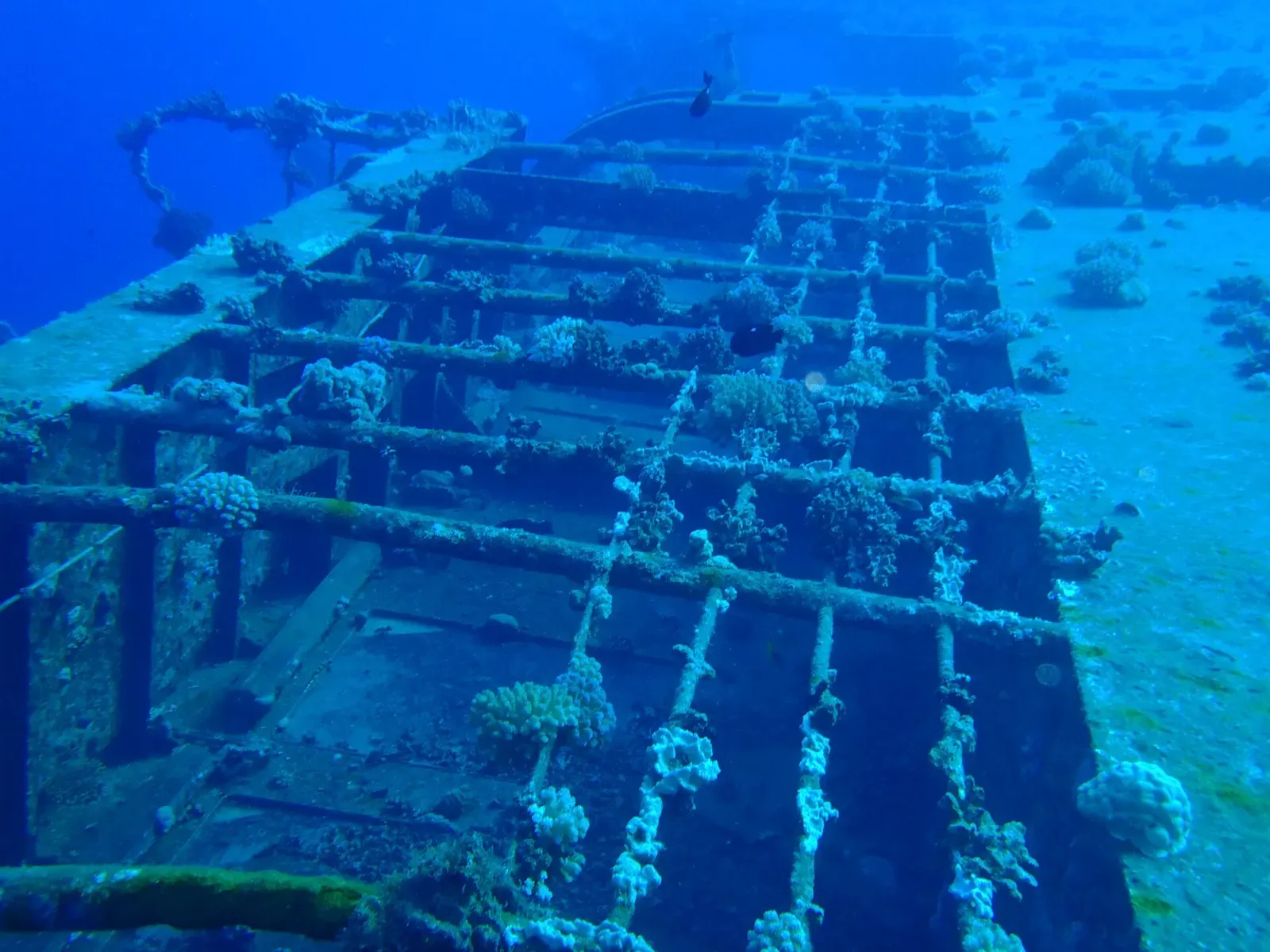
The wreck Djibouti divers call Le Faon also carries the names MV Priamos and Orchard Reefer: a 135-metre cargo ship lost in 1975 after an explosion in her engine room. She lies on her port side near Moucha Island between 10 and 28 metres, coral and sponge over the plating, and is dived as an artificial reef rather than as a deep technical wreck.
Also known as MV Priamos, Orchard Reefer.
Where it is and how deep
11.7244° N, 43.1917° EApproximate position — the dashed circle shows where the site lies; your operator's briefing has the mooring.
The dive
The wreck sits off Moucha Island and is run either as a day boat out of the Port de Peche, two kilometres from the centre of Djibouti City, or as a second dive on a liveaboard itinerary. She lies over on her port side, and the dive works the length of the hull between about 10 and 28 metres: shallow enough along the upper side that the dive is not a rushed one, deep enough along the bottom edge to want a plan before you drop.
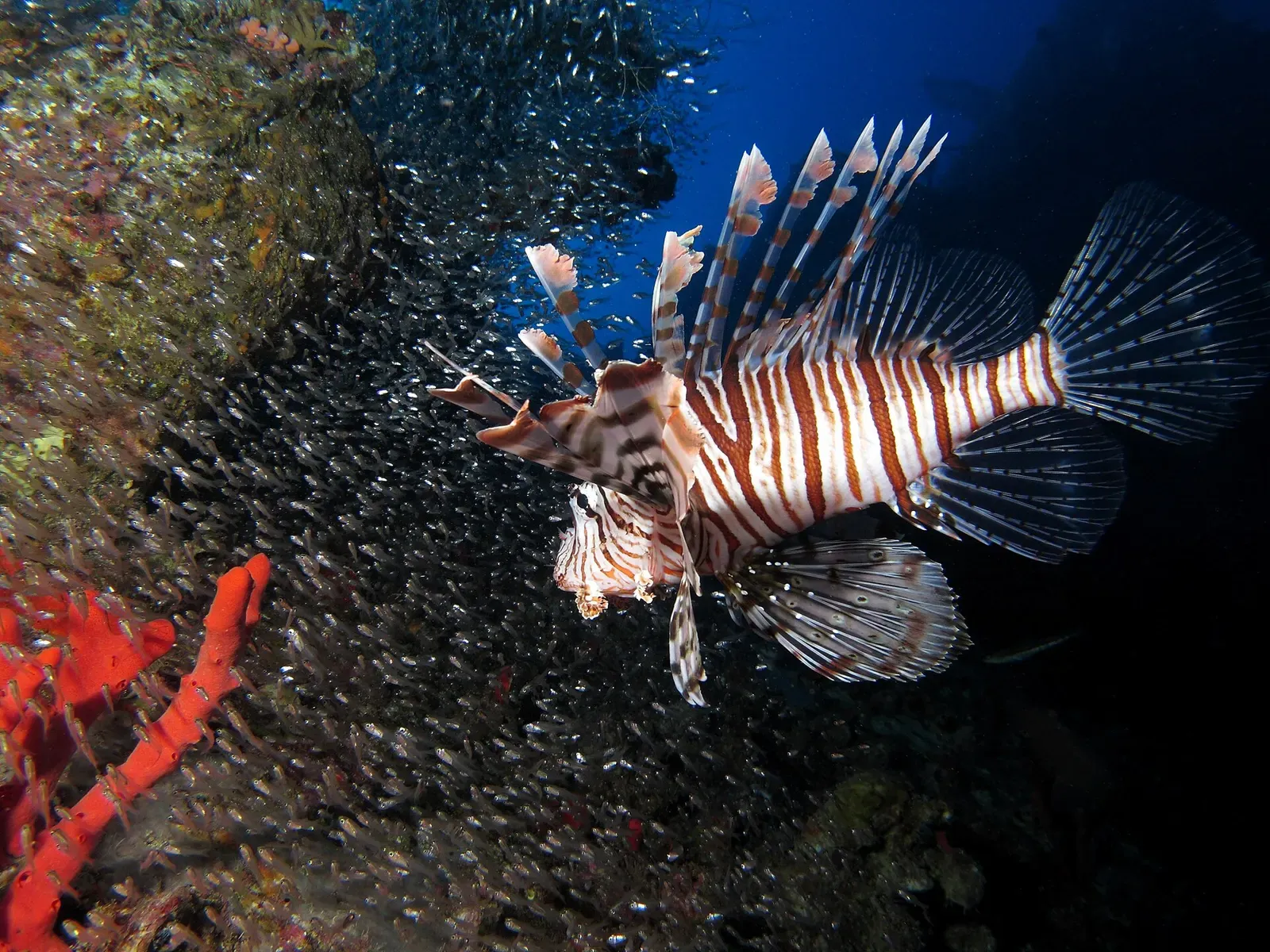
Coral and sponge have taken the plating and the ship now works as an artificial reef. Clusters of batfish hang over the wreck watching divers, glassfish and snappers move through the shaded structure, and moray eels and lionfish hold in the steel. She is dived by wreck divers of varying experience and groups do go inside, so penetration is a decision to make with the divemaster before the dive rather than on the fly.
The wreck
- Vessel
- MV Priamos
- Type
- Cargo ship
- Length
- 135 m (443 ft)
- Sunk
- 1975
- Cause
- Explosion in the engine room
- Lies
- On her port side near Moucha Island, between 10 and 28 metres
The wreck carries three names: Le Faon to Djibouti divers, MV Priamos and Orchard Reefer in the accounts of her loss. She sank in 1975 after an explosion in her engine room and came to rest on her port side near Moucha Island, where coral and sponge have since turned the 135-metre hull into an artificial reef that operators run as a second dive.
Marine life and season
- Reef fish swarms
| Jan | Feb | Mar | Apr | May | Jun | Jul | Aug | Sep | Oct | Nov | Dec |
|---|---|---|---|---|---|---|---|---|---|---|---|
| Prime | Prime | Good | Fair | Fair | Fair | Fair | Fair | Fair | Good | Prime | Prime |
Season follows Djibouti: Whale sharks aggregate reliably November–February when plankton blooms in the gulf; sightings are sparse the rest of the year.
Questions divers ask
How deep is the Le Faon wreck?+
She lies on her port side with the shallowest part around 10 metres and the deepest sections at about 28 metres, so the dive stays inside normal recreational limits.
Do you need wreck experience to dive Le Faon?+
She is dived by wreck divers of varying experience, but the deepest sections sit at about 28 metres, past Open Water limits, and groups do go inside, so the deeper and enclosed parts need the right training.
Sources
- Diving in Djibouti - Seven Brothers, Gulf of Tadjoura — Dive The World
- Diving in Djibouti: my first wreck — Atlas & Boots
More dive sites in Djibouti
Pelagic & blue water
Breath-hold encounters with juvenile whale sharks feeding at the surface
Cave & cavern
Swim through a coral-covered rift between two tectonic plates
Shallow coral gardens and deeper drop-offs, 30 to 45 minutes from the city
Pelagic & blue water
Hammerheads and mantas on current-swept pinnacles near Bab el-Mandeb
Similar dives elsewhere
An air pocket in the rear cargo hold big enough to surface in
A minesweeper on her port side, 25 minutes from the marina

An engine room full of glassfish at the end of a canted stern
A 115 m ferry lost in 1991, dived as a memorial without entry