Farasan Banks & Al Lith · Saudi Arabia · Reef · Coral garden
Abu Latt
Columnar Porites framework standing 10 m off the bottom
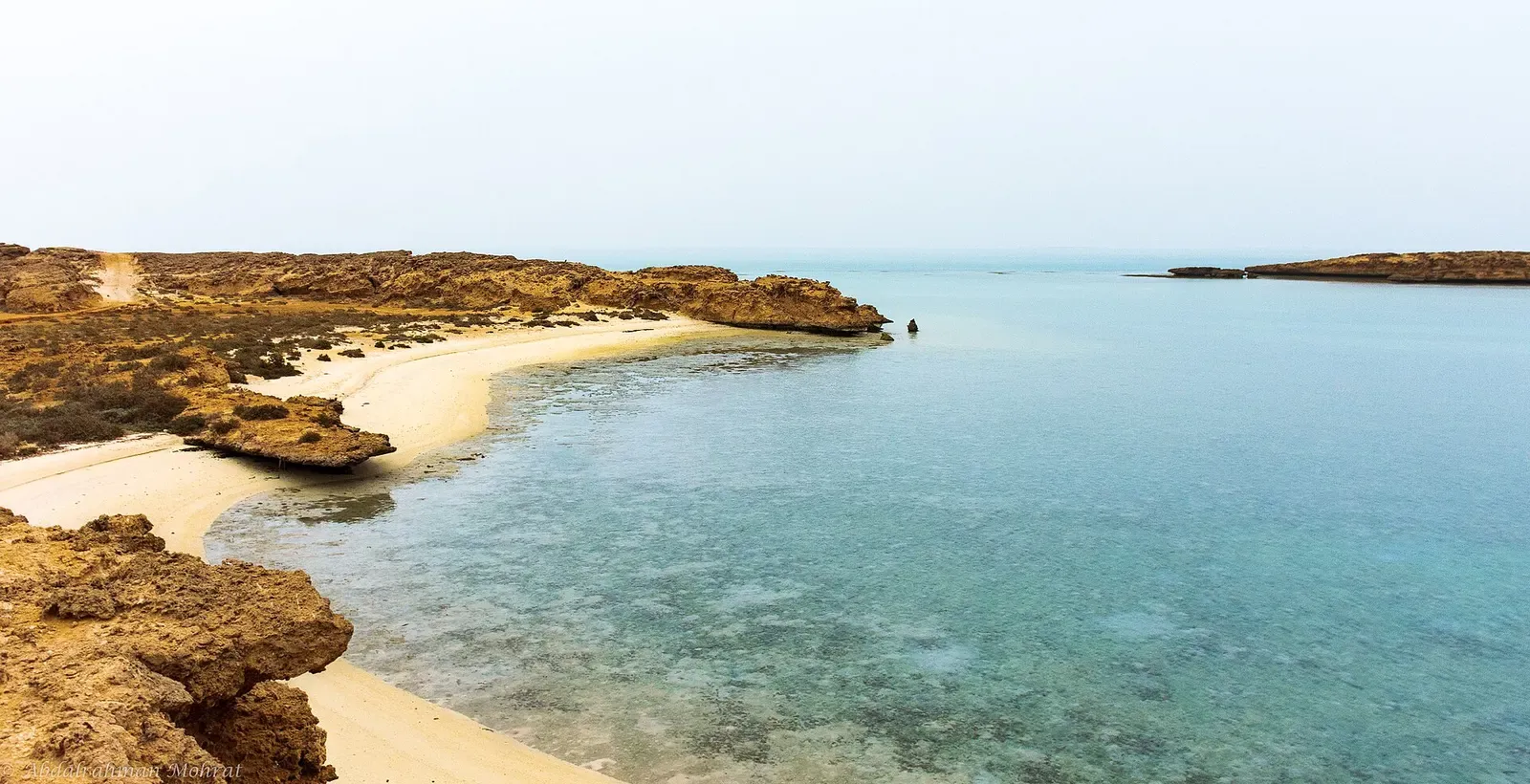
Abu Latt is an island about 24 km offshore from Al Lith (15 miles), with a shallow reef slope running from 3-4 m down to 12 m under high cover of Millepora and Acropora. Coral spurs break into sand and rubble as the slope drops away, and one stretch of the reef is built on a columnar Porites framework standing some 10 m off the bottom. The diving is shallow and undemanding.
Also known as Abu Latt Island, Abu Latt Reef.
Where it is and how deep
19.9667° N, 40.1333° EApproximate position — the dashed circle shows where the site lies; your operator's briefing has the mooring.
The dive
The reef here starts almost at the surface. A well-developed shallow slope runs from about 3-4 m down to 12 m under a high cover of Millepora and Acropora, and the structure breaks into coral spurs separated by patches of sand and rubble that continue on into deeper water. There is no route to follow and no feature to find: you work along the slope, and at these depths air rather than no-decompression time is what ends the dive.
A second stretch of the island's reef is built differently, on a columnar Porites framework with up to about 10 m of relief and shallow ground between 5 and 10 m. Large Porites colonies grow here in encrusting and massive forms alongside Diploastrea, Favia stelligera and Hydnophora, with giant clams in relatively high abundance set into the framework. Small colourful reef fish are everywhere, several larger grouper and snapper hold on the structure, and a shark came through on one of the survey dives.
The reef is not in perfect condition. Divers surveying it recorded many small dead corals and a good deal of partial mortality across the slope, signs of an earlier disturbance, though the prevalence of coral disease was low. Above water the island carries sandy beaches that are important nesting ground for sea turtles.
Marine life and season
- Groupers
| Jan | Feb | Mar | Apr | May | Jun | Jul | Aug | Sep | Oct | Nov | Dec |
|---|---|---|---|---|---|---|---|---|---|---|---|
| Good | Good | Prime | Prime | Prime | Fair | Fair | Fair | Fair | Good | Good | Good |
Season follows Farasan Banks & Al Lith: Whale sharks aggregate at Shib Habil Mar–May; midsummer surface temperatures above 40°C make the region impractical.
Questions divers ask
How deep is the diving at Abu Latt?+
The main reef slope runs from about 3-4 m down to 12 m, and the second area of columnar Porites framework sits in 5-10 m of water. Everything is shallow, which makes for long and undemanding dives.
How do you get to Abu Latt?+
By boat. The island lies roughly 24 km offshore from Al Lith (15 miles) on the Saudi Red Sea coast, and it is dived from boats working the Farasan Banks; the survey team that worked this reef anchored about 10 km north of the island.
What is the coral like at Abu Latt?+
High cover of Millepora and Acropora on the shallow slope, large Porites colonies in encrusting and massive forms, plus Diploastrea, Favia stelligera and Hydnophora. Surveys also recorded many small dead corals and a fair amount of partial mortality.
Sources
- Abu Latt: Our First Dives at Farasan Banks — Khaled bin Sultan Living Oceans Foundation
- Abu Latt — Wikipedia (Cebuano)
More dive sites in Farasan Banks & Al Lith
Wall diving where the drop runs to 500 m in places
A huge gorgonian at 35 m on the longest reef off Al Lith
Wall
Stepped plateaus at 25, 35 and 60 m with gorgonians in the deep
Reef
Juvenile whale sharks gather here every spring, in groups of two to four
Similar dives elsewhere

A resting pod of 60 to 80 spinner dolphins in the lagoon.
Swim-throughs and pinnacles from 10 metres, diveable year-round.

A gorgonian forest at 21 m and fusiliers packing the shallows
A gentle 6-metre shelf that slopes on down to 30