Flower Garden Banks · United States · Reef
Stetson Bank
Rocky outcrops under sponges, 129 km (80 miles) off Texas
Photo: National Marine Sanctuaries · Public domain
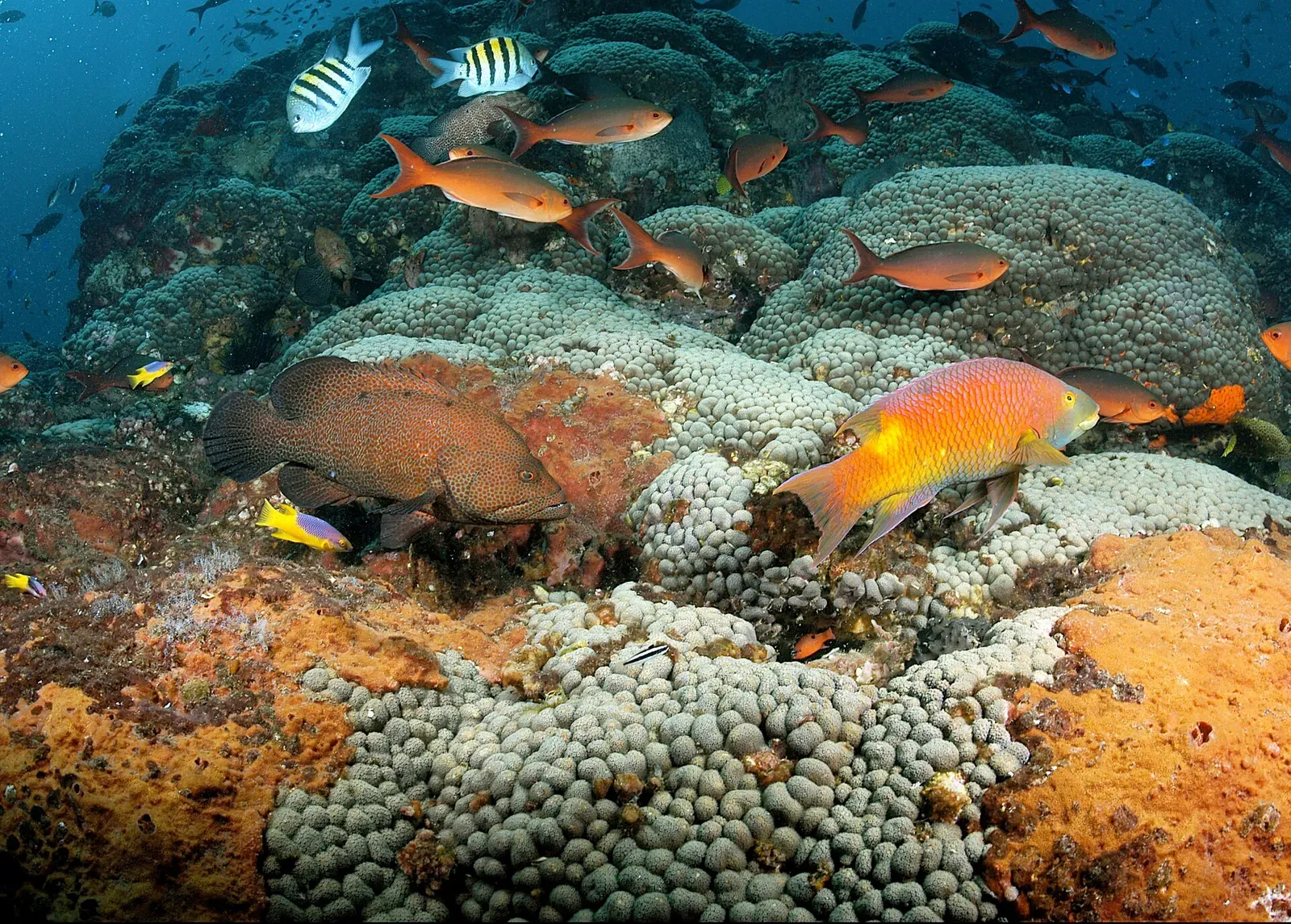
The closest to land of the sanctuary's three original banks, 80 miles (129 km) off the Texas coast, and the odd one out: uplifted siltstone and claystone rather than a coral cap. Cooler winter water keeps reef-building corals from taking hold, so the rock carries sponges of every conceivable colour and shape, with algae and fire coral on the crest.
Where it is and how deep
28.1655° N, 94.2977° WPublished position for this site.
Site maps published elsewhere
The dive
Stetson does not look like the Flower Garden caps. The bank is uplifted siltstone and claystone, and the dive is spent among rocky outcroppings and the gravelly sand flats between them, which carry clusters of tube sponges; erosion of the softer layers of rock has left distinct parallel ridges in many places. The five moorings sit in 22-26 m, the shallowest rock comes up to 17 m, and the bank bottoms out at 61 m.
Colour comes from sponges rather than coral. They cover large sections of the reef in every conceivable shape, and because winter water gets cold enough to keep the reef-building corals out, the crest runs to algae, sponges and fire coral instead. The exception is Sierra Madracis, the highest peak of the bank, named for the ten-ray star coral Madracis decactis and a hub of activity for thousands of fish.
Deeper, the community shifts again. The Stetson Ring, a circle of low-profile features in the deep area surrounding the bank, carries black corals, octocorals, sponges and invertebrates including arrow crabs and Christmas tree worms. That ground sits below the recreational range, but it fits the bank generally: rock and sponge rather than the wide coral scenes of East and West Flower Garden, and small subjects that hold still for a camera.
Background
The bank is named for Henry Stetson, a geological oceanographer with Woods Hole Oceanographic Institution. It was added to the sanctuary in 1996, four years after the two Flower Garden banks were first protected, and its surroundings were taken in again by the sanctuary expansion announced on January 19, 2021 and effective March 22, 2021, which also adjusted the boundaries of the three original banks.
Marine life and season
- Macro critters
- Reef fish swarms
| Jan | Feb | Mar | Apr | May | Jun | Jul | Aug | Sep | Oct | Nov | Dec |
|---|---|---|---|---|---|---|---|---|---|---|---|
| Off-season | Off-season | Fair | Good | Good | Prime | Prime | Prime | Prime | Good | Fair | Off-season |
Season follows Flower Garden Banks: Charter season runs roughly April-October when Gulf seas are calmer; coral spawn a few nights after the August full moon, and winter cold fronts shut most operators down.
Know before you go
- Currents run in different directions and at different speeds at different depths, and can develop or disappear mid-dive, so the run back to the mooring is not always the one you planned.
Photos from Stetson Bank
National Marine Sanctuaries · Public domain
National Marine Sanctuaries · Public domain
Dive videos
Stetson Bank - The Flower Garden Banks National Marine Sanctuary- The MV Fling · Scott Bauer Below on YouTube
Questions divers ask
Why is Stetson Bank different from the Flower Garden banks?+
It is uplifted siltstone and claystone rather than a coral cap, and cooler winter temperatures keep reef-building corals from establishing. Sponges, algae and fire coral cover the rock instead, which makes it the sanctuary's macro dive.
How deep is Stetson Bank?+
The mooring buoys sit in 22-26 m and the shallowest rock is at 17 m, with the bank bottoming out at 61 m. It is the closest to land of the sanctuary's three original banks, at 80 miles (129 km) offshore.
Sources
- Stetson Bank — NOAA Flower Garden Banks National Marine Sanctuary
- Mooring Buoys — NOAA Flower Garden Banks National Marine Sanctuary
- Sanctuary Banks — NOAA Flower Garden Banks National Marine Sanctuary
- Trip Preparation — NOAA Flower Garden Banks National Marine Sanctuary
- Flower Garden Banks National Marine Sanctuary — Wikipedia
Photo credits
- Reef fish schooling over Stetson Bank's rocky outcrops, a grouper resting below by National Marine Sanctuaries, Public domain, via Wikimedia Commons
- Boulder-shaped coral heads on Stetson Bank's coral-topped pinnacle, small fish swimming past by National Marine Sanctuaries, Public domain, via Wikimedia Commons
- Long-spined sea urchin perched on an orange elephant ear sponge at Stetson Bank by National Marine Sanctuaries, Public domain, via Wikimedia Commons
More dive sites in Flower Garden Banks
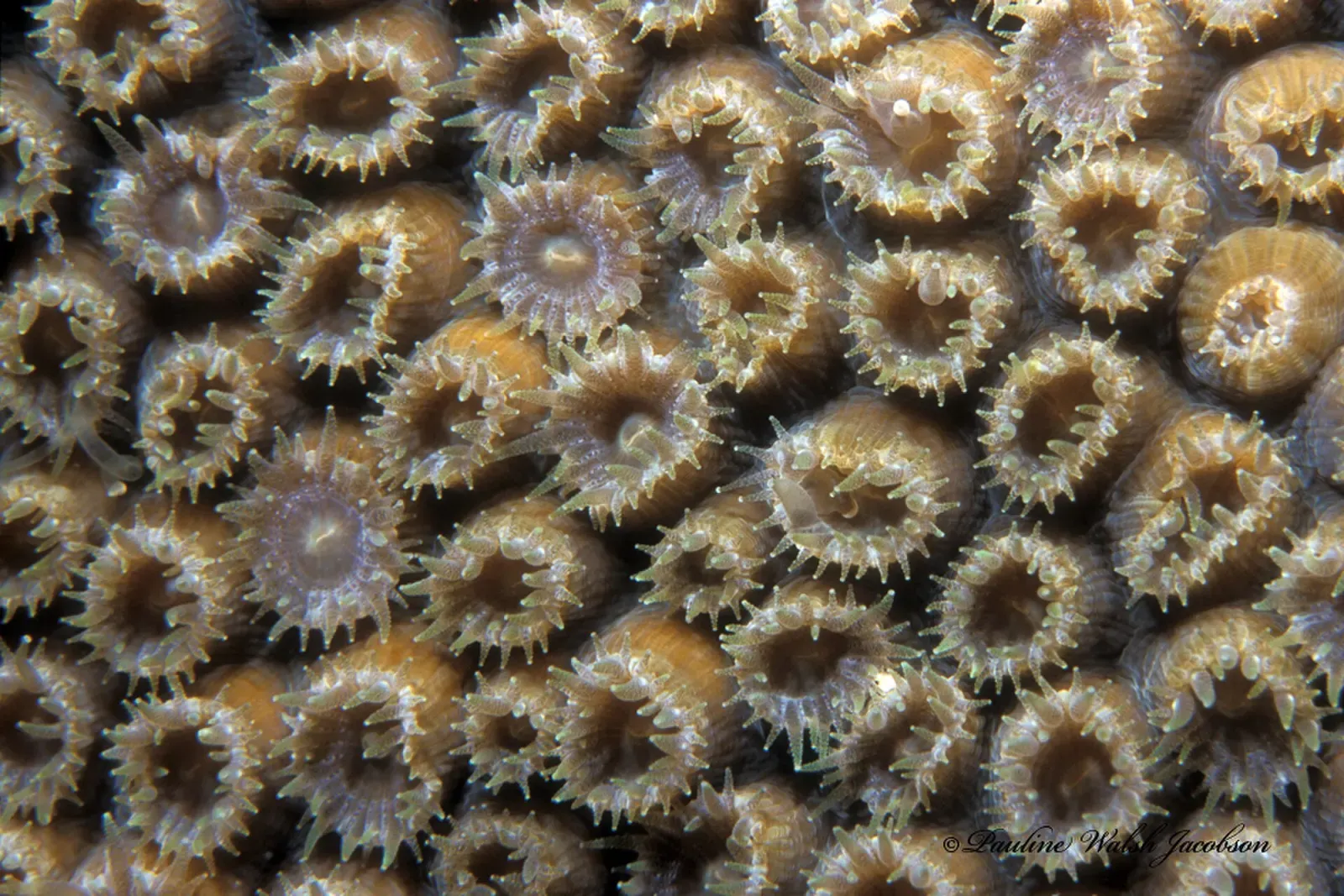
Over 52% coral cover, 192 km (119 miles) from land
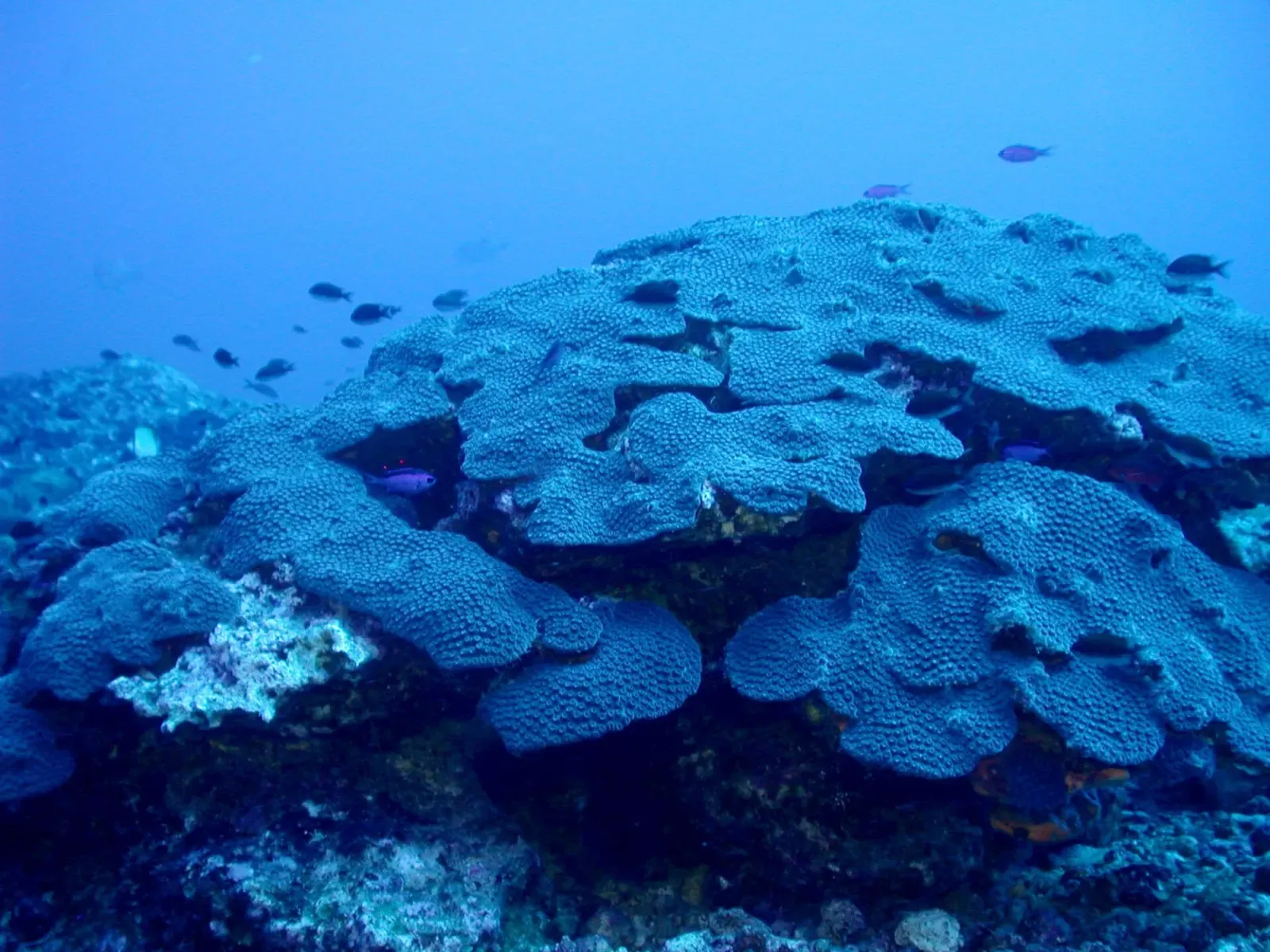
The only known reef dominated by blushing star coral
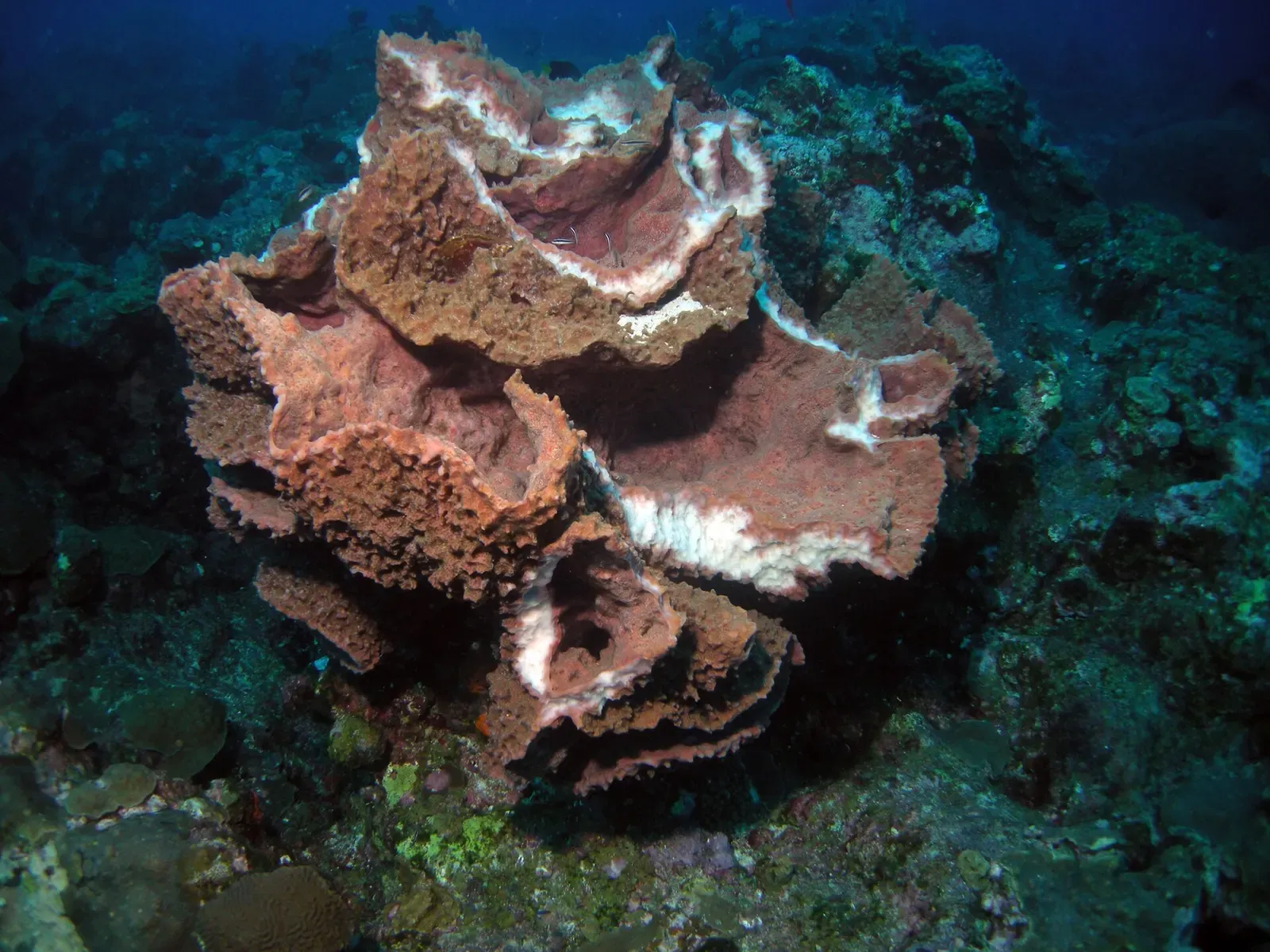
Reef standing 15-20 ft (6 m) above the sand, 182 km (113 miles) from land
Similar dives elsewhere

Sand slopes, low coral walls and a warship at 28 metres

A sand pit at 15 m (50 ft) leading out to a 27 m (90-foot) drop-off
A gentle reef slope that ends at a canyon and its sandfall

.jpg)
.jpg)
.jpg)
A King Neptune statue set down in the late 1970s marks the north end