Flower Garden Banks · United States · Reef · Coral garden
East Flower Garden Bank
Over 52% coral cover, 192 km (119 miles) from land
Photo: Pauline Walsh Jacobson · CC BY 4.0
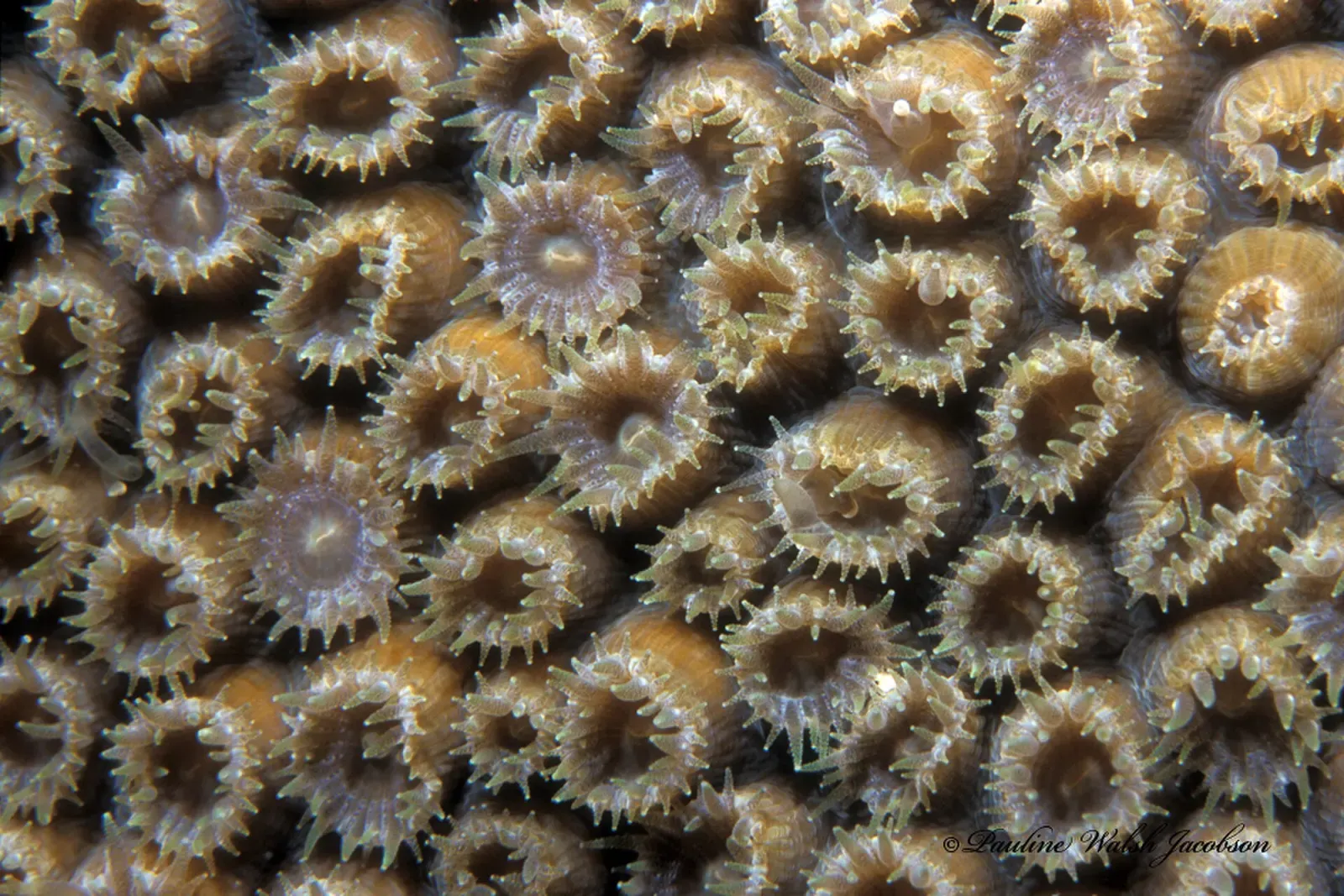
The eastern of the two coral caps that give the sanctuary its name, 119 miles (192 km) from land. Over 52 percent of the cap is coral cover, as much as five times the hard coral of other reefs in the region, and brain and star corals account for about 60 percent of it. Anchoring is not permitted in the sanctuary, so boats tie to fixed mooring buoys and divers drop straight onto the reef.
Also known as EFGB.
Where it is and how deep
27.9074° N, 93.5992° WPublished position for this site.
Site maps published elsewhere
The dive
Everything starts on the buoy line. Anchoring is banned inside the sanctuary, so the boat ties to one of seven fixed moorings and you descend through open water with nothing shallow anywhere near you. The moorings sit in 19-21 m and the top of the bank is at 19 m, so the reef resolves underneath almost as soon as you leave the surface. Below the cap the bank keeps going, down to 136 m, well past anything recreational.
The cap itself is dense. Over 52 percent of it is coral cover, as much as five times the hard coral of other reefs in the region, and the dominant species are brain and star corals, both threatened, which account for about 60 percent of the cover at this bank. Sanctuary-wide the count runs to almost 300 species of fish and over 20 species of coral, and there is no shortage of either over the reef.
Two things pull divers back here. Manta rays, the largest species of ray in the ocean, with wingspans upwards of 29 feet (8.8 m), use the Flower Garden Banks as critical nursery habitat. And under the bank a salt dome is leaking: super-salty water, over 200 parts per thousand, seeps out and settles into an underwater pool up to 25 cm (10 inches) deep, water dense enough that only bacterial mats survive in it.
Background
The banks were first mapped in 1936, and scuba expeditions in the early 1960s confirmed that what sat on top of the salt domes was living coral reef. East Flower Garden Bank was part of the original sanctuary established on January 17, 1992. In 2016 the sanctuary discovered a vast coral die-off on the East Bank; the event has since stabilized, but it is a reminder that the cap's condition is not a fixed thing.
Marine life and season
- Manta rays
- Pristine corals
| Jan | Feb | Mar | Apr | May | Jun | Jul | Aug | Sep | Oct | Nov | Dec |
|---|---|---|---|---|---|---|---|---|---|---|---|
| Off-season | Off-season | Fair | Good | Good | Prime | Prime | Prime | Prime | Good | Fair | Off-season |
Season follows Flower Garden Banks: Charter season runs roughly April-October when Gulf seas are calmer; coral spawn a few nights after the August full moon, and winter cold fronts shut most operators down.
Know before you go
- Currents run in different directions and at different speeds at different depths, and can develop or disappear mid-dive. Keep the mooring line in the plan rather than swimming off it.
- Wave height and frequency are variable this far offshore and can make reboarding the boat difficult; time the return to the platform and keep hold of the line.
- Over one hundred miles of water lie between the site and the nearest medical facility, so conservative profiles matter more here than on an inshore reef.
Dive videos
East Flower Garden Bank · Scott Strickland on YouTube
Scuba Diving East Flower Garden Banks! May, 2023 · Adam Hems on YouTube
Questions divers ask
How deep is East Flower Garden Bank?+
The top of the bank is at 19 m (62 ft) and the mooring buoys sit in 19-21 m, so there is no shallow diving here. The bank itself drops to 136 m, far beyond recreational range, and dives stay on the coral cap.
How do you get to East Flower Garden Bank?+
By dive charter: the bank lies 119 miles (192 km) from land. Anchoring is not permitted in the sanctuary, so boats tie to one of the seven fixed mooring buoys and divers descend the line.
What will you see at East Flower Garden Bank?+
Over 52 percent coral cover, about 60 percent of it brain and star corals, plus manta rays, for which the sanctuary is critical nursery habitat. Almost 300 species of fish and over 20 species of coral are recorded in the sanctuary.
Sources
- East Flower Garden Bank — NOAA Flower Garden Banks National Marine Sanctuary
- Mooring Buoys — NOAA Flower Garden Banks National Marine Sanctuary
- Trip Preparation — NOAA Flower Garden Banks National Marine Sanctuary
- Dive Charters — NOAA Flower Garden Banks National Marine Sanctuary
- Flower Garden Banks National Marine Sanctuary — Wikipedia
Photo credits
- Close-up of great star coral polyps, Montastraea cavernosa, on the reef cap by Pauline Walsh Jacobson, CC BY 4.0, via Wikimedia Commons
In The Logbook
- Where to dive in every month of the yearTrip planning · 14 min read
More dive sites in Flower Garden Banks
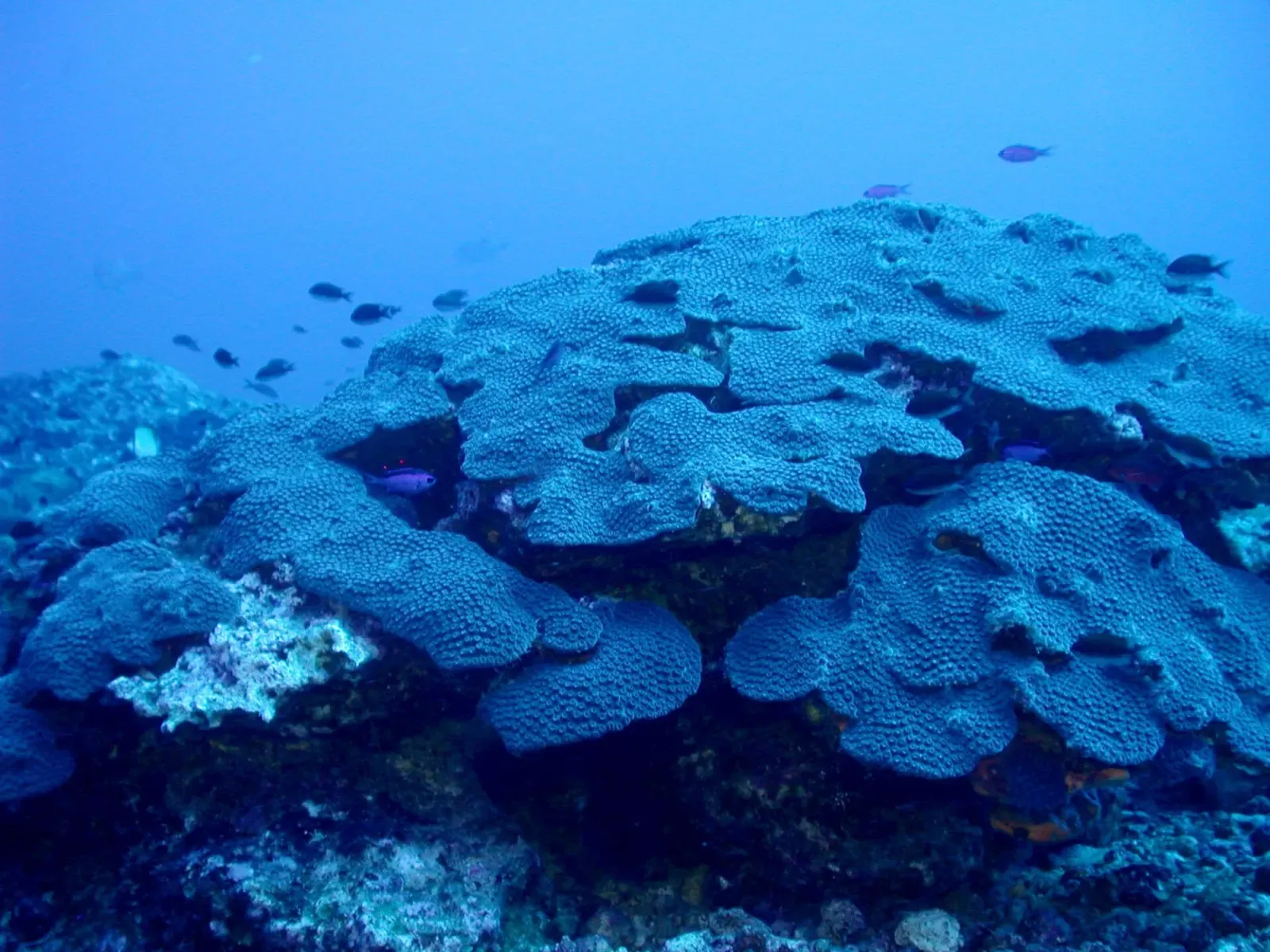
The only known reef dominated by blushing star coral
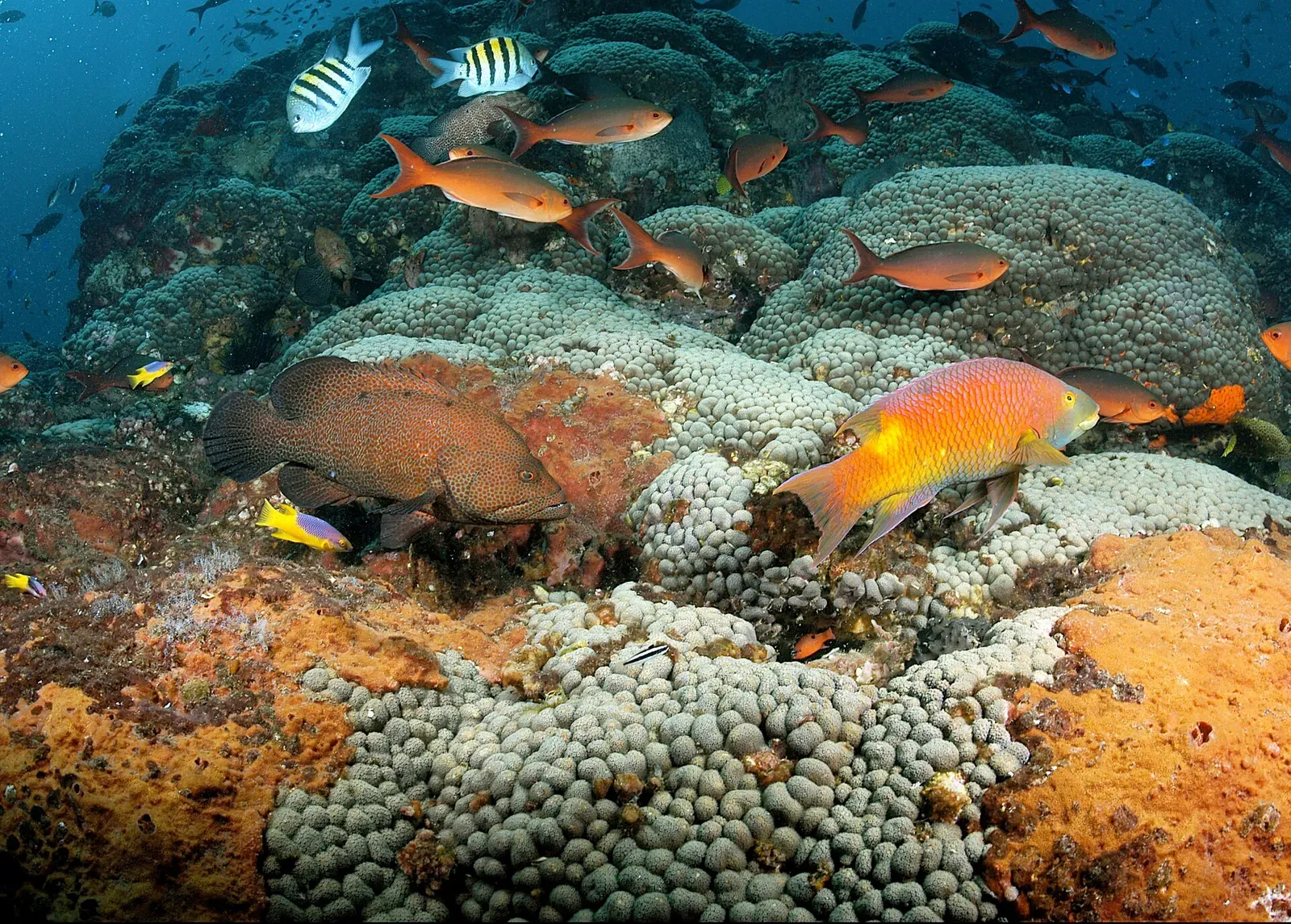
Rocky outcrops under sponges, 129 km (80 miles) off Texas
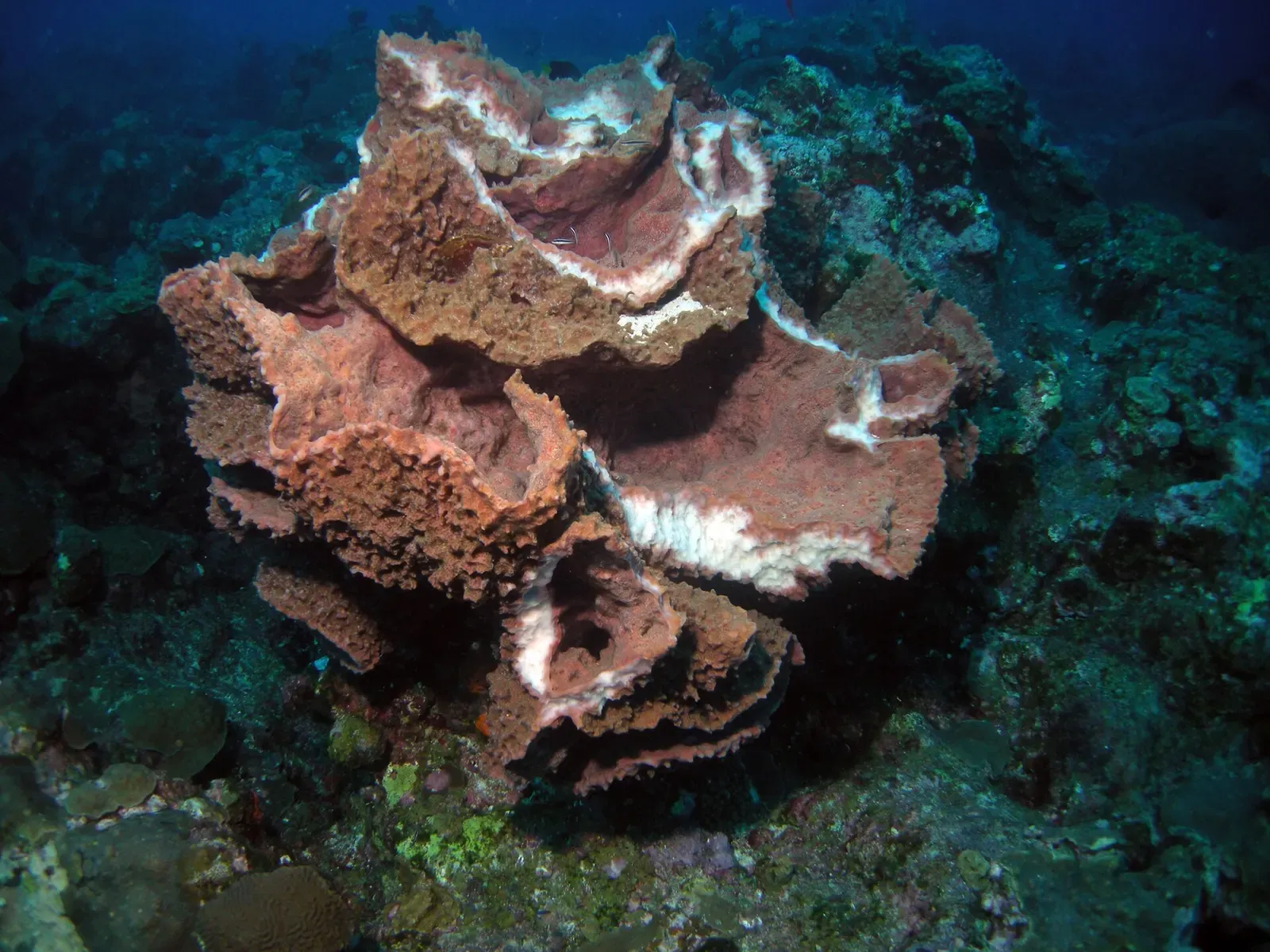
Reef standing 15-20 ft (6 m) above the sand, 182 km (113 miles) from land
Similar dives elsewhere
Sea turtles on the inner coral plate, eagle rays at La Grieta.

Reef topography that mirrors the cliffs above, at 11 to 18 metres.
Reef
Manta Reef
Kadavu & the Great Astrolabe Reef · Fiji
Mantas over a coral-covered reef top at 15 metres

Coral spurs and sand grooves at the foot of the Sombrero Key Lighthouse