Cold Water · Norway
Gulen & the Sognefjord
Over 30 well-preserved wrecks at the mouth of Norway's Sognefjord
Photo: Bernard Picton · CC BY-SA 4.0
Gulen sits at the mouth of the Sognefjord, a stretch of Norwegian coast that was of immense strategic importance in WWII and now holds over 30 well-preserved shipwrecks. The signature dive is the 122 m German freighter SS Frankenwald, and the twin wrecks of Ferndale and Parat are among the best known in Norway. Between the wrecks come a granite drop-off called the Troll Wall, kelp, soft coral and a house reef known across Scandinavia for its nudibranchs.
About diving in Gulen & the Sognefjord
Diving runs from day boats that work both the fjords and the outer coast, with the sites less than half an hour away, and the house reef is dived from shore. One resort takes divers to no fewer than 15 different wrecks, so a week can stay on steel or mix wrecks with walls, kelp and macro reefs. Most diving is easy with regard to tides and currents. The wrecks span every level, from the beginner-friendly Solvang at 15 m to the technical SS Lynx at 90 to 100 m.
The wrecks are well preserved. Strong currents carried Ferndale early into the narrow Krakhelle sound, where it was left a sitting duck, and it now forms a twin wreck with Parat. Away from the steel the reefs carry kelp and soft coral. Norway has close to a hundred nudibranch species, about two thirds of them at diveable depths, and the area also holds thorntail stingrays, wolf fish and monkfish.
Gulen suits wreck divers comfortable in a drysuit, and it is set up for groups and clubs: courses run from Open Water to Divemaster, and the resort handles large groups of technical divers and rebreathers, with nitrox and trimix on demand. Macro photographers have the house reef, and in autumn crustaceans and cephalopods take over from the nudibranchs.
Best time to dive Gulen & the Sognefjord
| Jan | Feb | Mar | Apr | May | Jun | Jul | Aug | Sep | Oct | Nov | Dec |
|---|---|---|---|---|---|---|---|---|---|---|---|
| Prime | Good | Good | Good | Good | Prime | Prime | Good | Good | Good | Good | Good |
The boats dive Gulen throughout the year. December, January and February bring the clearest water, with visibility reaching 35 m against an average of 15 to 18 m, and the end of January is when the deep-sea helmet jellyfish rises to the surface to mate. The water is coldest in March, at 6 °C. From March to September spring and summer bring the best conditions for diving the region, and in June and July dogfish gather at some of the deeper wrecks. The water peaks in August at up to 22 °C.
Dive types & marine life
At the end of January the deep-sea helmet jellyfish Periphylla periphylla comes to the surface to mate, a sight few places offer. Spring is the best season for nudibranchs, and in June and July dogfish gather at some of the deeper wrecks. Thorny rays turn up on nearly every dive at Stingray City, a sandy site at 14 to 18 m.
- Wreck
- Wall
- Muck & macro
- Nudibranchs
- Stingrays
- Macro critters
Best dive sites in Gulen & the Sognefjord
- 1
SS Frankenwald
A 122 m German freighter whose stern rests on sand at 44 m, the signature wreck of the area.
- 2
Ferndale
WWII wreck that starts at 6 m (20 ft) and runs down to its stern at 30 m (100 ft).
- 3
Parat
The deeper of the twin wrecks beside Ferndale; in winter it is a night dive even by day.
- 4
Troll Wall
Granite drop-off that rises above the surface and plunges to 45 m and beyond.
- 5
KNM Uller
Minelayer from 1876 at 55 m, with its mines and a cannon scattered on the bottom beside the hull.
- 6
Solvang
Beginner-friendly wreck at 15 m, the easy end of the wreck list.
- 7
Gulen House Reef
Nudibranch reef where more than 50 species have turned up in two years.
Site guides
Wreck
Intact hull and stern of a WWII freighter beside its deep twin, Parat
Muck & macro
More than 50 nudibranch species found in two years
Wreck
Mines and a cannon still pointing at the surface beside the hull
Wreck
A 1905 rescue steamer standing upright below the Ferndale
Wreck
Anemone-covered superstructure on an upright 122 m freighter
Wall
Granite face that rises out of the fjord and plunges past 45 m
How to get to Gulen & the Sognefjord
Bergen Airport (Flesland) is the way in. From there it is about 2 hours by rental car to Gulen, or a northbound speed ferry from central Bergen reaches Gulen in less than three hours.
Photos from Gulen & the Sognefjord
Bernard Picton · CC BY-SA 4.0
Bernard Picton · CC BY-SA 4.0
Bernard Picton · CC BY-SA 3.0
Bernard Picton · CC BY 4.0
Questions divers ask
Do divers need a drysuit for Gulen?+
Yes. The water falls to 6 °C in March and reaches only 22 °C in August, and winter wreck dives call for extra undergarments.
Are the Gulen wrecks suitable for newer divers?+
Some are. Ferndale starts at 6 m (20 ft) and suits beginners, while Parat rests below it in 46 to 61 m (150 to 200 ft) and is for technical divers only.
Can Gulen be dived from shore?+
Yes. The house reef is a shore dive, and the Troll Wall lies just off it, some 200 m from the resort pier; divers who stay shallow can swim from the wall back to the pier.
Sources
- Gulen Dive Resort — Gulen Dive Resort
- Gulen Highlights — Gulen Dive Resort
- How to get to Gulen — Gulen Dive Resort
- Gulen, Norway (X-Ray Mag) — X-Ray Mag
- Ferndale and Parat — Dykking.no
- Get wrecked in Norway — Dive Worldwide
Photo credits
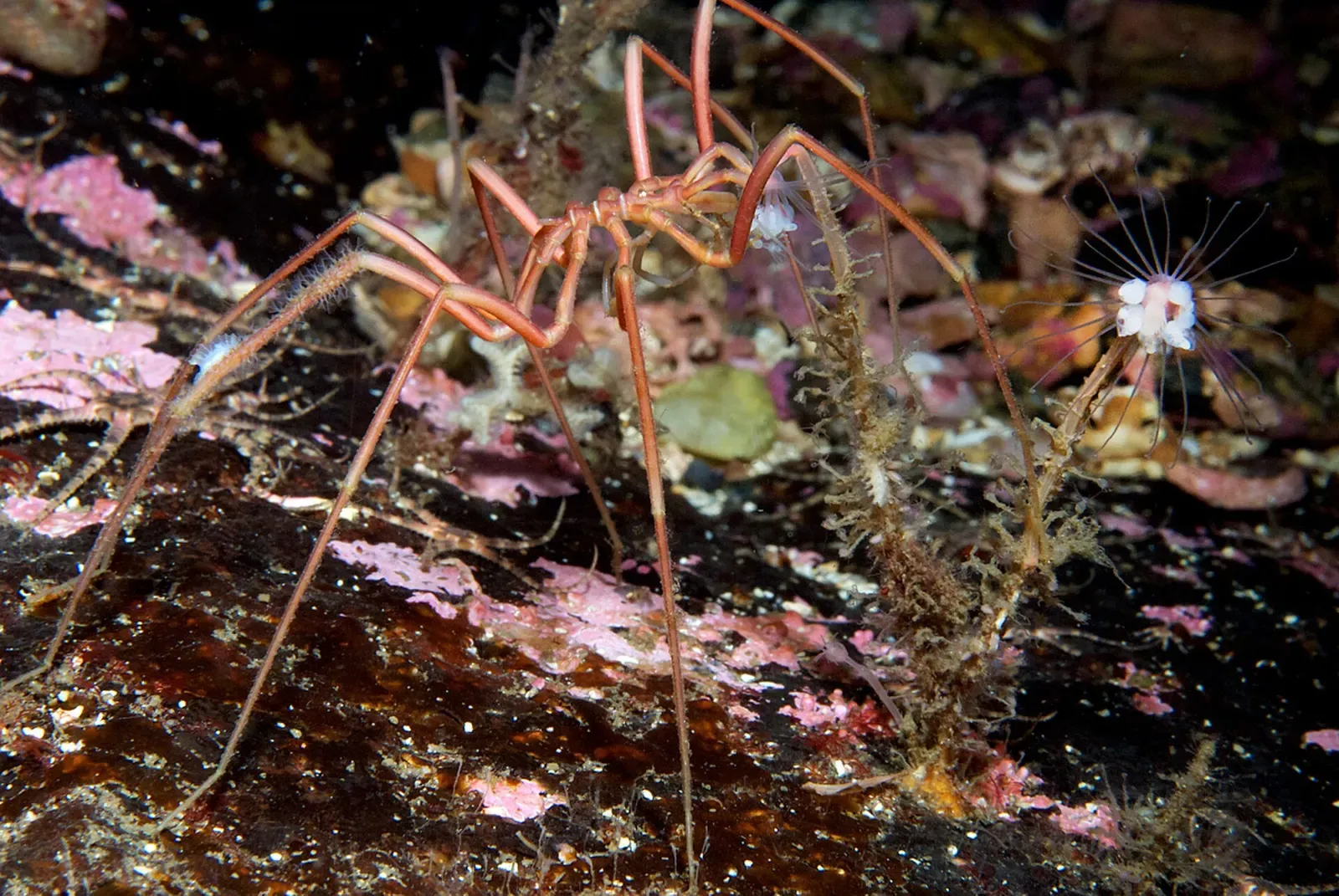
- A long-legged reddish-orange sea spider stands on dark rock crusted with pink coralline algae, beside a white hydroid polyp by Bernard Picton, CC BY-SA 4.0, via Wikimedia Commons
- A slender white nudibranch with pale, orange-tipped cerata clings to a branching hydroid beside a white egg ribbon by Bernard Picton, CC BY-SA 4.0, via Wikimedia Commons
- A translucent white nudibranch crawls over dark rock patched with pink coralline algae by Bernard Picton, CC BY-SA 4.0, via Wikimedia Commons
- A small yellow-brown nudibranch covered in pale bumps crawls over a red encrusted surface by Bernard Picton, CC BY-SA 3.0, via Wikimedia Commons
- A white nudibranch with dense, orange-brown cerata tipped in white perches on a brown hydroid stem by Bernard Picton, CC BY 4.0, via Wikimedia Commons
Embed
Run a dive centre, club or blog? Embed this map of 2 dive sites near Gulen & the Sognefjord on your own page.
Similar destinations
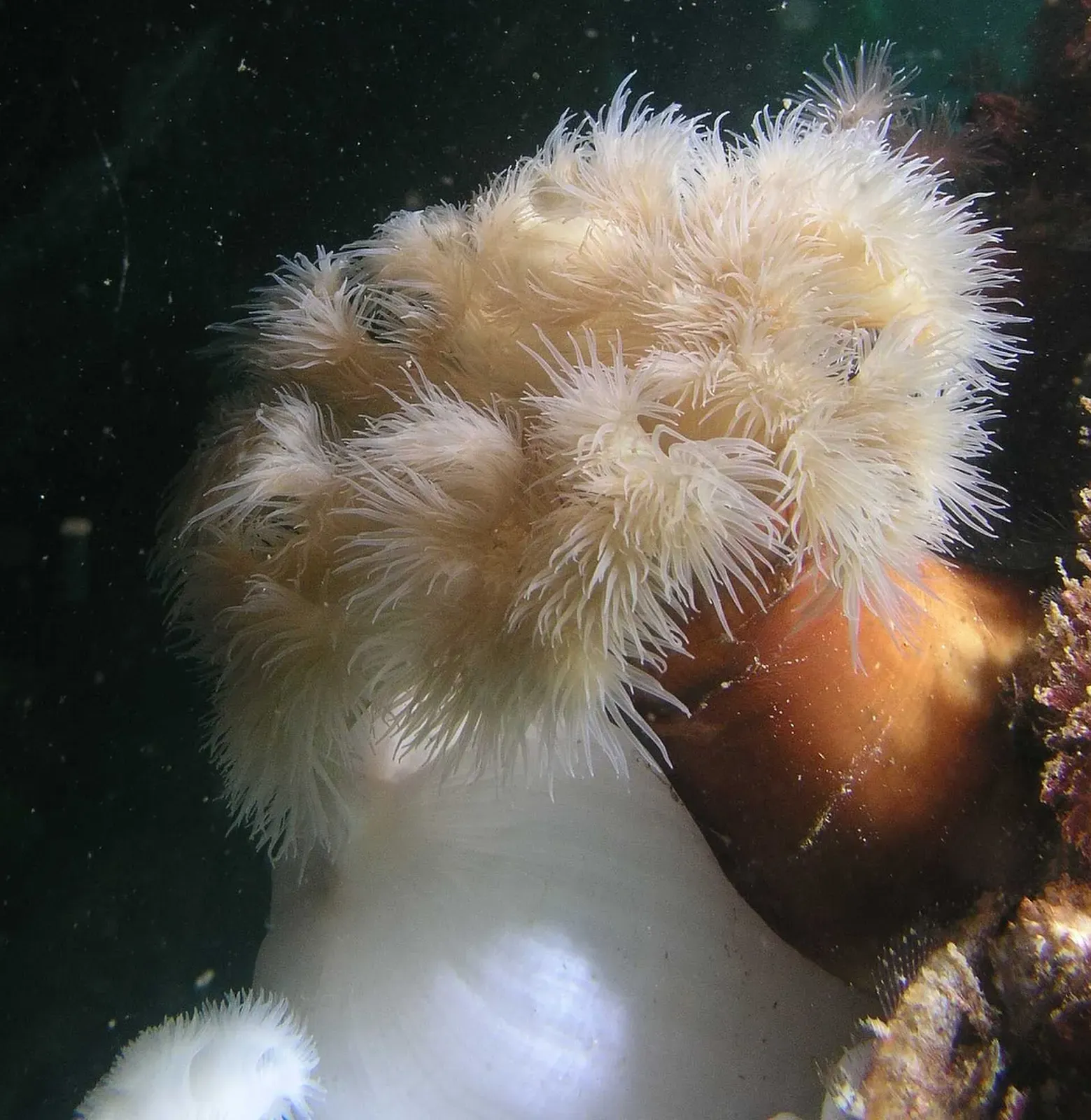
Cold-water walls, wrecks and wolf eels in Puget Sound and Hood Canal
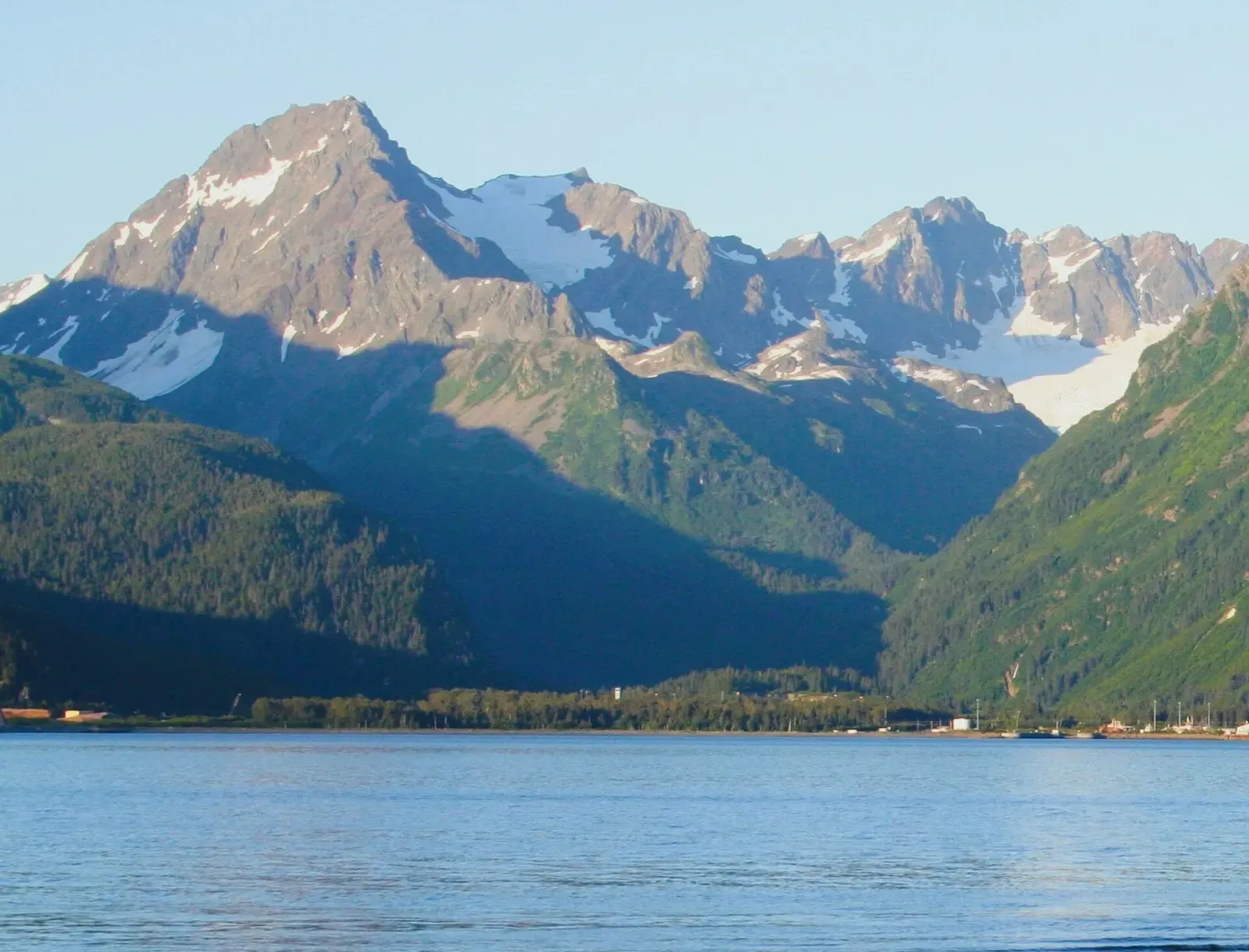
Cold-water walls, a Navy barge wreck and giant Pacific octopus
Cold Water
Cold-water coral walls within nitrox range of the surface


Dive beneath icebergs alongside penguins and leopard seals