
Cold Water · Antarctica
Antarctic Peninsula
Dive beneath icebergs alongside penguins and leopard seals
Photo: Liam Quinn · CC BY-SA 2.0
Diving the Antarctic Peninsula means entering near-freezing water from a Zodiac launched off an expedition ship, working around drifting brash ice and towering icebergs in full drysuit kit. Visibility is often excellent in the clear polar water, revealing dense beds of sea stars, giant isopods, and soft corals on the seabed, while curious leopard seals, crabeater seals, and porpoising penguins share the water with divers. The season is short and access is entirely liveaboard, with every dive planned around ice conditions and weather.
About diving in Antarctic Peninsula
Diving is a side programme on an expedition ship rather than the reason it sails. A small dive group, usually a dozen or fewer, shares the vessel with passengers doing landings, and the rhythm is one dive a day, occasionally two, slotted in wherever the ship's itinerary leaves room. The guide picks the site on the morning, after a long look from the bridge, so nothing is fixed in advance and a promised spot can quietly disappear overnight. Kit generally lives in a wet room and goes into the Zodiac already assembled.
Sites fall into a few recognisable types. Ice dives work the submerged face of a grounded berg, chosen aground precisely because a floating one can roll, and the interest there is blue-white sculpture rather than life. Rock walls dropping straight from shore are the opposite: dark, densely settled, worth a whole dive with the torch held close. Cobble and boulder slopes below the colonies are where encounters actually happen. Deception Island is different again, entered through the gap at Neptune's Bellows, with volcanic sand and sparse life inside the caldera.
Everything is engineered around cold. Regulators are cold-water rated and divers carry redundancy because free-flow, rather than gas planning, is the characteristic failure here; dry gloves are standard; and dives are kept short, often twenty to thirty minutes, with hands rather than gas or depth calling the end. The compensation is a seabed full of oddities, sea spiders and brittle stars and long nemertean proboscis worms, salps drifting through mid-water, and the specific business of surfacing into a bay of ice with the ship at anchor behind you.
It suits experienced drysuit divers who accept they are buying an expedition with diving inside it, and who will shrug when ice or weather takes a day away. November is the early end, with more snow and fast ice and fewer ships about; December and January bring the longest daylight and the colonies at full noise; February and March mean more open water, easier access to sites further south, and whales in the picture. Anyone counting dives should book elsewhere, since a voyage often yields fewer than a dozen.
Best time to dive Antarctic Peninsula
| Jan | Feb | Mar | Apr | May | Jun | Jul | Aug | Sep | Oct | Nov | Dec | |
|---|---|---|---|---|---|---|---|---|---|---|---|---|
| Season | Prime | Prime | Good | Off-season | Off-season | Off-season | Off-season | Off-season | Off-season | Off-season | Good | Prime |
| Daytime high | 0°C32°F | 0°C32°F | 0°C32°F | -1°C30°F | -1°C30°F | -3°C27°F | -3°C27°F | -3°C27°F | -3°C27°F | -2°C28°F | -1°C30°F | -1°C30°F |
| Rain | 130 mm5.1 in | 150 mm5.9 in | 190 mm7.5 in | 196 mm7.7 in | 160 mm6.3 in | 153 mm6.0 in | 147 mm5.8 in | 152 mm6.0 in | 196 mm7.7 in | 181 mm7.1 in | 177 mm7.0 in | 127 mm5.0 in |
| Jan | Feb | Mar | Apr | May | Jun |
|---|---|---|---|---|---|
| Prime | Prime | Good | Off-season | Off-season | Off-season |
| Daytime high | |||||
| 0°C32°F | 0°C32°F | 0°C32°F | -1°C30°F | -1°C30°F | -3°C27°F |
| Rain | |||||
| 130 mm5.1 in | 150 mm5.9 in | 190 mm7.5 in | 196 mm7.7 in | 160 mm6.3 in | 153 mm6.0 in |
| Jul | Aug | Sep | Oct | Nov | Dec |
|---|---|---|---|---|---|
| Off-season | Off-season | Off-season | Off-season | Good | Prime |
| Daytime high | |||||
| -3°C27°F | -3°C27°F | -3°C27°F | -2°C28°F | -1°C30°F | -1°C30°F |
| Rain | |||||
| 147 mm5.8 in | 152 mm6.0 in | 196 mm7.7 in | 181 mm7.1 in | 177 mm7.0 in | 127 mm5.0 in |
2011–2025 averages. Daytime high and rain: NASA POWER.
Expedition ships operate only during the austral summer; the peninsula is inaccessible to tourism the rest of the year.
Best months: January, February, December
Antarctic Peninsula water temperature and weather by month
Rain falls through the year, about 160 mm (6.3 in) a month on average, with April the wettest. Daytime highs sit around -2 °C (28 °F) all year. The coldest water here is about -1 °C (30 °F), so pack a drysuit.
Dive types & marine life
Gentoo and chinstrap penguins are the ones divers see most, a fast blur near a colony, with December and January the peak; Adélie show up less often. Crabeater seals are around all season, and guides will often call divers out if a leopard seal takes a close interest. Humpback and minke sightings build through February and March, while the benthos, nudibranchs included, holds up in any month.
- Ice
- Wall
- Muck & macro
- Penguins
- Seals & sea lions
- Whales
- Macro critters
- Nudibranchs
Best dive sites in Antarctic Peninsula
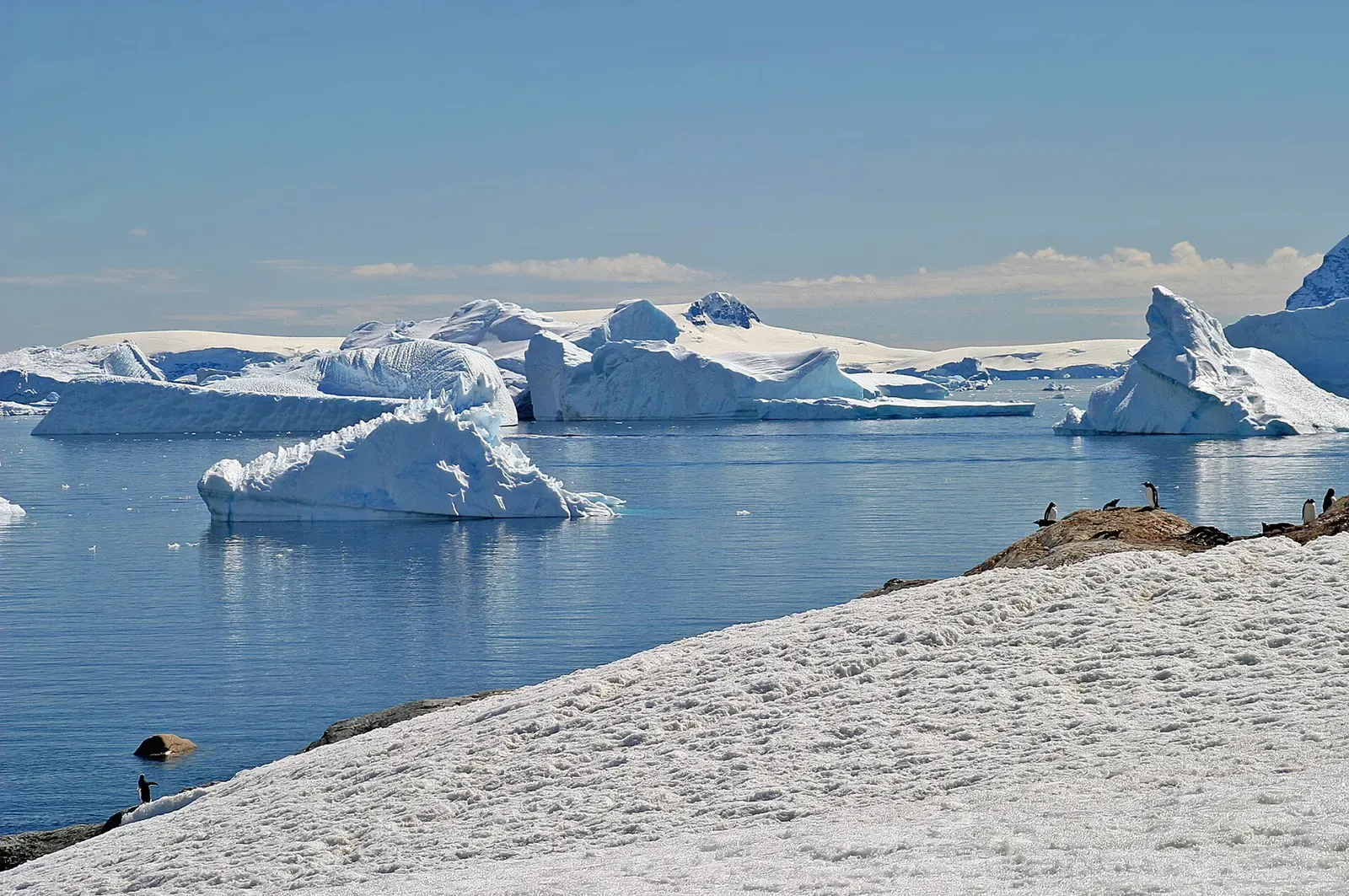
The peninsula's largest gentoo colony, 6,500 pairs
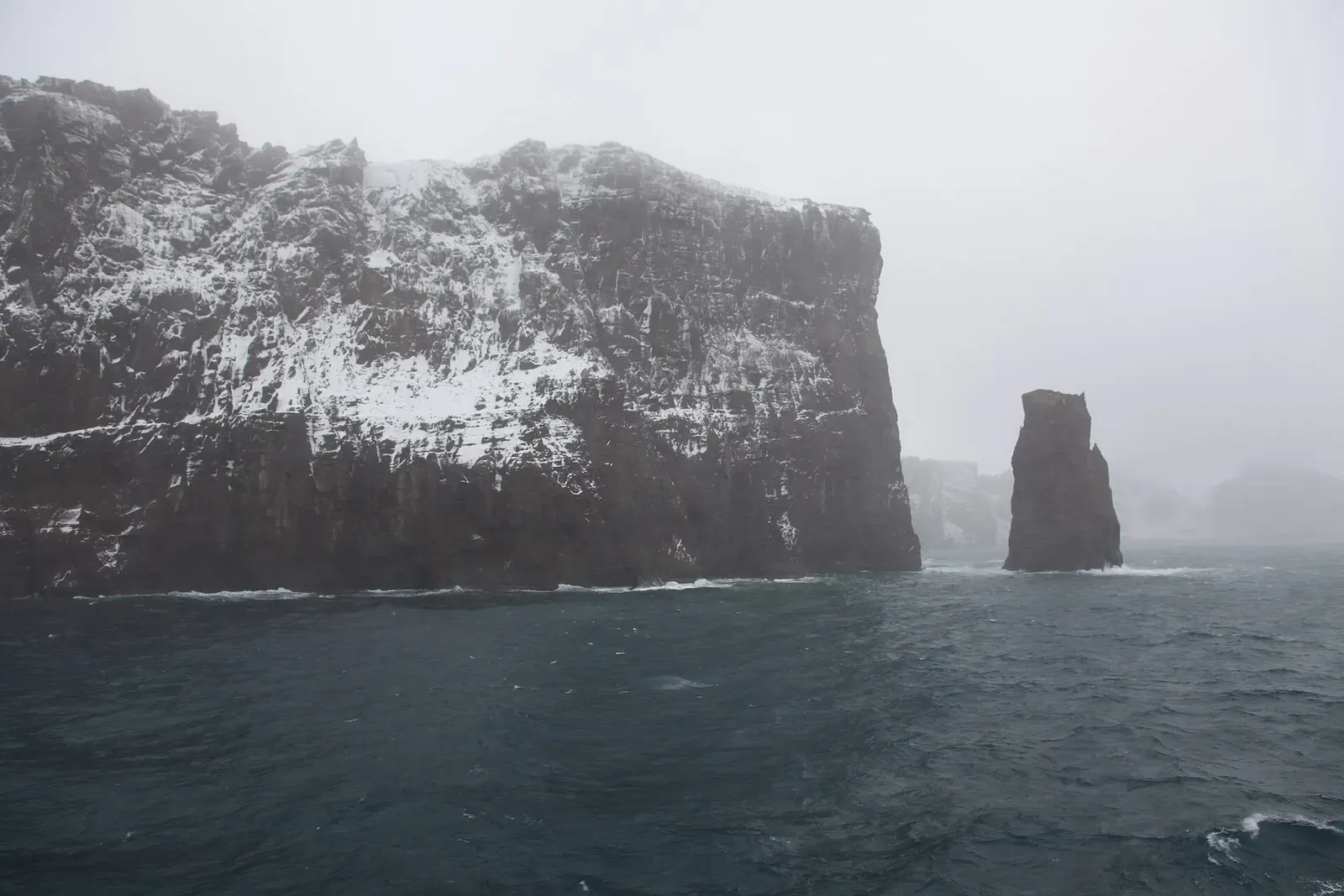
Dive inside the flooded caldera of an active volcano
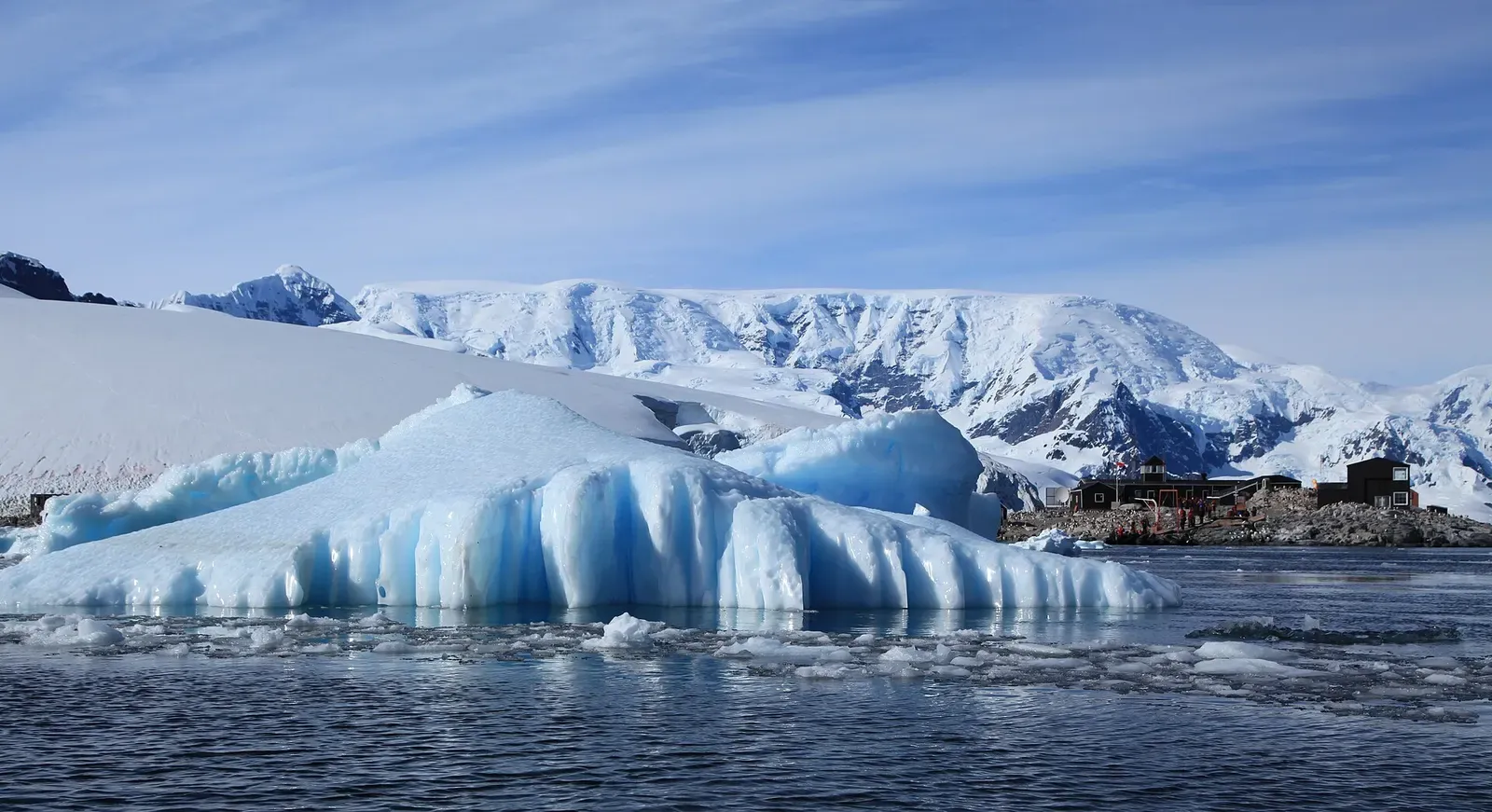
Chinstrap colony and seal haul-outs in McFarlane Strait
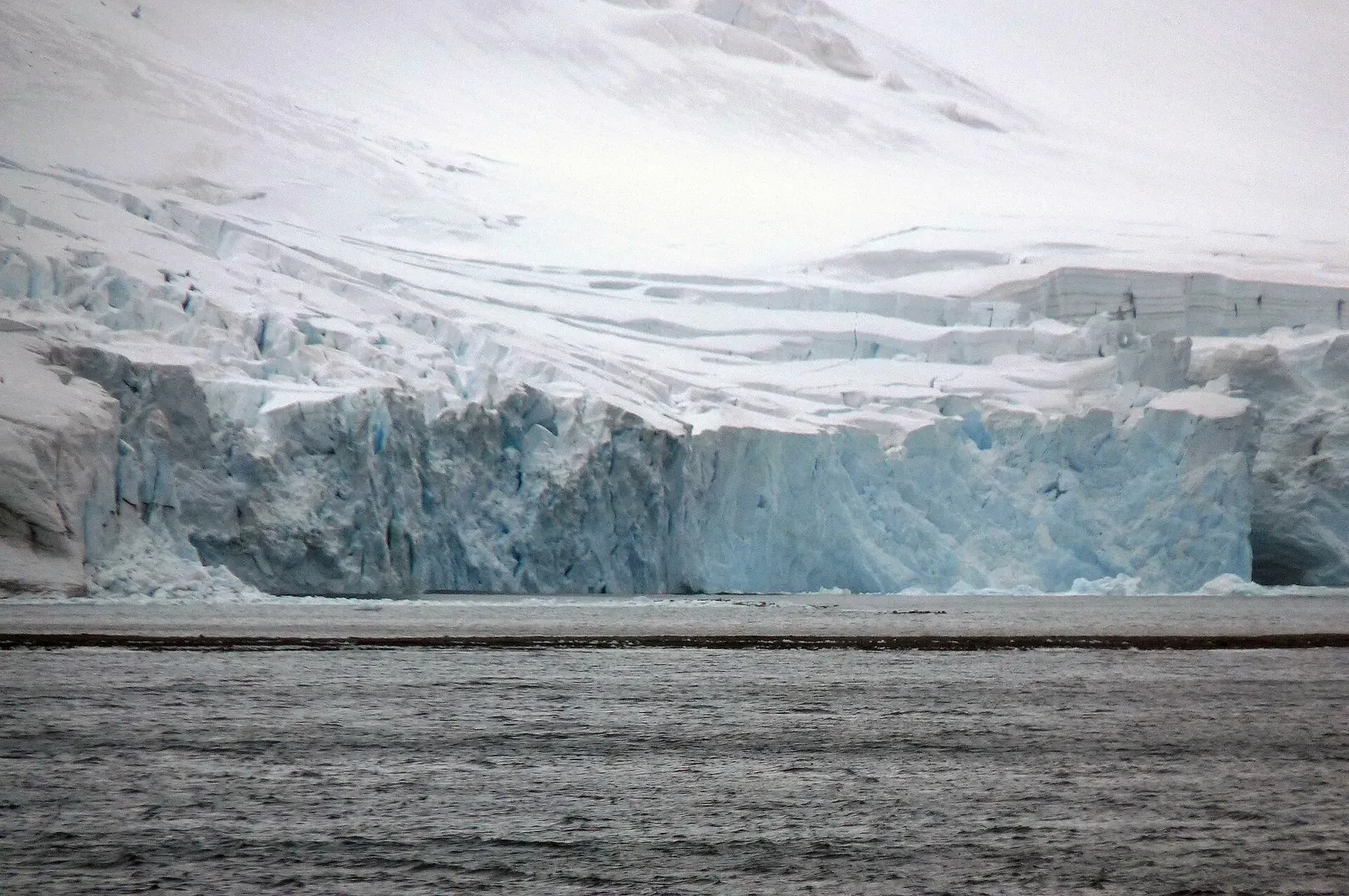
A tidal current keeps this glacier-backed bay ice-free
How to get to Antarctic Peninsula
Ships sail from Ushuaia in Argentina and cross the Drake Passage, roughly two days each way; some operators instead fly Punta Arenas to King George Island and join the ship there, though fewer of those sailings carry a dive programme. It is liveaboard only, dive places per voyage are limited, and popular departures are commonly booked a year or more ahead.
Photos from Antarctic Peninsula
Liam Quinn · CC BY-SA 2.0
puliarf · CC BY 2.0
Liam Quinn · CC BY-SA 2.0
D-Stanley · CC BY 2.0
Grant.C · CC BY 2.0
Gary Bembridge from London, UK · CC BY 2.0
Dive videos
Scuba Diving Antarctica Icebergs · Becky Kagan Schott on YouTube
Scuba Diving in Antarctica with Leopard Seals · BigAnimals Expeditions on YouTube
Photo credits
- Snow-covered peaks and glaciers reflect in the still water of Paradise Harbour, Antarctica by Liam Quinn, CC BY-SA 2.0, via Wikimedia Commons
- A crabeater seal rests on a low iceberg with glaciated peaks rising behind it in Paradise Harbour by Liam Quinn, CC BY-SA 2.0, via Wikimedia Commons
- A line of Adelie penguins leaps off an ice edge into the sea in a burst of spray by puliarf, CC BY 2.0, via Openverse
- A gentoo penguin stands over two downy chicks on a pebble nest at Waterboat Point by Liam Quinn, CC BY-SA 2.0, via Wikimedia Commons
- A humpback whale's tail fluke rises from grey water as it dives by D-Stanley, CC BY 2.0, via Openverse
- A gentoo penguin steps into shallow water along the Antarctic Peninsula. by Grant.C, CC BY 2.0, via Wikimedia Commons
- A leopard seal surfaces in the water of Lemaire Channel, Antarctica. by Gary Bembridge from London, UK, CC BY 2.0, via Wikimedia Commons
Embed
Run a dive centre, club or blog? Embed this map of 4 dive sites near Antarctic Peninsula on your own page.
In The Logbook
- Ice diving: how it works and where to goCold water · 12 min read
- Where to dive in DecemberTrip planning · 10 min read
- Where to dive in every month of the yearTrip planning · 14 min read
- Where to dive with seals and sea lionsBig animals · 17 min read
- Why you get cold diving, even in a wetsuitBody & health · 8 min read
- How long to wait before flying after divingBody & health · 8 min read
- Cold-water diving: is it worth the drysuit?Cold water · 8 min read
Similar destinations

Four ore carriers torpedoed at their pier in 1942, still lying at 27–40 m
Cold Water
Strýtan
Iceland
A shallow hydrothermal vent cone rising to 15 m in a cold Arctic fjord

Ice diving and Arctic kelp walls from an expedition ship at 78° north


.jpg)
.jpg)
.jpg)
.jpg)
Giant Pacific octopus and anemone-covered walls in the 'Emerald Sea'