
Jardines de la Reina · Cuba · Reef
Black Coral I and II
The reserve's signature reef shark dive, at 25 to 30 m
Area photo: Alex Chernikh · CC BY 2.5
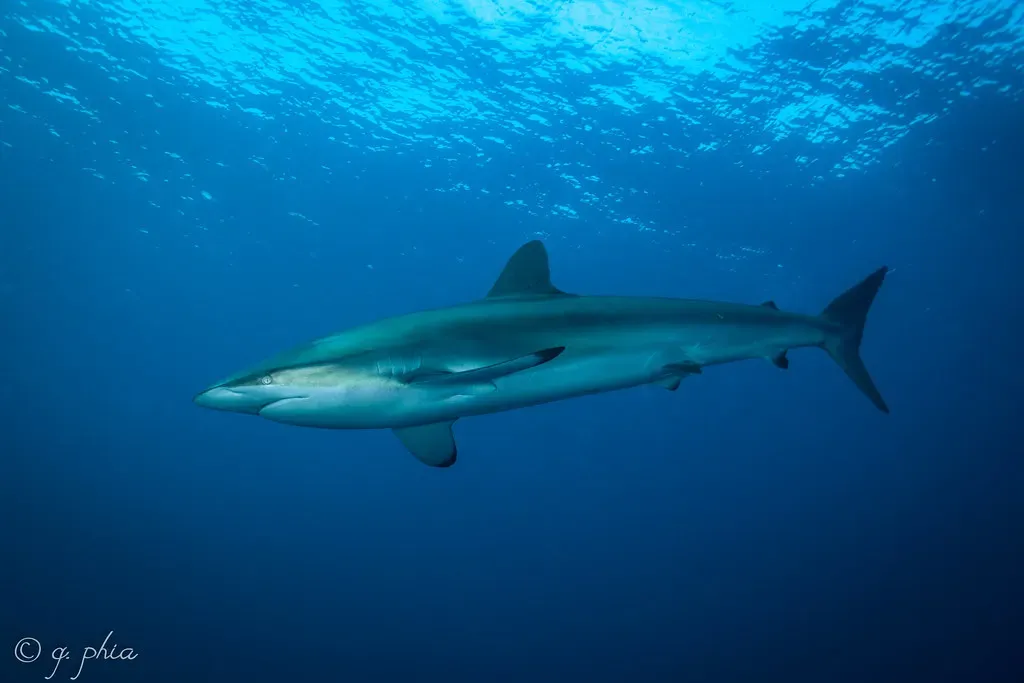
Black Coral I and II are the signature shark dives of Jardines de la Reina, a pair of reef sites worked between 25 and 30 m. Caribbean reef sharks and silky sharks are the most numerous species here and the reason divers come. Nassau and goliath grouper hold on the same reef, with individuals up to 85 kg.
Where it is and how deep
No published position for this site — the map shows Jardines de la Reina and its other sites; operators know the mooring.
The dive
Both sites run at much the same depth, 25 m at the top of the reef and 30 m where it slopes away, so the sensible plan is the same either way: drop straight down, settle on the reef and stay put rather than swimming a circuit. The sharks arrive on their own schedule, and covering ground tends to spread the group out rather than bring anything in.
Caribbean reef sharks and silky sharks are the most numerous, and they rarely show aggression because they face no threat from people here, treating divers as curious bubble-blowing visitors rather than something to avoid. Nassau and goliath grouper hold on the same reef, and divers see large individuals up to 85 kg, sizes that overfishing has stripped from most of the Caribbean. Keep your hands in and let the animals set the distance.
Marine life and season
- Reef sharks
- Groupers
| Jan | Feb | Mar | Apr | May | Jun | Jul | Aug | Sep | Oct | Nov | Dec |
|---|---|---|---|---|---|---|---|---|---|---|---|
| Prime | Prime | Prime | Prime | Good | Fair | Fair | Fair | Off-season | Off-season | Good | Prime |
Season follows Jardines de la Reina: Best conditions run November–May; summer stays diveable but hot, and September–October carries the peak hurricane risk.
Know before you go
- Sharks pass at close range and a moving hand can be mistaken for a small fish; keep your hands close to your body rather than reaching out.
Dive videos
Black Coral 2 - JdlR · joe foyle on YouTube
Questions divers ask
Are the sharks at Black Coral dangerous?+
They rarely show aggression, because they face no threat from people in the reserve and treat divers as curious visitors. The one precaution is to keep your hands close to your body so they are not mistaken for small fish.
Sources
- Cuba Diving, Jardines de la Reina Dive Sites — Dive The World
In The Logbook
- Where to see reef sharks on your first divesBig animals · 14 min read
- Where to dive in DecemberTrip planning · 10 min read
More dive sites in Jardines de la Reina
Seamount
A seamount topping out at 6 m with current-fed pelagics
Pinnacle
Four sunlit tunnels bored through a coral mountain
Reef
Tarpon and jack schools over a drop-off at 25 m
A vertical wall plated with black coral and tube sponges
Similar dives elsewhere

A cave under the overhangs, and reef sharks out in the blue
Easy shore entry onto a sloping reef often dived at night
Reef
Coconut Reef
St. Kitts · Saint Kitts and Nevis
Nurse and reef sharks along a sloping reef and wall
Finger coral, a small tug and a slope to 28 metres