Cold Water · Russia
Kola Peninsula & the Barents Sea
King crabs and walls with anemone colonies in Pechenga Bay
Cold-water diving from Liinakhamari, a village at the northernmost point of the Kola Peninsula on the Barents Sea shore of Pechenga Bay. The bay has five main sites, with sheer cliffs and walls carrying colonies of anemones and scallops; other sites include the shallow Nemetsky Peninsula cove, easy dives at Cape Romanov and the Pechora wreck in Ambarnaya Bay. Most dives run from 5 to 25 m, and the introduced Kamchatka king crab is the commonest resident.
About diving in Kola Peninsula & the Barents Sea
Diving here is boat diving from Liinakhamari, a small settlement at the northernmost point of the Kola Peninsula on the Barents Sea. A specially equipped boat carries divers out to the sites. Liinakhamari lies inside the border zone, so a permit to enter it is needed, and groups close well ahead of departure while the paperwork is filed. Cold water, unstable weather and depth all make the dives harder, and much depends on the weather, as with everything above the Arctic Circle.
Pechenga Bay offers landscape dives on sheer cliffs and walls, with colonies of anemones and scallops. Below the surface grow thickets of kelp several metres tall, with anemones and ascidians. The bay itself drops to 150 m, but the usual dives stay between 5 and 25 m, because deeper down it turns dark. Visibility runs from 5 m in heavy swell or rain to 15–20 m in calm weather. Nudibranchs, shrimps, hermit crabs, sea urchins and many kinds of starfish share the rock with the king crabs.
The coast suits divers who are comfortable in cold, dark water and accept that the weather shapes the trip. Newcomers have the shallow Nemetsky Peninsula cove and the easy dives at Cape Romanov, and are best off coming in summer, when the water is a little warmer. Advanced divers come for Ambarnaya Bay and its dives on the Pechora and the Stolbov. Anyone wanting a long season or warm water should look elsewhere: the main season here lasts three months.
Best time to dive Kola Peninsula & the Barents Sea
| Jan | Feb | Mar | Apr | May | Jun | Jul | Aug | Sep | Oct | Nov | Dec |
|---|---|---|---|---|---|---|---|---|---|---|---|
| Fair | Fair | Fair | Fair | Fair | Prime | Prime | Prime | Good | Fair | Fair | Fair |
The sea is coldest in March, at about 2 °C (36 °F). The base offers dives and sea fishing all year, but the main season fit for diving runs only from late May to August. Average summer water reaches 5 to 10 °C, with 7 to 10 °C on the dives themselves, and August is the warmest month at about 11 °C (52 °F). Newcomers do best in the height of summer. Club trips to Liinakhamari also run in September.
Dive types & marine life
The Kamchatka king crab is the commonest animal on the dives, a legacy of an ambitious Soviet-era experiment that brought it to the Barents Sea. Arctic lion's mane jellyfish trailing two-metre tentacles are met often. Species are few, but meeting them is close to guaranteed because they are abundant.
- Wall
- Wreck
- Nudibranchs
Best dive sites in Kola Peninsula & the Barents Sea
- 1
Pechora
Wreck in Ambarnaya Bay lying from 40 m down, for advanced divers.
- 2
Polyutikha Zapadnaya Bay
Scenic bay above and below water, with a seabird colony on its island.
- 3
Cape Romanov
Easy diving among scallops and crabs.
- 4
Nemetsky Peninsula
Shallow cove used for check dives and suited to beginners.
Site guides
Wreck
A former German ship, once the Otto Wuensche, in Ambarnaya Bay
How to get to Kola Peninsula & the Barents Sea
Fly or take the train to Murmansk. A car transfer from Murmansk airport or station to Liinakhamari takes about two hours, and a bus also runs. The second base, Garmoniya Severa on a small peninsula in the Motovsky Gulf, is reached from the checkpoint 100 km from Murmansk on the M-18 towards Norway, then by dirt road and motorboat.
Questions divers ask
Is a permit needed to dive at Liinakhamari?+
Yes. Liinakhamari is in the border zone, so a permit to enter it is required, and dive groups close their lists well ahead of the trip to allow time for the paperwork.
When is the dive season at Liinakhamari?+
The main season runs from late May to August, and club trips also run in September. Summer is the best time for newcomers, when the water is a little warmer.
How do divers get to Liinakhamari?+
Through Murmansk. A car transfer from the airport or station takes about two hours, and there is also a bus.
Are king crabs seen on the dives?+
Yes. The Kamchatka king crab, brought to the Barents Sea by a Soviet-era experiment, is the commonest resident; almost nobody hunts it here, so it is plentiful and large.
Sources
- DiverSea dive centre — DiverSea
- Дайвинг на Баренцевом Море. Лиинахамари — Akvanavt dive club
- Дайвинг на Баренцевом море — Neva-Divers
- Дайвинг в Лиинахамари — Triton dive centre
- Гармония Севера — Garmoniya Severa
- Kirkenes water temperature — seatemperature.info
- Где лучше всего заняться дайвингом в России — Москва 24
- 12 внезапных фактов о Баренцевом море — Tonkosti.ru
- Нырнуть в Баренцево море — Вокруг света
Embed
Run a dive centre, club or blog? Embed this map of 1 dive sites near Kola Peninsula & the Barents Sea on your own page.
Similar destinations

Four ore carriers torpedoed at their pier in 1942, still lying at 27–40 m

Sweden's only cold-water coral reefs, inside its first marine national park
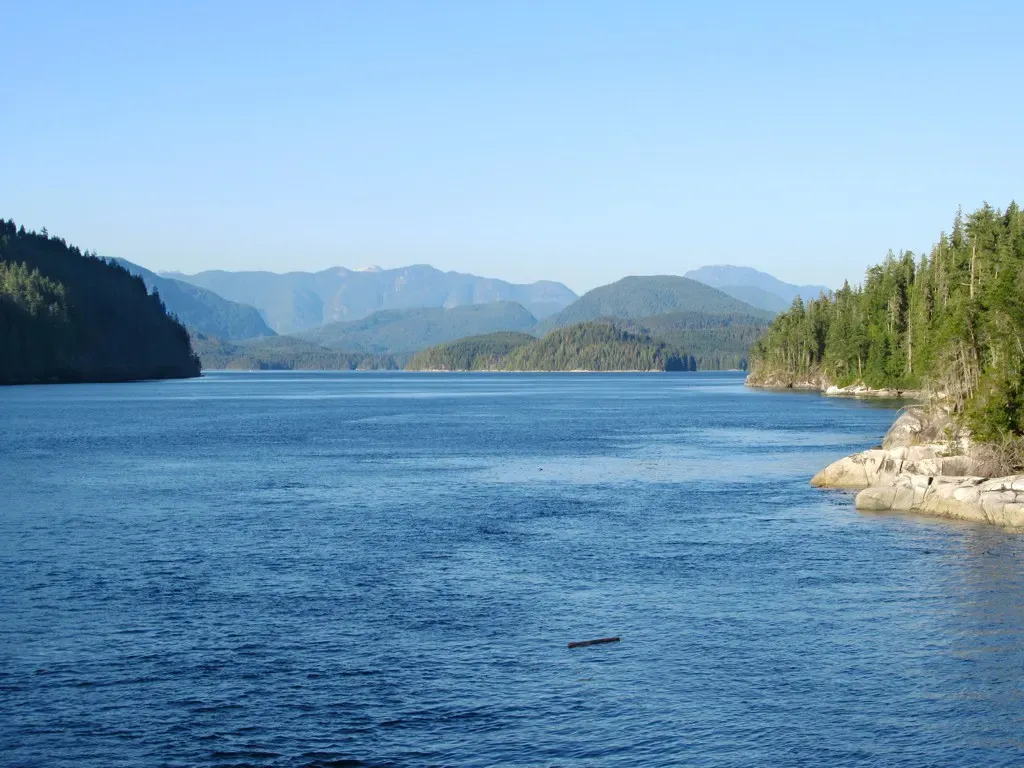
Slack-water walls of giant tube worms in the strong currents of Discovery Passage
Cold Water
A cavern and swim-throughs off the walls of remote Tory Island