
New Caledonia · France · Wreck · Artificial reef
La Diéppoise
A wooden minesweeper reduced to her metal ribs
Area photo: Jean Rerêve · CC BY-SA 4.0
A former anti-mine ship, later a lighthouse and beacon tender, scuttled in the Nouméa lagoon in 1988 and lying at 25 m. Her hull was built of wood so she would not set off magnetic mines; the timber has since rotted away and only the frames remain, so the wreck is a see-through skeleton you can look straight into. Little grows on her, but schools of fish hold around the ribs.
Also known as La Diéppoise Wreck.
Where it is and how deep
22.4811° S, 166.4419° EPublished position for this site.
The dive
The wreck sits at 25 m and is described as an easy one to visit: a single-level dive with no deeper section to manage and nothing complicated about the approach. What makes it unusual is what is left of her. She was built with a wooden hull specifically so she would not trigger magnetic mines, and now that the timber has gone the hull is reduced to its frames, so you can see straight through the ribs into the interior without entering it.
That structure sets the diving. There is little fixed growth on the metal, so the wreck reads as an outline rather than as a reef, and the interest is in the shape and in what gathers around it. Large schools of fish hold over and around the frames, sharks and rays are reported passing the site, and green turtles and barracuda are among the species divers log here.
The wreck
- Vessel
- La Diéppoise (ex-HMCS Chaleur)
- Type
- Bay-class minesweeper, later a beacon tender
- Length
- 46 m (151 ft)
- Built
- 1952
- Sunk
- 1988
- Cause
- Scuttled in Nouméa's lagoon as an artificial reef and dive site
- Lies
- On the bottom at 25 m, the wooden hull rotted back to its frames
She began as HMCS Chaleur, a Canadian Bay-class minesweeper launched in 1952 and built of wood planking on aluminium framing. France took her over in 1954 and renamed her La Diéppoise; her minesweeping gear came off in 1973 and she finished her career tending lighthouses and beacons in New Caledonia. She was paid off in 1987, and on 19 January 1988 she was towed out into the Nouméa lagoon and sunk there as an artificial reef and recreational dive site.
Marine life and season
- Reef fish swarms
- Sea turtles
- Barracuda
| Jan | Feb | Mar | Apr | May | Jun | Jul | Aug | Sep | Oct | Nov | Dec |
|---|---|---|---|---|---|---|---|---|---|---|---|
| Fair | Fair | Good | Good | Good | Good | Good | Good | Prime | Prime | Prime | Good |
Season follows New Caledonia: Sep–Dec is warmest and clearest before the wet season; Jan–Mar is cyclone season, and winter water drops to about 21°C.
Dive videos
Exploration de "La Diéppoise" // Nouvelle Calédonie · Fly Pro on YouTube
Questions divers ask
Why did La Diéppoise have a wooden hull?+
She was built as an anti-mine ship, and a wooden hull avoids triggering magnetic mines. The timber has since rotted away underwater, leaving only the metal frames of the hull standing on the bottom.
How deep is La Diéppoise?+
The wreck lies at 25 m, a depth the site listing calls easy to visit — one level, no deeper section to descend to, but past the 18 m an Open Water certification covers.
When was La Diéppoise sunk?+
She was paid off in 1987 and deliberately sunk in the Nouméa lagoon on 19 January 1988 to serve as an artificial reef and dive site. Before that she was the Canadian minesweeper HMCS Chaleur, launched in 1952.
Sources
- La Diéppoise, wreck — Scubago
- HMCS Chaleur (MCB 144) — Wikipedia
In The Logbook
- Ships sunk on purpose, and where to dive themWrecks · 14 min read
More dive sites in New Caledonia
A manta cleaning station on a 13 m plateau in the Boulari pass
Wreck
A broken-up 50 m wreck on a 12 m bottom
Wreck
A well-preserved fishing boat leaning to starboard at 20 m
Wall
Passages and arches at 10 m above a wall that falls to 70 m
Lagoon
Sand and coral heads at 3–6 m, sheltered from the trade winds
Drift
A gentle drift slope from 6 m to 50 m with a diver's memorial
Reef
Reported as the densest fish concentration near Nouméa
Wall
A school of about 70 grey reef sharks on a drifting wall
Similar dives elsewhere
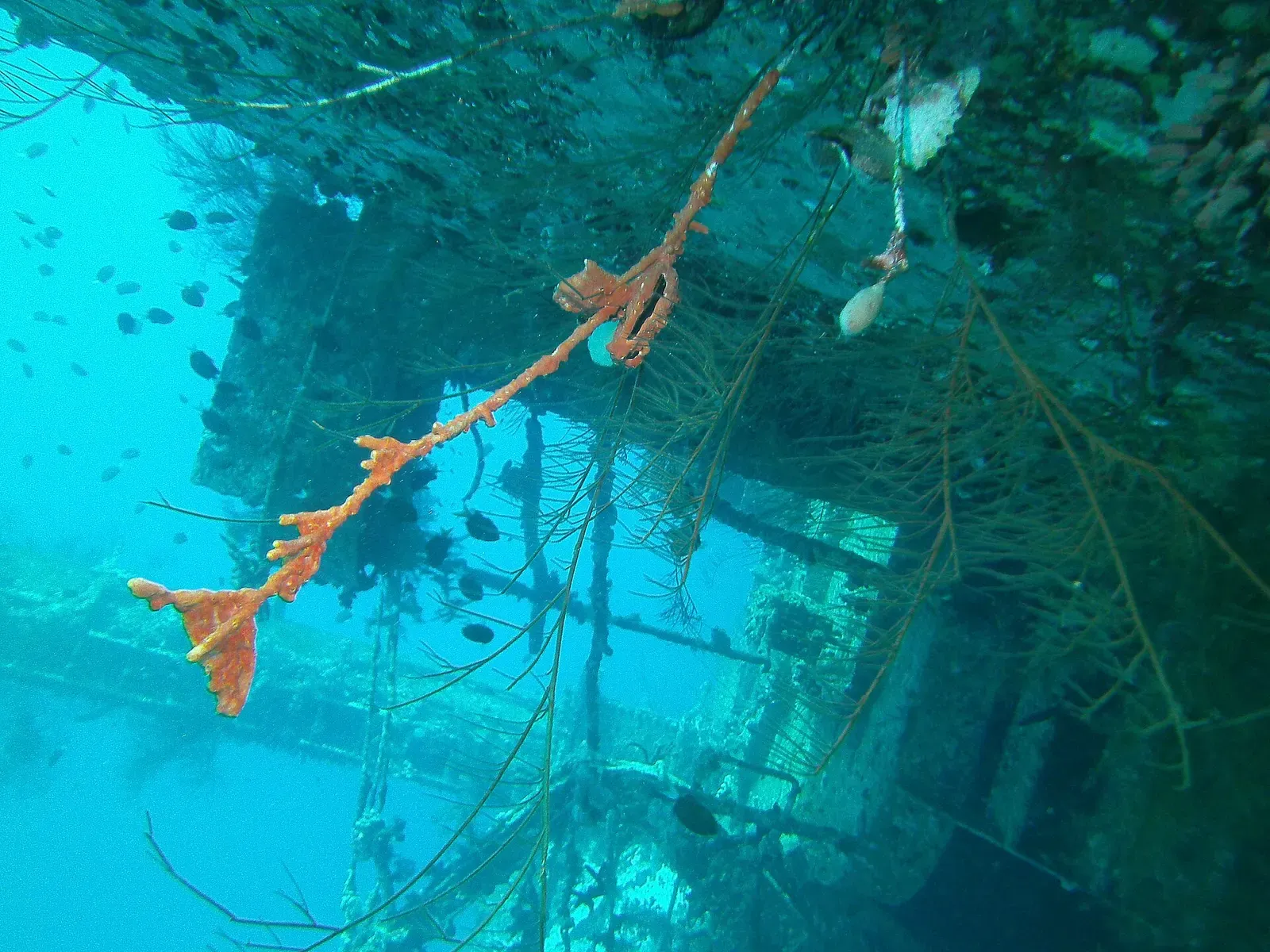
An air pocket in the rear cargo hold big enough to surface in

A 100 m cable layer with a 40 m cable corridor through her hull
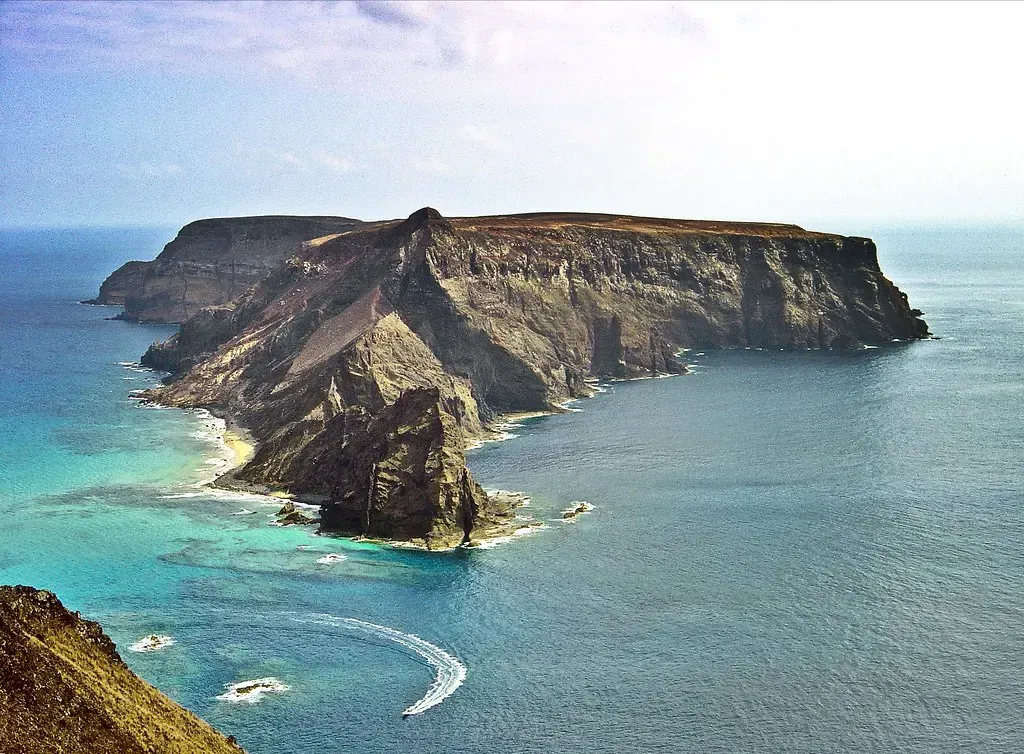
A Navy corvette sunk in 2016, top at 15 m, bottom at 30 m
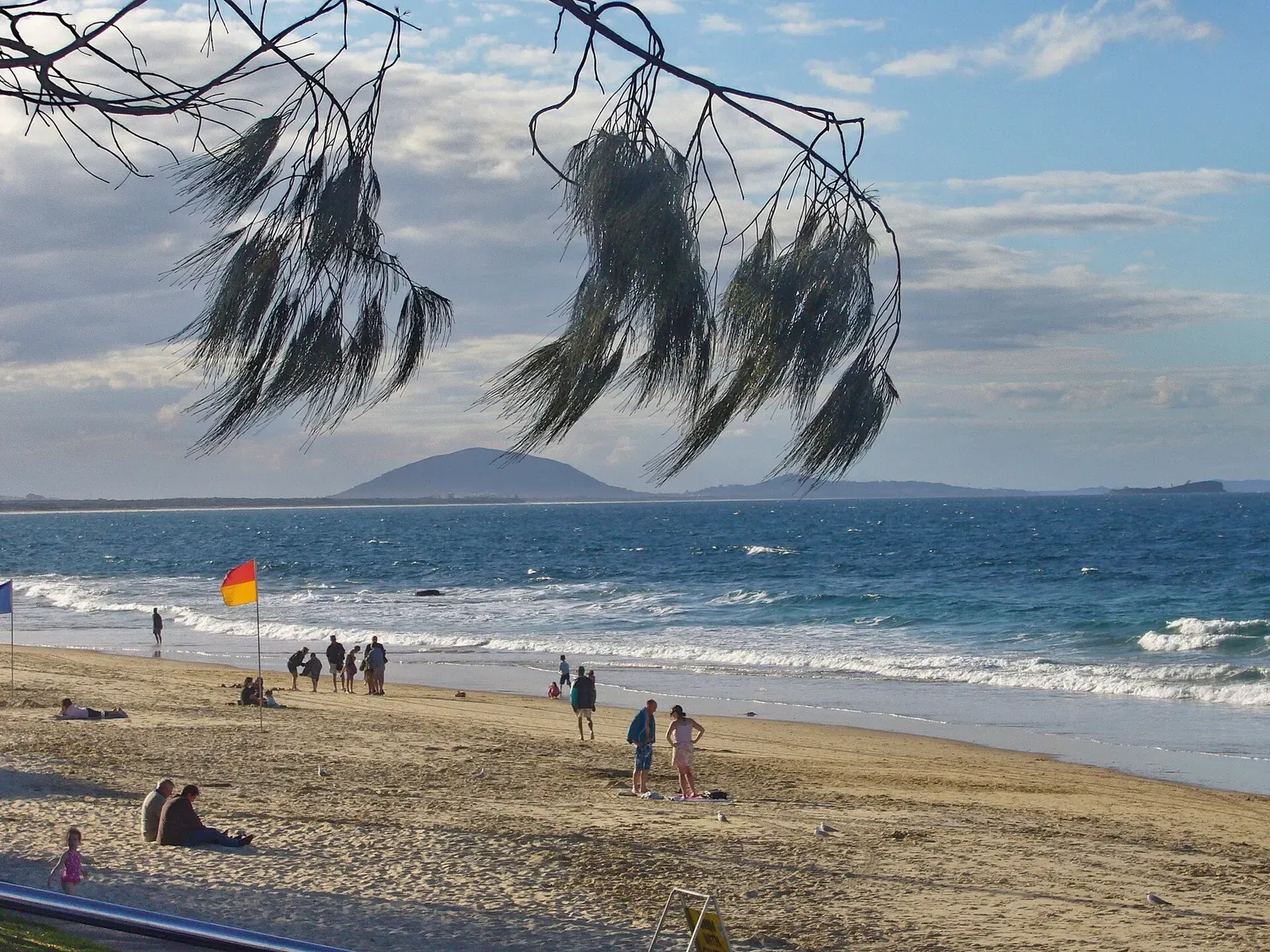

A 133 m destroyer on sand at 28 m, dived outside only