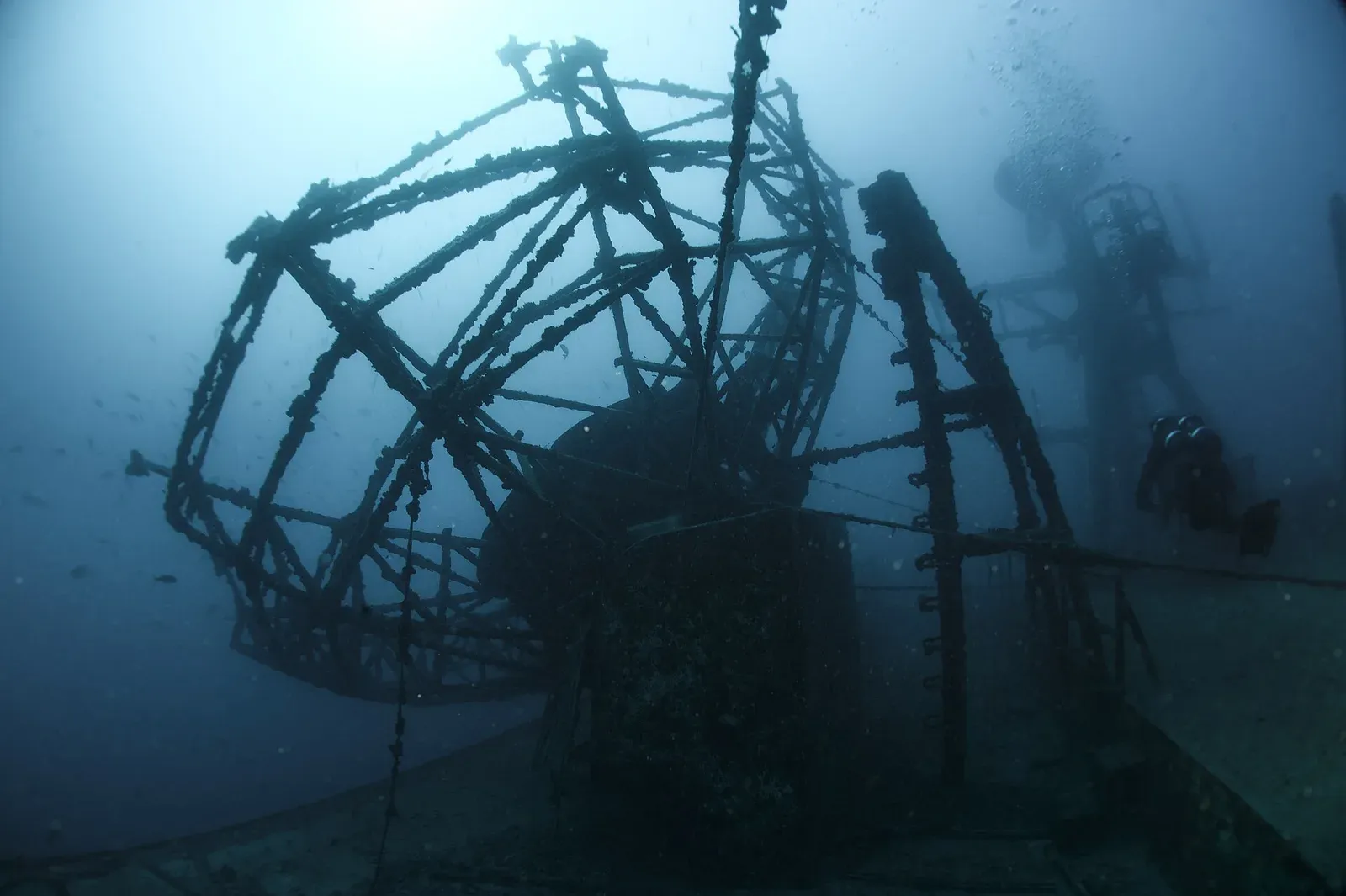
Ask a diver to name their first wreck and the answer is usually a ship that nobody lost. It was retired, bought for a token sum or given away by a navy, stripped, cleaned, towed to a spot somebody had surveyed, and sunk on a schedule with a crowd watching from boats. The depth it came to rest at was chosen, and it was chosen for you.
That is what separates a purpose-sunk ship from the wrecks in our other wreck guides. The WWII wrecks sank where the war happened to catch them, and the deep wrecks lie wherever the storm, the mine or the reef left them, which is often far past the recreational line. A reefed ship lies where a committee put it. Look at enough of them and a pattern appears: almost all of them were aimed at the same slice of water.
Why anyone sinks a ship
Three different motives hide behind the same phrase, and they produce different wrecks.
The first is making habitat. The Lesleen M was put down in St Lucia’s Anse Cochon bay in 1986 by the island’s Department of Fisheries, as a fisheries project rather than a dive attraction, and the hull now carries soft coral, sponges and the juvenile fish that shelter in it. North Carolina bought the Liberty ship Theodore Parker for its state artificial reef programme in 1974.
The second is disposal that pays. A navy with a frigate to get rid of can scrap it or give it away, and giving it away to a reef project turns a cost into a ceremony. That is how Portugal’s four Ocean Revival hulls, Australia’s run of guided-missile destroyers and frigates, and the Mexican Navy’s retired Admirable-class minesweepers at Cozumel, Isla Mujeres and Veracruz Reef System all ended up on the bottom.
The third is buying a dive economy. The Cayman Islands Tourism Association spent a decade pursuing a new wreck before the Kittiwake went down off Seven Mile Beach in January 2011. Grenada’s former coast guard flagship Tyrrel Bay was sunk in 2018 on a campaign by the island’s dive association, paid for by the tourism authority, the hotel association and a boatyard. Statia bought the cable ship that became Charlie Brown for one dollar. The returns can be real: a 2009 University of the Sunshine Coast study estimated that ex-HMAS Brisbane contributed A$18 million to the Sunshine Coast economy, and the Spiegel Grove drew around 50,000 dives a year across her first two years off Key Largo.
The depth is a decision
When the Vandenberg went down off Key West on 27 May 2009, she took 1 minute 45 seconds to sink and landed upright in nearly 150 feet (45 m) of water. Her stacks, masts and antennas had been trimmed first, to leave 40 to 45 feet (12 to 14 m) of water over the top of her. So the structure starts around 12 m and the sand lies past the recreational limit, and one 159 m (522 ft) hull works for a diver on their tenth dive and a diver on their thousandth.
Put the ships whose records give both a shallowest and a deepest depth on one chart and she is the deep end of a remarkably tight group.

Embed this diagram
<figure>
  <img src="https://reefwander.com/og/diagrams/chosen-depth.svg" alt="Ships sunk on purpose for divers, from the shallowest part of each dive to the deepest. Most start inside Open Water range, and all but the Vandenberg end at or above the 40 m sport limit." loading="lazy">
  <figcaption>Diagram by Reefwander, licensed under CC BY 4.0.</figcaption>
</figure>
Read it against the two dashed lines. Most of these ships start above 18 m, the depth an Open Water certificate is written for, and none of them ends deeper than 45 m. The bottoms bunch between the high 20s and 40 m: P29 off Ċirkewwa has her highest point 12 m down and sits on sand at 34 m, HMAS Perth II runs from 5 m to 36 m, and the St George off Bayahibe has her top at 15 m, her stern at 31 m and her bow on the sand at 44 m. Um El Faroud, a 115 m tanker off Wied iż-Żurrieq, has her bridge between 15 and 18 m and her main deck at 25 m.
At the shallow end the aim is explicit. The Kittiwake was sunk in 18 m with her highest point 4.5 m below the surface, before a storm pushed her over and deeper, and Tyrrel Bay rests at 16 m with her upper works within 4.6 m. At the deep end the newest Gozo wreck, MT Hephaestus, scuttled in August 2022, lies at about 46 m, and that is as deep as any ship in this guide was put on purpose.
The logic is built into how reef sites are chosen: water shallow enough for a lot of divers to reach, and deep enough for the ship to sit out the surface weather. The top of the ship is set by the sea overhead, the bottom by who is paying to visit.
Sometimes the planners cut the ship to fit the water rather than the other way round. North Carolina removed the Theodore Parker’s superstructure before sinking her in 1974, so her second deck became her top deck, at about 9 m.
Now compare the wrecks that chance put down. HMHS Britannic lies at 80 to 122 m in the Kea Channel, the Andrea Doria at 58 to 73 m off Montauk, and the MV Fairwind at 87 m off South West Rocks. Nobody chose those depths, and most divers will never see those ships. We make the full argument for accidental wrecks, deck by deck, in the deep wrecks guide.
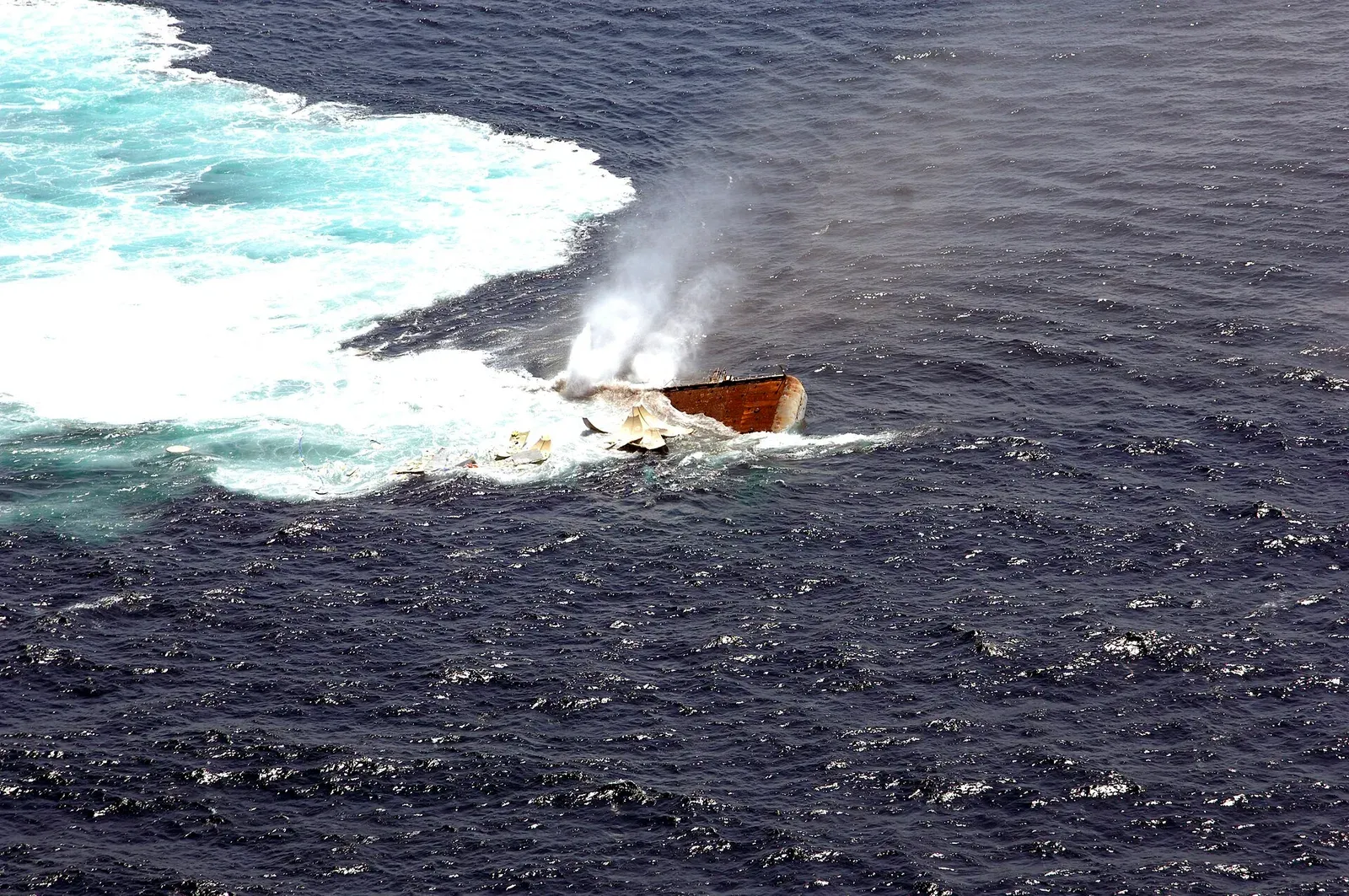
The exception shows what everyone else is avoiding. The aircraft carrier Oriskany was sunk about 22.5 nautical miles southeast of Pensacola Pass on 17 May 2006, in 212 feet (65 m) of water. She came to rest upright, as intended, with her island rising to 70 ft (21 m) and her flight deck at 135 ft (41 m), and Hurricane Gustav settled her another 10 feet deeper in 2008, leaving the flight deck at 145 ft (44 m). The largest vessel ever sunk as an artificial reef, a record the liner SS United States is set to take, is mostly out of reach: the island is the recreational dive, and the flight deck and hull below it belong to divers with technical training and the gas to match.
What comes out of a ship first
A working ship is full of things that should not go into the sea: fuel, lubricating oil, hydraulic fluid, wiring insulation, asbestos lagging, paint, and in older ships electrical cable and gaskets made with PCBs. It is also full of things that should not go near a diver: doors that swing shut, hatches that close overhead, cable that snags, dead-end compartments. Preparing a hull for a reef is the work of getting all of that out.
In the United States the list is written down. The 2006 national guidance from the Environmental Protection Agency and the Maritime Administration asks for fuels and oils to be cleaned out until no sheen would be visible when the ship sinks, loose asbestos removed, anything carrying 50 parts per million or more of solid PCBs taken out, peeling paint and active antifouling stripped, and loose debris cleared. For divers it adds the removal of sharp, snagging objects, doors and access hatches, the widening of openings, holes cut in the hull to let light in, and the sealing of restrictive spaces such as boiler and engine rooms.
The Vandenberg shows what that means on a big ship. Before she reached Key West she had been through about 75,000 man-hours of cleanup in two Norfolk shipyards, and workers hauled off more than a million feet of wire, 1,500 vent gaskets, dozens of watertight steel doors, 81 bags of asbestos and 193 tons of potentially cancer-causing substances, and the project cost about $8.6 million from buying the ship to cleaning it. The Spiegel Grove’s preparation and sinking cost $1 million.
The same work shows up at every scale. Bermuda’s government bought the abandoned freighter Hermes, had her “thoroughly cleaned and made ‘diver friendly’”, and scuttled her on 15 May 1984; she sits upright and nearly intact at 24.4 m. The Cedar Pride, a freighter gutted by fire at anchor in Aqaba in 1982, owes her second life to a king who dived: the King of Jordan backed a plan to sink her, and she was cleaned of oil and anything that could harm marine life before she went down on 16 November 1985. Statia’s dive community stripped the Charlie Brown of fittings, furniture and oil before opening her sea chests on 25 July 2003. HMNZS Canterbury was stripped of potential contaminants and scrap before she was sunk in 2007, and the Dominican Republic’s Atlantic Princess was cleaned out and had her sharp edges removed. Even aircraft get the treatment: the C-130 Hercules put down off Aqaba in 2021 had its fuel, oil and paint removed and its engines and propellers taken off first.
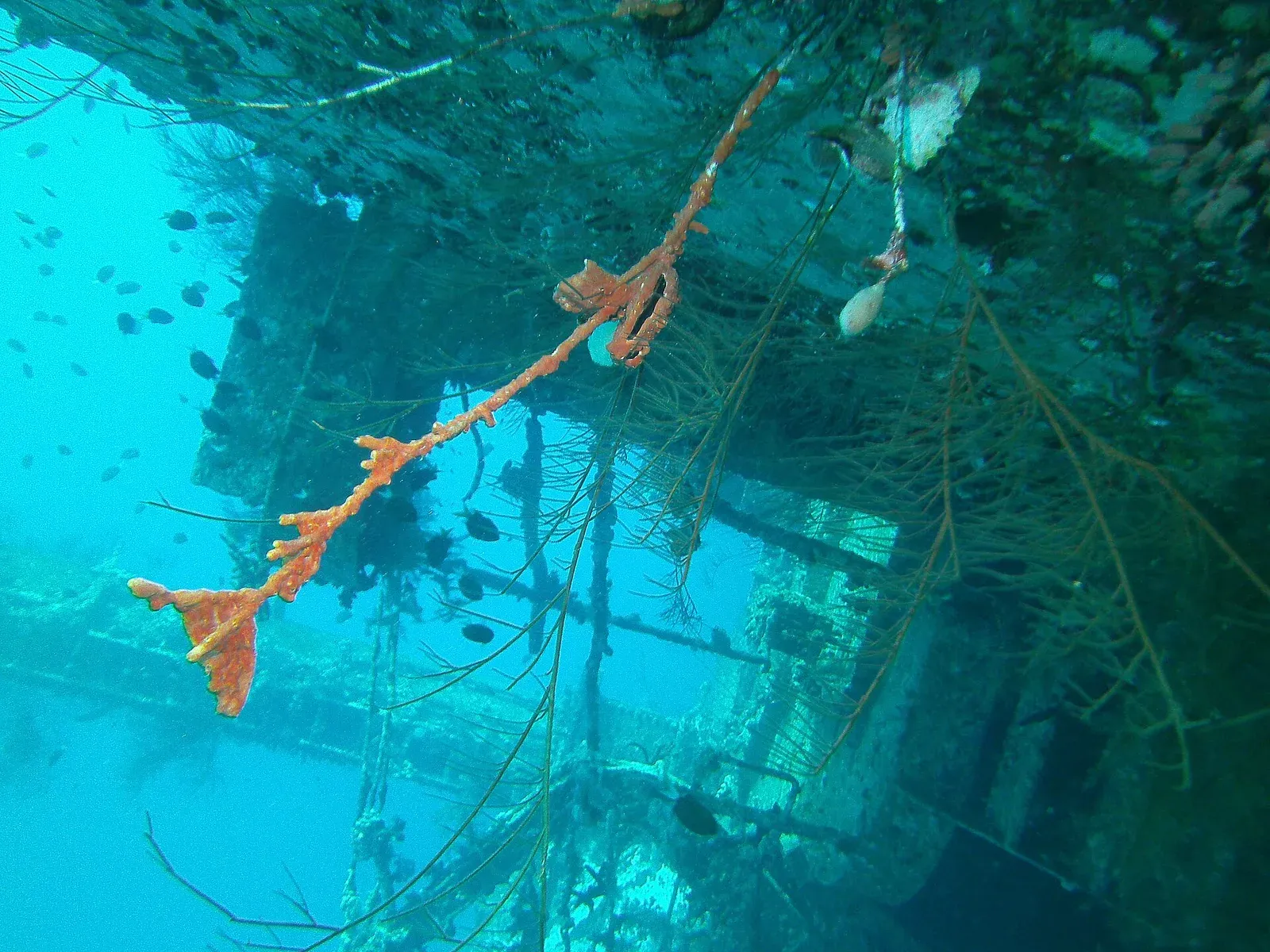
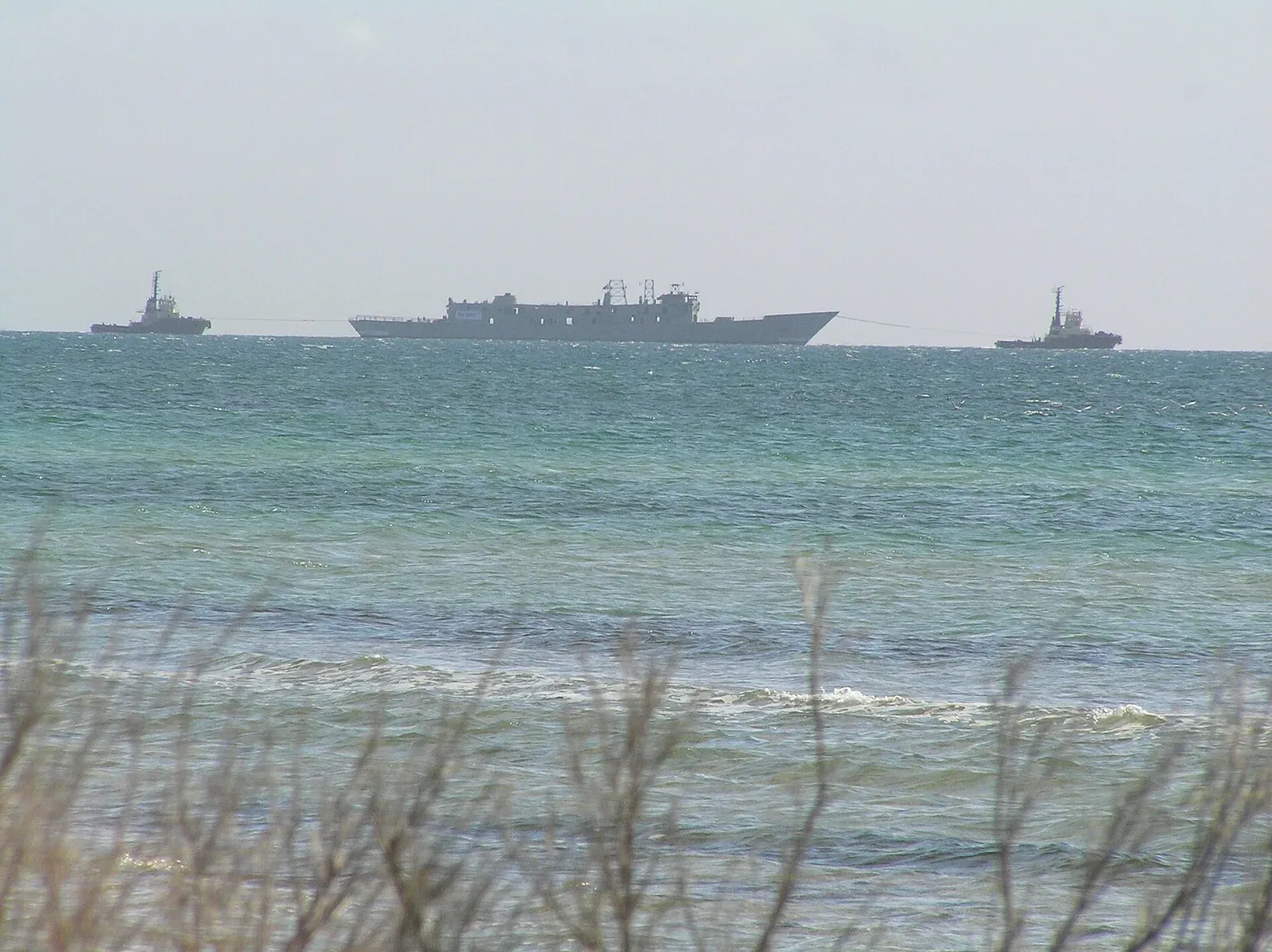
Then comes the sinking itself, which is engineering too. Ex-HMAS Brisbane went down off Mudjimba on 31 July 2005 on explosives set in wooden frames inside the hull below the waterline, and reached the bottom in 28 m of water in 2 minutes and 10 seconds. Canterbury took twelve charges totalling only 14 kg, and she still sits upright and mostly intact, unlike many similar wrecks that have broken up. Ex-HMAS Canberra went down on sixteen charges fired at 1400 on 4 October 2009, in 30 m off Ocean Grove.
The ships, by region
Depth, level and the area’s best months come from each site’s own record. The season ratings belong to the area and describe diving conditions; none of these ships has a season of its own.
| Site | Depth | Level | Best months |
|---|---|---|---|
| USNS Vandenberg Key West · United States | 12–45 m | Advanced | Apr–May |
| USS Spiegel Grove Florida Keys · United States | 21–40 m | Advanced | Apr–Aug |
| USCGC Bibb Florida Keys · United States | to 40 m | Advanced | Apr–Aug |
| Eagle Wreck Florida Keys · United States | 21.3–33.5 m | Advanced | Apr–Aug |
| Cayman Salvager Key West · United States | to 27 m | Advanced | Apr–May |
| Theodore Parker North Carolina Wrecks · United States | 9–18 m | Intermediate | Sep–Oct |
| Hermes Bermuda · Bermuda | 22.9–24.4 m | Intermediate | May–Sep |
| USS Kittiwake Grand Cayman · Cayman Islands | 10.7–18 m | Beginner | Dec–Apr |
| MV Captain Keith Tibbetts Cayman Brac · Cayman Islands | to 27 m | Intermediate | Dec–May |
| Ray of Hope Nassau & New Providence · Bahamas | 12–18 m | Beginner | Nov–May |
| C-53 Felipe Xicoténcatl Cozumel · Mexico | to 25 m | Intermediate | Jan–Apr |
| C-58 Minesweeper Isla Mujeres · Mexico | to 26 m | Advanced | Jun–Aug |
| C-50 Rivapalacios Veracruz Reef System · Mexico | to 27 m | Advanced | May–Aug |
| Fang Ming Wreck Sea of Cortez · Mexico | to 21 m | Intermediate | Jun–Oct |
| Odyssey Wreck Roatán · Honduras | 12–33 m | Advanced | Mar–Aug |
| El Aguila Roatán · Honduras | 18–33 m | Advanced | Mar–Aug |
| Prince Albert Wreck Roatán · Honduras | to 20 m | Intermediate | Mar–Aug |
| St George Bayahibe · Dominican Republic | 15–40 m | Advanced | Jan–Apr |
| Atlantic Princess Bayahibe · Dominican Republic | to 12 m | Beginner | Jan–Apr |
| Butler Bay Wrecks St. Croix · U.S. Virgin Islands | 5–24 m | Intermediate | Dec–May |
| Charlie Brown St. Eustatius · Caribbean Netherlands | 17–31 m | Advanced | Dec–May |
| Lesleen M St. Lucia · St. Lucia | to 20 m | Intermediate | Dec–Apr |
| SK2 St. Lucia · St. Lucia | 21–30 m | Advanced | Dec–Apr |
| Tyrrel Bay Grenada · Grenada | 4.6–16 m | Beginner | Jan–Apr |
| Servemar X Recife Wrecks · Brazil | 20–25 m | Intermediate | Sep–Feb |
Florida has the biggest hulls and the deepest bottoms; the Caribbean islands have the shallow, forgiving ones. Mexico’s three minesweepers are sisters, all Admirable-class hulls built for the US Navy in the Second World War and passed to the Mexican Navy in 1962. Two of Roatán’s three were put down by resorts: the Prince Albert sits upright at 20 m in front of the resort that sank her in 1985, reachable from the beach, and was modified for easy entry before she went down.
| Site | Depth | Level | Best months |
|---|---|---|---|
| Um El Faroud Malta & Gozo · Malta | 28–35 m | Advanced | Jun–Sep |
| P29 Patrol Boat Malta & Gozo · Malta | 12–35 m | Advanced | Jun–Sep |
| MV Karwela Malta & Gozo · Malta | 30–41 m | Advanced | Jun–Sep |
| MT Hephaestus Malta & Gozo · Malta | to 46 m | Advanced | Jun–Sep |
| Dragaminas (El Nalón) Cabo Tiñoso (La Azohía, Isla Plana & Puerto de Mazarrón) · Spain | 28–35 m | Advanced | Jun–Sep |
| Ocean Diver Menorca · Spain | 25–28 m | Advanced | Jun–Sep |
| NRP Hermenegildo Capelo Algarve · Portugal | to 30 m | Advanced | Jun–Sep |
| NRP Almeida Carvalho Algarve · Portugal | to 30 m | Advanced | Jun–Sep |
| NRP Oliveira e Carmo Algarve · Portugal | to 28 m | Advanced | Jun–Sep |
| NRP Zambeze Algarve · Portugal | to 28 m | Advanced | Jun–Sep |
| Wreck of the NRP Afonso Cerqueira Madeira · Portugal | to 30 m | Advanced | Jun–Sep |
| Cordeca (Corveta General Pereira D'Eça) Porto Santo · Portugal | 15–30 m | Advanced | Jul–Oct |
| Cedar Pride Wreck Aqaba · Jordan | 10–27 m | Advanced | May–Sep |
| The Tank Aqaba · Jordan | 5–7 m | Beginner | May–Sep |
| C-130 Hercules Wreck Aqaba · Jordan | 12–17 m | Intermediate | May–Sep |
| Satil Eilat · Israel | 18–24 m | Intermediate | Mar–May |
Gozo’s Xatt l-Aħmar is a cluster of its own: the Karwela, a 1957 ferry, went down in August 2006 alongside two other ships scuttled there as diving attractions, and the Hephaestus joined them in 2022, all from the same shore entry. Portugal’s Algarve — Ocean Revival is the only place here built as a set, four navy hulls sunk off Portimão in 2012 and 2013 at 28 to 30 m. Aqaba has done the opposite, adding one piece at a time since the first tank went down in 1999.
| Site | Depth | Level | Best months |
|---|---|---|---|
| HTMS Sattakut Koh Tao · Thailand | 18–30 m | Advanced | Mar–May |
| HTMS Kut Pattaya & the Sattahip Wrecks · Thailand | to 30 m | Advanced | May–Jul |
| Maritime Wreck Redang & Perhentian Islands · Malaysia | 16–23 m | Intermediate | Apr–Jul |
| Ex-HMAS Brisbane Mooloolaba · Australia | 6–28 m | Intermediate | Jul–Oct |
| Ex-HMAS Canberra Port Phillip · Australia | to 30 m | Advanced | May–Jul |
| HMAS Perth II Albany · Australia | 5–36 m | Intermediate | Dec–Mar |
| Cheynes III (Wreck) Albany · Australia | to 23 m | Intermediate | Dec–Mar |
| Rainbow Warrior Bay of Islands · New Zealand | to 26 m | Intermediate | Dec–Apr |
| HMNZS Canterbury Bay of Islands · New Zealand | 20–36 m | Advanced | Dec–Apr |
| La Diéppoise New Caledonia · France | to 25 m | Intermediate | Sep–Nov |
| Antonio Lorenzo Réunion · France | 20–40 m | Advanced | May–Oct |
| Haerlem Algoa Bay · South Africa | 18–21 m | Intermediate | Nov–Mar |
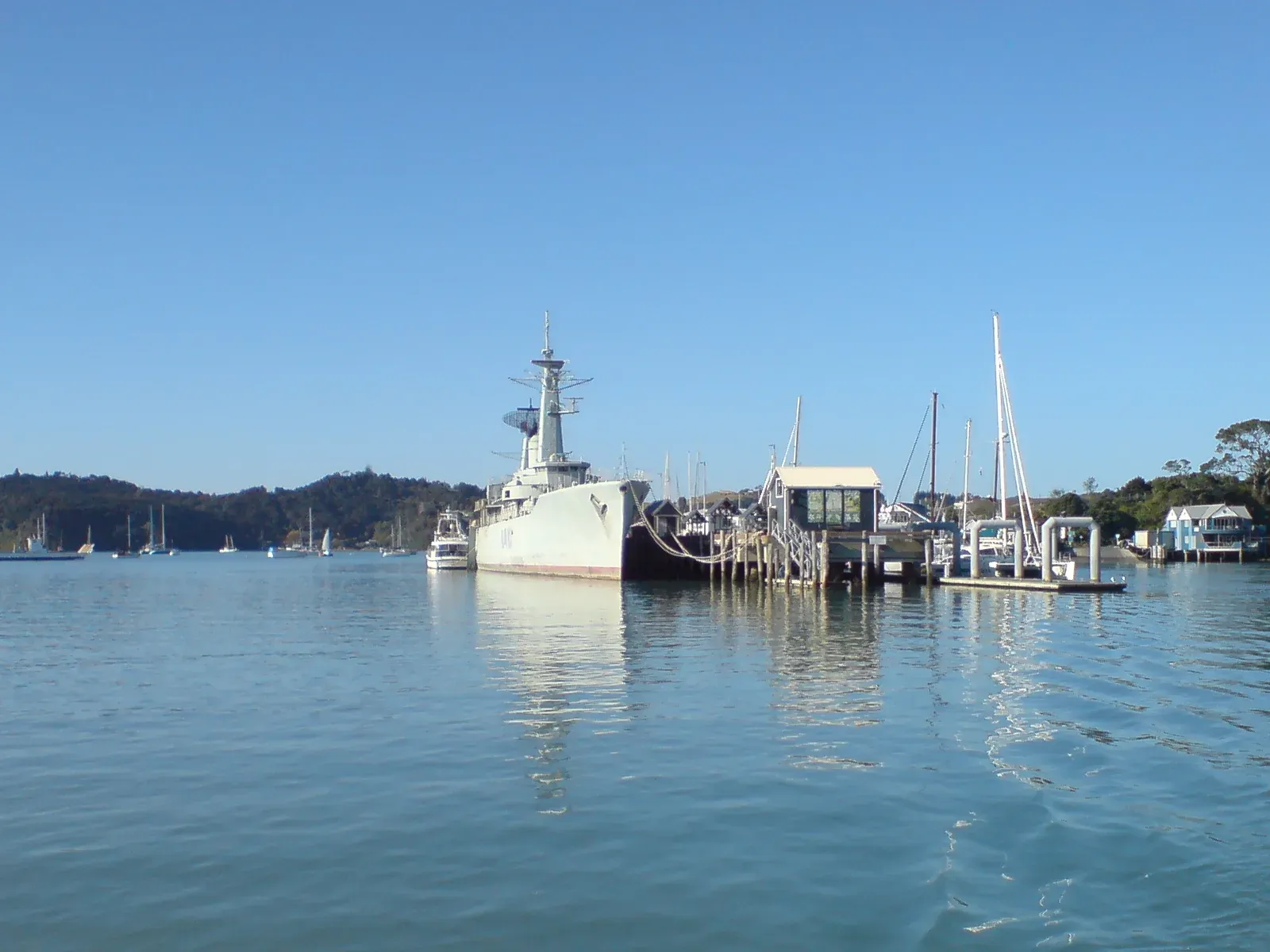
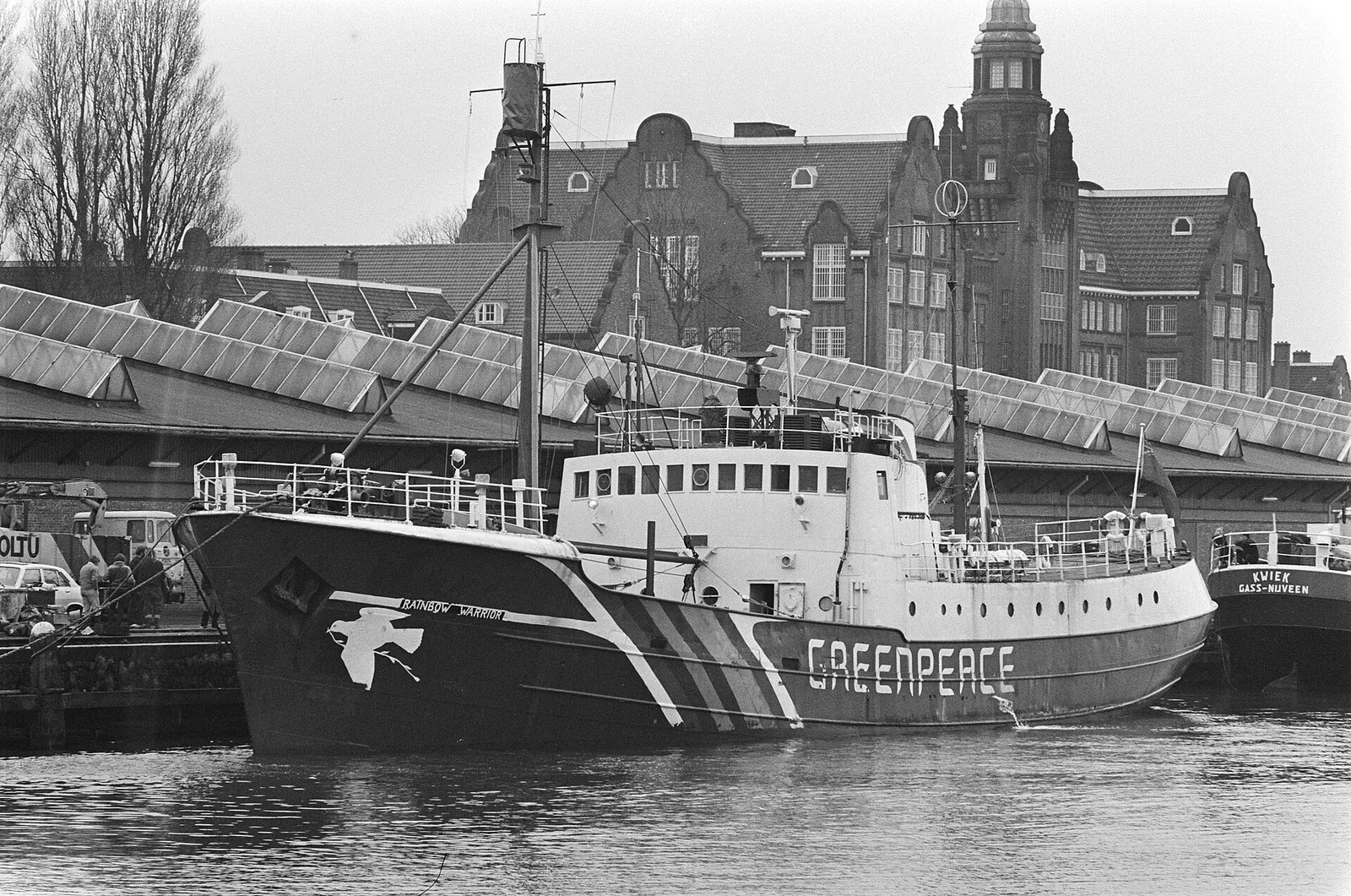
The Pacific list has the best story in this guide. The Rainbow Warrior was bombed by French intelligence agents in the Port of Auckland on 10 July 1985, killing the photographer Fernando Pereira. She was refloated that August for forensic examination and scuttled in Matauri Bay on 12 December 1987 to be dived, and she lies at a maximum of 26 m under a colony of anemones. In New Caledonia, La Diéppoise was a minesweeper built of wood so she would not set off magnetic mines; the planking has rotted away and she is now a skeleton of frames at 25 m.
| Site | Depth | Level | Best months |
|---|---|---|---|
| Niagara II Tobermory · Canada | to 30 m | Advanced | Jul–Sep |
| Caroline Rose Tobermory · Canada | to 17 m | Intermediate | Jul–Sep |
| Stanegarth Stoney Cove · United Kingdom | to 20 m | Intermediate | Oct–Jan |
Fresh water has its own reefed ships. Tobermory’s divers sank the schooner Caroline Rose in 1990 and the sand dredge Niagara II in 1999 among the park’s nineteenth-century casualties, and Stanegarth, a steam tug built in 1910, went into an English quarry in June 2000 as a magazine project and is called the largest inland wreck in the UK.
When it goes wrong
A planned sinking is still a ship going down in open water, and the plan does not always hold.
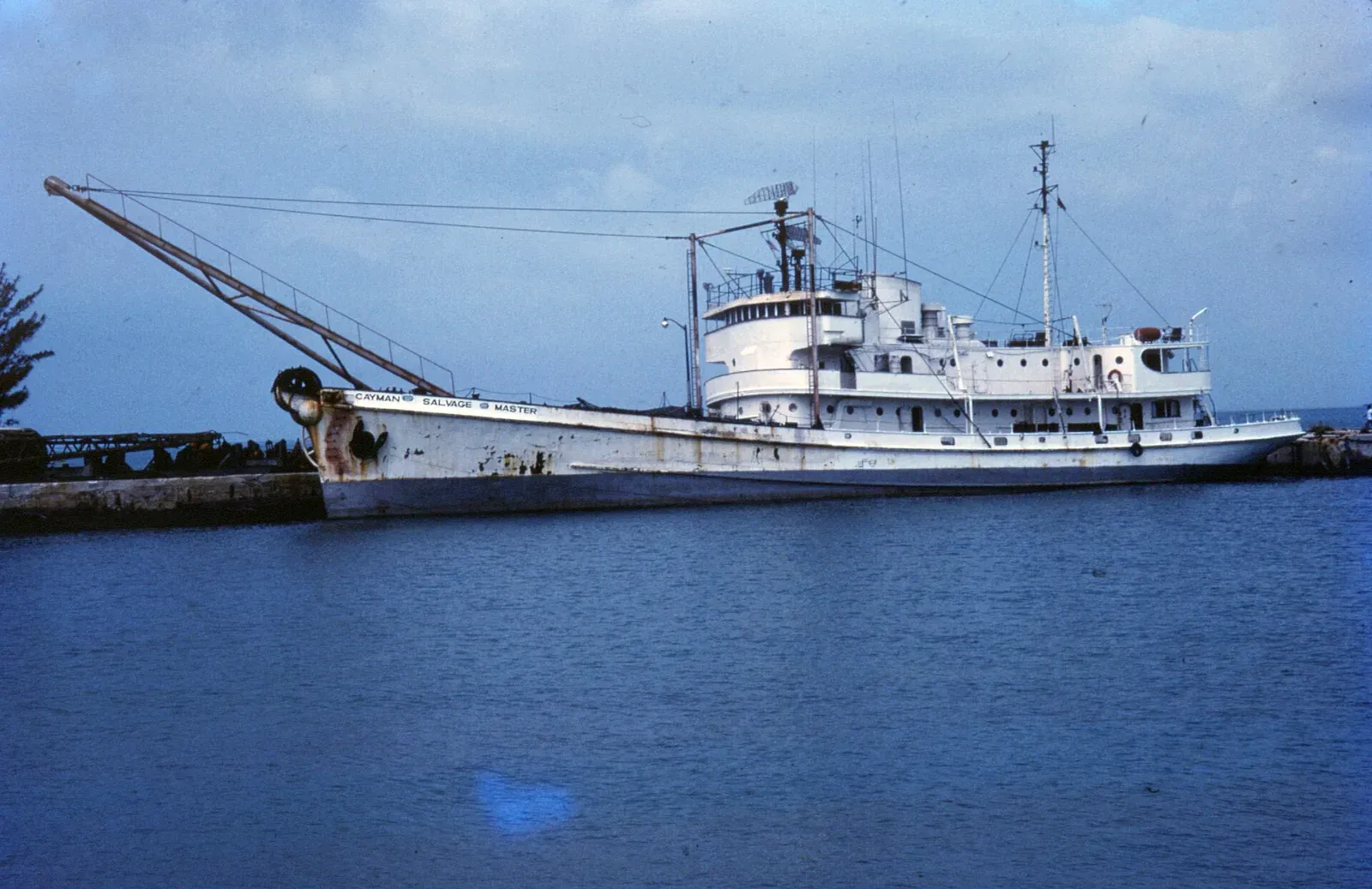
The Spiegel Grove is the famous failure. Scuttled off Key Largo on 17 May 2002, she settled too soon, began rolling to starboard and ended up upside down. Salvors spent another $250,000 rolling her onto her starboard side that June, on top of the $1 million the preparation and sinking had cost, and she opened to divers on 26 June 2002. Three years later Hurricane Dennis finished the job for nothing, shifting her onto her keel in July 2005, the position she had been meant to land in. The Coast Guard cutter Bibb, sunk nearby in 1987, never did settle upright and still lies on her side at about 40 m. And the Cayman Salvager never reached her reef at all: she was under tow in 1985 to be scuttled in 91 m (300 ft) when the line parted, and she sank in 27 m instead, where she lay on her port side until Hurricane Katrina righted her in 2005.
Then the sea goes to work on the steel. Even a shallow, well-placed ship moves: Tropical Storm Nate snapped the Kittiwake’s anchor chains in October 2017 and pushed her onto her port side, and her shallowest point is now reported about 6 m (20 ft) deeper than the 4.5 m she was sunk to. The Eagle sat intact off Islamorada from December 1985 until Hurricane Georges split her hull in two in 1998. Um El Faroud stood whole from 1998 until a storm in the winter of 2005/6 broke her in two. El Aguila lasted a single year before Hurricane Mitch broke her into three. Australia’s navy wrecks show the next stage: Parks Victoria closed ex-HMAS Canberra in mid-2011 over safety concerns as the frigate degraded, and reopened her that October; ex-HMAS Adelaide off Avoca Beach lost her weakened superstructure to a storm in 2024 and has been closed to divers since July of that year; and Tropical Cyclone Alfred moved part of ex-HMAS Brisbane’s forward structure off the hull in March 2025, so she is now dived outside only.
The worst failure on record was not a ship at all. In the early 1970s, between one and two million tyres were bundled with steel clips and dropped off Fort Lauderdale to make fish habitat on what became Osborne Reef, in about 20 m of water some 2,100 m offshore. The clips corroded, the bundles came apart, and storms have been throwing loose tyres against the natural reef ever since. The founder of the group that organised it later said: “I look back now and see it was a bad idea.” Military divers recovered around 72,000 tyres between 2007 and 2009, and a state contractor took over in 2015. By September 2023, 543,197 tyres had been removed and about 484,000 unburied tyres were still on the seafloor, and Florida’s 2024 restoration plan put the rest of the job at 14 fiscal years and about $137 million. Removal contracts were still running in 2026.
Two honest caveats belong beside every reef project. The Oriskany went down with an estimated 700 pounds of PCBs still aboard, in gaskets, cable, insulation and paint, under a risk-based approval from the EPA; reef fish sampled in her first two years carried mean PCB levels above the state and federal screening values, and fell below them after three. And the oldest argument about artificial reefs has never been settled: whether they produce new fish or only gather fish that would have lived on natural reef anyway. A 2012 science review for the US national marine sanctuaries found the balance between the two had “yet to be unequivocally resolved”, and that artificial reefs are now widely accepted to do some of each. A reefed ship is a dive site with a habitat benefit, not a guaranteed one.
The ones that were not sunk for us
Scuttling is far older than diving, and for most of its history it meant denying a ship to someone. On 21 June 1919 Rear Admiral Ludwig von Reuter ordered the interned German High Seas Fleet scuttled at Scapa Flow rather than let the British have it; battleships like Markgraf lie upturned with 25 m of water over the hull and 45 m under it. The German freighter Sophie Rickmers was scuttled off Pulau Weh in 1940, though the two published accounts disagree on the date and on who she was being kept from; her decks are at around 45 m. At Guam, the crew of the German raider SMS Cormoran blew a charge in her coal bunker in April 1917 as the United States moved to seize her.
Then there is a third intention: engineering. In November 1915 the French battleship Masséna and the passenger ship Saghalien were scuttled side by side off Cape Helles as a breakwater for the Allied evacuation of Gallipoli, and they lie in 5 to 7 m of water.
Same verb, opposite purpose, and it shows in the dive. Nobody cleaned these ships, cut them open for visitors or chose their depth, and Markgraf and two of her sisters are now scheduled monuments. They belong with the ships in our WWII wrecks guide, not with the ones above. One more trap: Grenada’s Bianca C is the Caribbean’s largest wreck and is often mistaken for a reef project, but she burned and sank in 1961, and her working depth of 28 to 40 m was nobody’s decision.
Your first one
Everything above points to the same advice. If you have not dived a wreck yet, dive a purpose-sunk one, and pick one from the shallow end of the chart.
Tyrrel Bay at 4.6 to 16 m and the Kittiwake, on sand at 18 m, both sit entirely inside the Open Water line. The Atlantic Princess off Bayahibe lies at about 12 m in water bright enough to read her from above. The Ray of Hope off Nassau was sunk upright on sand in 2003 with her bow at 12 m and her stern at 18 m. The tank that started Aqaba’s reef in 1999 sits on sand in 5 to 7 m, close enough to the beach to double as a training site. The Lesleen M lies in 20 m in the middle of a sheltered bay. Butler Bay on St Croix has a wheelhouse 5 m down and a trawler upright at up to 24 m, a beginner wreck and a deeper one on the same site.
Stay outside on the first dive, watch your fins near the hull, and save the inside for when you have trained for it. Your first wreck dive covers what the dive feels like and how to get ready.