Australia & New Zealand · Australia
North Stradbroke Island — Point Lookout
Manta cleaning stations Oct–Apr, grey nurse sharks through winter
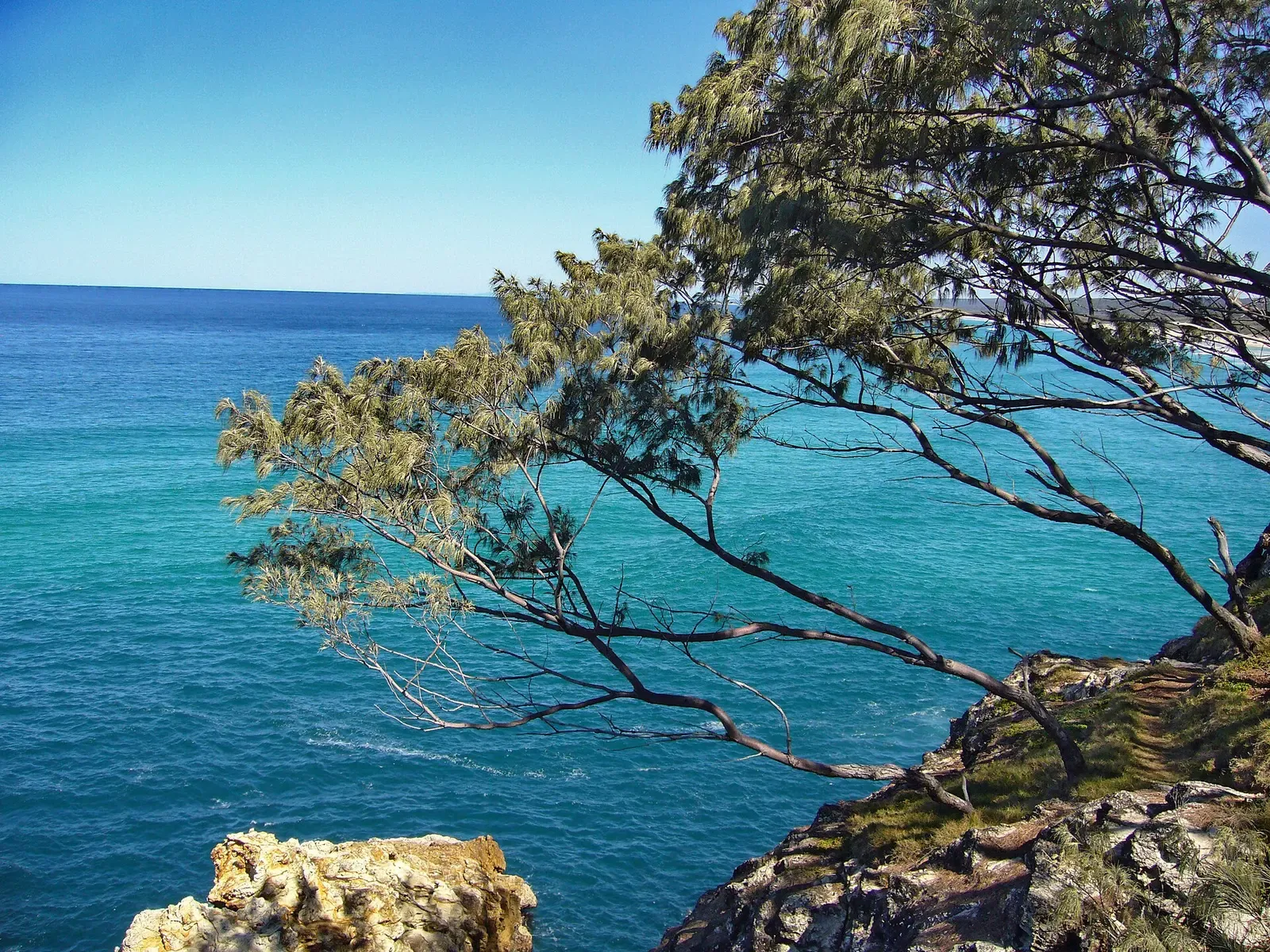
Photo: Tanya Dedyukhina · CC BY 3.0
Point Lookout is the ocean-side corner of North Stradbroke Island, reached by ferry from Cleveland outside Brisbane, and its one dive centre launches boats off the beach to a cluster of rock reefs ten to fifteen minutes out. Manta Bommie, three outcrops carrying cleaning stations on shallow rock, draws migrating manta rays from October to April. Flat Rock, several kilometres offshore, holds grey nurse sharks in the sand channel at Shark Alley through winter. Ordinary diving runs 4 to 30 m.
About diving in North Stradbroke Island — Point Lookout
Trips run Friday to Tuesday, twice a day, out of Manta Lodge & Scuba Centre, the island's only dive centre. The morning group meets at 6:45 and is back on land around 11; the afternoon group meets at 11:45 and returns about 4. The sites sit close enough to the launch that a trip is two dives with the surface interval spent on the water. When swell shuts the offshore reefs down, Shag Rock six to eight minutes out is the fallback, or the Amity Point shore dive on the sheltered side of the island.
The diving is rock rather than coral: outcrops and bommies rising off sand, ledges and gutters cut into them, and open water between. Manta Bommie is three shallow outcrops carrying cleaning stations. Flat Rock, several kilometres out, has Shark Alley on one side and Turtle Cave on the other, and prevailing currents there tend to bring clearer water. Boat Rock drops near-vertically to 25 m and is dived only in flat conditions. Shag Rock is the macro dive, with wobbegongs, turtles, schools of pomfrets, mantis shrimp and ghost pipefish. All of it lies inside Moreton Bay Marine Park.
Current is what sorts the sites: the outer rocks are prone to it, and the closer ones get used because they are sheltered. How much of the catalogue opens up then depends on certification. Open Water gets Manta Bommie, Shag Rock, the Nursery and Amity Point; Advanced gets Shark Alley and Turtle Cave; Boat Rock and Bull Shark Bommie are graded Master Diver, with live drop and pick-up. Seven's Reef runs 20 to 48 m on pinnacles with unpredictable visibility, and 29 Fathom Reef sits at 51 to 62 m — both technical dives. The hospital ship AHS Centaur lies far offshore in 2,059 m of water, a war grave inside a navigational exclusion zone rather than a dive.
It suits divers who want big animals on a seasonal calendar and are content with one operator, a five-day boat week and a short run of rock reefs dived repeatedly. Anyone wanting several dive shops or a wider spread of sites would do better at Julian Rocks off Byron Bay, about 130 km south. Winter here means 19–20°C water and a thicker suit, while the summer manta window comes with the poorest visibility of the year, averaging 5 to 11 m against the island's 12 to 16 m general average.
When to dive North Stradbroke Island — Point Lookout
| Jan | Feb | Mar | Apr | May | Jun | Jul | Aug | Sep | Oct | Nov | Dec |
|---|---|---|---|---|---|---|---|---|---|---|---|
| Good | Good | Good | Good | Fair | Prime | Prime | Prime | Prime | Prime | Good | Good |
Mantas work the Manta Bommie cleaning stations Oct–Apr; grey nurse sharks and humpbacks arrive Jun–Oct, when visibility is also at its best. Boats run Friday to Tuesday.
Dive types & marine life
Manta rays work the Manta Bommie cleaning stations from October to April, with leopard sharks and guitarfish in the same months. Grey nurse sharks, an endangered species, hold in numbers on the Shark Alley sand channel in winter, alongside eagle rays and passing humpbacks. Turtles and wobbegongs are resident, and a lone whale shark has visited Turtle Cave between February and April in some years.
- Reef
- Drift
- Wall
- Pelagic & blue water
- Night
- Manta rays
- Sand tiger sharks
- Whales
- Bull sharks
- Wobbegongs
- Sea turtles
- Eagle rays
- Stingrays
- Dolphins
- Macro critters
- Reef fish swarms
Notable dive sites in North Stradbroke Island — Point Lookout
Shore dive timed for slack water at the top of the tide
Wall
Near-vertical walls dived four or five times a year
Deep reef at 28 to 45 m with resident bull sharks
Flat Rock's shallow corner, 4 to 18 m over juvenile fish
Winter sand channel where grey nurse sharks gather
Small cave at 10 m on Flat Rock's northern side
Reef
Shallow cleaning stations that mantas work from October to April
Reef
Decompression depths, strong current, whaler sharks
Reef
The area's shelter dive, 800 m off Home Beach
Getting there
Ferries leave Toondah Harbour at Cleveland, 29 km ESE of Brisbane's CBD, for Dunwich: the passenger-only Stradbroke Flyer takes about 25 minutes, the Big Red Cat car ferry about 45, the Stradbroke Ferries vehicle ferry about 50. Point Lookout, where the dive centre and boats are, is on the far, surf side of the island. Driving on the beaches and recreation areas needs a paid vehicle permit.
Photos from North Stradbroke Island — Point Lookout
Michael Coghlan · CC BY-SA 4.0
Tanya Dedyukhina · CC BY 3.0
Jordan Condon · CC BY 3.0
S. Newrick · CC BY-SA 4.0
Photo credits
- A pandanus tree leans over a rocky headland above turquoise water at Point Lookout. by Tanya Dedyukhina, CC BY 3.0, via Wikimedia Commons
- Hillside grasses and pandanus trees above a sandy bay at Point Lookout. by Michael Coghlan, CC BY-SA 4.0, via Wikimedia Commons
- A rocky point and curving sandy beach meeting the surf at Main Beach. by Tanya Dedyukhina, CC BY 3.0, via Wikimedia Commons
- Morning light over a rocky cove with tide pools on the coast at Point Lookout. by Jordan Condon, CC BY 3.0, via Wikimedia Commons
- Aerial view along the long sandy sweep of Main Beach from the Point Lookout headland. by S. Newrick, CC BY-SA 4.0, via Wikimedia Commons
Similar destinations

Tropical and temperate species overlap on one rock 2.5 km offshore
A 125 m ocean through-cave, and grey nurse sharks in the gutters

The highest reef manta density on the Great Barrier Reef, year-round


.jpeg)
.JPG)
Weedy seadragons over temperate sponge gardens, entered from a car park