
Australia & New Zealand · Australia
Great Barrier Reef — Cairns & Ribbons
Giant Queensland grouper at Cod Hole and dwarf minke whales in winter.
Photo: Toby Hudson · CC BY-SA 3.0
The outer Great Barrier Reef off Cairns begins about 50 km offshore and runs north to the Ribbon Reefs, long thin strips on the reef's outer edge. Boats from Cairns work the wall at Norman Reef and the swim-throughs and coral fields of Flynn Reef, while liveaboards push north to Cod Hole and its giant Queensland grouper, the isolated pinnacles of Steve's Bommie and Pixie Pinnacle, and the dwarf minke whales that pass in June and July.
About diving in Great Barrier Reef — Cairns & Ribbons
Distance sets the pattern of every trip. The outer reef starts about 50 km from shore, and although day trips run, most of such a day goes on the ride between hotel and reef. Liveaboards of several lengths leave Cairns all year, and they are the only way onto the Ribbon Reefs, which lie north of Cairns, 50 to 100 km off the northern Queensland coast, and carry the pinnacles and Cod Hole.
The Cairns reefs offer wall diving, swim-throughs and wide fields of coral, and at Flynn Reef the bommies break into walls, overhangs and crevices. At Pellowe Reef, near the edge of the continental shelf, squirrelfish and sergeant majors crowd the coral beside resident Napoleon wrasse, and chevron barracuda and nudibranchs are regular. On the Ribbon Reefs the top of Pixie Pinnacle carries hard and soft coral including black coral, gorgonian fans, sponges, lace coral and yellow turret coral. Turtles, whitetip reef sharks, groupers and large wrasse are abundant on the outer reef.
Flynn Reef works for novices through to very experienced divers, and the Ribbon Reefs offer diving for all levels. Currents run mild on some reefs and moderate on others, access to Pellowe Reef depends on the weather, and when the current is right boats drift Dynamite Pass, a channel sharks use to pass through. A diver with only one day gives most of it to the crossing, so the Ribbon Reefs, the pinnacles and the minke whales belong to those with time for a liveaboard.
Best time to dive Great Barrier Reef — Cairns & Ribbons
| Jan | Feb | Mar | Apr | May | Jun | Jul | Aug | Sep | Oct | Nov | Dec | |
|---|---|---|---|---|---|---|---|---|---|---|---|---|
| Season | Fair | Fair | Good | Good | Good | Prime | Prime | Prime | Prime | Prime | Prime | Fair |
| Sea surface | 29°C84°F | 29°C84°F | 29°C84°F | 28°C82°F | 27°C81°F | 25°C77°F | 25°C77°F | 25°C77°F | 25°C77°F | 26°C79°F | 27°C81°F | 29°C84°F |
| Daytime high | 30°C86°F | 30°C86°F | 29°C84°F | 29°C84°F | 27°C81°F | 26°C79°F | 25°C77°F | 25°C77°F | 25°C77°F | 27°C81°F | 28°C82°F | 29°C84°F |
| Rain | 349 mm13.7 in | 288 mm11.3 in | 337 mm13.3 in | 149 mm5.9 in | 81 mm3.2 in | 48 mm1.9 in | 44 mm1.7 in | 22 mm0.9 in | 24 mm0.9 in | 48 mm1.9 in | 50 mm2.0 in | 180 mm7.1 in |
| Jan | Feb | Mar | Apr | May | Jun |
|---|---|---|---|---|---|
| Fair | Fair | Good | Good | Good | Prime |
| Sea surface | |||||
| 29°C84°F | 29°C84°F | 29°C84°F | 28°C82°F | 27°C81°F | 25°C77°F |
| Daytime high | |||||
| 30°C86°F | 30°C86°F | 29°C84°F | 29°C84°F | 27°C81°F | 26°C79°F |
| Rain | |||||
| 349 mm13.7 in | 288 mm11.3 in | 337 mm13.3 in | 149 mm5.9 in | 81 mm3.2 in | 48 mm1.9 in |
| Jul | Aug | Sep | Oct | Nov | Dec |
|---|---|---|---|---|---|
| Prime | Prime | Prime | Prime | Prime | Fair |
| Sea surface | |||||
| 25°C77°F | 25°C77°F | 25°C77°F | 26°C79°F | 27°C81°F | 29°C84°F |
| Daytime high | |||||
| 25°C77°F | 25°C77°F | 25°C77°F | 27°C81°F | 28°C82°F | 29°C84°F |
| Rain | |||||
| 44 mm1.7 in | 22 mm0.9 in | 24 mm0.9 in | 48 mm1.9 in | 50 mm2.0 in | 180 mm7.1 in |
2011–2025 averages. Sea surface: NOAA Coral Reef Watch, measured at the surface, so deeper water can run colder. Daytime high and rain: NASA POWER.
Boats sail all year; visibility peaks from September to November and corals spawn in October or November, while December to February brings the most rain, often at night.
Best months: June, July, August, September, October, November
Great Barrier Reef water temperature and weather by month
The sea surface runs from 25 °C (77 °F) in July to 29 °C (84 °F) in February. Most rain falls from December to April, peaking at about 350 mm (14 in) in January; it stays largely dry from May to November. Daytime highs reach 30 °C (86 °F) in February and drop to 25 °C (77 °F) in August. The coldest water here is about 23 °C (73 °F), so pack a 5 mm suit.
Dive types & marine life
Humpback whales are commonly spotted from June to November, and in June and July dozens of dwarf minke whales follow their migration route around the Ribbon Reefs. The giant potato grouper stay at Cod Hole all year. Eagle rays cruise by Norman Reef's Wonderful Wall on a good day, and dolphins and bronze whalers appear in some areas.
- Reef
- Wall
- Drift
- Night
- Groupers
- Whales
- Reef sharks
- Sea turtles
- Napoleon wrasse
- Pristine corals
- Reef fish swarms
- Barracuda
- Eagle rays
- Manta rays
- Dolphins
- Nudibranchs
Best dive sites in Great Barrier Reef — Cairns & Ribbons
- 1
Cod Hole
Ribbon Reef site famous for giant Queensland grouper, the cod of its name.
- 2
Steve's Bommie
Isolated pinnacle off Ribbon Reef #3 that rises from 30 m to 5 m below the surface.
- 3
Pixie Pinnacle
Pinnacle only 15 m across between Ribbon Reefs #9 and #10, visited by every dive boat.
- 4
Flynn Reef
Cairns reef whose Gordon's Mooring and Tracy's Bommie give swim-throughs, overhangs and night dives.
- 5
Norman Reef
Outer-edge reef 70 km north-east of Cairns with a long eastern wall dropping into deep water.
Site guides
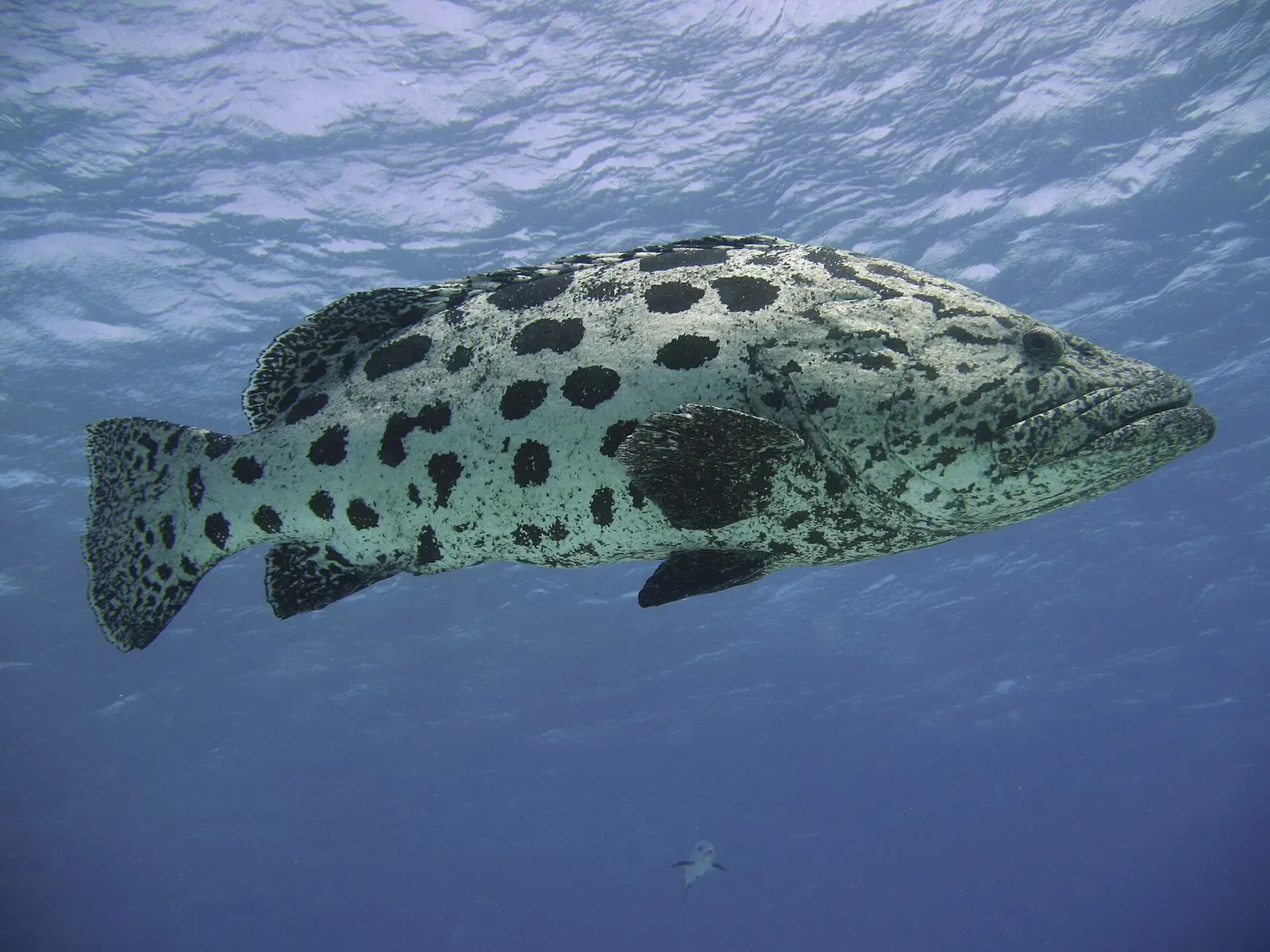
A dozen resident potato cod, the largest around 30 kg
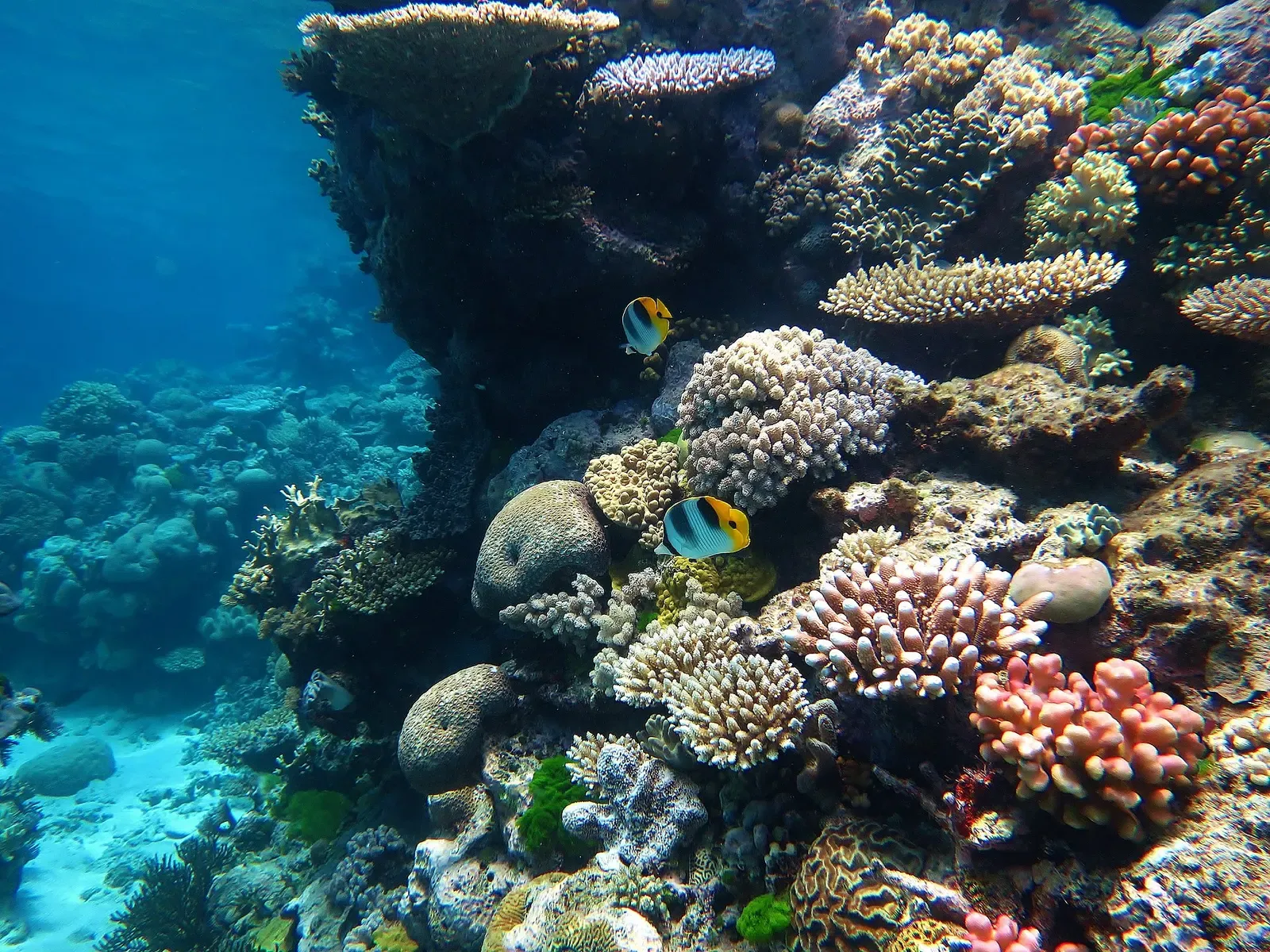
Moorings from an 8 m coral garden to a 30 m wall
Coral garden
Terraced coral slope falling away from an 8 m sandy mooring
Swim-throughs and overhangs among Flynn Reef's smaller bommies
A 20 m wall with a sand patch crowded with sea cucumbers
A long eastern wall dropping into deep water
A 25 m wall with a very shallow top for the safety stop
Small caves in a 15 m wall holding eels and octopus
One coral tower, 30 m to 5 m, dived by spiralling upward
How to get to Great Barrier Reef — Cairns & Ribbons
Cairns Airport has a daily shared shuttle to Cairns City, Palm Cove and Port Douglas. The three-day outer-reef liveaboard collects divers from Cairns city accommodation at no charge, while transfers from the Northern Beaches cost extra.
Photos from Great Barrier Reef — Cairns & Ribbons
Jean-Paul Boerekamps · CC0
Toby Hudson · CC BY-SA 3.0
Toby Hudson · CC BY-SA 3.0
Daniel Eisenhauer · CC BY 4.0
Dive videos
Diving the Great Barrier Reef | Australia's Underwater Paradise · George Mavrakis on YouTube
Diving the "Cod Hole" on Australia's Great Barrier Reef, after Cyclone Yasi | underwater footage · Undersea Productions on YouTube
Questions divers ask
Can the Ribbon Reefs be dived on a day trip?+
No. The Ribbon Reefs and Cod Hole lie north of Cairns, 50 to 100 km off the coast, and only liveaboards reach them.
Can new divers learn on the outer reef?+
Yes. Courses in Cairns run from beginner to advanced, including a four-day learn-to-dive course on day trips, and outer reefs such as Milln, Flynn and Norman offer easy, entry-level diving.
Are the currents strong on the Cairns reefs?+
They run from mild to moderate depending on the reef. When conditions suit, boats drift Dynamite Pass, a channel sharks pass through.
Is the reef off Cairns protected?+
Yes. The outer reefs off Cairns form part of the Great Barrier Reef Marine Park.
Sources
- Australia - Great Barrier Reef - Cairns — Dive The World
- Australia - Great Barrier Reef - Ribbon Reefs — Dive The World
- Flynn Reef dive site — PADI
- Great Barrier Reef Liveaboard Scuba Diving | PADI Open Water Learn to Dive & Advanced Courses | Pro Dive — Pro Dive Cairns
- Great Barrier Reef Dive Site Maps — Pro Dive Cairns
- Cairns Region Airport Shuttle and Hotel Transfers — Tropic Wings
- Spirit of Freedom – Cairns to Cod Hole Liveaboard Dive Tour — Cairns Dive Adventures
- 3 Day Great Barrier Reef liveaboard Dive Trip — Pro Dive Cairns
Photo credits
- A colorful coral bommie of table and staghorn corals rises through clear blue water on Flynn Reef by Toby Hudson, CC BY-SA 3.0, via Wikimedia Commons
- A green sea turtle glides close to the camera over the Great Barrier Reef by Jean-Paul Boerekamps, CC0, via Wikimedia Commons
- A male dark-capped parrotfish swims over the reef flat at Flynn Reef near Cairns by Toby Hudson, CC BY-SA 3.0, via Wikimedia Commons
- A striped surgeonfish with bright yellow and blue lines swims over Flynn Reef by Toby Hudson, CC BY-SA 3.0, via Wikimedia Commons
- A tawny nurse shark rests on the sand beneath a coral ledge on the Great Barrier Reef by Daniel Eisenhauer, CC BY 4.0, via Wikimedia Commons
Embed
Run a dive centre, club or blog? Embed this map of 9 dive sites near Great Barrier Reef on your own page.
In The Logbook
- Where can you legally swim with whales?Big animals · 14 min read
- Do you need a safety stop? What it buys youBody & health · 11 min read
Similar destinations

The highest reef manta density on the Great Barrier Reef, year-round

Tame Maori wrasse inshore, and the outer barrier sixty kilometres out

Tropical and temperate species overlap on one rock 2.5 km offshore


The world's southernmost coral reef, with advanced diving at Balls Pyramid offshore.