
Palm Beach & Jupiter · United States · Muck & macro
Blue Heron Bridge
Over 100 nudibranch and sea slug species in under 8 m of water
Area photo: Dough4872 · CC BY-SA 4.0
A shore dive under the Blue Heron Bridge at Phil Foster Park in Riviera Beach, and one of the most popular dive sites in South Florida. Water averages about 5 m (15 ft) with a maximum of 8 m (25 ft), and the sand and rubble under the spans hold seahorses, frogfish and more than 100 species of nudibranch and sea slug.
Also known as Phil Foster Park, BHB.
Where it is and how deep
26.7831° N, 80.0419° WPublished position for this site.
The dive
The dive is built around the tide rather than a route. Gulf Stream water comes in twice daily on the high tides, flowing through the inlet into the Intracoastal Waterway and carrying exotic, biodiverse marine life in to settle in the shallows, so divers enter off the beach in the roughly two-hour window around slack high tide and are out before the currents build. Visibility in that window typically runs 20 to 40 feet (12 m), though it can drop to a couple of feet or open up past 24 m (80 ft) depending on conditions.
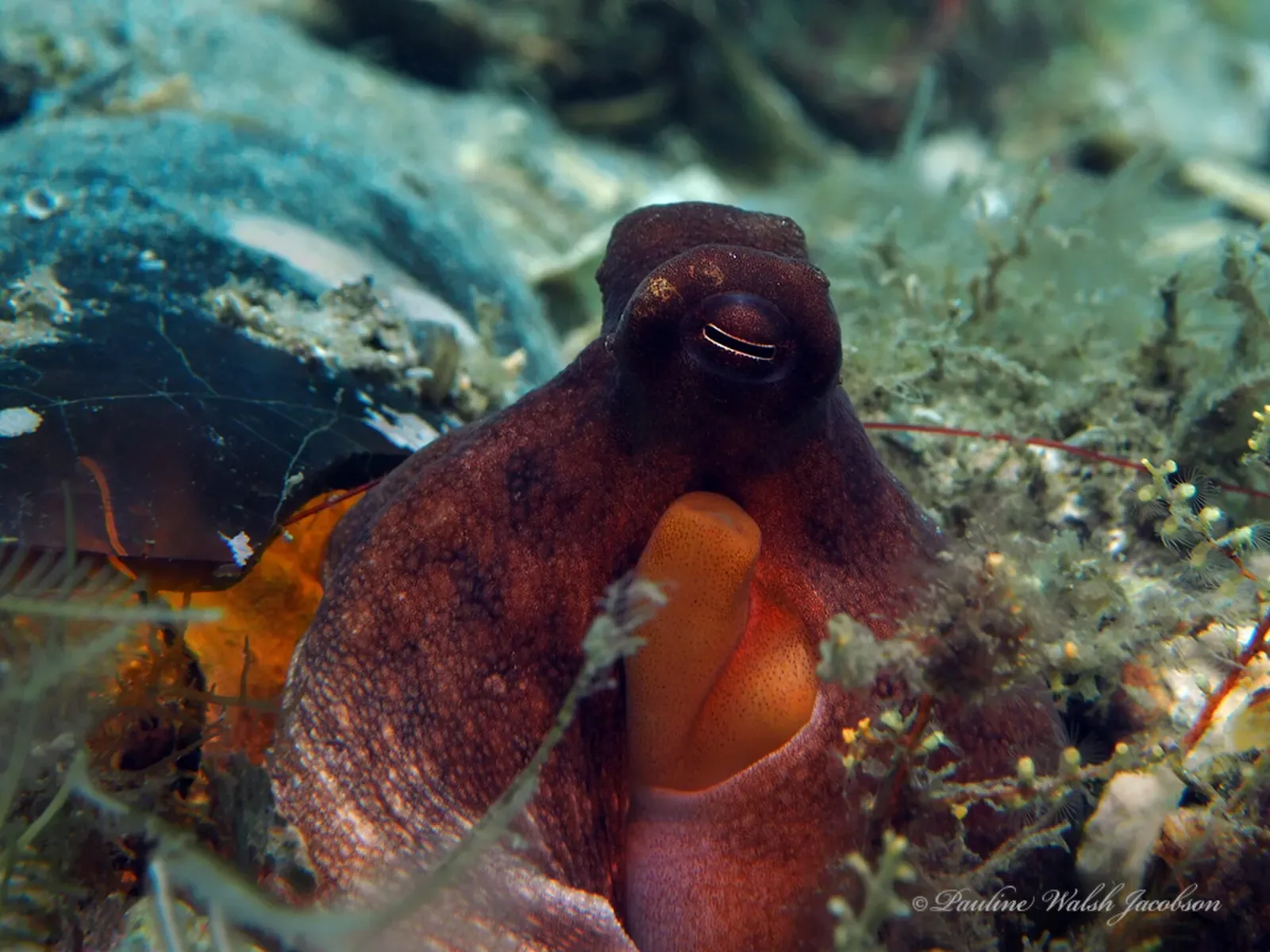
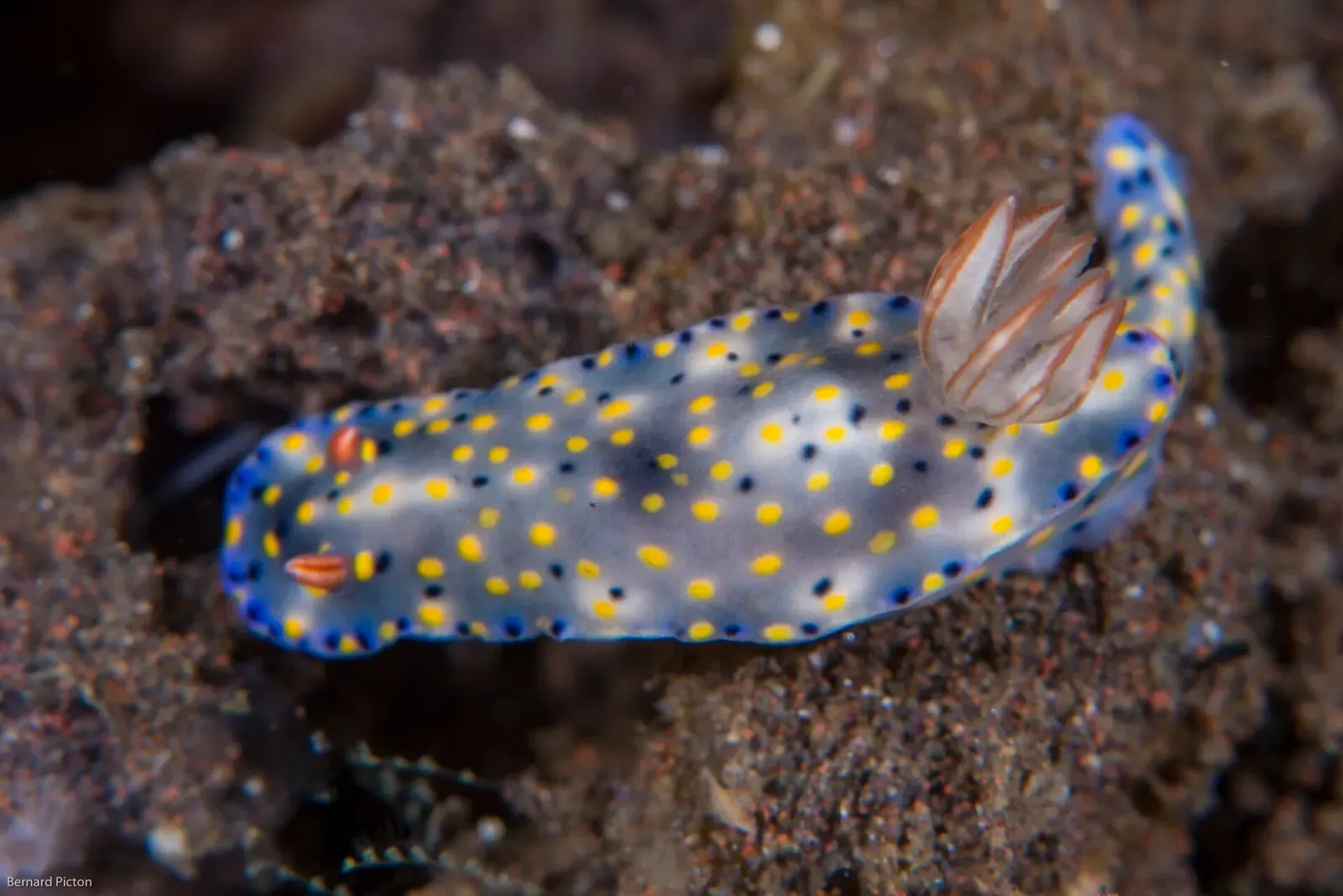
There is no depth to manage: the bottom averages around 5 m (15 ft) and the deepest point is 8 m (25 ft), so the limiting factor is gas and patience rather than a profile. Most of the diving is spent hovering over sand, rubble and structure looking closely at small things — lined and longsnout seahorses, striated, ocellated and dwarf frogfish, Caribbean reef, Atlantic longarm, brown-striped and common octopuses, and over 100 recorded species of nudibranch and sea slug.
Bigger animals move through the same shallows. Spotted eagle rays and nurse sharks pass over the sand, and goliath groupers turn up occasionally. Novice divers, freedivers and experienced divers all use the site, and there is convenient parking just off the beach, so you can gear up on a tailgate and walk directly from the beach into the water.
Marine life and season
- Frogfish
- Nudibranchs
- Octopus & cuttlefish
- Macro critters
- Eagle rays
- Groupers
| Jan | Feb | Mar | Apr | May | Jun | Jul | Aug | Sep | Oct | Nov | Dec |
|---|---|---|---|---|---|---|---|---|---|---|---|
| Prime | Prime | Prime | Good | Good | Good | Good | Prime | Prime | Good | Good | Good |
Season follows Palm Beach & Jupiter: Lemon sharks aggregate Jan–Mar and goliath grouper spawn Aug–Sep; the Gulf Stream keeps visibility high year-round.
Know before you go
- Tidal currents can be strong outside the two-hour dive window, especially at the bridges — plan the entry and exit around slack high tide.
Questions divers ask
How deep is Blue Heron Bridge?+
Shallow: the bottom averages around 5 m (15 ft) with a maximum depth of 8 m (25 ft), so the dive is limited by gas rather than by no-decompression time.
When can you dive Blue Heron Bridge?+
In the roughly two-hour window around slack high tide, when Gulf Stream water floods in through the inlet. Outside that window tidal currents can be strong, particularly at the bridges.
Do you need a boat to dive Blue Heron Bridge?+
No. It is a shore dive with easy entry right off the beach at Phil Foster Park in Riviera Beach, used by novice divers, freedivers and experienced divers alike.
Sources
- Blue Heron Bridge Dive Site Summary — Divers Alert Network
- Blue Heron Bridge at Phil Foster Park — Scubago
More dive sites in Palm Beach & Jupiter
Reef
A King Neptune statue set down in the late 1970s marks the north end
Reef
Schooling gamefish and goliath grouper over a sharply cut ledge
Reef
Lemon sharks stage on this reef ledge by the dozens each January and February
Wreck
A 1926 patrol yacht scuttled here in 1968, dived on the current
Twin ledges from 20 and 26 m (65 and 85 feet), ending in a circular bowl
Similar dives elsewhere
A submerged sailboat and a resident school of spadefish
The Red Wall: the last column before the channel, thick with sponges

Frogfish and flamboyant cuttlefish on rubble inside 10 metres

Black sand at 10 m with mimic octopus and frogfish