Blue Heron Bridge · United States · Muck & macro · Artificial reef
East Bridge Span
A submerged sailboat and a resident school of spadefish
Photo: Pauline Walsh Jacobson · CC BY 4.0
The eastern span carries the road toward Singer Island, and two things under it draw divers: a submerged sailboat full of life and a resident school of spadefish. Depths are the same 5 to 20 feet (up to 6 m) as the rest of Blue Heron Bridge, and so are the rules, which means staying clear of the marked boat channel and leaving every animal where it sits.
Also known as East Blue Heron Bridge.
Where it is and how deep
26.7841° N, 80.0428° WApproximate position — the dashed circle shows where the site lies; your operator's briefing has the mooring.
The dive
From the beach, head for the span that runs east toward Singer Island. The set piece is a submerged sailboat sitting under the bridge, grown over and full of life, along with the resident school of spadefish. Depth across the span runs 5 to 20 feet (up to 6 m), so there is time to circle the boat, look into it from several sides, and come back to it later in the same dive.
Away from the sailboat the diving is the same as the rest of the bridge: pilings, rubble and sand, searched slowly for seahorses, octopus, pipefish, frogfish and nudibranchs. Manatees, spotted eagle rays, nurse sharks, green sea turtles and Goliath grouper are listed as rare sightings rather than as things to expect. Keep clear of the marked boat channel that runs through the site, and take nothing: spearfishing and lobstering are banned at the bridge and the wildlife is not to be touched or disturbed.
Marine life and season
- Reef fish swarms
- Macro critters
- Frogfish
- Octopus & cuttlefish
- Nudibranchs
- Eagle rays
- Sea turtles
- Dugongs & manatees
- Groupers
| Jan | Feb | Mar | Apr | May | Jun | Jul | Aug | Sep | Oct | Nov | Dec |
|---|---|---|---|---|---|---|---|---|---|---|---|
| Good | Good | Good | Prime | Prime | Prime | Prime | Prime | Good | Good | Good | Good |
Season follows Blue Heron Bridge: Divable year-round; Apr–Aug brings the warmest water and the widest range of juveniles, and every dive is tied to the high-tide window.
Know before you go
- A marked boat channel runs through the site and boats use it. Stay clear of it; the site map shows where it runs. A divers-down flag is required and divers must stay within 91 m (300 ft) of it.
Photos from East Bridge Span
Pauline Walsh Jacobson · CC BY 4.0
Pauline Walsh Jacobson · CC BY 4.0
Pauline Walsh Jacobson · CC BY 4.0
Dive videos
A Diver's Guide to the Blue Heron Bridge: East Bridge Span · Michael Smith on YouTube
Blue Heron Bridge Dive - East Span · Shawn McCall on YouTube
Questions divers ask
Is there a wreck at Blue Heron Bridge?+
There is a submerged sailboat under the eastern span, grown over and full of life. No source publishes its name, size or the date it went down.
How deep is the east span?+
The same 1.5 to 6 metres (5 to 20 feet) as the rest of the bridge site. It is a shallow, shore-entry dive planned around the tide.
Sources
- Blue Heron Bridge dive site guide — Force-E Scuba Centers
- Phil Foster Park (OpenStreetMap) — OpenStreetMap
Photo credits
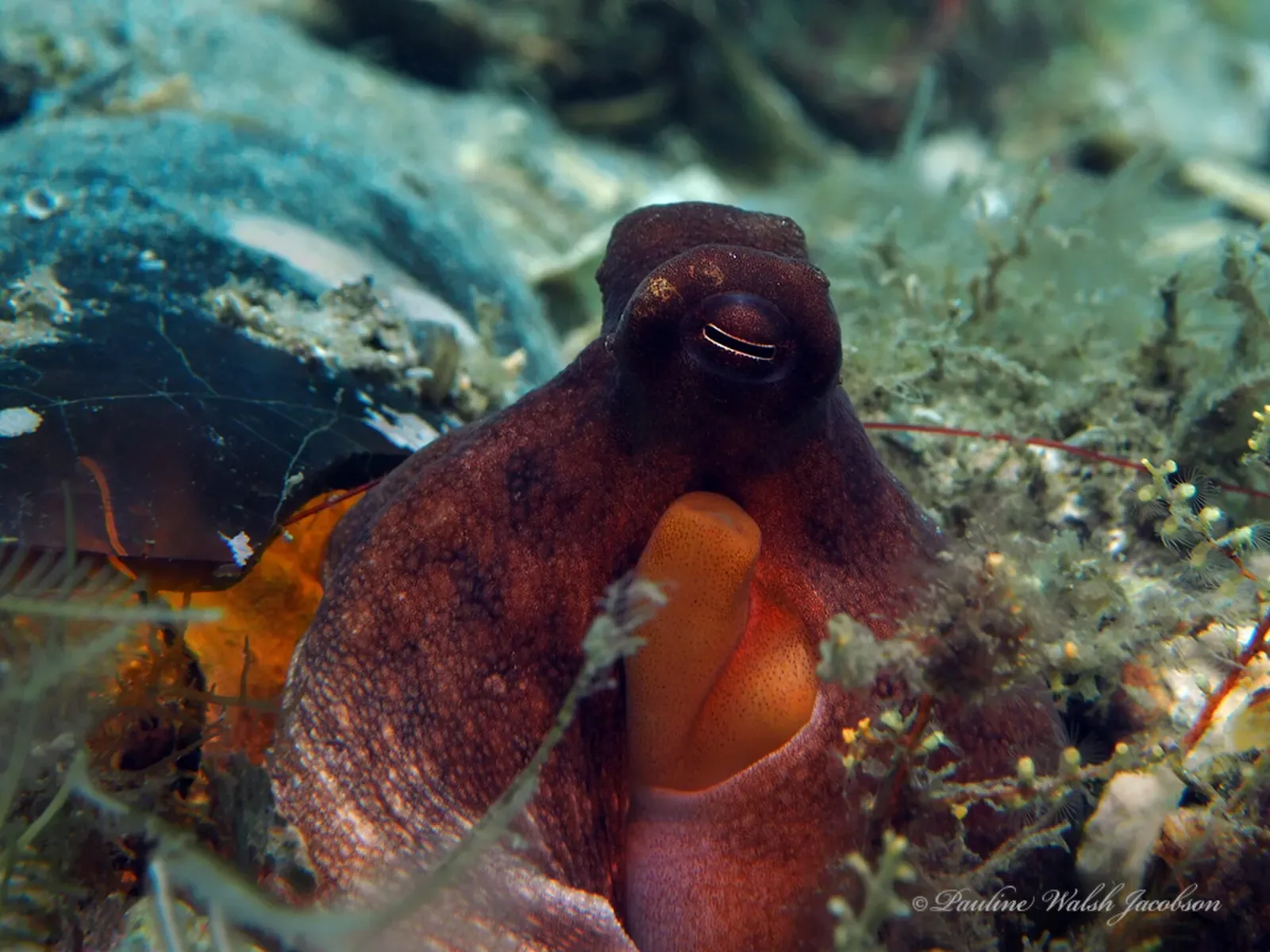
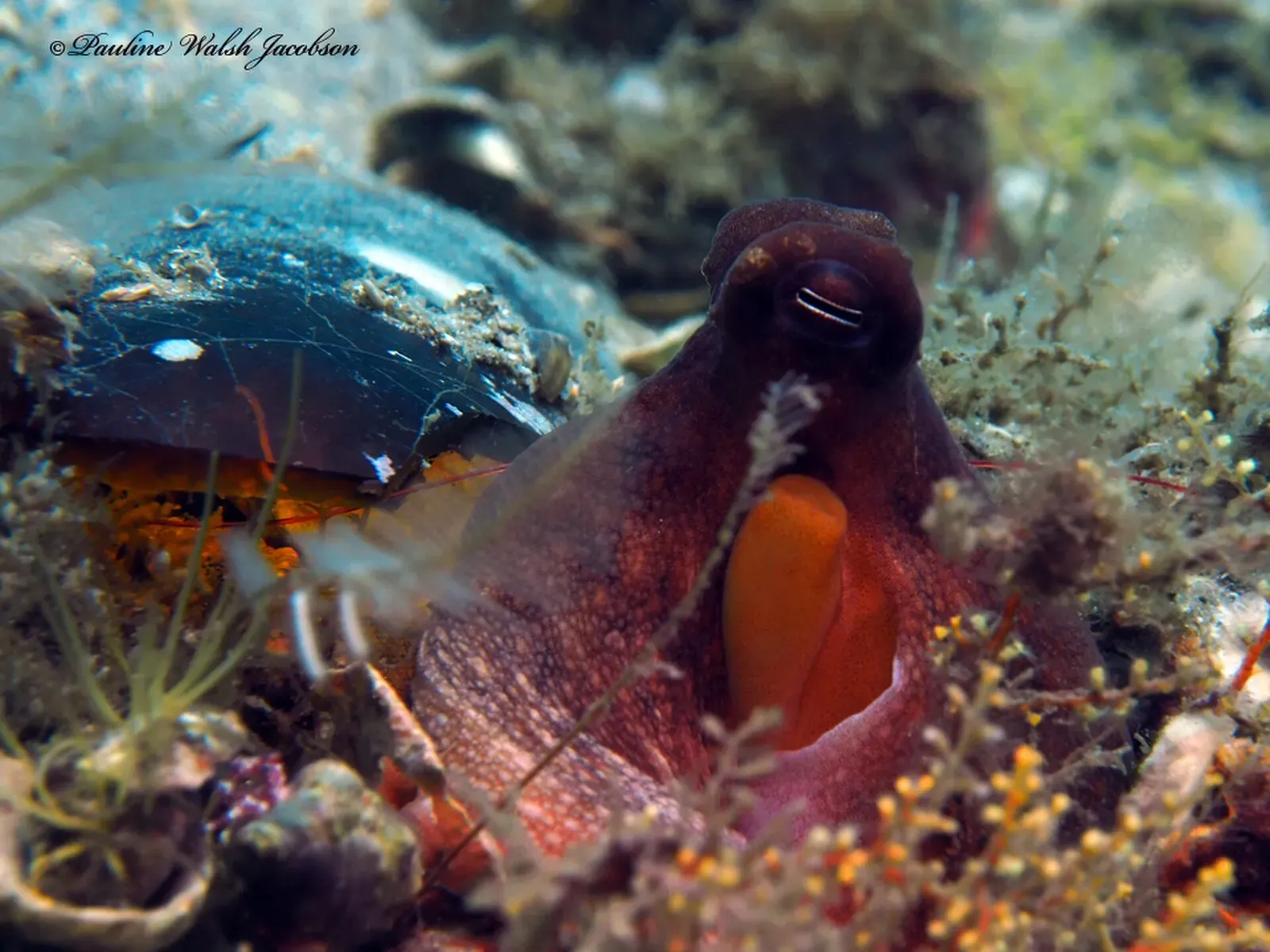
- A reddish-brown octopus with one orange-tipped arm curled peers from a rocky crevice underwater by Pauline Walsh Jacobson, CC BY 4.0, via Wikimedia Commons
- A round, mottled tan frogfish with a lure sitting on the seafloor near the bridge pilings by Pauline Walsh Jacobson, CC BY 4.0, via Wikimedia Commons
- A flat, warty polka-dot batfish with a yellow underside resting on sandy bottom by Pauline Walsh Jacobson, CC BY 4.0, via Wikimedia Commons
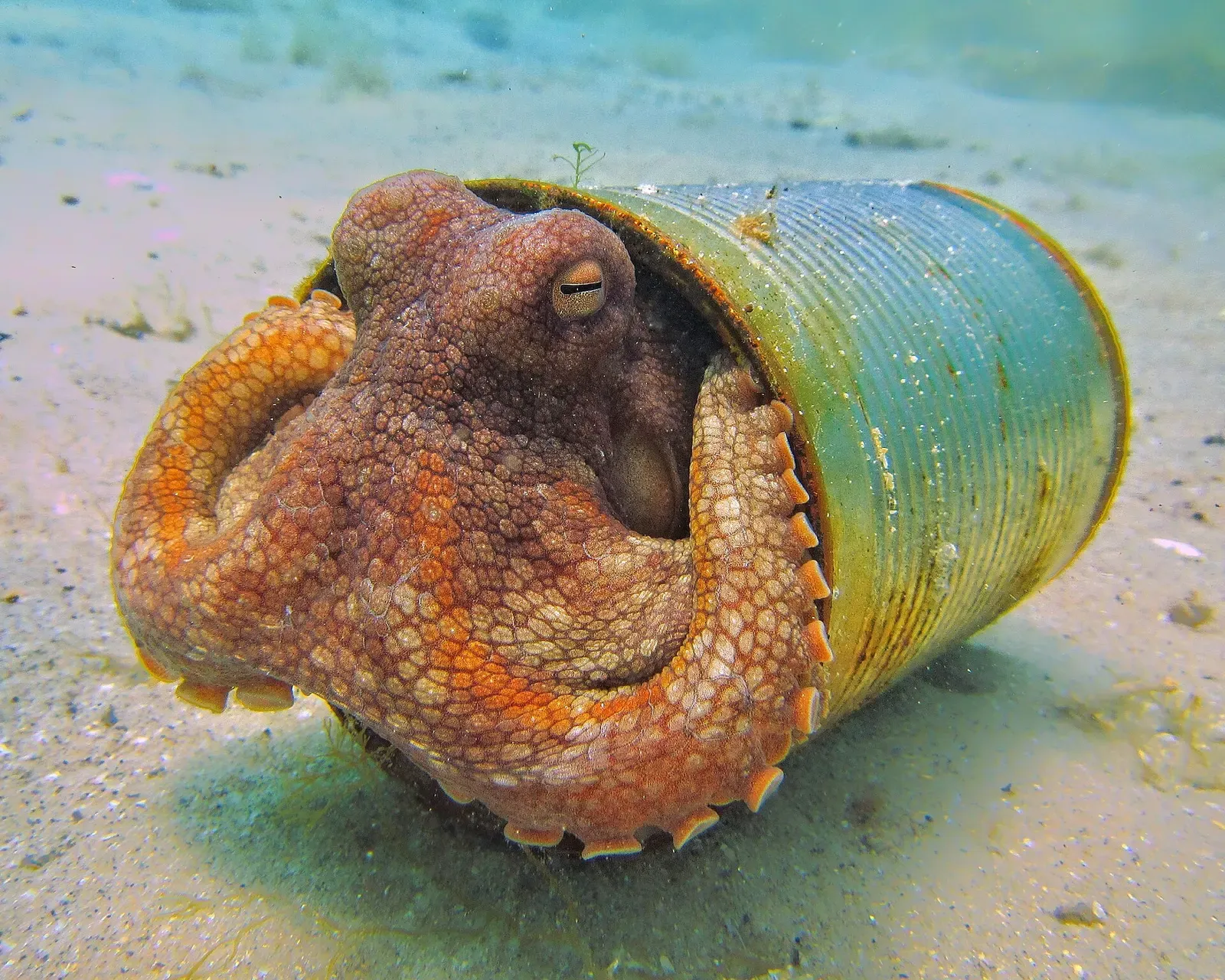
- An octopus emerging head-first from a hole in the sandy bottom by Pauline Walsh Jacobson, CC BY 4.0, via Wikimedia Commons
In The Logbook
- Frogfish: species, behaviour and where to diveMacro & muck · 12 min read
- The best muck diving in the worldMacro & muck · 6 min read
More dive sites in Blue Heron Bridge
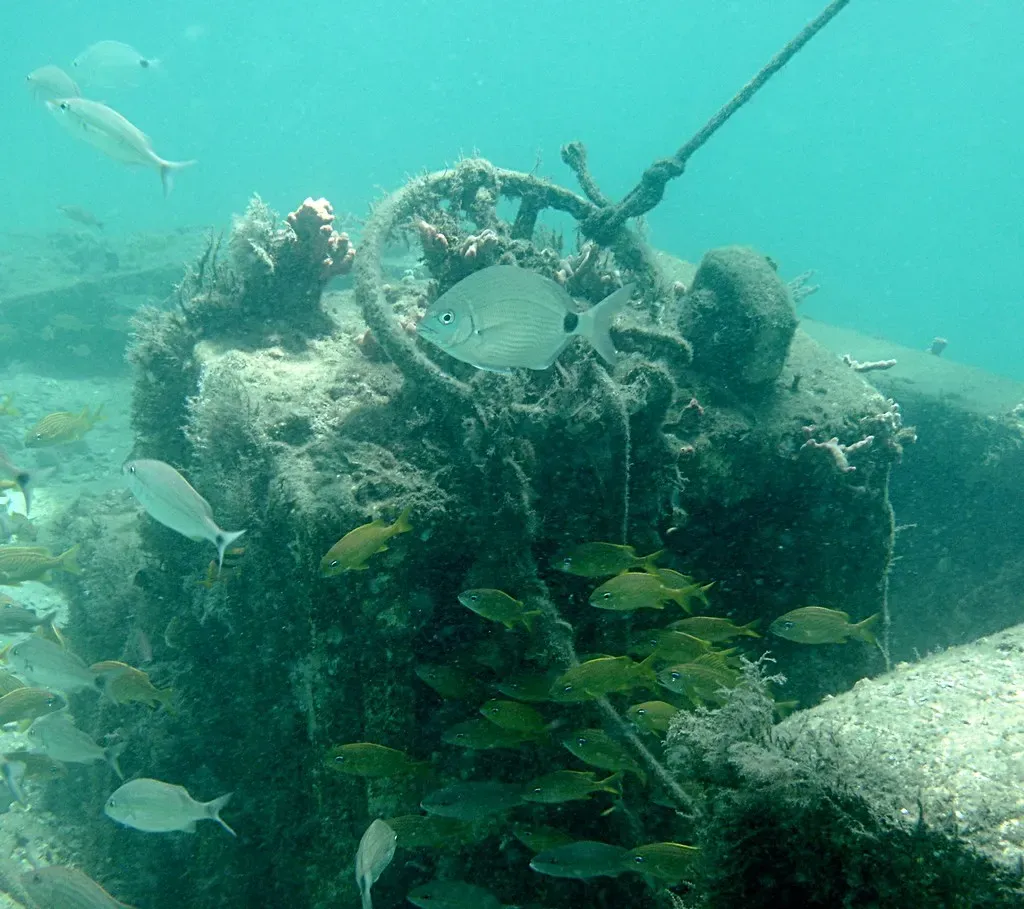
Reef balls, mini wrecks and hammerhead statues in a few feet of water
The Red Wall: the last column before the channel, thick with sponges
Similar dives elsewhere

Over 100 nudibranch and sea slug species in under 8 m of water
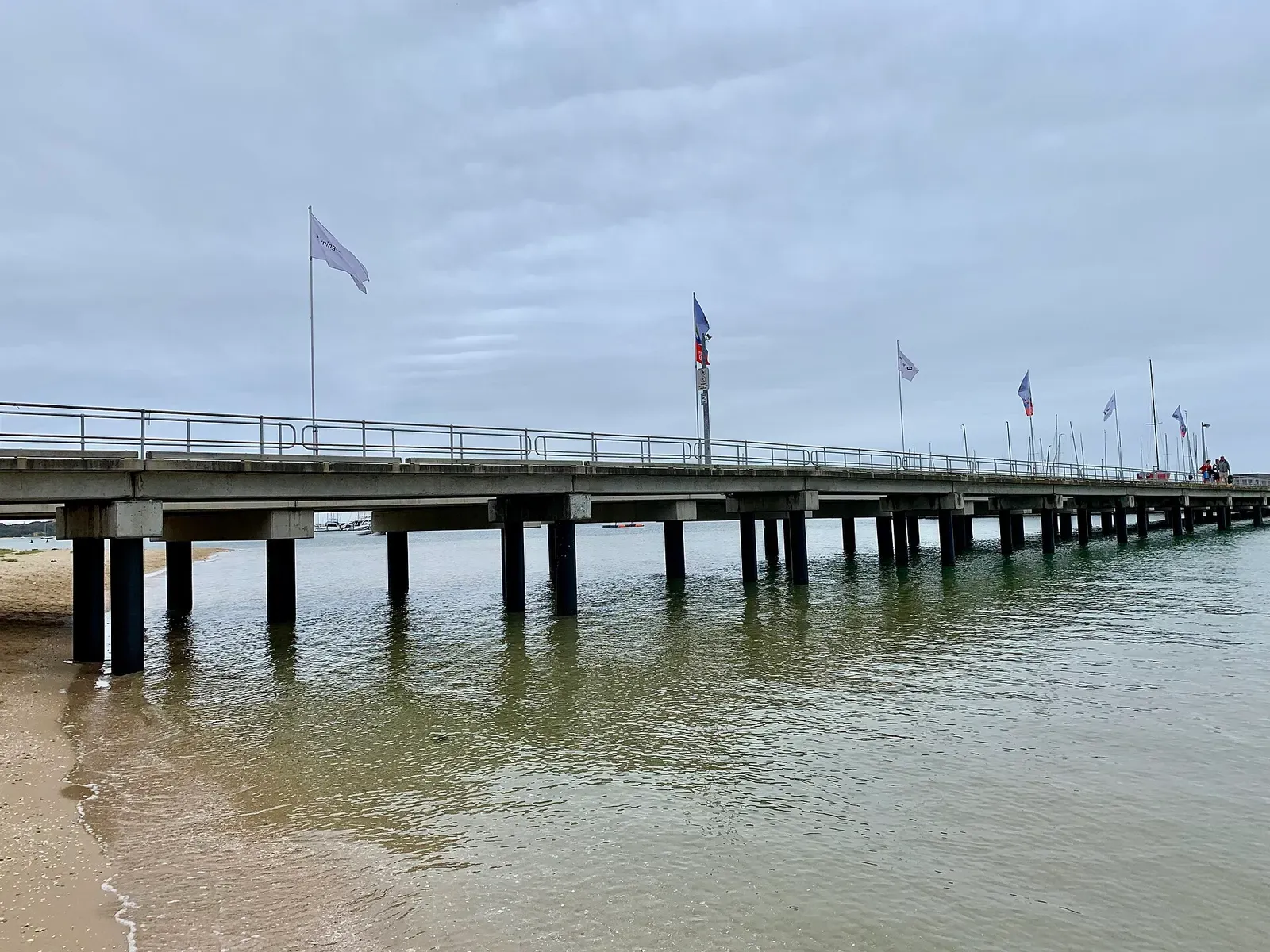
More than a hundred nudibranch species under one pier
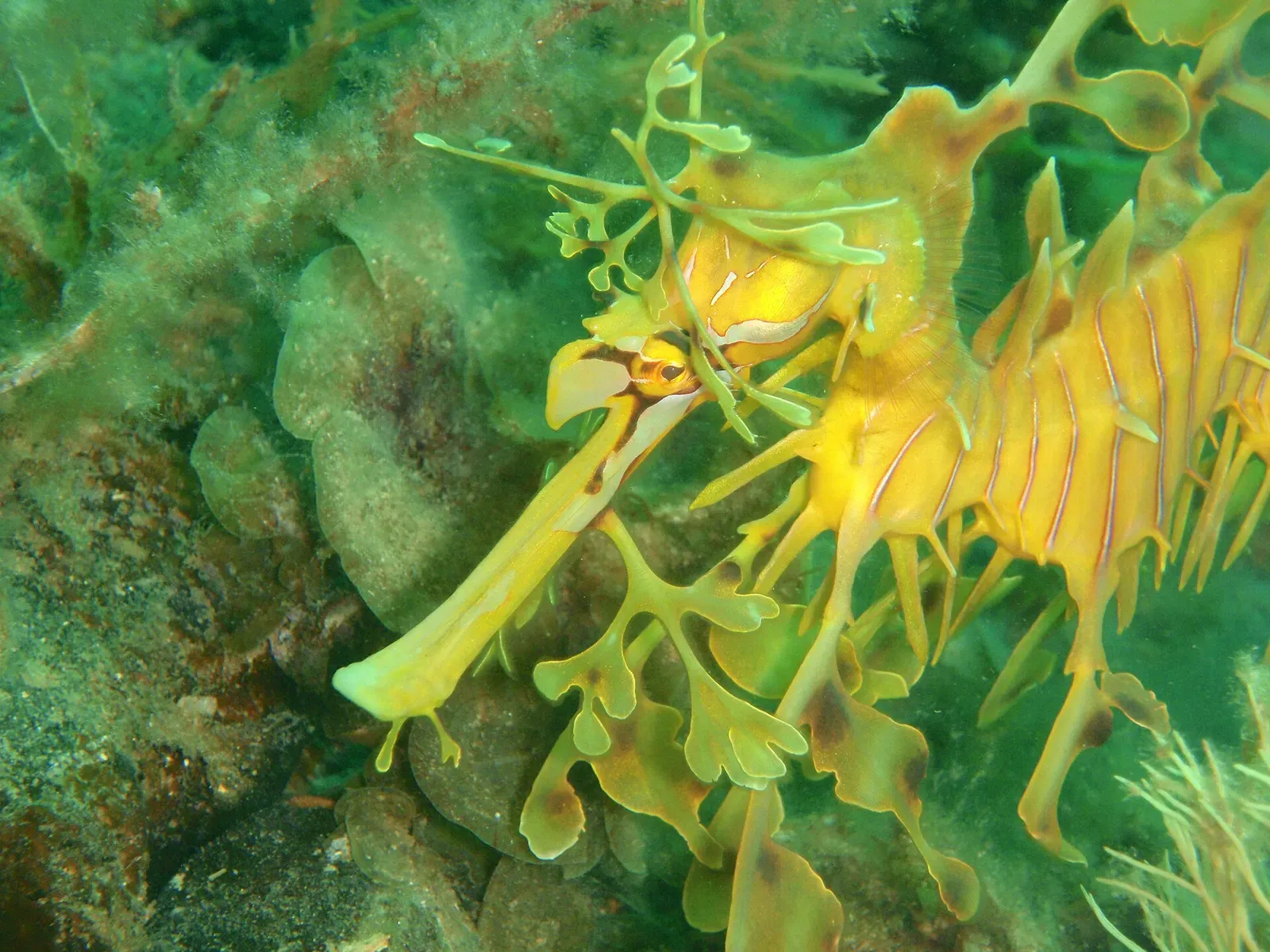
A resident leafy seadragon population lives under the old jetty.


Spider crabs in late May and June, wrecks either side