Blue Heron Bridge · United States · Muck & macro · Artificial reef
West Bridge Span
The Red Wall: the last column before the channel, thick with sponges
Photo: amanderson2 · CC BY 2.0
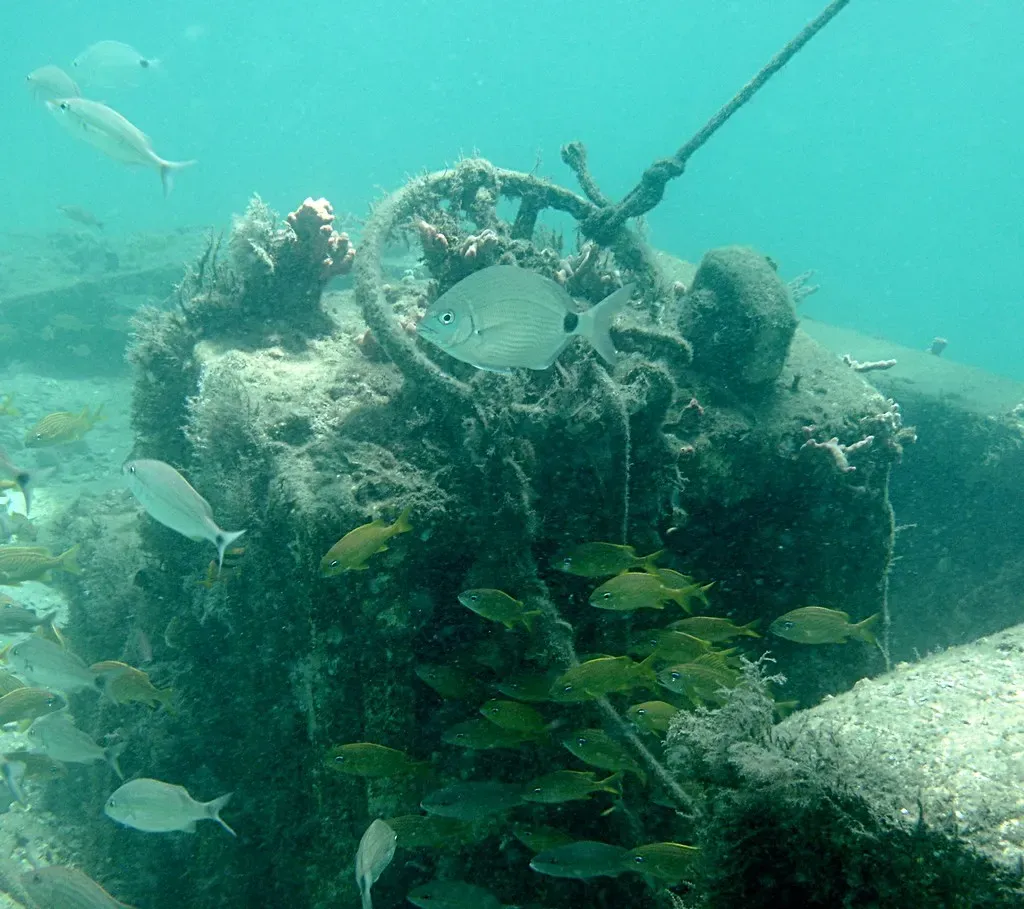
The western span is the taller of the two bridges, and its columns carry enough growth to pull in tropical fish, angelfish in particular. The last column before the boat channel, known as the Red Wall, is covered in red and pink sponges and worth a slow look for whatever is hiding in it. Depths run 5 to 20 feet (up to 6 m), so the tide window ends the dive long before air does.
Also known as West Blue Heron Bridge.
Where it is and how deep
26.7841° N, 80.0428° WApproximate position — the dashed circle shows where the site lies; your operator's briefing has the mooring.
The dive
Walk in from the beach inside the high-tide window and swim out to the pilings under the western span, the taller of the two bridges. The columns are the dive: they carry heavy growth that draws tropical fish, angelfish above all, and the rubble and sand around their bases is where the seahorses, octopus, pipefish, frogfish and nudibranchs sit. Depth over the span runs between 5 and 20 feet, about 1.5 to 6 metres.
Work along the line of columns to the Red Wall, the last one before the boat channel, covered in red and pink sponges. Look into it rather than at it, because that is where the critters hide. Do not cross into the marked channel: boats use it, a dive flag is required, and divers must stay within 91 m (300 ft) of it. Bigger animals are a rare sighting rather than a fixture here, but manatees, spotted eagle rays, nurse sharks, green sea turtles and Goliath grouper have all been recorded.
Marine life and season
- Macro critters
- Frogfish
- Octopus & cuttlefish
- Nudibranchs
- Eagle rays
- Sea turtles
- Dugongs & manatees
- Groupers
| Jan | Feb | Mar | Apr | May | Jun | Jul | Aug | Sep | Oct | Nov | Dec |
|---|---|---|---|---|---|---|---|---|---|---|---|
| Good | Good | Good | Prime | Prime | Prime | Prime | Prime | Good | Good | Good | Good |
Season follows Blue Heron Bridge: Divable year-round; Apr–Aug brings the warmest water and the widest range of juveniles, and every dive is tied to the high-tide window.
Know before you go
- A marked boat channel runs through the site and boats use it. Stay clear of it; the site map shows where it runs. A divers-down flag is required and divers must stay within 91 m (300 ft) of it.
- The dive is planned around high water. Enter between an hour before and an hour after high tide, the window the site is dived on.
Photos from West Bridge Span
amanderson2 · CC BY 2.0
amanderson2 · CC BY 2.0
Pauline Walsh Jacobson · CC BY 4.0
Questions divers ask
How deep is the west span at Blue Heron Bridge?+
The bridge site runs 5 to 20 feet, roughly 1.5 to 6 metres. Dives here are planned around the high-tide window rather than around air.
What is the Red Wall?+
The last bridge column before the boat channel on the west side, covered in red and pink sponges. It is searched slowly for critters hiding in the growth.
Sources
- Blue Heron Bridge dive site guide — Force-E Scuba Centers
- Reef Smart Guides — Wikipedia
- Phil Foster Park (OpenStreetMap) — OpenStreetMap
Photo credits
- A ship's wheel and mounted post, encrusted with growth underwater, with small fish schooling around it by amanderson2, CC BY 2.0, via Openverse
- A spiny, striped burrfish resting on orange sponge growth by amanderson2, CC BY 2.0, via Openverse
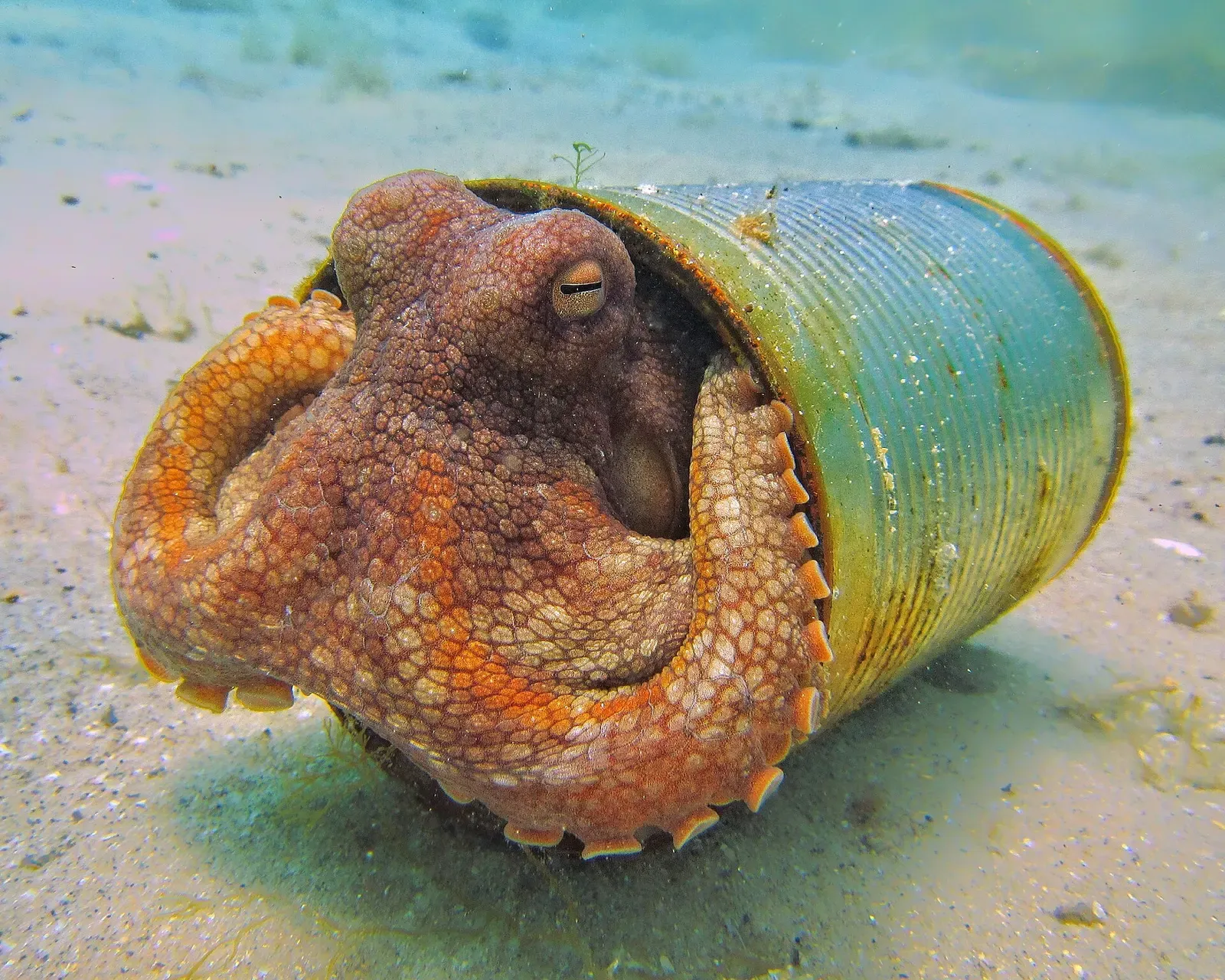
- An octopus peering out from a den made of shells and rubble by amanderson2, CC BY 2.0, via Openverse
- A round, mottled tan frogfish with a lure sitting on the seafloor by Pauline Walsh Jacobson, CC BY 4.0, via Wikimedia Commons
In The Logbook
- Nudibranchs: species, habits and where to diveMacro & muck · 13 min read
- Frogfish: species, behaviour and where to diveMacro & muck · 12 min read
- Night diving: the best night dives in the worldNight diving · 12 min read
- The best muck diving in the worldMacro & muck · 6 min read
- The best shore dives in the worldShore diving · 8 min read
More dive sites in Blue Heron Bridge
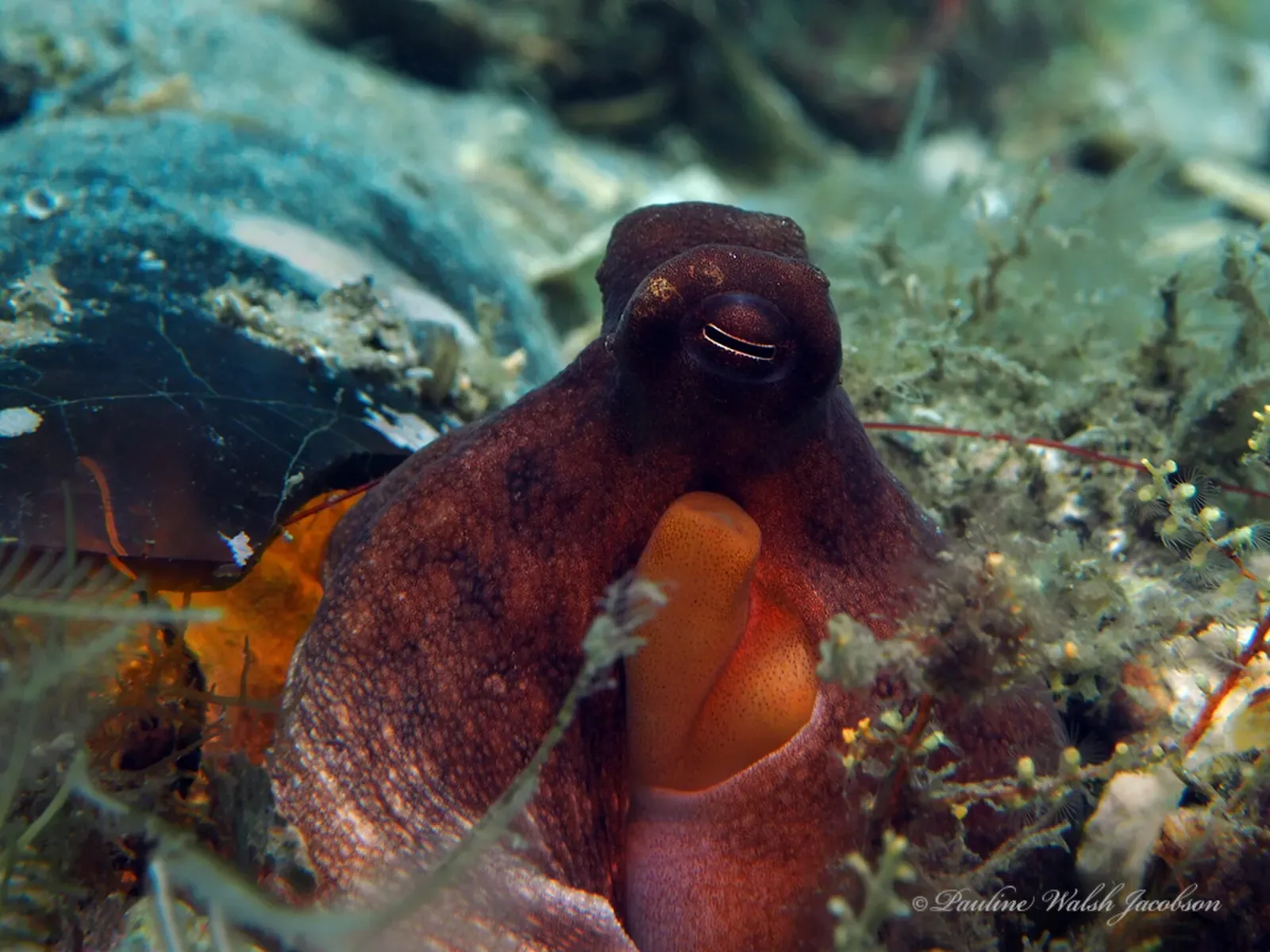
A submerged sailboat and a resident school of spadefish
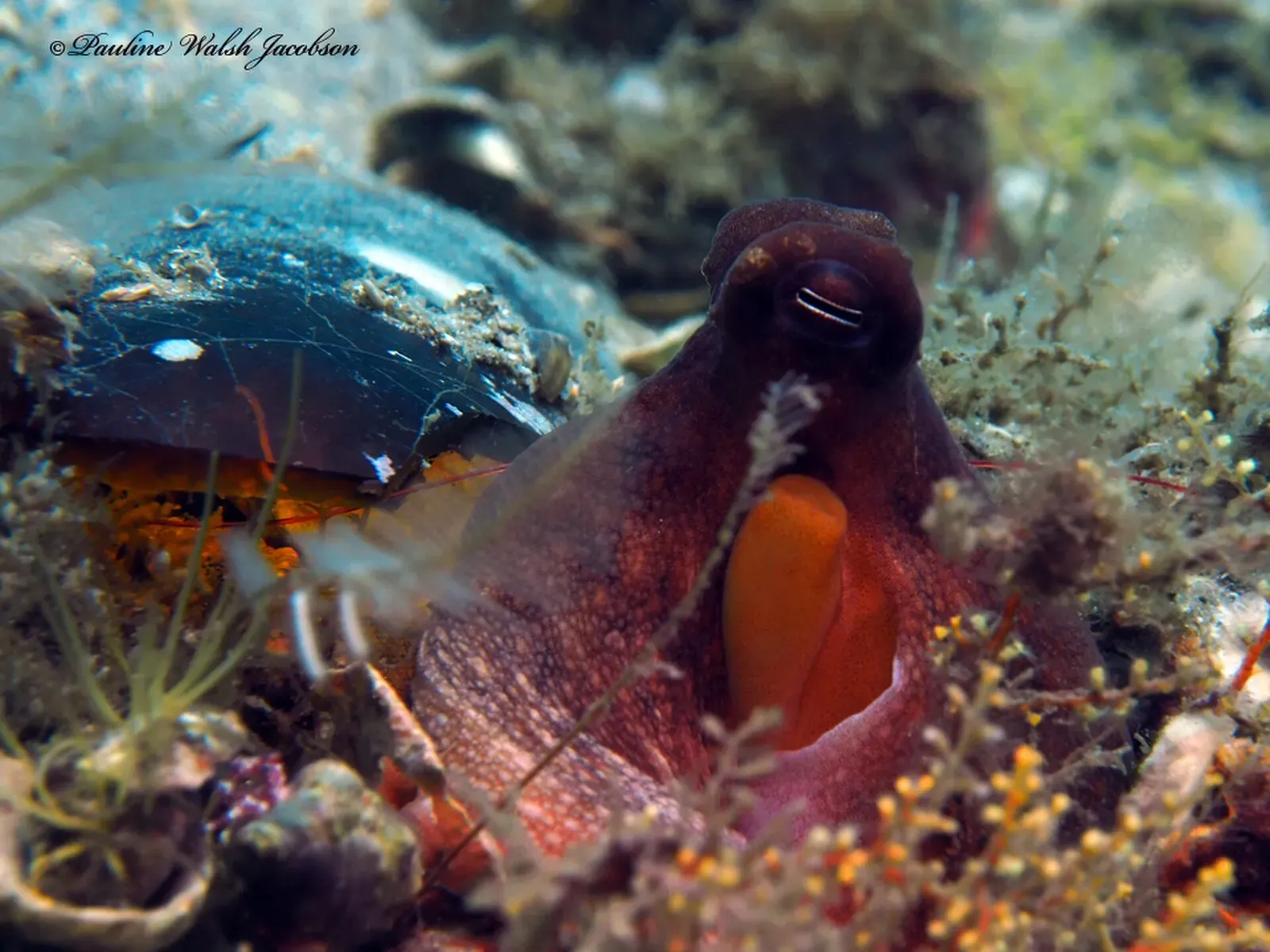
Reef balls, mini wrecks and hammerhead statues in a few feet of water
Similar dives elsewhere

Over 100 nudibranch and sea slug species in under 8 m of water
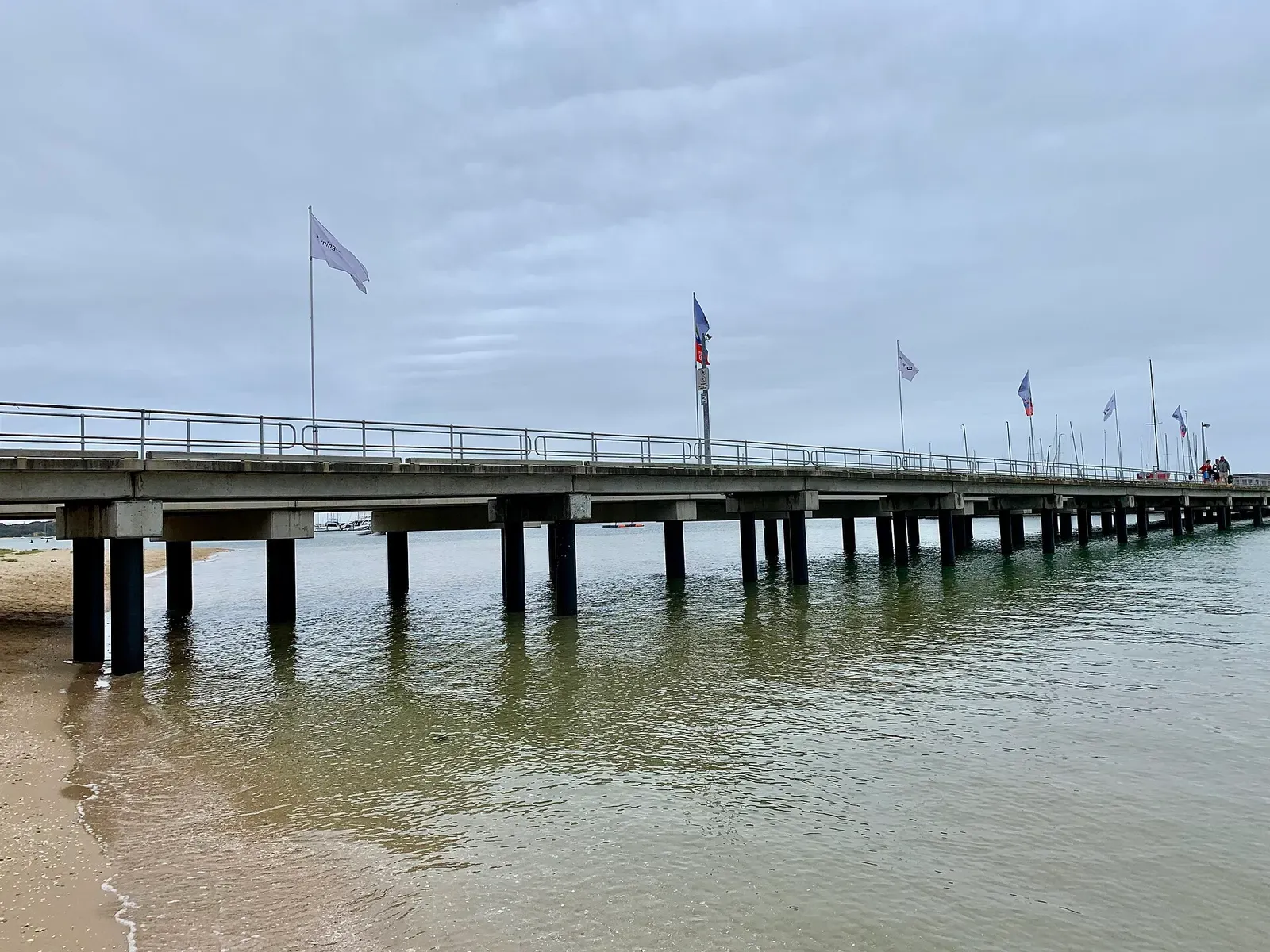
More than a hundred nudibranch species under one pier
Spider crabs in late May and June, wrecks either side


Coral-grown structures at nine metres, dived for shrimp and nudibranchs