South America · Chile
Robinson Crusoe Island (Juan Fernández)
The endemic Juan Fernández fur seal colony at Tres Puntas
Photo: Richard N Horne · CC BY-SA 4.0
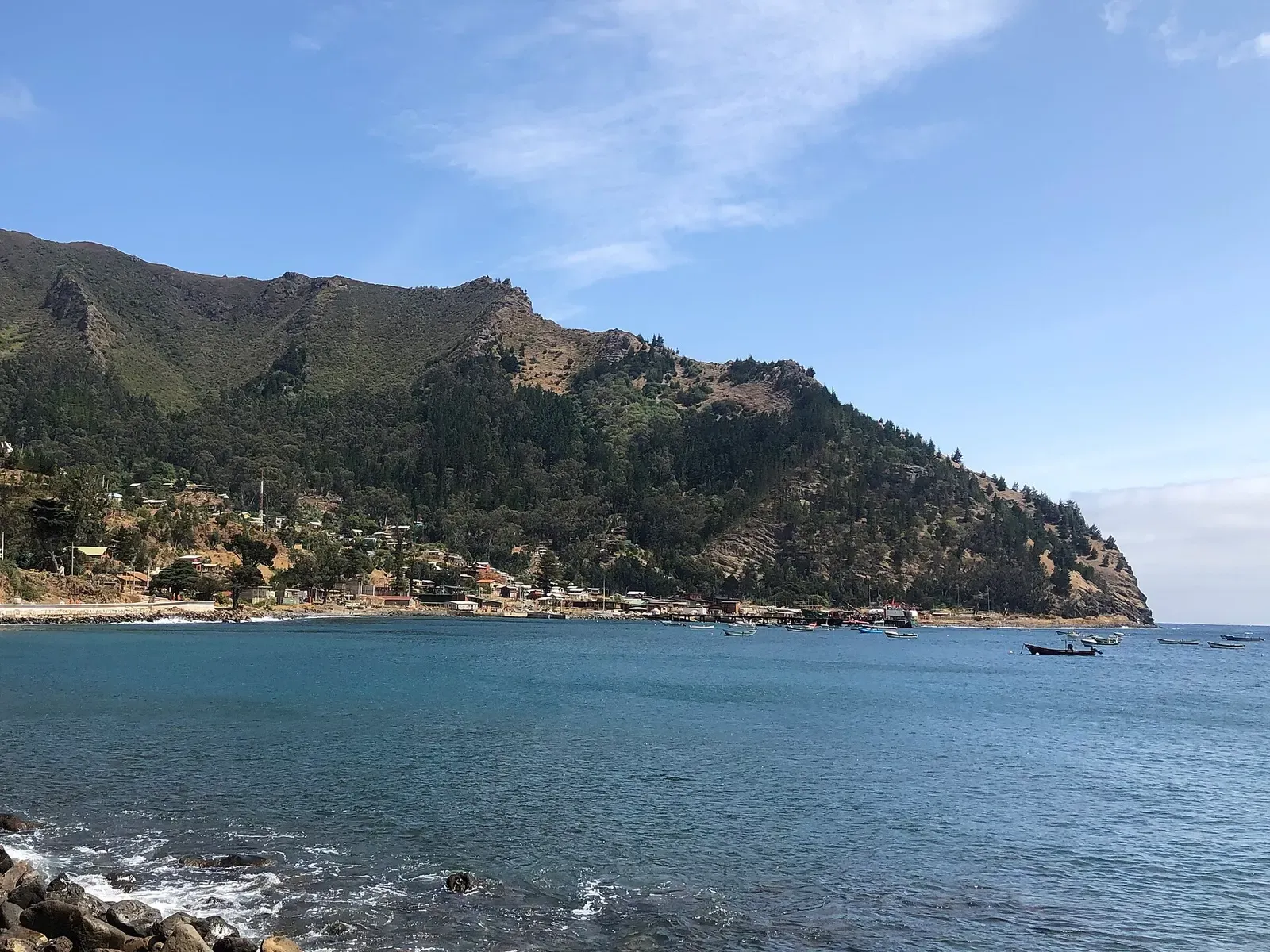
Robinson Crusoe Island, in Chile's Juan Fernández archipelago, is a remote national-park island where three small dive centres run boat dives around its coast and the smaller Santa Clara. Sites range from Sal Si Puedes in Cumberland Bay to the caverns and fur-seal colony at Tres Puntas, deep walls at the Los Chamelos islets and the Miraflores, a wreck sunk in 1921 that lies at 36 m. The endemic Juan Fernández fur seal and clawless spiny lobster live nowhere else.
About diving in Robinson Crusoe Island (Juan Fernández)
Diving runs from San Juan Bautista, the main town, by boat, and the sites are grouped into three zones by crossing time. Cumberland Bay, home to Sal Si Puedes, lies within 20 minutes. The bay at Tres Puntas is about 40 minutes out, and surface intervals there are spent beside the fur-seal colony. The Los Chamelos islets are the furthest run, and Santa Clara, the small island off Robinson Crusoe, holds the Miraflores wreck and the Los Negros site.
The diving divides between deep dives, caverns and walls. Tres Puntas mixes deep profiles with cavern swims, and the Los Chamelos islets drop as walls suited only to experienced divers. The Miraflores, sunk off Santa Clara in 1921, rests at 36 m and holds a dense bank of life. The animals are particular to the islands: the Juan Fernández fur seal, the archipelago's only endemic mammal, called the two-haired fur seal in Spanish for its double coat, and the clawless Juan Fernández spiny lobster. The German cruiser Dresden, scuttled in Cumberland Bay in the First World War, lies at 70 m, a technical dive.
It suits experienced, unhurried divers who can build a trip around a small air-taxi schedule, with flights clustered in January and February and wind or rain able to stall landings in any month. Dives are offered for every certification level, but the Los Chamelos walls call for advanced divers and the Miraflores wreck for deep certification as well, and the water sits between about 14 and 20 °C. Divers wanting a shorter, easier trip are better served on the mainland.
Best time to dive Robinson Crusoe Island (Juan Fernández)
| Jan | Feb | Mar | Apr | May | Jun | Jul | Aug | Sep | Oct | Nov | Dec |
|---|---|---|---|---|---|---|---|---|---|---|---|
| Good | Good | Good | Fair | Fair | Fair | Fair | Fair | Fair | Fair | Fair | Fair |
Flights from Santiago run mostly in January and February and seldom outside November to March; January to March is also the warmest water.
Dive types & marine life
The Juan Fernández fur seal, Arctocephalus philippi, is the archipelago's only endemic mammal, and its colony at Tres Puntas is part of the dive day there. The clawless Juan Fernández spiny lobster, Jasus frontalis, is endemic too.
- Wall
- Cave & cavern
- Wreck
- Seals & sea lions
Best dive sites in Robinson Crusoe Island (Juan Fernández)
- 1
Tres Puntas
Bay about 40 minutes out with deep dives, caverns and the fur-seal colony used for surface intervals.
- 2
Miraflores Wreck
Ship sunk off Santa Clara in 1921, lying at 36 m; advanced divers with deep certification only.
- 3
Sal Si Puedes
The legendary site of Cumberland Bay, no more than 20 minutes from the village by boat.
- 4
Los Chamelos
Deep wall dives on the furthest islets, for advanced and experienced divers only.
Site guides
Wreck
A 1921 wreck off Santa Clara at 36 m, carrying a dense bank of life
Wreck
A First World War German cruiser at 70 m in Cumberland Bay
How to get to Robinson Crusoe Island (Juan Fernández)
Air taxis fly from Tobalaba (Eulogio Sánchez) Airport in eastern Santiago, about 1½ hours, mostly in January and February and seldom outside November to March. With no interior roads, a 1.5-hour motor launch links the airstrip with San Juan Bautista, the main town.
Photos from Robinson Crusoe Island (Juan Fernández)
Fraenerys · CC BY 3.0
Questions divers ask
What certification do the Robinson Crusoe Island dives need?+
Dives run for every level. Los Chamelos is for advanced divers, and the Miraflores wreck at 36 m needs deep certification.
Where do divers see the Juan Fernández fur seal?+
The Juan Fernández fur seal colony at Tres Puntas is part of the dive day there, used for surface intervals. The seal is the archipelago's only endemic mammal.
How do divers get to Robinson Crusoe Island?+
Air taxis fly from Tobalaba Airport in eastern Santiago, about 1½ hours, mostly in January and February and seldom outside November to March. A 1.5-hour motor launch links the airstrip with San Juan Bautista.
Sources
- Archipiélago Expediciones: home — Archipiélago Expediciones
- Buceos Guiados — Archipiélago Expediciones
- Bautismo Submarino — Archipiélago Expediciones
- Nado con lobos marinos — Archipiélago Expediciones
- Servicios — Marenostrum Expediciones
- Scuba Diving on Robinson Crusoe Island — La Robinson Oceanic
- Juan Fernández Islands – Wikivoyage — Wikivoyage
- Robinson Crusoe Island – Wikipedia — Wikipedia
- Archipiélago de Juan Fernández National Park — Wikipedia
- SMS Dresden (1907) — Wikipedia
- Robinson Crusoe Island water temperature — seatemperature.info
Photo credits
- Cumberland Bay with the houses of San Juan Bautista along the shore below steep forested ridges, small boats moored offshore by Richard N Horne, CC BY-SA 4.0, via Wikimedia Commons
- Eroded red and ochre volcanic cliffs streaked with green above a rocky shoreline at Bahía del Padre by Fraenerys, CC BY 3.0, via Wikimedia Commons
Embed
Run a dive centre, club or blog? Embed this map of 1 dive sites near Robinson Crusoe Island (Juan Fernández) on your own page.
Similar destinations
Cold upwelling packs granite walls with fish an hour from Rio

Hundreds of spinner dolphins gather daily in Baía dos Golfinhos.

Giant manta rays glide over an offshore granite reef from March through September.


.jpeg)
Granite reefs where tropical and temperate species overlap