
South America · Brazil
Laje de Santos
Giant manta rays glide over an offshore granite reef from March through September.
Photo: Fserpa · CC BY-SA 4.0
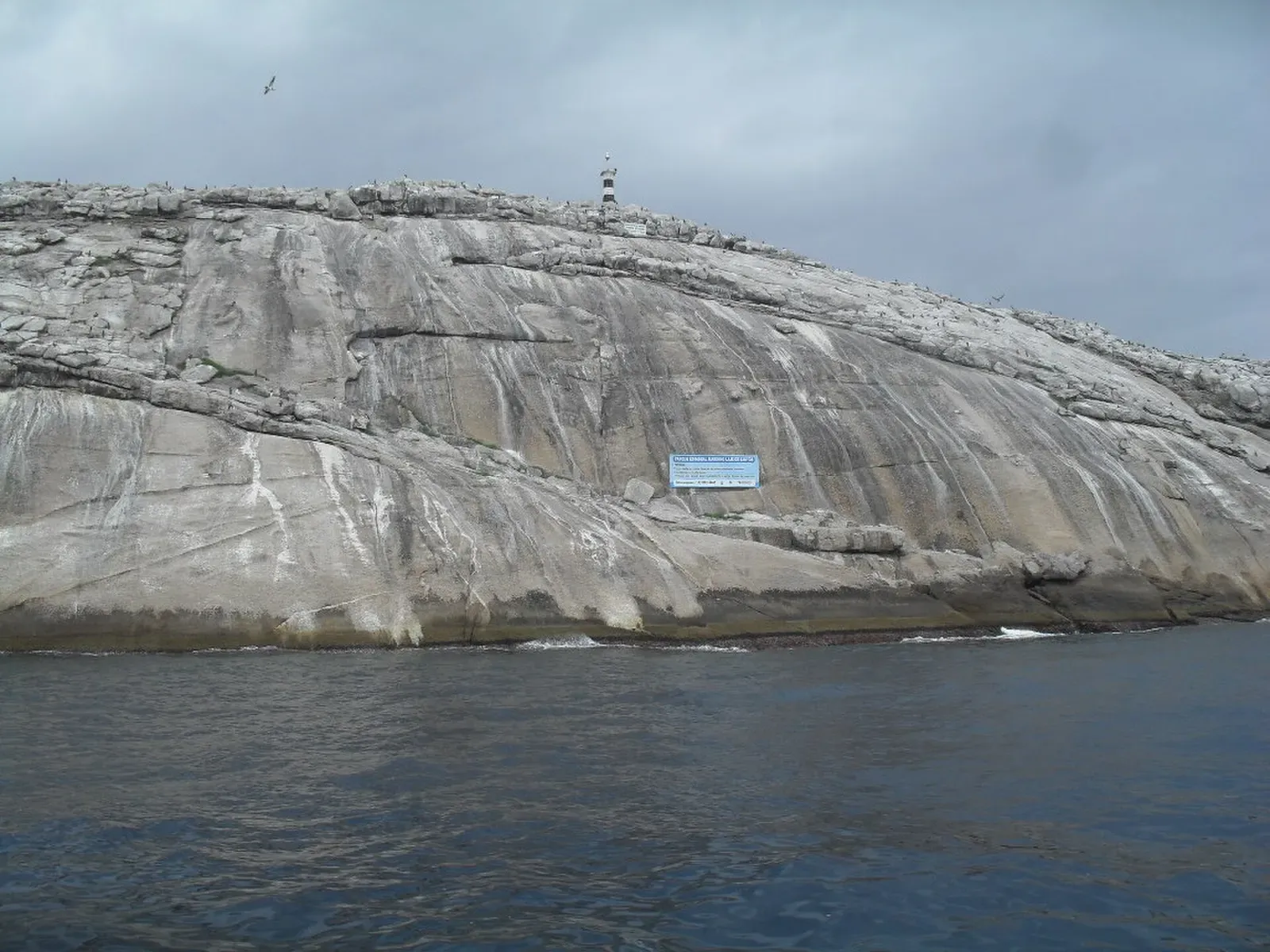
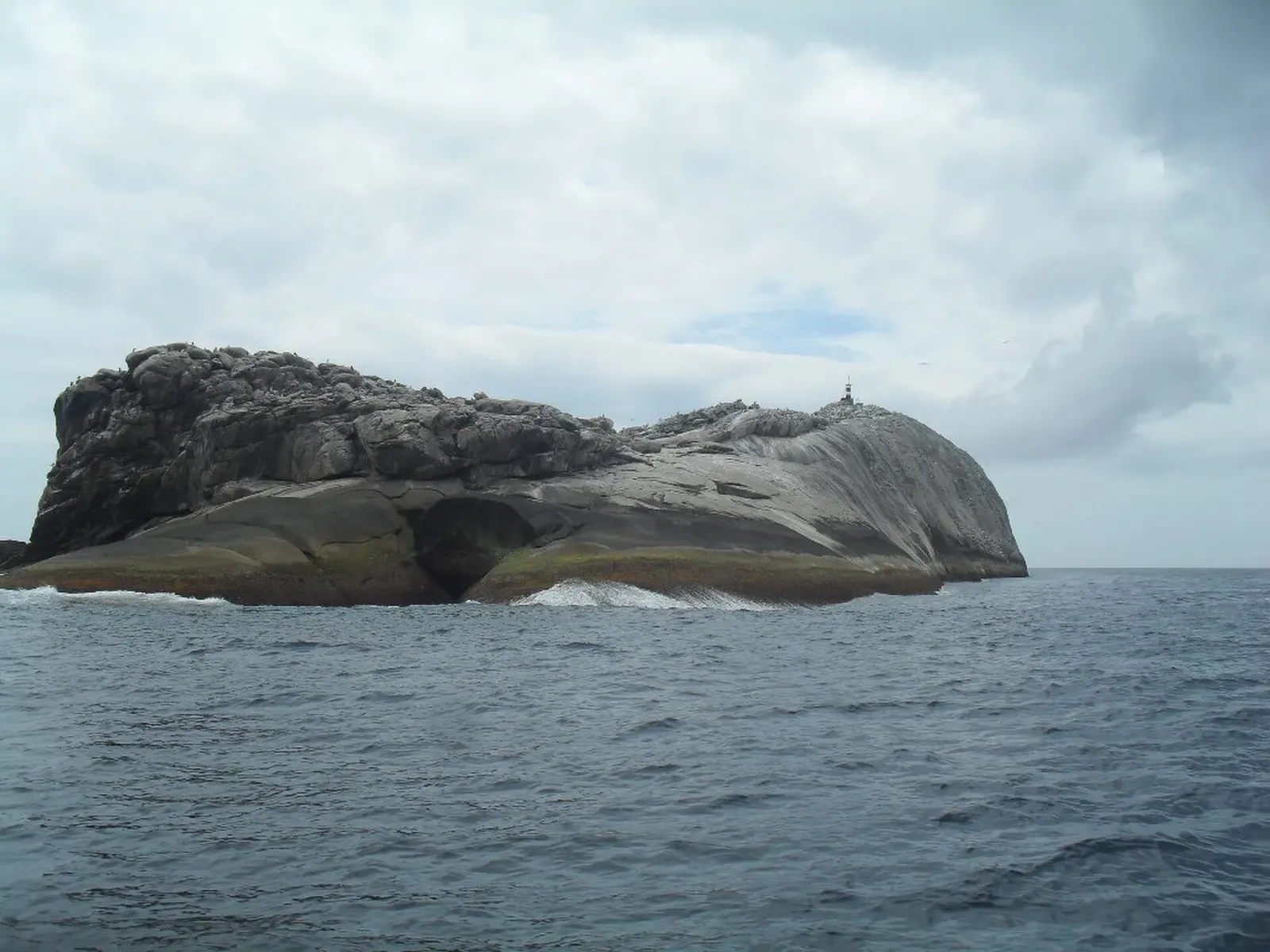
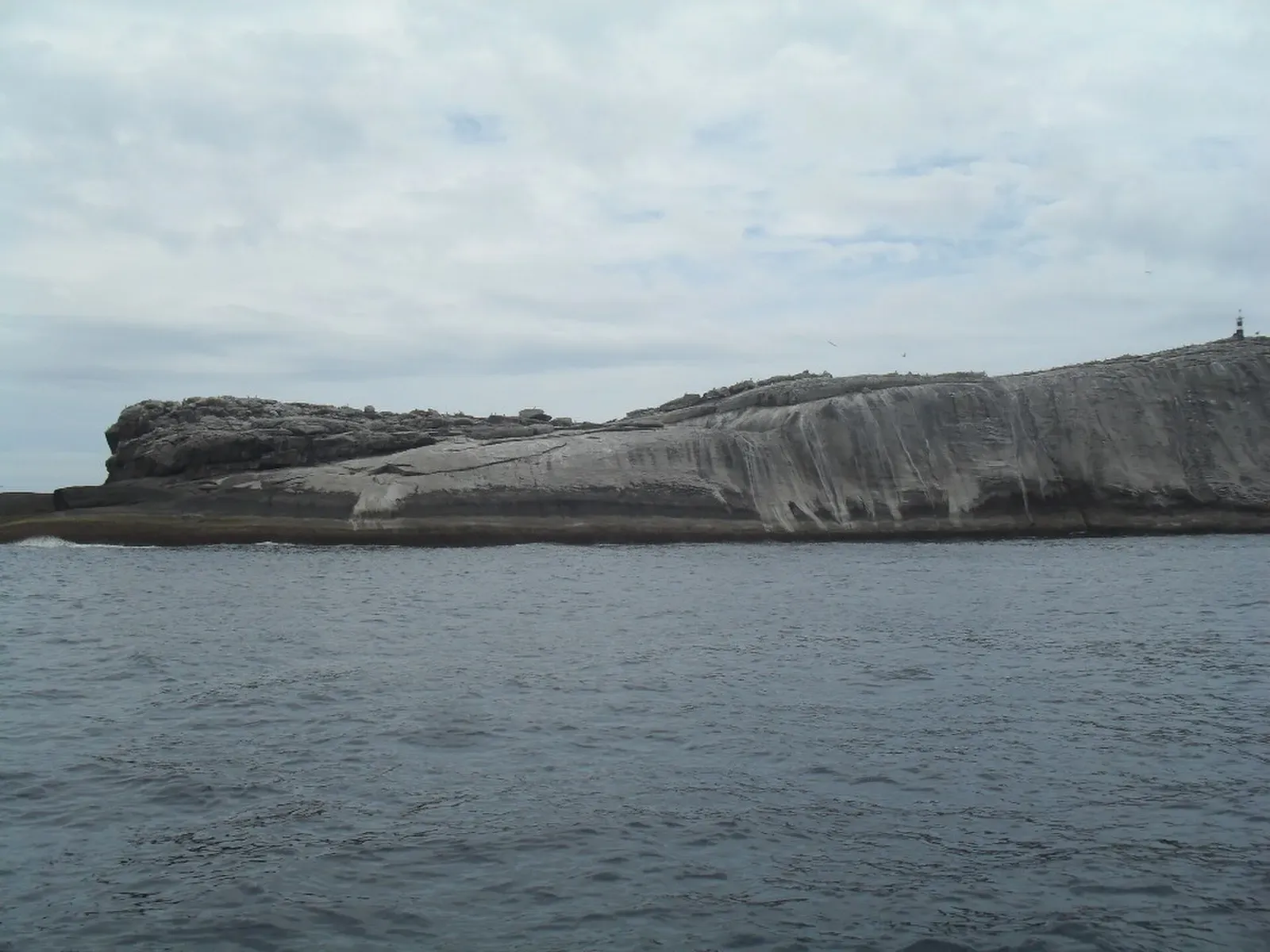
Laje de Santos is an isolated granite islet and submerged reef complex about 33 nautical miles off Santos, protected as São Paulo state's first marine park since 1993. Day-boat dives explore rocky pinnacles, walls, swim-throughs and a small wreck in water from 6 to 35 m deep, with big resident groupers and schooling jacks around the rocks. Giant manta rays pass through the park from March to September, and cold thermoclines occasionally push visibility and temperature in opposite directions between seasons.
About diving in Laje de Santos
This is a full day out rather than something you slot into an afternoon. Boats leave the marinas around Santos and Guarujá early, and the crossing takes a good part of the morning before anyone gets wet. There is nowhere to land at the islet, so surface intervals, lunch and kit changes all happen on deck, and the day ends back on the mainland in the late afternoon. Carry more food, water and sun cover than a shore-based day would ask for.
Underwater the park reads as a set of separate granite features rather than one continuous reef. The islet drops away in slabs and steps, and the submerged peaks standing off it are each dived as their own site, with the boat repositioning between them. Cover is sponge, algae and sea fans on bare rock rather than hard coral, since this is subtropical water and not tropical, and fish stack up wherever current pushes over a high point.
Waiting for mantas is a different kind of dive from the reef work: you settle near a pinnacle in cool green water and stay put rather than swim, which is why guides press hard on buoyancy and on keeping hands and fins off the rock. Temperature swings widely across the year and a thermocline can drop it sharply mid-dive, so most regulars dive it in 5–7 mm rather than the suit that would be ample further up the Brazilian coast. The crossing is exposed, and anyone prone to seasickness should take something before boarding rather than after.
Best time to dive Laje de Santos
| Jan | Feb | Mar | Apr | May | Jun | Jul | Aug | Sep | Oct | Nov | Dec | |
|---|---|---|---|---|---|---|---|---|---|---|---|---|
| Season | Fair | Fair | Good | Prime | Prime | Prime | Prime | Good | Good | Fair | Fair | Fair |
| Sea surface | 27°C81°F | 27°C81°F | 26°C79°F | 26°C79°F | 24°C75°F | 22°C72°F | 21°C70°F | 21°C70°F | 21°C70°F | 22°C72°F | 23°C73°F | 25°C77°F |
| Daytime high | 30°C86°F | 29°C84°F | 28°C82°F | 28°C82°F | 27°C81°F | 26°C79°F | 25°C77°F | 25°C77°F | 27°C81°F | 27°C81°F | 27°C81°F | 29°C84°F |
| Rain | 144 mm5.7 in | 131 mm5.2 in | 110 mm4.3 in | 55 mm2.2 in | 42 mm1.7 in | 54 mm2.1 in | 34 mm1.3 in | 33 mm1.3 in | 44 mm1.7 in | 88 mm3.5 in | 97 mm3.8 in | 104 mm4.1 in |
| Jan | Feb | Mar | Apr | May | Jun |
|---|---|---|---|---|---|
| Fair | Fair | Good | Prime | Prime | Prime |
| Sea surface | |||||
| 27°C81°F | 27°C81°F | 26°C79°F | 26°C79°F | 24°C75°F | 22°C72°F |
| Daytime high | |||||
| 30°C86°F | 29°C84°F | 28°C82°F | 28°C82°F | 27°C81°F | 26°C79°F |
| Rain | |||||
| 144 mm5.7 in | 131 mm5.2 in | 110 mm4.3 in | 55 mm2.2 in | 42 mm1.7 in | 54 mm2.1 in |
| Jul | Aug | Sep | Oct | Nov | Dec |
|---|---|---|---|---|---|
| Prime | Good | Good | Fair | Fair | Fair |
| Sea surface | |||||
| 21°C70°F | 21°C70°F | 21°C70°F | 22°C72°F | 23°C73°F | 25°C77°F |
| Daytime high | |||||
| 25°C77°F | 25°C77°F | 27°C81°F | 27°C81°F | 27°C81°F | 29°C84°F |
| Rain | |||||
| 34 mm1.3 in | 33 mm1.3 in | 44 mm1.7 in | 88 mm3.5 in | 97 mm3.8 in | 104 mm4.1 in |
2011–2025 averages. Sea surface: NOAA Coral Reef Watch, measured at the surface, so deeper water can run colder. Daytime high and rain: NASA POWER.
Autumn and winter (Mar–Sep) bring the clearest water and the manta ray aggregation; summer is warmer but rain and runoff cut visibility, and strong wind can close the park to boats.
Best months: April, May, June, July
Laje de Santos water temperature and weather by month
The sea surface runs from 21 °C (70 °F) in August to 27 °C (81 °F) in February. It is 24 °C (75 °F) or warmer from December to May. Most rain falls from October to March, peaking at about 140 mm (5.5 in) in January; July to September are the driest. Daytime highs reach 30 °C (86 °F) in January and drop to 25 °C (77 °F) in July. Below the surface the water can drop to about 18 °C (64 °F), so pack a 5 mm suit.
Dive types & marine life
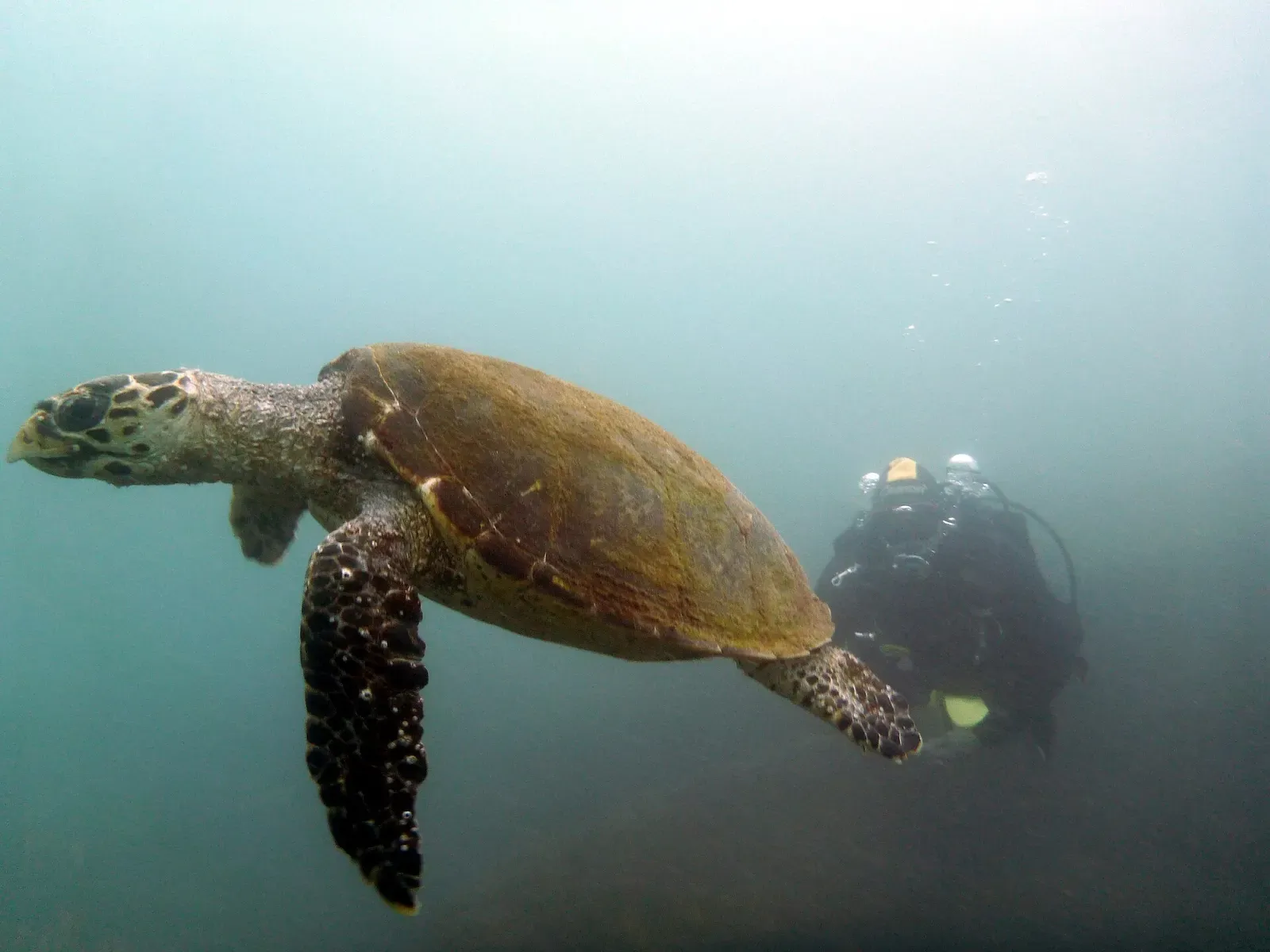
Giant mantas pass through between March and September, with April to July the most reliable stretch and the clearest water alongside it. Grouper, jacks and barracuda hold on the submerged rock peaks in any month, turtles are common on the shallower sites, and dolphins are more often a sighting from the boat on the crossing than something you meet at depth.
- Reef
- Wall
- Wreck
- Cave & cavern
- Drift
- Manta rays
- Groupers
- Sea turtles
- Dolphins
- Barracuda
- Trevally & jacks
Best dive sites in Laje de Santos
A shallow rock at the islet's edge where turtles gather
A U-shaped passage under an arch that stands above the water
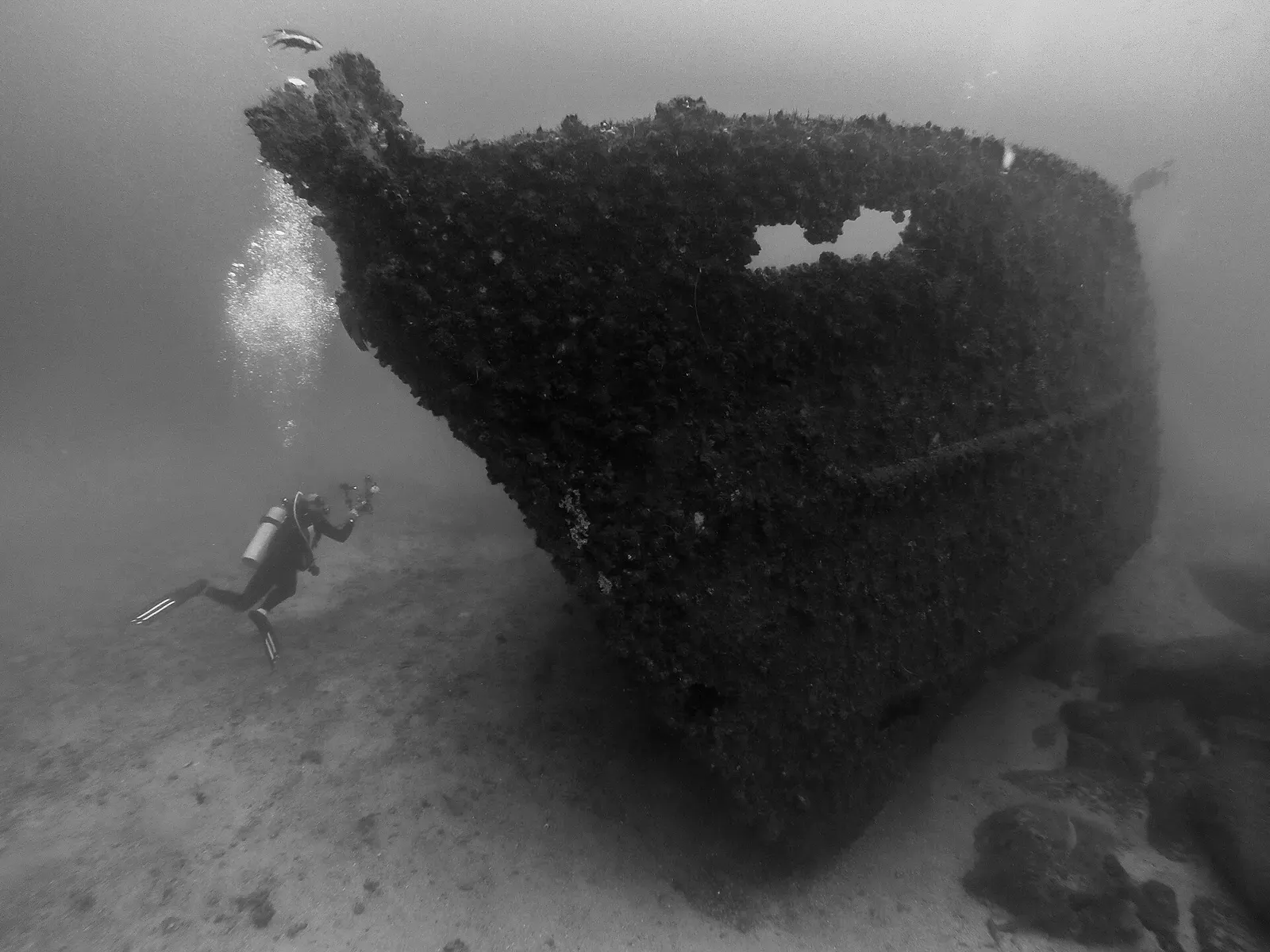
An iron fishing boat scuttled to seed an artificial reef
Fishing anchors lost in the boulders off the Laje's west side
Parcel do Brilhante
Submerged rock peak at 15 m that catches the light in clear water.
Parcel do Bandolim
One of the park's most popular rock formations for schooling fish.
How to get to Laje de Santos
Nearly everyone comes out of São Paulo, an hour or two down to the coast. Day boats run from Santos and the Guarujá side and are back by late afternoon; there is no accommodation, shore diving or facility of any kind at the islet, so it is either a long day trip or a night on the coast beforehand. Wind cancels departures outright, so leave a spare day in the plan.
Photos from Laje de Santos
mlsouza85 · CC BY-SA 3.0
jpdandretta · CC BY 4.0
João D'Andretta · CC BY 4.0
Dive videos
A Laje mais colorida do Brasil - Laje de Santos - Novembro 2025 / WALVEE + PÉ DE PATO · Walvee Dives on YouTube
Mergulhando - Laje de Santos (o dia que apareceu uma raia manta) · Coluna d'Água on YouTube
Photo credits
- Brain coral colony among boulders on the reef at Laje de Santos marine park by Fserpa, CC BY-SA 4.0, via Wikimedia Commons
- Granite islet of Laje de Santos rising from the sea, seen from a dive boat by mlsouza85, CC BY-SA 3.0, via Wikimedia Commons
- Brazilian wrasse sheltering under a rocky ledge near Santos, Brazil by jpdandretta, CC BY 4.0, via Wikimedia Commons
- Orange sea star resting on a dark, current-swept reef slope by João D'Andretta, CC BY 4.0, via Wikimedia Commons
Embed
Run a dive centre, club or blog? Embed this map of 4 dive sites near Laje de Santos on your own page.
In The Logbook
- Where to dive with sea turtlesBig animals · 15 min read
Similar destinations

Hundreds of spinner dolphins gather daily in Baía dos Golfinhos.
Cold upwelling packs granite walls with fish an hour from Rio
Sunken wrecks and a guided cavern sit minutes from the Flic en Flac shore


Hooked onto the reef at Blue Corner as schools and grey reef sharks pour past