South America · Brazil
Arraial do Cabo
Cold upwelling packs granite walls with fish an hour from Rio
Photo: Wusel007 · CC BY-SA 4.0
Arraial do Cabo sits at the point where a cold upwelling pushes nutrient-rich water from the South Atlantic against the tropical Brazil Current, making it the most biologically productive stretch of the Brazilian coast. Divers work granite walls, boulder fields and swim-throughs around Ilha do Farol and Pontal do Atalaia, with big schools of fish and unusually large groupers. Water can swing from 26°C and clear to 14°C and green within a single week when the upwelling turns on.
About diving in Arraial do Cabo
Boats are small and fast and leave from Praia dos Anjos, the harbour beach beside the town centre, so crossings run in minutes rather than half-hours. A standard trip is two tanks with the surface interval anchored in a cove, and the skipper usually settles which sites to dive on the morning itself rather than a week ahead. Operators are clustered within a few streets of each other, which makes booking at short notice easy and makes a windy day easy to lose with nothing to do but wait it out.
The peninsula splits the diving in two, and which side you are on matters more than the site name. On the sheltered side the profiles are shallow, the ground is sand and low rock, and the water is calmer and warmer; a couple of those beaches also take shore entries, mostly for training. On the ocean-facing flanks the bottom falls away faster, surge pushes between the boulders and the fish concentrate in the moving water. Operators often do one of each so a closed-out outer site does not waste the trip.
When the cold water is in, the dive changes shape. You leave the warm surface layer, cross a hard thermocline partway down and finish the descent in cold, plankton-heavy water where visibility collapses and the rock is stacked with fish. It is neither a comfortable dive nor a pretty one by tropical standards, but those are the days divers come back for. The same northeast winds that set the upwelling going are the ones that keep the boats on the beach.
That swing is what to plan around. Arraial rewards divers who can stay flexible, who bring thermal protection they may not end up needing, and who care more about fish behaviour and rock structure than about warm water and coral. It works badly as a single fixed dive day booked from a distance and well as a long weekend with slack in it, which is how most people coming out from Rio treat it. Divers set on warmth and long sightlines are better served further north up the Brazilian coast.
Best time to dive Arraial do Cabo
| Jan | Feb | Mar | Apr | May | Jun | Jul | Aug | Sep | Oct | Nov | Dec | |
|---|---|---|---|---|---|---|---|---|---|---|---|---|
| Season | Fair | Good | Good | Prime | Prime | Prime | Prime | Prime | Good | Fair | Fair | Fair |
| Sea surface | 24°C75°F | 25°C77°F | 25°C77°F | 25°C77°F | 24°C75°F | 23°C73°F | 22°C72°F | 21°C70°F | 21°C70°F | 22°C72°F | 23°C73°F | 24°C75°F |
| Daytime high | 29°C84°F | 30°C86°F | 30°C86°F | 29°C84°F | 29°C84°F | 27°C81°F | 28°C82°F | 28°C82°F | 28°C82°F | 30°C86°F | 30°C86°F | 30°C86°F |
| Rain | 175 mm6.9 in | 125 mm4.9 in | 152 mm6.0 in | 94 mm3.7 in | 73 mm2.9 in | 37 mm1.5 in | 27 mm1.1 in | 48 mm1.9 in | 53 mm2.1 in | 97 mm3.8 in | 191 mm7.5 in | 191 mm7.5 in |
| Jan | Feb | Mar | Apr | May | Jun |
|---|---|---|---|---|---|
| Fair | Good | Good | Prime | Prime | Prime |
| Sea surface | |||||
| 24°C75°F | 25°C77°F | 25°C77°F | 25°C77°F | 24°C75°F | 23°C73°F |
| Daytime high | |||||
| 29°C84°F | 30°C86°F | 30°C86°F | 29°C84°F | 29°C84°F | 27°C81°F |
| Rain | |||||
| 175 mm6.9 in | 125 mm4.9 in | 152 mm6.0 in | 94 mm3.7 in | 73 mm2.9 in | 37 mm1.5 in |
| Jul | Aug | Sep | Oct | Nov | Dec |
|---|---|---|---|---|---|
| Prime | Prime | Good | Fair | Fair | Fair |
| Sea surface | |||||
| 22°C72°F | 21°C70°F | 21°C70°F | 22°C72°F | 23°C73°F | 24°C75°F |
| Daytime high | |||||
| 28°C82°F | 28°C82°F | 28°C82°F | 30°C86°F | 30°C86°F | 30°C86°F |
| Rain | |||||
| 27 mm1.1 in | 48 mm1.9 in | 53 mm2.1 in | 97 mm3.8 in | 191 mm7.5 in | 191 mm7.5 in |
2011–2025 averages. Sea surface: NOAA Coral Reef Watch, measured at the surface, so deeper water can run colder. Daytime high and rain: NASA POWER.
Apr–Aug brings the calmest seas and clearest water; strong spring and summer winds regularly cancel boats, and upwelling drops temperatures sharply.
Best months: April, May, June, July, August
Arraial do Cabo water temperature and weather by month
The sea surface runs from 21 °C (70 °F) in August to 25 °C (77 °F) in March. It is 24 °C (75 °F) or warmer from December to May. Most rain falls from November to March, peaking at about 190 mm (7.5 in) in November; it stays largely dry from June to September. Daytime highs sit around 29 °C (84 °F) all year. Below the surface the water can drop to about 14 °C (57 °F), so pack a 7 mm suit with a hood, or a semi-dry.
Dive types & marine life
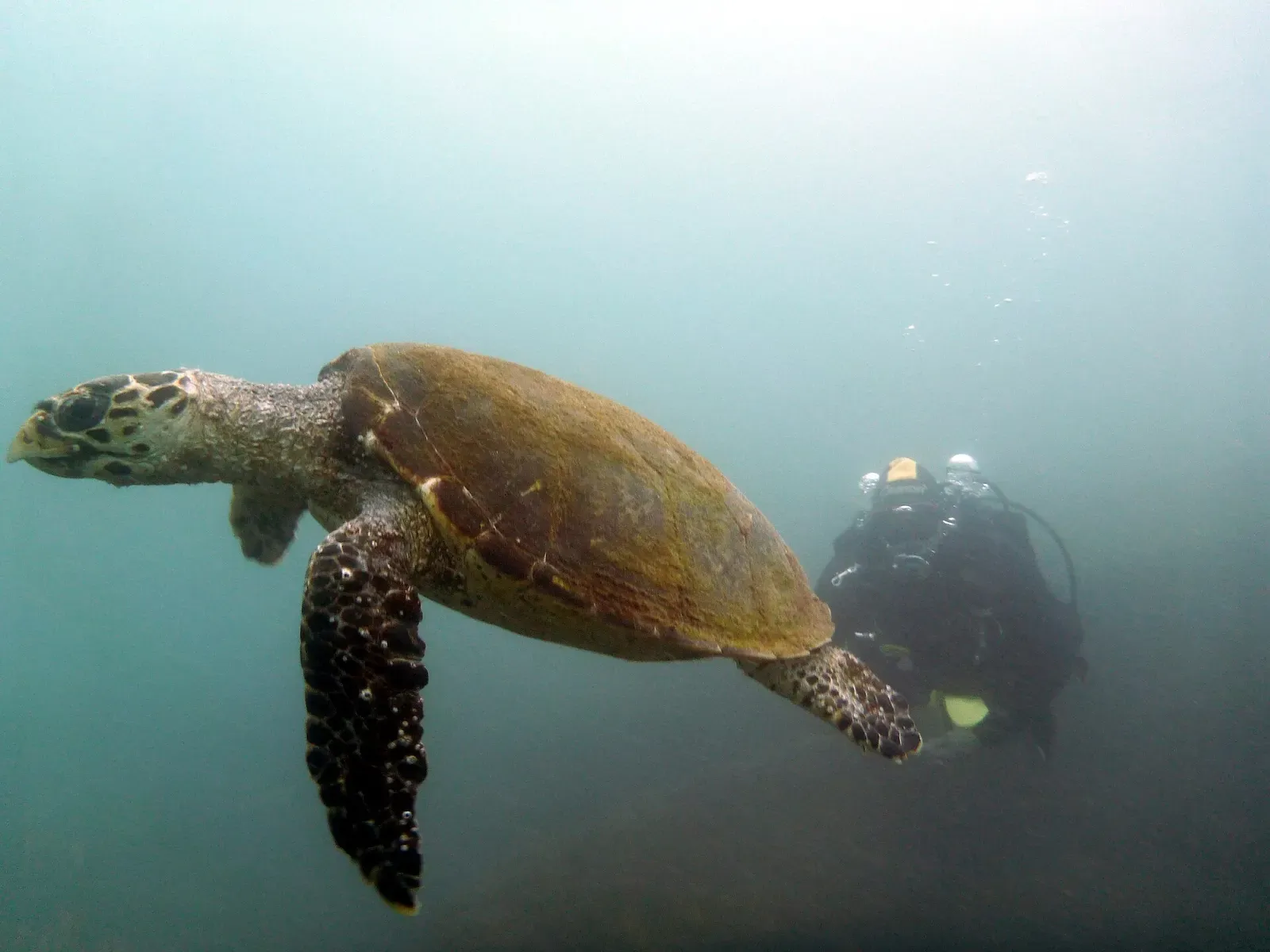
Groupers, barracuda and schooling reef fish hold on the outer granite year-round and bunch up when the cold water is running. Turtles, octopus and nudibranchs are the steady sightings on the sheltered inside sites in any month. Dolphins show up around the boats, and whales are reported passing offshore in the second half of the year, from the surface rather than on a dive.
- Reef
- Wall
- Wreck
- Drift
- Cave & cavern
- Sea turtles
- Reef fish swarms
- Groupers
- Octopus & cuttlefish
- Barracuda
- Dolphins
- Whales
- Nudibranchs
Best dive sites in Arraial do Cabo
Reef
Wind-sheltered island dive to 18 m in clear water
Reef
Shallow 5-18 m profile open to divers of every level
Reef
Deep point of Cabo Frio island with passing fish
Reef
Clear water and scenery at 9-16 m for photographers
Abundant marine life on a dive down to 40 m
Fenda de Nossa Senhora
Narrow granite fissure divers swim through at 12 m.
Enseada do Bananal
Sheltered cove used for training and night dives.
Naufrágio Cardeiros
Small wreck lying at 22 m outside the bay.
How to get to Arraial do Cabo
Most divers come overland from Rio de Janeiro, roughly two to three hours by car or intercity bus. Cabo Frio's regional airport is the nearest arrival point, though scheduled service is limited. Almost everyone stays in Arraial itself, where the dive centres and the boat beach are within walking distance, and Cabo Frio and Búzios are close enough to commute in for the day.
Photos from Arraial do Cabo
Barão Mochileiro · CC BY 3.0
Wusel007 · CC BY-SA 4.0
João D'Andretta · CC BY 4.0
Wusel007 · CC BY-SA 4.0
Dive videos
[4K] Scuba Diving in Brazil | Rio de Janeiro | Arraial do Cabo | January 2024 | Sony A7RV · Coffee Travel Dive on YouTube
Scuba Diving Arraial do Cabo Brazil · Bostic Scuba Diving on YouTube
Photo credits
- Turquoise cove of Praia do Forno framed by cactus-covered cliffs at Arraial do Cabo by Barão Mochileiro, CC BY 3.0, via Wikimedia Commons
- Green sea turtle gliding over a rocky reef at Arraial do Cabo, Brazil by Wusel007, CC BY-SA 4.0, via Wikimedia Commons
- A scuba diver swims alongside a sea turtle off Arraial do Cabo by Wusel007, CC BY-SA 4.0, via Wikimedia Commons
- Smoothtail spiny lobster tucked into a rocky crevice near Arraial do Cabo by João D'Andretta, CC BY 4.0, via Wikimedia Commons
- A green sea turtle rests beneath a rocky ledge at an Arraial do Cabo dive site by Wusel007, CC BY-SA 4.0, via Wikimedia Commons
Embed
Run a dive centre, club or blog? Embed this map of 8 dive sites near Arraial do Cabo on your own page.
Similar destinations
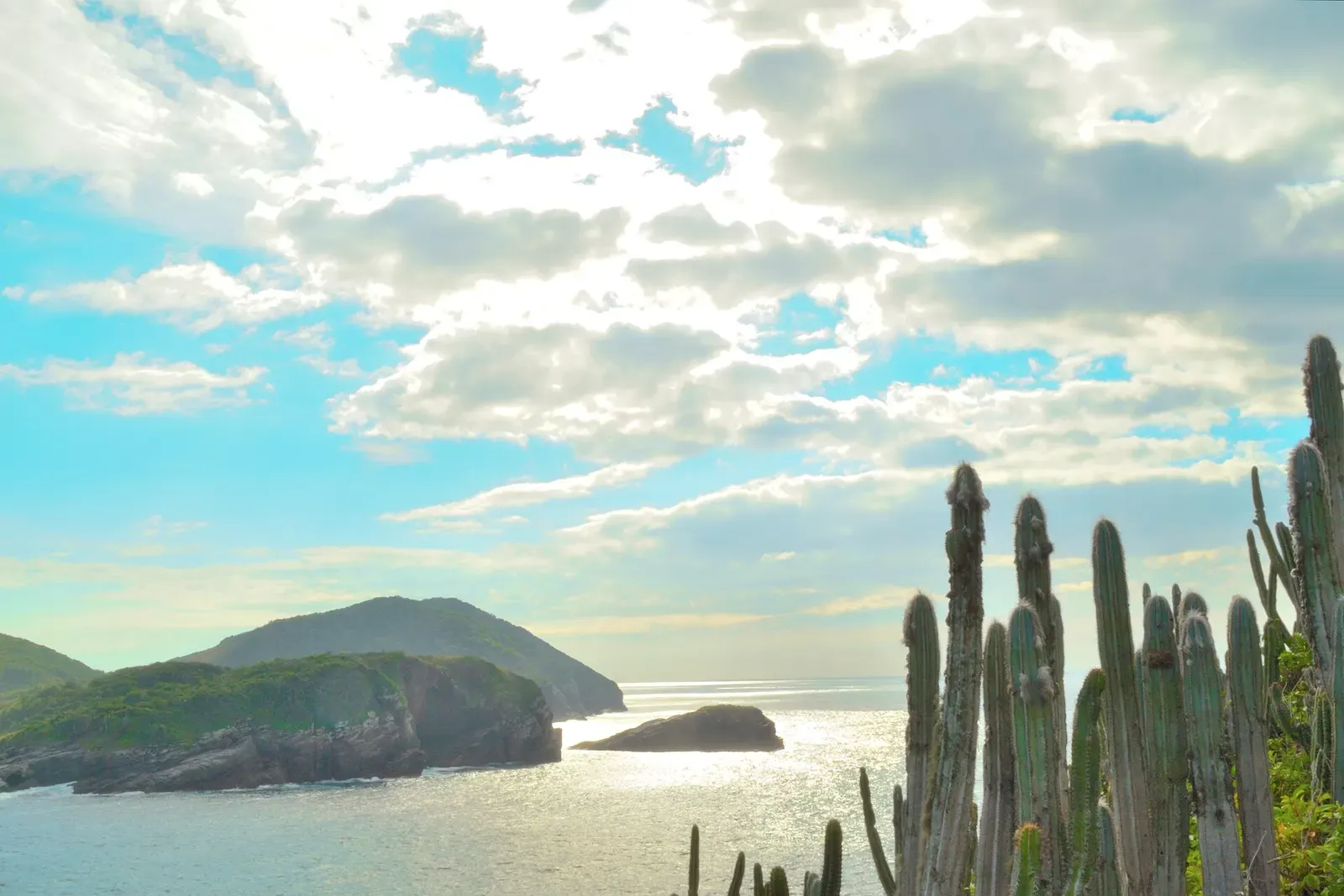
Ilha de Âncora, a turtle sanctuary 11 km off the peninsula
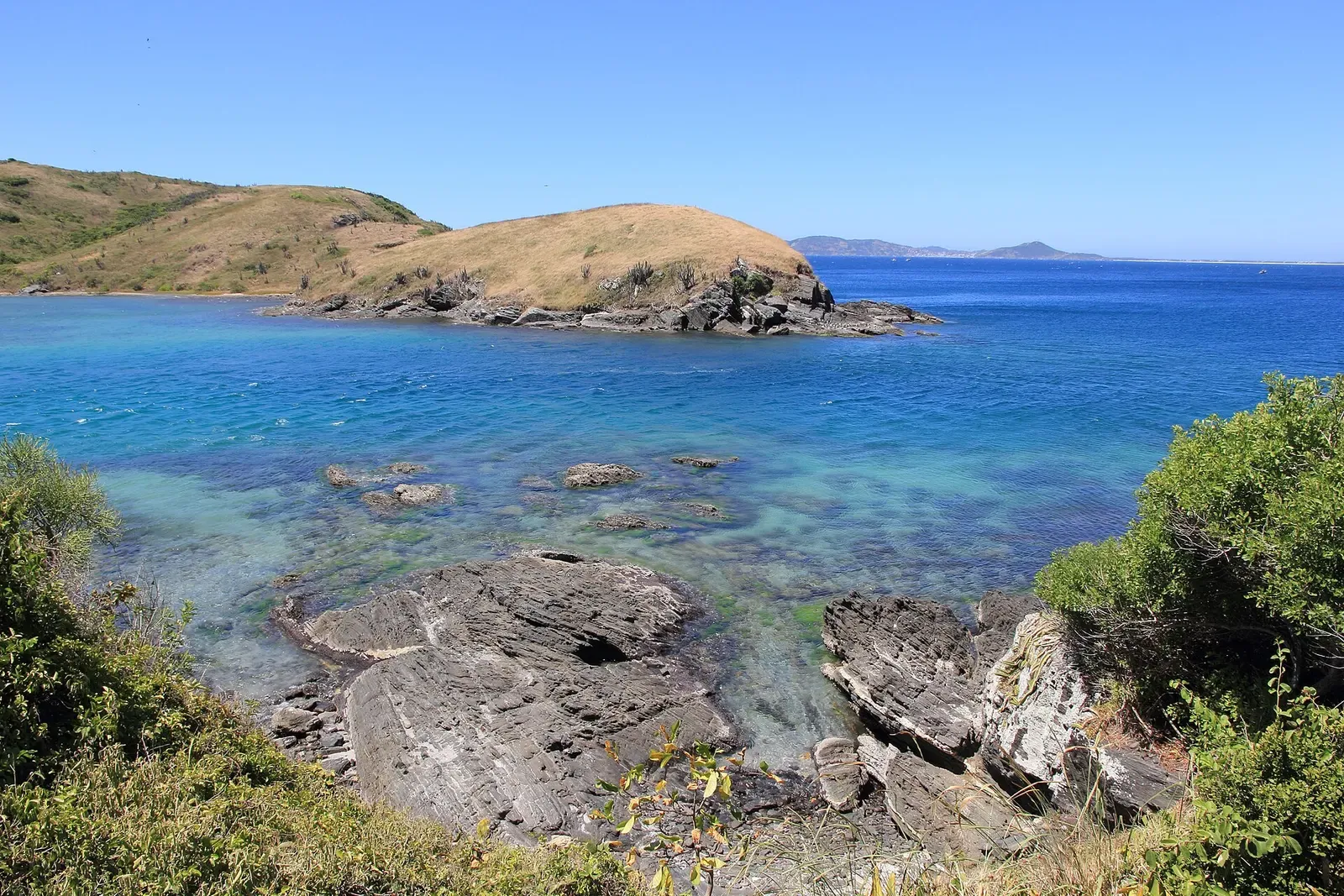
Rocky islands where cold and warm currents meet, a short boat run from town

Hundreds of spinner dolphins gather daily in Baía dos Golfinhos.


.jpeg)


Giant manta rays glide over an offshore granite reef from March through September.