
Africa · São Tomé and Príncipe
São Tomé & Príncipe
Equatorial volcanic pinnacles almost nobody has dived
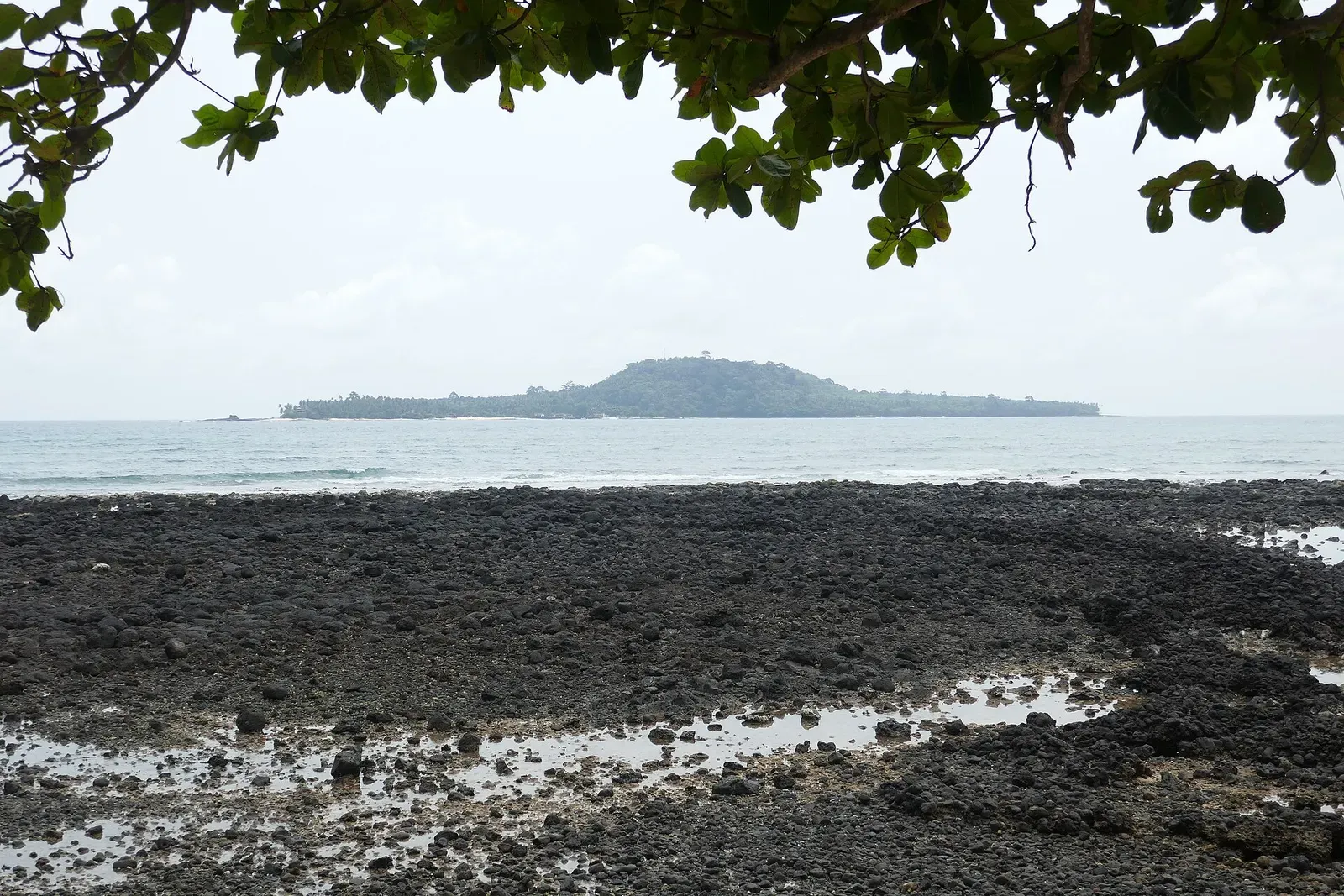
Photo: Helena Van Eykeren · CC BY 2.0
These two volcanic islands sit on the equator in the Gulf of Guinea, and almost nobody dives them — the country has a handful of operators and the reefs have never been mapped in detail. What is there is rock rather than coral: basalt pinnacles, arches and drop-offs in nutrient-rich Atlantic water, with big grouper and jack schools that have never been fished hard. Humpback whales calve here between July and October, and four species of turtle nest on the beaches.
About diving in São Tomé & Príncipe
Diving here is a small, arrange-it-in-advance affair. A handful of centres work off the two islands, boats are modest and go out when there are enough people to fill them, and a day usually means two dives on one stretch of coast rather than a planned circuit of named sites. There is no dive-shop strip and no liveaboard fleet. The workable approach is to book ahead, take whatever site the operator picks, and let wind and swell decide the rest.
What you drop onto is volcanic. Both islands are basalt peaks on the Cameroon volcanic line, and the coast carries on underwater as stacks, boulder fields and steep faces; hard coral grows here but never builds the structure, so the relief is rock. Nutrient-rich equatorial water swings visibility about from week to week and leaves the reef greener and more productive-looking than a picture-book tropical site. The fish are eastern Atlantic, with some species found almost nowhere else, so a diver arriving from the Indian Ocean will not recognise much.
The payoff for the effort is fish size and density. Grouper hold on the offshore rock at a size that has become scarce on harder-fished coasts, and jacks and barracuda move through in schools, which makes this wide-angle territory rather than a macro hunt; most dives stay inside 30 m on pinnacle tops and their skirts. A few wrecks lie in the bay off the capital, but they are a side trip rather than the reason to come. It suits self-sufficient divers who treat the exploratory quality as the attraction and can absorb the odd day when no boat goes out at all.
Best time to dive São Tomé & Príncipe
| Jan | Feb | Mar | Apr | May | Jun | Jul | Aug | Sep | Oct | Nov | Dec | |
|---|---|---|---|---|---|---|---|---|---|---|---|---|
| Season | Good | Good | Good | Fair | Fair | Good | Prime | Prime | Prime | Prime | Good | Good |
| Sea surface | 28°C82°F | 29°C84°F | 29°C84°F | 29°C84°F | 29°C84°F | 27°C81°F | 26°C79°F | 26°C79°F | 26°C79°F | 27°C81°F | 28°C82°F | 28°C82°F |
| Daytime high | 28°C82°F | 29°C84°F | 29°C84°F | 29°C84°F | 28°C82°F | 27°C81°F | 26°C79°F | 26°C79°F | 27°C81°F | 28°C82°F | 28°C82°F | 28°C82°F |
| Rain | 114 mm4.5 in | 116 mm4.6 in | 168 mm6.6 in | 168 mm6.6 in | 130 mm5.1 in | 49 mm1.9 in | 24 mm0.9 in | 22 mm0.9 in | 43 mm1.7 in | 120 mm4.7 in | 163 mm6.4 in | 133 mm5.2 in |
| Jan | Feb | Mar | Apr | May | Jun |
|---|---|---|---|---|---|
| Good | Good | Good | Fair | Fair | Good |
| Sea surface | |||||
| 28°C82°F | 29°C84°F | 29°C84°F | 29°C84°F | 29°C84°F | 27°C81°F |
| Daytime high | |||||
| 28°C82°F | 29°C84°F | 29°C84°F | 29°C84°F | 28°C82°F | 27°C81°F |
| Rain | |||||
| 114 mm4.5 in | 116 mm4.6 in | 168 mm6.6 in | 168 mm6.6 in | 130 mm5.1 in | 49 mm1.9 in |
| Jul | Aug | Sep | Oct | Nov | Dec |
|---|---|---|---|---|---|
| Prime | Prime | Prime | Prime | Good | Good |
| Sea surface | |||||
| 26°C79°F | 26°C79°F | 26°C79°F | 27°C81°F | 28°C82°F | 28°C82°F |
| Daytime high | |||||
| 26°C79°F | 26°C79°F | 27°C81°F | 28°C82°F | 28°C82°F | 28°C82°F |
| Rain | |||||
| 24 mm0.9 in | 22 mm0.9 in | 43 mm1.7 in | 120 mm4.7 in | 163 mm6.4 in | 133 mm5.2 in |
2011–2025 averages. Sea surface: NOAA Coral Reef Watch, measured at the surface, so deeper water can run colder. Daytime high and rain: NASA POWER.
Jun–Sep is the dry season with the calmest water and humpbacks present; the Mar–May rains cut visibility sharply.
Best months: July, August, September, October
São Tomé & Príncipe water temperature and weather by month
The sea surface runs from 26 °C (79 °F) in August to 29 °C (84 °F) in April. Most rain falls from October to May, peaking at about 170 mm (6.7 in) in March; it stays largely dry from June to September. Daytime highs sit around 28 °C (82 °F) all year. The coldest water here is about 25 °C (77 °F), so pack a 3 mm full suit.
Dive types & marine life
Humpbacks are around from roughly July to October, overlapping the months the calendar rates prime, and are often heard underwater before anything is seen. Grouper, barracuda and jack schools are the year-round constant over the rock, and turtles turn up on most shallow dives. Whale sharks are reported now and then, but as luck rather than a season you can book around.
- Reef
- Wall
- Pelagic & blue water
- Wreck
- Night
- Whales
- Sea turtles
- Dolphins
- Reef fish swarms
- Groupers
- Barracuda
- Trevally & jacks
- Whale sharks
Best dive sites in São Tomé & Príncipe
Wall and sand dives at the equatorial crossing islet
Sete Pedras
Seven basalt stacks off the east coast with walls and big fish schools.
Ilhéu Bom Bom
Príncipe islet with clear water, arches and dense reef fish.
Lagoa Azul
Sheltered northern bay used for training and shallow macro dives.
How to get to São Tomé & Príncipe
Almost everyone flies into São Tomé, with connections from Lisbon and a small number of West African hubs; Príncipe is a separate short domestic hop. Bases are the capital, the equator islet off the southern tip, and Bom Bom on Príncipe. Diving is day boats and shore entries, with no liveaboards.
Photos from São Tomé & Príncipe
Helena Van Eykeren · CC BY 2.0
Dive videos
Wreck diving in Sao Tome · Ivo Madder on YouTube
Photo credits
- Waves break through a channel in black volcanic rock at Boca do Inferno, with palms on the bluff above the São Tomé coastline by Helena Van Eykeren, CC BY 2.0, via Wikimedia Commons
- A turquoise bay lined with sand and palm trees curves toward a small coastal town on São Tomé island by Helena Van Eykeren, CC BY 2.0, via Wikimedia Commons
Embed
Run a dive centre, club or blog? Embed this map of 1 dive sites near São Tomé & Príncipe on your own page.
Similar destinations

East Africa's last viable dugong population, in a 1971 national park

Tidal gaps flush an 800 m channel past sheer coral walls

.jpg)
.jpg)
Thousands of green turtles nest on one protected stretch of coast
Africa
Diani Beach
Kenya
Whale sharks from November to February and 29 sites within 40 minutes