
Africa · Tanzania
Pemba Island
Tidal gaps flush an 800 m channel past sheer coral walls
Photo: James Heilman, MD · CC BY-SA 3.0
The Pemba Channel is 800 m deep and only 50 km wide, so the island's western reefs end abruptly in walls that fall into open ocean. Diving is done in the gaps — Njao, Fundu and Uvinje — where tidal water pours through and pulls divers along drop-offs hung with gorgonians and barrel sponges. Visibility is consistently better than anywhere else on the Tanzanian coast, and the channel's depth brings pelagics onto the reef edge without warning.
About diving in Pemba Island
Diving here runs on the tide table rather than the clock. Boats leave the lodge beaches on the west coast when the exchange is right, so a briefing can be at first light one day and mid-morning the next, and the plan can still change on the water if the flow arrives early. Each lodge tends to work the gaps nearest it, so crossings are usually short and groups stay small, since only a few operators are based on the island. Two dives before lunch and something shallower in the afternoon is the usual shape of a day.
The sites are not variations on one theme. A gap dive starts at a break between an offshore islet and the fringing reef, entered up-current, flown along the drop-off face and finished mid-blue on a marker buoy. Between the gaps that same reef edge can be dived slowly, hanging under overhangs to pick out soft coral and small animals. Behind it are sheltered hard-coral shelves with almost no flow, and offshore pinnacles that need settled weather and a longer crossing to reach.
It suits divers already comfortable in moving water: descending into blue onto a reef edge, holding trim as the flow speeds up in the narrows, deploying a marker from mid-water and being collected well downstream of where the dive began. There is no shore diving and no walk-in fallback when the wind is up, so most people commit to one west-coast lodge and dive from it daily. Anyone still building buoyancy is better served on the protected inshore reefs or on Zanzibar.
Best time to dive Pemba Island
| Jan | Feb | Mar | Apr | May | Jun | Jul | Aug | Sep | Oct | Nov | Dec | |
|---|---|---|---|---|---|---|---|---|---|---|---|---|
| Season | Prime | Prime | Good | Off-season | Off-season | Fair | Good | Good | Good | Prime | Prime | Prime |
| Sea surface | 28°C82°F | 29°C84°F | 29°C84°F | 29°C84°F | 28°C82°F | 27°C81°F | 26°C79°F | 26°C79°F | 26°C79°F | 27°C81°F | 28°C82°F | 29°C84°F |
| Daytime high | 29°C84°F | 30°C86°F | 31°C88°F | 30°C86°F | 29°C84°F | 28°C82°F | 27°C81°F | 27°C81°F | 27°C81°F | 29°C84°F | 29°C84°F | 30°C86°F |
| Rain | 34 mm1.3 in | 23 mm0.9 in | 70 mm2.8 in | 220 mm8.7 in | 260 mm10.2 in | 59 mm2.3 in | 29 mm1.1 in | 19 mm0.7 in | 31 mm1.2 in | 71 mm2.8 in | 108 mm4.3 in | 74 mm2.9 in |
| Jan | Feb | Mar | Apr | May | Jun |
|---|---|---|---|---|---|
| Prime | Prime | Good | Off-season | Off-season | Fair |
| Sea surface | |||||
| 28°C82°F | 29°C84°F | 29°C84°F | 29°C84°F | 28°C82°F | 27°C81°F |
| Daytime high | |||||
| 29°C84°F | 30°C86°F | 31°C88°F | 30°C86°F | 29°C84°F | 28°C82°F |
| Rain | |||||
| 34 mm1.3 in | 23 mm0.9 in | 70 mm2.8 in | 220 mm8.7 in | 260 mm10.2 in | 59 mm2.3 in |
| Jul | Aug | Sep | Oct | Nov | Dec |
|---|---|---|---|---|---|
| Good | Good | Good | Prime | Prime | Prime |
| Sea surface | |||||
| 26°C79°F | 26°C79°F | 26°C79°F | 27°C81°F | 28°C82°F | 29°C84°F |
| Daytime high | |||||
| 27°C81°F | 27°C81°F | 27°C81°F | 29°C84°F | 29°C84°F | 30°C86°F |
| Rain | |||||
| 29 mm1.1 in | 19 mm0.7 in | 31 mm1.2 in | 71 mm2.8 in | 108 mm4.3 in | 74 mm2.9 in |
2011–2025 averages. Sea surface: NOAA Coral Reef Watch, measured at the surface, so deeper water can run colder. Daytime high and rain: NASA POWER.
Oct–Mar is the main season with the calmest sea; the long rains in April and May close most operations on the island.
Best months: January, February, October, November, December
Pemba Island water temperature and weather by month
The sea surface runs from 26 °C (79 °F) in August to 29 °C (84 °F) in March. Most rain falls from April and May, peaking at about 260 mm (10 in) in May; July to September are the driest. Daytime highs reach 31 °C (88 °F) in March and drop to 27 °C (81 °F) in August. The coldest water here is about 25 °C (77 °F), so pack a 3 mm full suit.
Dive types & marine life
Reef sharks, trevally and barracuda hold in the gaps where the flow runs hardest, and napoleon wrasse and grouper work the wall lip. Reef mantas are a possibility along the channel edge rather than a fixture, turtles are steadier on the shallower reef, and dolphins are usually a boat-ride sighting. Nudibranchs and intact coral repay a slow pace on the sheltered dives, best Oct-Mar.
- Wall
- Drift
- Reef
- Coral garden
- Pelagic & blue water
- Reef sharks
- Manta rays
- Sea turtles
- Napoleon wrasse
- Trevally & jacks
- Barracuda
- Groupers
- Nudibranchs
- Pristine corals
- Dolphins
Best dive sites in Pemba Island
Wall
The sand floor beside the wall drops away past 80 m
Reef
Coral bommies off the resort's own water entrance
Pinnacle
A summit 40 m long with the reef falling past 60 m
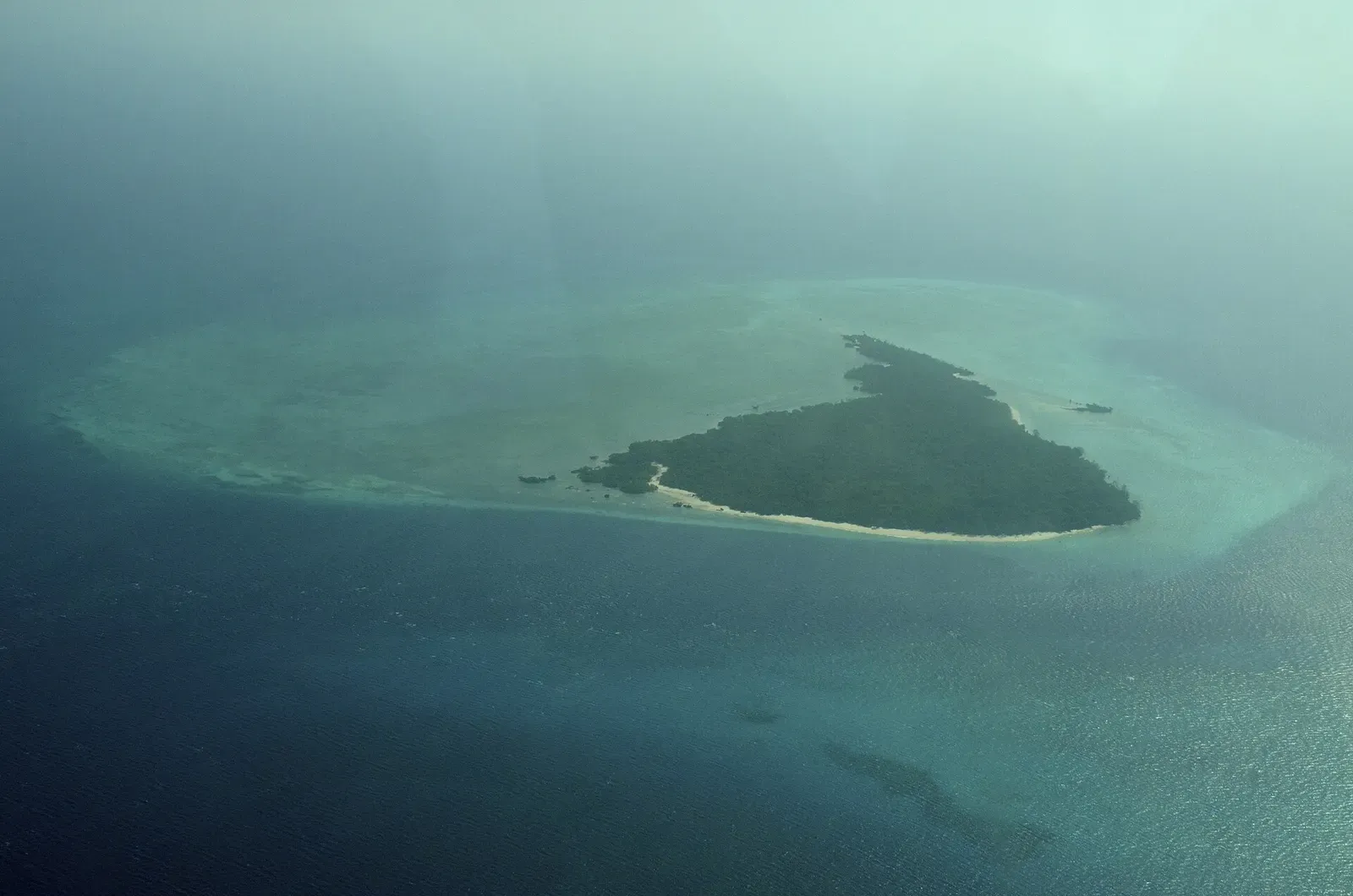
300 fish species on a reef that starts at the beach
Wall
The northbound current sweeps divers through the gap into the lagoon
Pinnacle
A coral mountain from 30 m to 16 m, slack water only
Wall
Camouflaged fish on an easy 5–18 m slope, day or night
Reef
A split in the wall opens into a sand valley at 12 m
Wall
500 m of sloping wall from 6 m down to 25 m
Pinnacle
A chain of sea mountains drifted one to the next
Wall
Undercut overhangs and table-coral sheets on a channel wall
How to get to Pemba Island
Most divers fly to Pemba's airport at Chake Chake via Zanzibar or Dar es Salaam; passenger ferries also run to Mkoani in the south. The dive lodges sit mainly along the west and north-west coasts and run their own boats, and road transfers across the island are slow, so people pick one base and stay. Everything is boat-based, with liveaboards working the channel in season.
Photos from Pemba Island
Bernard E. Picton · CC BY-SA 4.0
Bernard E. Picton · CC BY-SA 4.0
Bernard E. Picton · CC BY-SA 4.0
desertnaturalist · CC BY 4.0
Dive videos
Wonderful Diving in Pemba, Tanzania 2017 (4K-Video) · Bird & Wildlife Adventures on YouTube
Photo credits
- A lionfish spreads its venomous fins over the reef while diving off Pemba, Tanzania by James Heilman, MD, CC BY-SA 3.0, via Wikimedia Commons
- Seychelles butterflyfish patrols a coral wall off Pemba Island, Tanzania by Bernard E. Picton, CC BY-SA 4.0, via Wikimedia Commons
- Blackwedged butterflyfish with bold yellow bands cruises a Pemba Island reef by Bernard E. Picton, CC BY-SA 4.0, via Wikimedia Commons
- Melon butterflyfish glides over coral at a Pemba Island dive site by Bernard E. Picton, CC BY-SA 4.0, via Wikimedia Commons
- A shoal of Indian dascyllus shelters among coral at a Pemba Island dive site by desertnaturalist, CC BY 4.0, via Wikimedia Commons
Embed
Run a dive centre, club or blog? Embed this map of 9 dive sites near Pemba Island on your own page.
In The Logbook
- Frogfish: species, behaviour and where to diveMacro & muck · 12 min read
- How long does a tank of air last?Gear & kit · 9 min read
Similar destinations

East Africa's last viable dugong population, in a 1971 national park


Thousands of green turtles nest on one protected stretch of coast
Pacific Islands
A pinnacle rising 900 m from the seabed to within metres of the surface
Pacific Islands
A hundred kilometres of barrier reef with almost no divers on it