Skopelos · Greece · Reef
Glysteri Beach
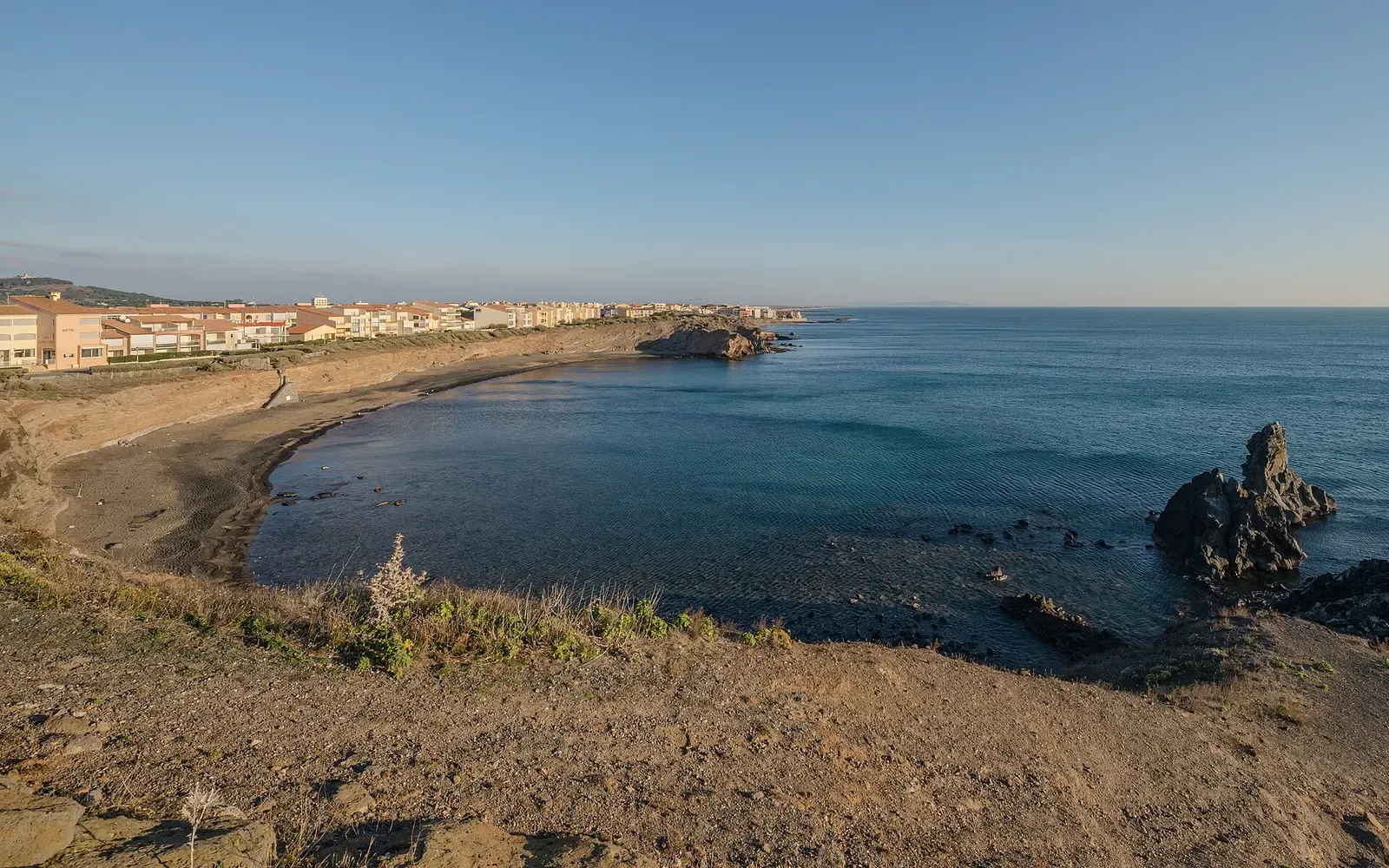
Rocky slopes of a town bay, shallow enough for a first dive
Glysteri is a gravel beach with sandy patches close to Skopelos Town, and the shore dive there follows the rocky slopes of the bay. At 5 to 15 m it needs no prior diving experience, which suits divers making their first dives on the island.
Also known as Glysteri.
Where it is and how deep
39.1432° N, 23.7173° EApproximate position — the dashed circle shows where the site lies; your operator's briefing has the mooring.
The dive
The dive starts from the beach and heads along the rocky slopes of the bay, following the rock formations they make over a bottom that stays between 5 and 15 m for the whole dive.
Marine life and season
The sources we used don't single out particular species here.
| Jan | Feb | Mar | Apr | May | Jun | Jul | Aug | Sep | Oct | Nov | Dec |
|---|---|---|---|---|---|---|---|---|---|---|---|
| Fair | Fair | Fair | Good | Good | Good | Good | Good | Good | Good | Fair | Fair |
Season follows Skopelos: Conditions are best from April to October; the water runs from about 14 °C in March to 26 °C in August.
Questions divers ask
Can someone with no diving experience dive at Glysteri Beach?+
Yes. Glysteri needs no prior experience: it is a shore dive along the rocky slopes of the bay between 5 and 15 m.
Sources
- Glysteri Beach - Skopelos Dive Center — Skopelos Dive Center
- Scuba diving Skopelos — Skopelos Activities
More dive sites in Skopelos
Wall
Amarantos Wall
A wall running straight out from the shore, with rock formations on top
Wreck
Christoforos Wreck
An 83 m collier standing upright on the sand as if still under way
Cave & cavern
Dasia Canyon
A rock canyon at the end of a swim past hundreds of nudibranchs
Wall
Dasia Gallery
A tunnel through the cape with daylight pouring in through its roof
Similar dives elsewhere

Gorgonians on the vertical north wall of a submerged island
Reef · Tabarca & Santa Pola · Spain
La Llosa
A 50 m rock on a migration route, with schools of large groupers
Faults and overhangs in two coralligenous blocks at 21 m
A rock pyramid entirely covered in Parazoanthus