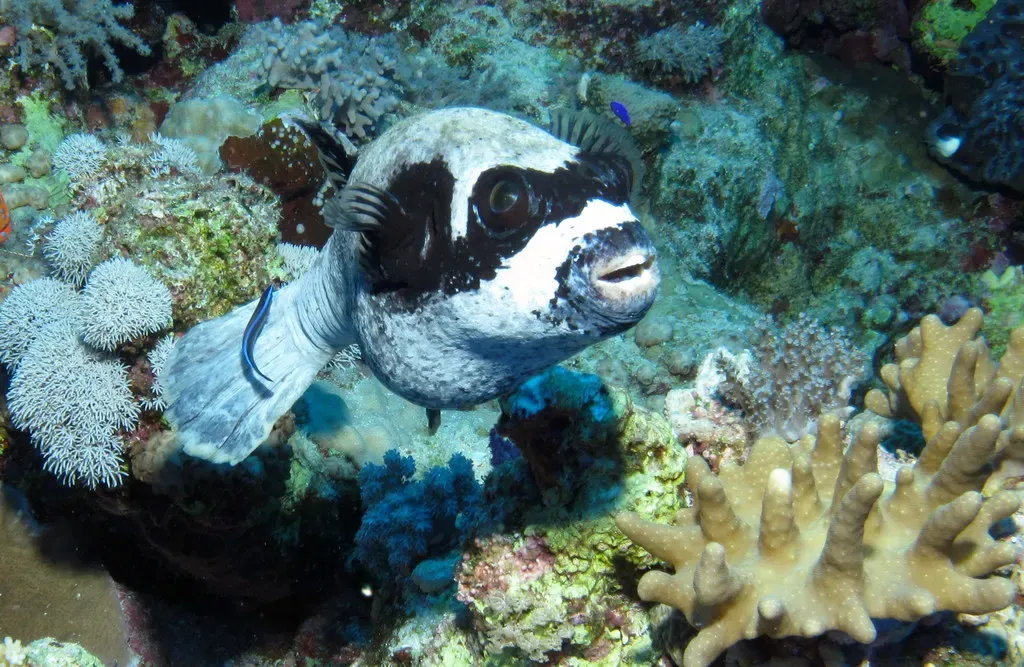
St John's Reefs · Egypt · Reef · Wall · Cave & cavern · Night
Dangerous Reef
Short caverns at 7 m under an overnight mooring
Photo: Derek Keats · CC BY 2.0
Despite the name, this is the gentle end of St John's: a horseshoe-shaped reef 410 metres long with steep walls meeting a sand slope at 20 metres and short caverns under the moorings at 7 to 10 metres. It shelters the boat well enough to anchor overnight, which is why it is one of the area's regular night dives.
Also known as Gota Gibli.
Where it is and how deep
23.3402° N, 35.8553° EApproximate position — the dashed circle shows where the site lies; your operator's briefing has the mooring.
The dive
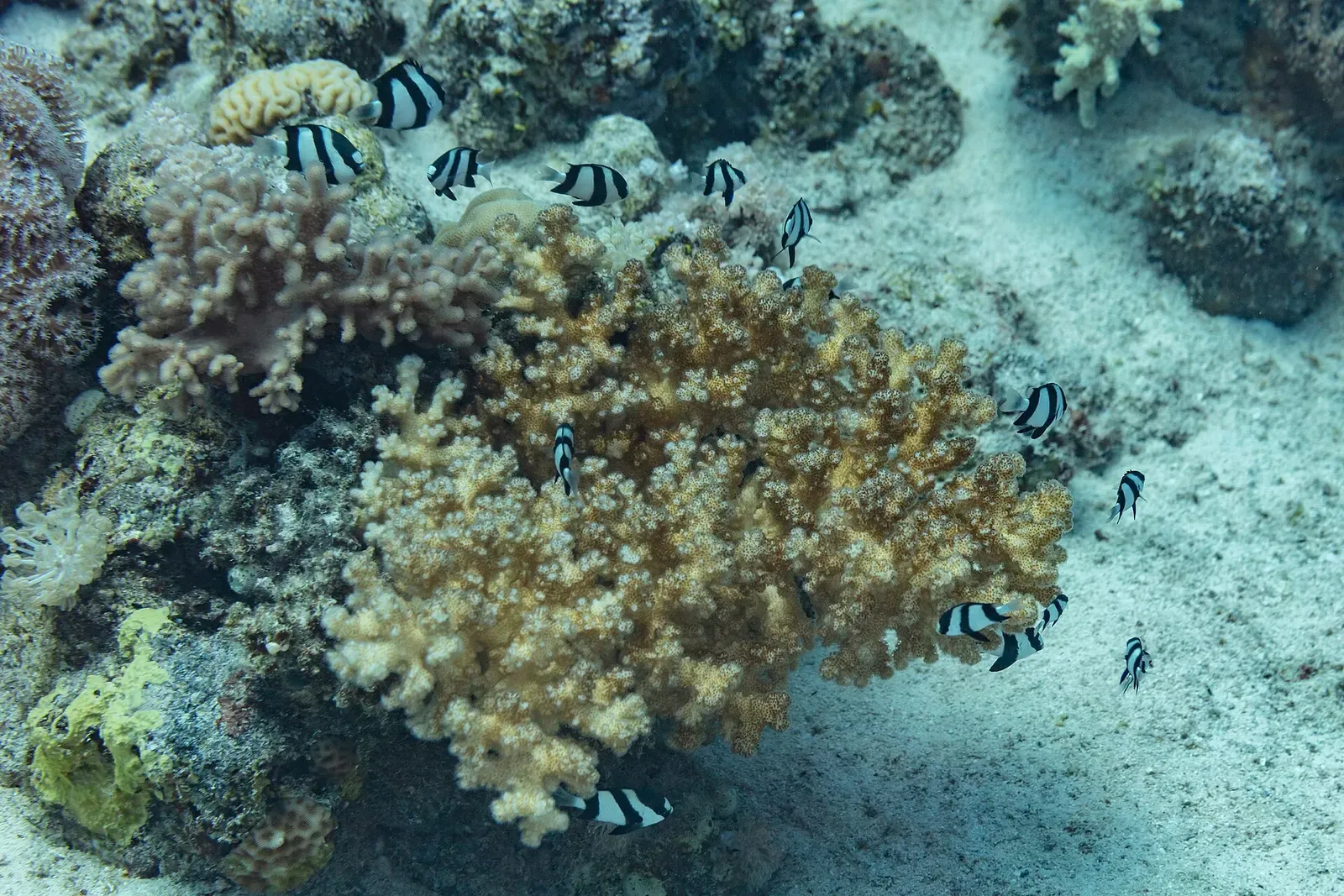
The reef is a horseshoe with steep walls all round it, and those walls meet the sloping seabed at 20 metres before the sand bottoms out at almost 30. Outside the horseshoe the walls keep going, dropping over 100 metres. Most of the diving stays inside that shallow band, working the coral where the wall meets the sand, and there is plenty of life along it.
Under the moorings sit short caverns at 7 to 10 metres — easy to explore, no route-finding involved, and shallow enough to leave the tank barely touched. Groups of bottlenose dolphins visit often, mantas are encountered commonly, and reef fish, moray eels and turtles are the everyday sightings. The caves along the southern side are where sharks were once regularly found sleeping.
This is also one of the reliable night dives in St John's, precisely because the boat can lie here safely after dark. The same shallow caverns take on squid, Spanish dancers and moray eels out hunting in the open. It is also a good site for divers still early in their logbook, as long as the deeper sand inside the horseshoe is treated as optional.
Background
The name is folklore rather than a hazard rating. Sources are clear that Dangerous Reef is no more dangerous than the other reefs in St John's: it earned the label because sharks were often found sleeping in the caves along its southern side, and the name stuck long after the reason for it stopped shaping how the site is dived. Today it is one of the area's calmer stops and a regular overnight anchorage.
Marine life and season
- Dolphins
- Sea turtles
- Manta rays
- Squid
- Nudibranchs
| Jan | Feb | Mar | Apr | May | Jun | Jul | Aug | Sep | Oct | Nov | Dec |
|---|---|---|---|---|---|---|---|---|---|---|---|
| Fair | Fair | Good | Prime | Prime | Prime | Good | Good | Prime | Prime | Good | Fair |
Season follows St John's Reefs: Mar–Jun and Sep–Nov are the settled windows; midsummer is very hot and winter northerlies make the long crossing uncomfortable.
Know before you go
- The sand inside the horseshoe bottoms out at almost 30 m and the outer walls drop past 100 — an easy site to drift deeper on without noticing.
Photos from Dangerous Reef
Derek Keats from Johannesburg, South Africa · CC BY 2.0
Derek Keats · CC BY 2.0
Derek Keats · CC BY 2.0
Dive videos
Dangerous Reef, St Johns, Southern Red Sea · Adrian Redgate on YouTube
Dangerous Reef at NIght · Fabián Raimondo on YouTube
Questions divers ask
Why is it called Dangerous Reef?+
Because sharks were often found sleeping in the caves along its southern side. The reef itself is described as no more dangerous than any other in St John's, and it is used as a sheltered overnight anchorage.
Is Dangerous Reef good for new divers?+
Yes — it is described as a good spot for novice divers and for learning to dive in St John's. The caverns under the moorings sit at 7 to 10 metres, though the sand inside the horseshoe drops to almost 30, so watch your depth.
Sources
- Dangerous Reef – Red Sea Diving Deep South St John's Dangerous Reef — Red Sea Diving
- ST. Johns - Red Sea World Travel — Red Sea World Travel
- St. John's - Best Red Sea Liveaboard Diving In Southern Egypt — No Troubles Just Bubbles
- Dangerous Reef - OpenStreetMap node 701364652 — OpenStreetMap
Photo credits
- Masked puffer fish close up against the reef at Dangerous Reef by Derek Keats, CC BY 2.0, via Openverse
- Red and white striped crown butterflyfish over coral at Dangerous Reef by Derek Keats from Johannesburg, South Africa, CC BY 2.0, via Wikimedia Commons
- A gorgon's head basket star fully open on coral during a night dive by Derek Keats, CC BY 2.0, via Openverse
- Purple prickly tube sponge beside hard coral on the reef slope by Derek Keats, CC BY 2.0, via Openverse
More dive sites in St John's Reefs
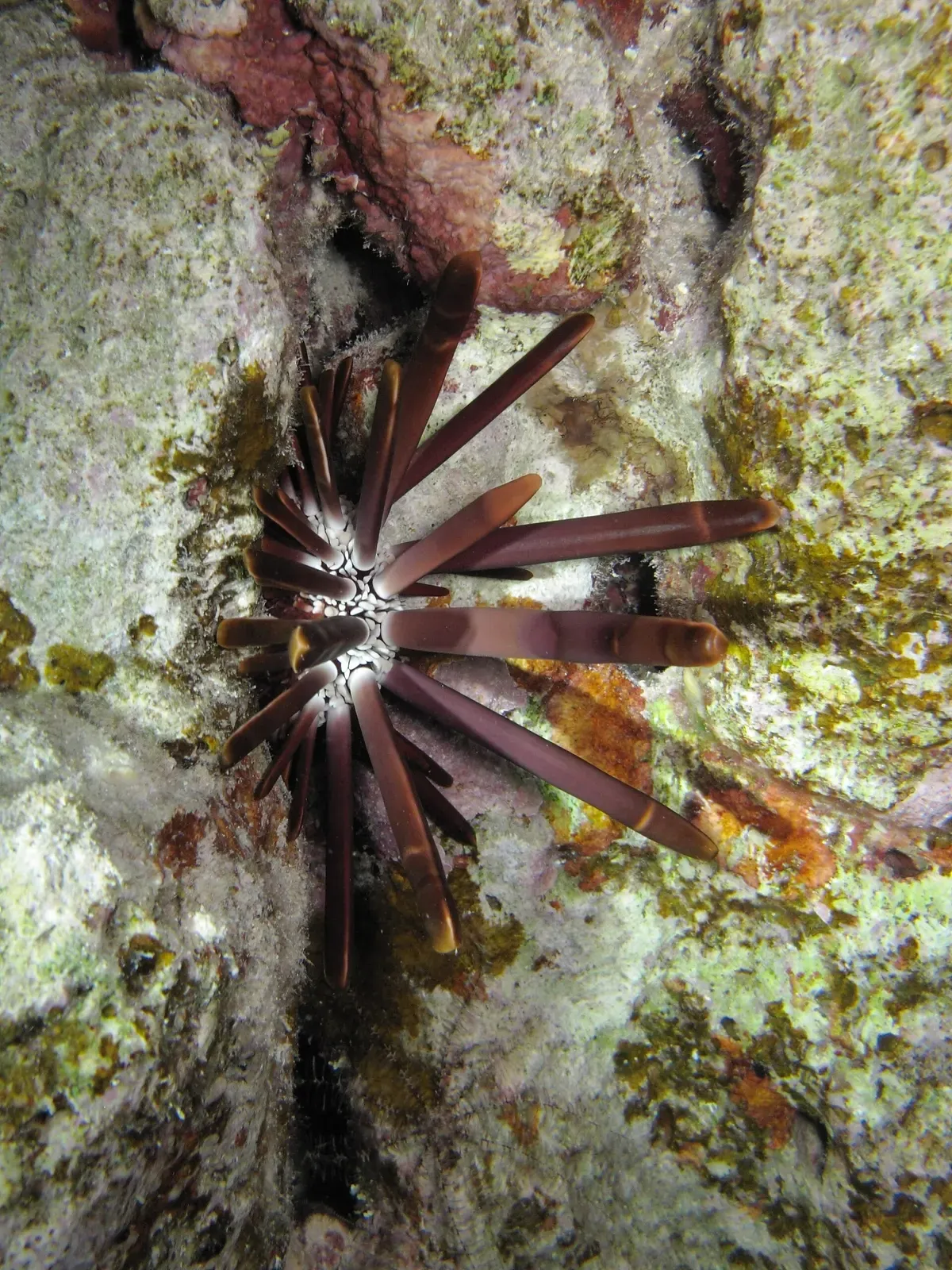
A maze of coral columns down to sand at 20 m
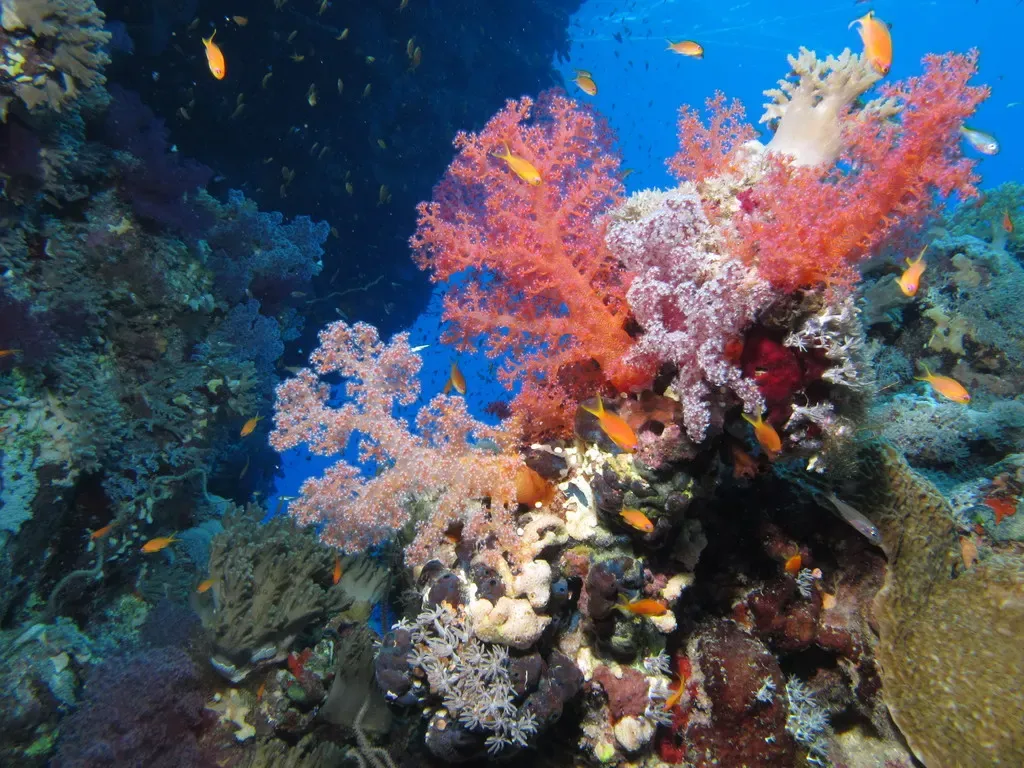
Tunnels and fissures cut into an 840 m reef block
Wall
Overhangs on the southern wall and a cavern you enter at 10 m
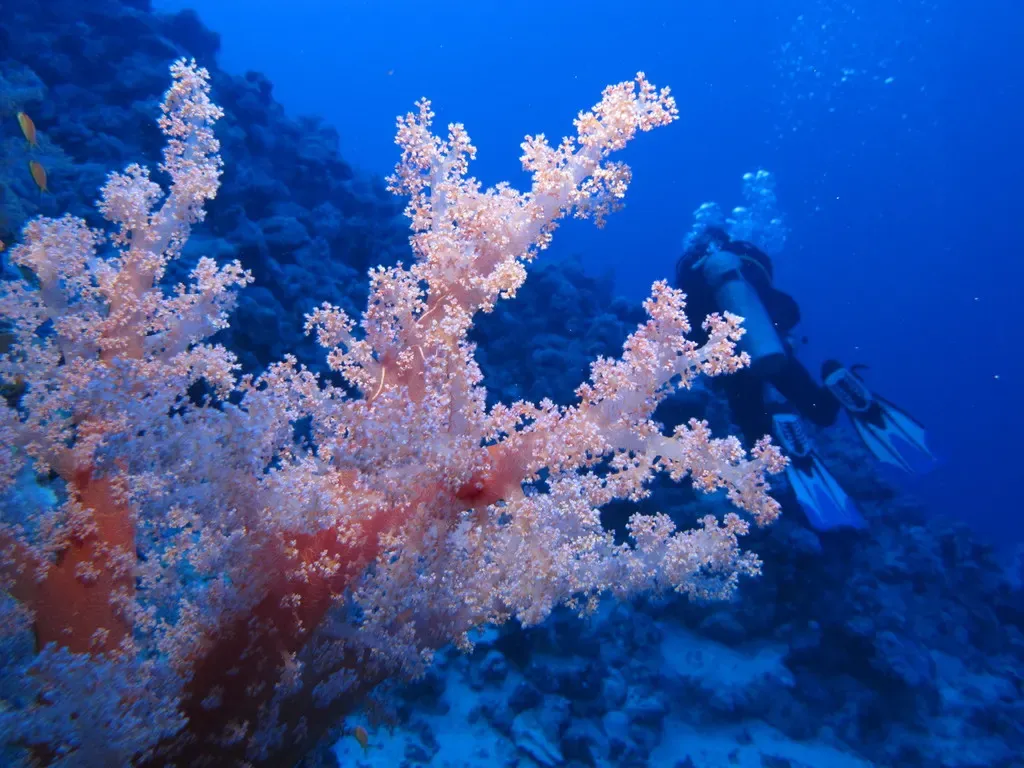
Grey reefs and hammerheads off an exposed pinnacle
Pinnacle
A ledge at 20–35 m circling a current-swept habili
Cave & cavern
Sunlight falling through cracks in the cavern roof at 6-10 m
Similar dives elsewhere

A resting pod of 60 to 80 spinner dolphins in the lagoon.
Two caves at 3 m, a 5 m platform, and sand at 36 m off one beach
Shallow coral gardens and deeper drop-offs, 30 to 45 minutes from the city

.jpg)
Black coral colonies and a cave at 23 metres