
Red Sea & Gulf of Aden · Egypt
St John's Reefs
Light shafts cut through shallow coral caves at Umm Kharārīm
Photo: Derek Keats · CC BY 2.0
St John's is the furthest south a Red Sea liveaboard normally reaches, a scatter of offshore reefs near the Sudanese border with no land in sight and no day-boat access. The corals here are the healthiest in Egyptian water, and the reefs come in two forms: habili, submerged pinnacles that catch current and hold grey reef sharks and hammerheads, and gota, larger reef blocks cut through by caves. Umm Kharārīm's cave system runs shallow with light shafts breaking through the roof.
About diving in St John's Reefs
A day here belongs to the boat. Southern itineraries run about a week, and once the long overnight steam south is behind you the schedule settles into three or four dives a day, with the tenders doing most of the work: a zodiac carries divers out to a pinnacle, drops them upcurrent and collects them wherever they surface. Boats lie overnight in the lee of the reef blocks, so a guide can swap an exposed outer site for a sheltered inner one within the same morning if the wind gets up.
The two reef forms dive nothing alike. On a habili there is no reference beyond the pinnacle itself: you drop onto the top, work around it against whatever the current is doing, and spend as much of the dive facing open water as facing coral. The gotas are the opposite, big enough to put the reef between you and the weather, and their tunnels and cave mouths stay inside the daylight zone rather than being true cave, so they are guide-led, single-file swims where buoyancy matters more than depth. Most itineraries alternate the two.
What divers talk about afterwards is the hard coral. Table and fire coral run right up over the shallows, and the structure is unbroken enough that the small fish depending on it are there in proportion; the sites up north, worked by day boats for forty years, rarely show that. The other difference is distance. Grey reefs here will often come in for a look rather than holding as silhouettes, and the safety stop after a habili dive, hung in open water with nothing beneath you, is usually what people describe first.
It suits divers who have already done the northern wrecks and want the opposite kind of trip. In practice that means conservative profiles because the week offers no bailout to shore, carrying your own SMB and a spare, and accepting that a briefing can change at anchor when the wind does. Photographers do well if they can work wide in blue water and in the low, angled light inside the gotas. Divers still early in their logbook, or prone to seasickness on a long crossing, get more out of the reefs closer to shore further north.
Best time to dive St John's Reefs
| Jan | Feb | Mar | Apr | May | Jun | Jul | Aug | Sep | Oct | Nov | Dec | |
|---|---|---|---|---|---|---|---|---|---|---|---|---|
| Season | Fair | Fair | Good | Prime | Prime | Prime | Good | Good | Prime | Prime | Good | Fair |
| Sea surface | 24°C75°F | 24°C75°F | 24°C75°F | 25°C77°F | 27°C81°F | 29°C84°F | 30°C86°F | 31°C88°F | 30°C86°F | 29°C84°F | 28°C82°F | 26°C79°F |
| Daytime high | 27°C81°F | 28°C82°F | 31°C88°F | 32°C90°F | 37°C99°F | 39°C102°F | 40°C104°F | 39°C102°F | 37°C99°F | 34°C93°F | 31°C88°F | 29°C84°F |
| Rain | 2 mm0.1 in | 1 mm0.0 in | 0 mm0.0 in | 1 mm0.0 in | 1 mm0.0 in | 0 mm0.0 in | 0 mm0.0 in | 0 mm0.0 in | 0 mm0.0 in | 4 mm0.2 in | 7 mm0.3 in | 2 mm0.1 in |
| Jan | Feb | Mar | Apr | May | Jun |
|---|---|---|---|---|---|
| Fair | Fair | Good | Prime | Prime | Prime |
| Sea surface | |||||
| 24°C75°F | 24°C75°F | 24°C75°F | 25°C77°F | 27°C81°F | 29°C84°F |
| Daytime high | |||||
| 27°C81°F | 28°C82°F | 31°C88°F | 32°C90°F | 37°C99°F | 39°C102°F |
| Rain | |||||
| 2 mm0.1 in | 1 mm0.0 in | 0 mm0.0 in | 1 mm0.0 in | 1 mm0.0 in | 0 mm0.0 in |
| Jul | Aug | Sep | Oct | Nov | Dec |
|---|---|---|---|---|---|
| Good | Good | Prime | Prime | Good | Fair |
| Sea surface | |||||
| 30°C86°F | 31°C88°F | 30°C86°F | 29°C84°F | 28°C82°F | 26°C79°F |
| Daytime high | |||||
| 40°C104°F | 39°C102°F | 37°C99°F | 34°C93°F | 31°C88°F | 29°C84°F |
| Rain | |||||
| 0 mm0.0 in | 0 mm0.0 in | 0 mm0.0 in | 4 mm0.2 in | 7 mm0.3 in | 2 mm0.1 in |
2011–2025 averages. Sea surface: NOAA Coral Reef Watch, measured at the surface, so deeper water can run colder. Daytime high and rain: NASA POWER.
Mar–Jun and Sep–Nov are the settled windows; midsummer is very hot and winter northerlies make the long crossing uncomfortable.
Best months: April, May, June, September, October
St John's Reefs water temperature and weather by month
The sea surface runs from 24 °C (75 °F) in February to 31 °C (88 °F) in August. Rain is scarce: about 20 mm (0.8 in) falls in a typical year. Daytime highs reach 40 °C (104 °F) in July and drop to 27 °C (81 °F) in January. The coldest water here is about 22 °C (72 °F), so pack a 5 mm suit.
Dive types & marine life
Grey reef sharks are the dependable sighting, usually holding mid-water on the current-facing side of a habili; hammerheads are occasional and tend to be deep and early. Oceanic whitetips are a possibility in the settled autumn window rather than a fixture. Mantas pass over the outer reefs, and napoleon wrasse, turtles and dolphins turn up across a week.
- Reef
- Wall
- Cave & cavern
- Drift
- Pelagic & blue water
- Reef sharks
- Oceanic whitetips
- Hammerheads
- Manta rays
- Dolphins
- Napoleon wrasse
- Pristine corals
- Trevally & jacks
- Barracuda
- Sea turtles
Best dive sites in St John's Reefs
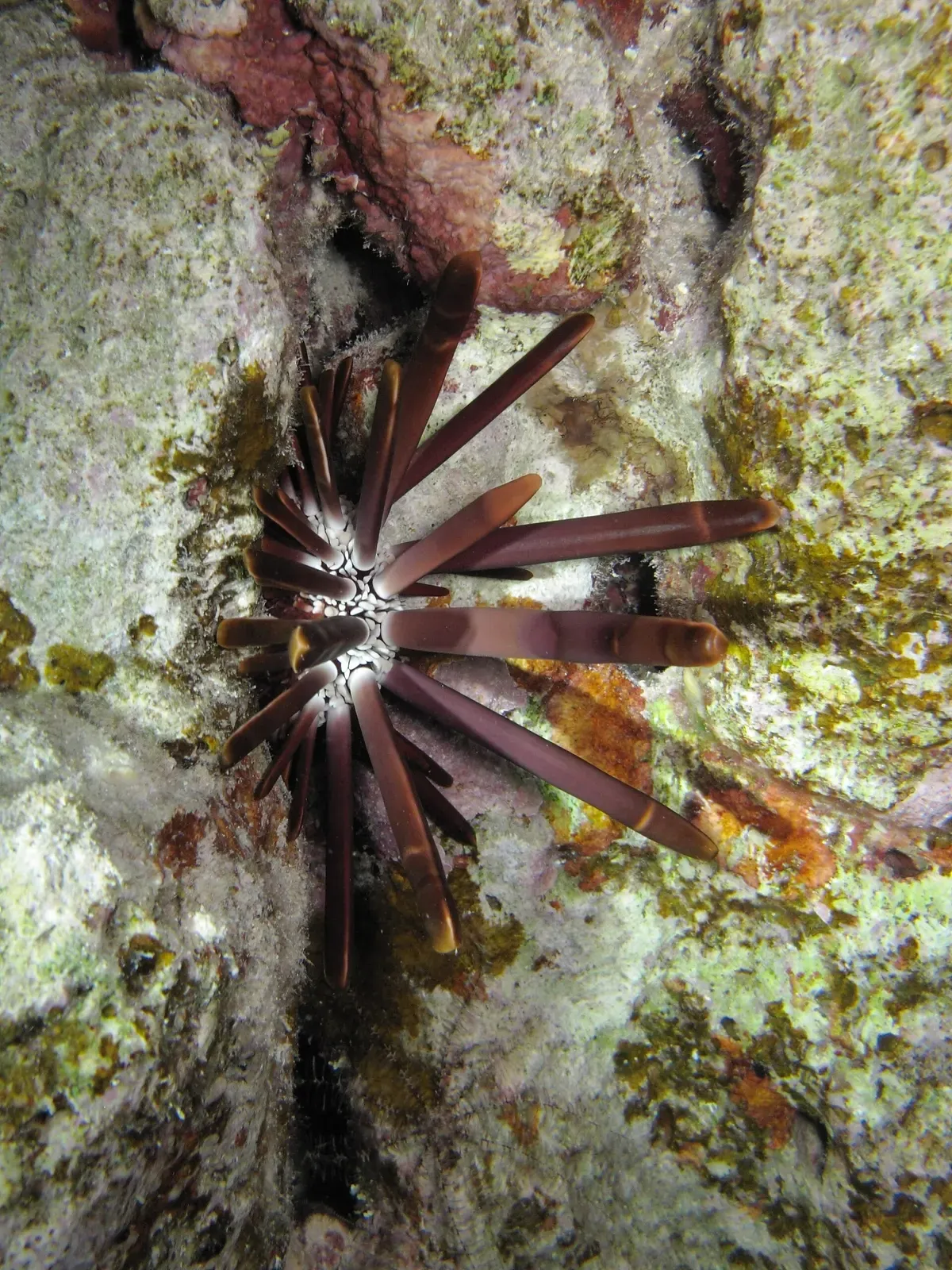
A maze of coral columns down to sand at 20 m
Short caverns at 7 m under an overnight mooring
Tunnels and fissures cut into an 840 m reef block
Wall
Overhangs on the southern wall and a cavern you enter at 10 m
Grey reefs and hammerheads off an exposed pinnacle
Pinnacle
A ledge at 20–35 m circling a current-swept habili
Cave & cavern
Sunlight falling through cracks in the cavern roof at 6-10 m
How to get to St John's Reefs
Boats leave from Port Ghalib, a short transfer from Marsa Alam airport, or from Hamata a couple of hours further south. A week is the standard length, usually pairing St John's with Fury Shoals, Rocky Island and Zabargad. Nothing is resupplied once you sail, and weather can reshuffle the route mid-week.
Photos from St John's Reefs
Derek Keats · CC BY 2.0
Derek Keats · CC BY 2.0
Derek Keats · CC BY 2.0
Derek Keats · CC BY 2.0
Dive videos
Diving Egypt - Cruising St Johns Reef [4K] · Victor_eeo on YouTube
Egypt liveaboard diving Deep South - Scuba diving St. John's Egypt 4k - Coral reefs and sharks · buchpetzer on YouTube
Photo credits
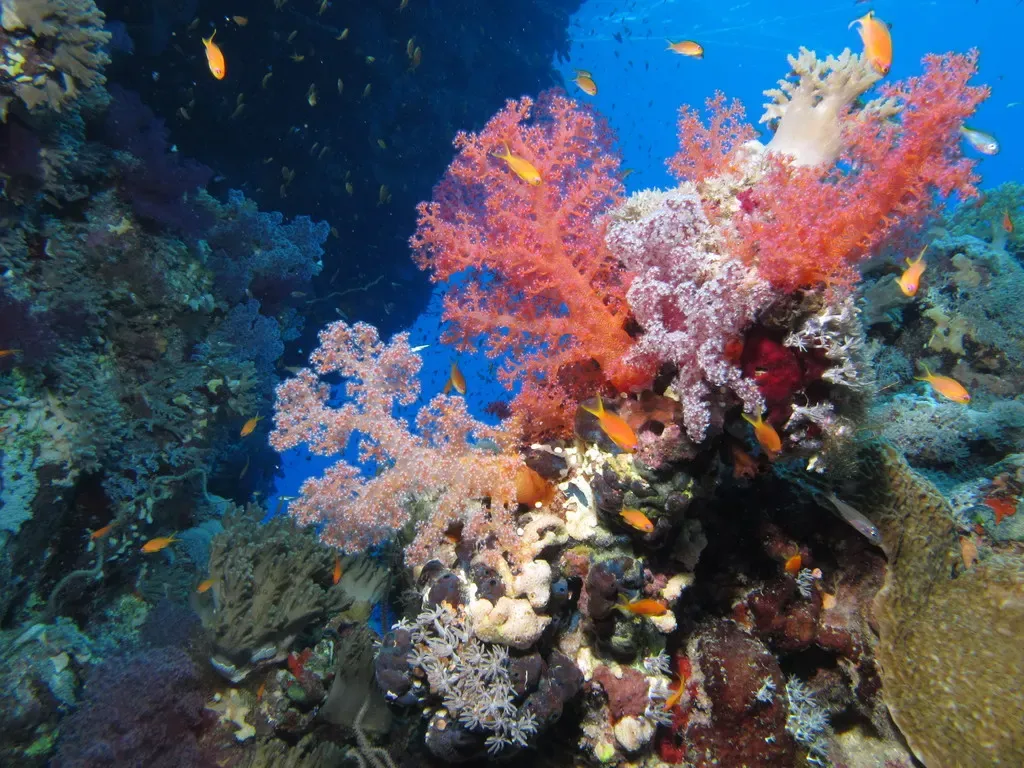
- Pastel pink and orange soft corals cover the reef wall at Gota Kebir, St John's by Derek Keats, CC BY 2.0, via Wikimedia Commons
- A crown butterflyfish swims over coral at Dangerous Reef, St John's Reefs by Derek Keats, CC BY 2.0, via Wikimedia Commons
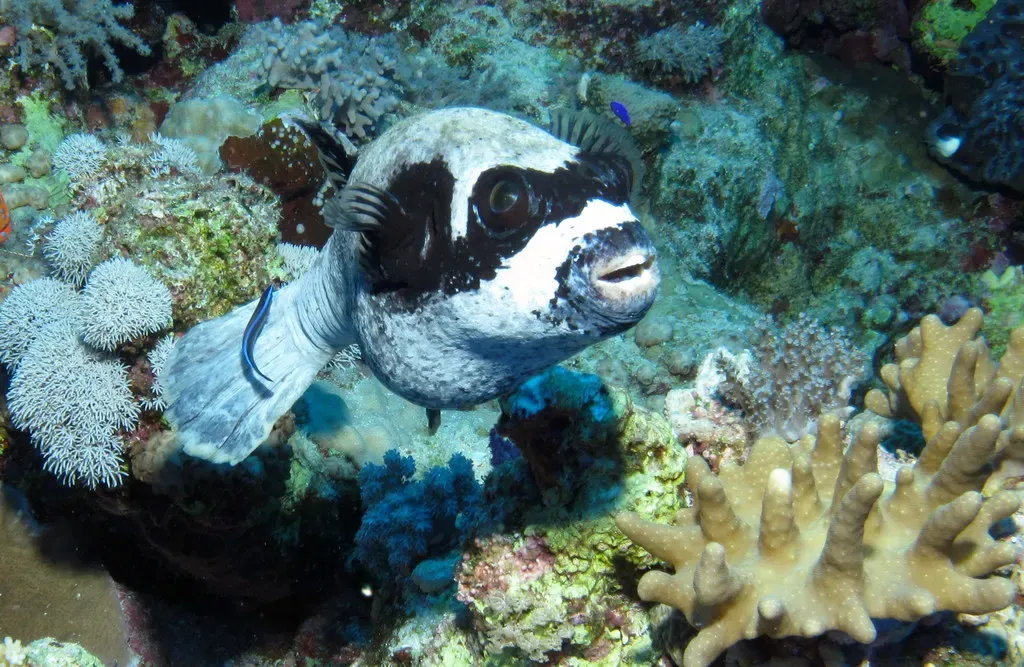
- A masked puffer peers out from a reef crevice at Dangerous Reef, St John's Reefs by Derek Keats, CC BY 2.0, via Wikimedia Commons
- A coral trout rests among reef rock and soft coral at Dangerous Reef by Derek Keats, CC BY 2.0, via Wikimedia Commons
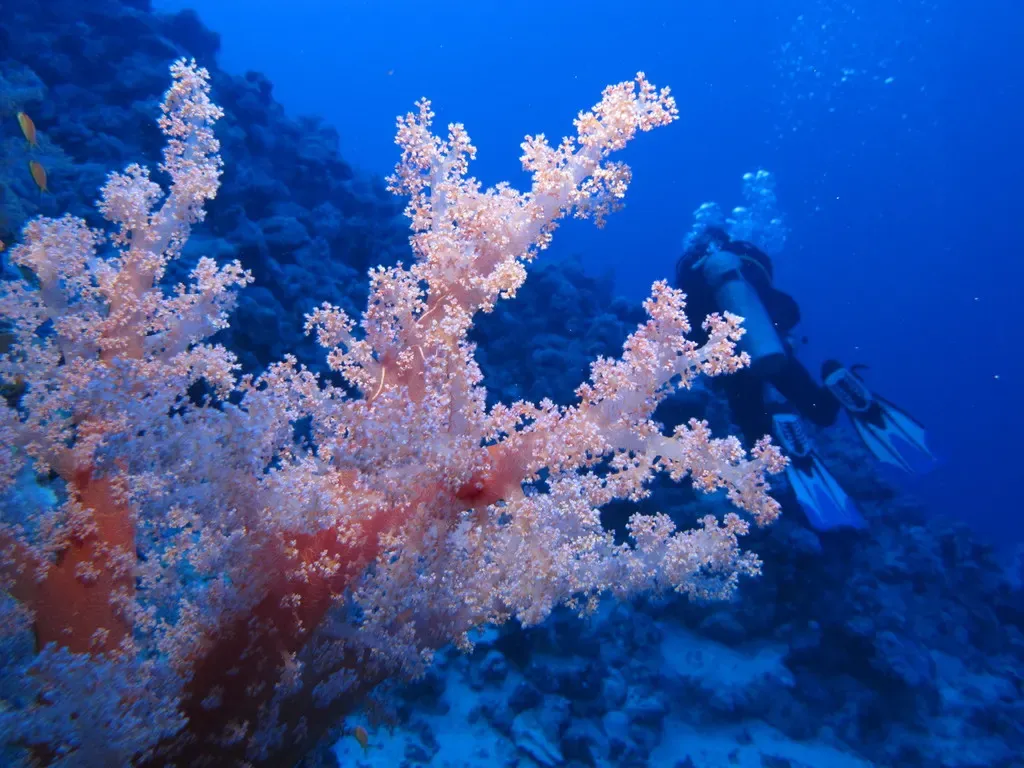
- A diver trailing bubbles glides over open blue water near Gota Kebir by Derek Keats, CC BY 2.0, via Wikimedia Commons
Embed
Run a dive centre, club or blog? Embed this map of 7 dive sites near St John's Reefs on your own page.
In The Logbook
- Where to see reef sharks on your first divesBig animals · 14 min read
- Why do you pee when diving, and tire after?Body & health · 12 min read
- How long should a surface interval be?Body & health · 8 min read
- Malapascua thresher sharks: Monad or Kimud?Big animals · 11 min read
- Where to dive with oceanic whitetip sharksBig animals · 11 min read
- Cavern and cenote diving without cave trainingCaves & caverns · 8 min read
- When and where to dive with hammerheadsBig animals · 16 min read
Similar destinations
Red Sea & Gulf of Aden
Farasan Banks & Al Lith
Saudi Arabia
Whale sharks gather each spring on a reef almost nobody dives

Dugongs at Abu Dabbab, spinner dolphins at Sha'ab Samadai, sharks at Elphinstone
Uncrowded Fury Shoals reefs, from shallow caves to Sha'ab Maksur's drop-offs


.jpg)
.jpg)
.jpg)
.jpg)
The Thistlegorm's holds still stacked with motorcycles, trucks and rail cars