St. Thomas · U.S. Virgin Islands · Wall · Reef
Buck Island Wall
Stingrays and eagle rays cruising a multi-level reef wall
Area photo: Becky A. Dayhuff, Environmental Educator · Public domain
Buck Island Wall, also known as Dive Flag Rock or Andres' Reef, is a reef wall on the north side of Buck Island off St. Thomas and one of the deeper dives on the island's list. Stingrays and eagle rays regularly cruise along it, and its two levels suit a multi-level dive.
Also known as Dive Flag Rock, Andres' Reef.
Where it is and how deep
18.2815° N, 64.8941° WApproximate position — the dashed circle shows where the site lies; your operator's briefing has the mooring.
The dive
The top of the reef lies at 9 m (30 ft) and the sand at its foot at 18 to 21 m (60 to 70 ft). That spread lets the dive run on two levels, along the sand at the base of the wall and over the reef top above it.
Marine life and season
- Stingrays
- Eagle rays
| Jan | Feb | Mar | Apr | May | Jun | Jul | Aug | Sep | Oct | Nov | Dec |
|---|---|---|---|---|---|---|---|---|---|---|---|
| Good | Good | Good | Good | Fair | Prime | Fair | Fair | Fair | Fair | Fair | Good |
Season follows St. Thomas: Boats leave daily; June brings resting sharks to the Navy Barges, and May to November is the rainy season.
Dive videos
Dive Flag Rock #2 · cruckdriver7 on YouTube
Sources
- AAdivers dive sites — AA Divers
- OpenStreetMap — OpenStreetMap
More dive sites in St. Thomas
Wreck
Intact engines on a shipping vessel broken into three pieces
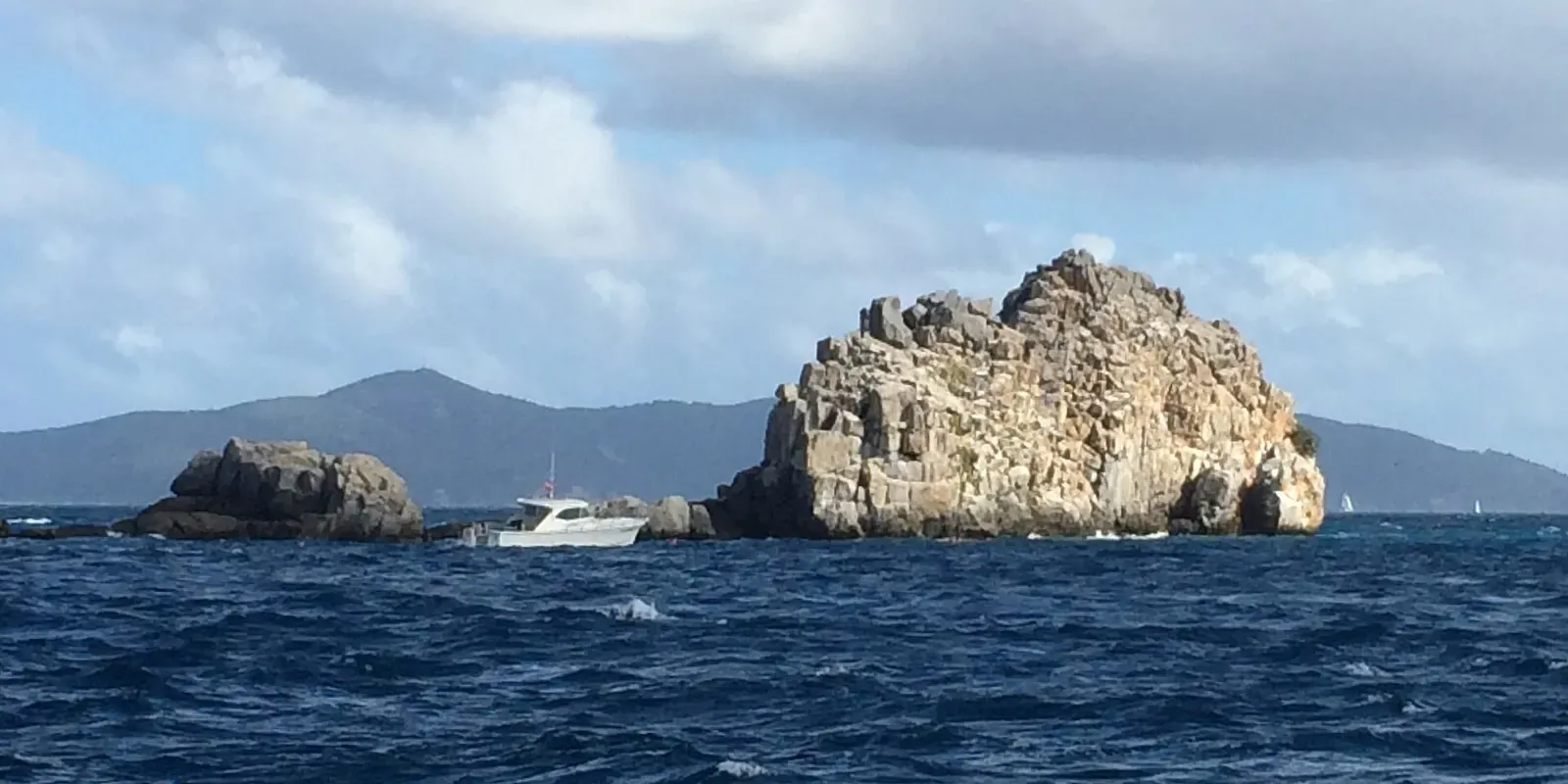
A canyon with almost vertical walls on the north side
Reef
A series of swim-throughs cut through the rock
Wreck
A former hospital ship and office complex lying on her side
Pinnacle
Lots of barracudas around rocks in the middle of the cut
Reef
Huge barrel sponges on terraced rock groupings
Similar dives elsewhere
Wall
Rendezvous Bay
Montserrat · Montserrat
Eagle rays on the wall face, turtles on the reef top

Swim-throughs and overhangs on a wall to 21 metres

An arch and a fissure cut into an islet off Pointe du Diamant


Two facing walls a quarter mile apart, cut by a prehistoric river