Caribbean · U.S. Virgin Islands
St. Thomas
Swim-through rocks, a multi-level reef wall and two big wrecks
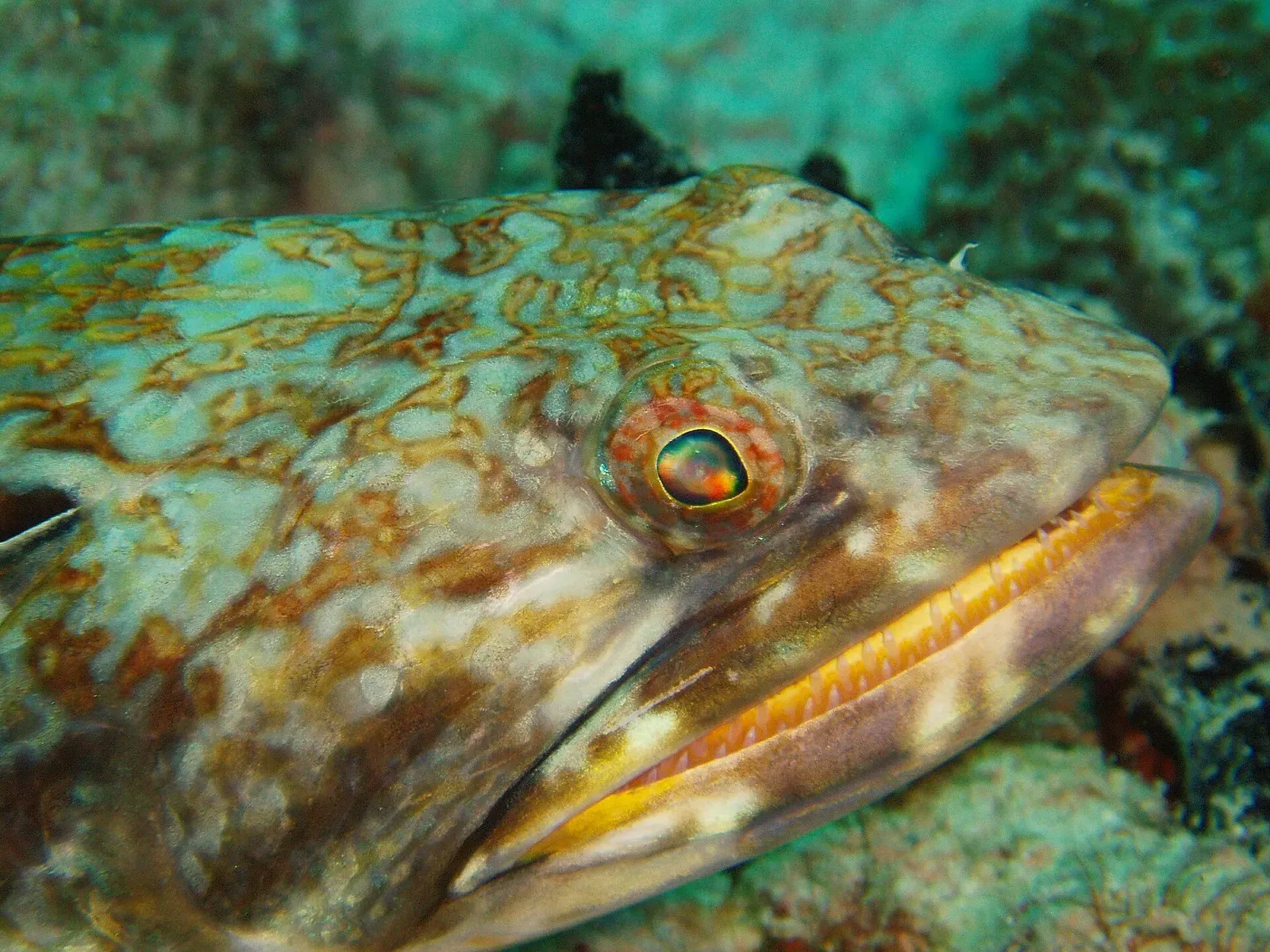
Photo: Becky A. Dayhuff, Environmental Educator · Public domain
St. Thomas, the island that holds the capital of the U.S. Virgin Islands, is dived by boat from Red Hook on the east end and from Secret Harbour, with more than 40 sites on the Caribbean and Atlantic sides. Rock formations such as Cow Rock and Carvel Rock and the multi-level Buck Island Wall are dived between about 9 and 24 m (30 and 80 ft), the Miss Opportunity and WIT Concrete wrecks lie deeper, and turtles, eagle rays and reef sharks are the regular company.
About diving in St. Thomas
Diving here is a boat affair. Boats leave from Red Hook on the east end and from Secret Harbour, and between them they reach more than 40 sites spread over the Caribbean Sea and the Atlantic Ocean. Red Hook boats run two-tank trips every morning and afternoon, and the crew picks the sites by the weather and surface conditions. The unprotected French Cap is visited only when the seas are relatively calm, and at Carvel Rock the current is checked before anyone gets in, since a drift from there heads toward Tortola. Night dives are also on the schedule.
The terrain is rock and reef rather than deep drop-offs. Cow Rock, Calf Rock and Carvel Rock are formations of ledges, crevices and swim-throughs, and tarpon hang around them. Calf Rock, shallow and clear, carries a large field of soft corals and gorgonians and stands of elkhorn coral sheltering small fish. Stingrays and eagle rays cruise along Buck Island Wall. Among the wrecks, the Cartanza Sr. lies in three pieces across Buck Island Cove with her engines still intact, and the Miss Opportunity broke open when she hit the bottom and is easily penetrated.
St. Thomas suits newer divers and groups that mix divers with snorkelers. Mingo Cay, a training site, tops out at 14 m (45 ft), most sites stay within 24 m (80 ft), and the Cartanza Sr. and the Ledges at Little St. James suit snorkelers as well as divers. The Miss Opportunity, with multiple decks to explore, holds even seasoned wreck divers. Divers after long drifts or sheer walls will find less: there is no true drift dive here, and St. Croix has the continental-shelf drop-offs this coast lacks.
Best time to dive St. Thomas
| Jan | Feb | Mar | Apr | May | Jun | Jul | Aug | Sep | Oct | Nov | Dec |
|---|---|---|---|---|---|---|---|---|---|---|---|
| Good | Good | Good | Good | Fair | Prime | Fair | Fair | Fair | Fair | Fair | Good |
December to April falls outside the rainy season, and the two-tank boats leave daily; February has the coolest water, around 25°C (77°F). The rainy season runs from May to November. June is the shark breeding season, when sharks rest in groups under one part of the Navy Barges wreck, the large ones 1.8 m (6 ft) or more. The water keeps warming through the summer to its peak in September, at up to 30°C (86°F), and September has also brought hurricanes, as Irma did in 2017.
Best months: June
Dive types & marine life
Turtles turn up regularly at the Ledges at Little St. James and usually at Cow Rock, eagle rays and stingrays cruise Buck Island Wall, and tarpon hang around the rocks. Large reef sharks are often seen, the WIT Concrete has a resident goliath grouper, and June, the shark breeding season, brings resting congregations of sharks to the Navy Barges.
- Reef
- Wall
- Wreck
- Sea turtles
- Eagle rays
- Stingrays
- Reef sharks
- Groupers
- Octopus & cuttlefish
Best dive sites in St. Thomas
- 1
Cow Rock
Rock formation threaded with swim-throughs, with critters in the crevices, to 14 m (45 ft)
- 2
Buck Island Wall
Multi-level wall from a reef top at 9 m (30 ft) to sand at 18 to 21 m (60 to 70 ft)
- 3
Miss Opportunity
Former hospital ship on her side in just over 27 m (90 ft), reached from 12 m (40 ft)
- 4
WIT Concrete
Upright bulk carrier coated in sponges and corals off the west end
- 5
Carvel Rock
Line of rocks whose north side holds a near-vertical canyon down to 24 m (80 ft)
- 6
Joe's Jam & Coral Bowl
Amphitheatre of coral around a sandy bowl where large reef sharks are often seen
- 7
Wye Reef
Terraces to 18 m (60 ft) with octopus and huge barrel sponges
- 8
Fish Stick
One-way dive to 24 m (80 ft), the nearest thing to a drift dive here
Site guides
Wall
Stingrays and eagle rays cruising a multi-level reef wall
Wreck
Intact engines on a shipping vessel broken into three pieces
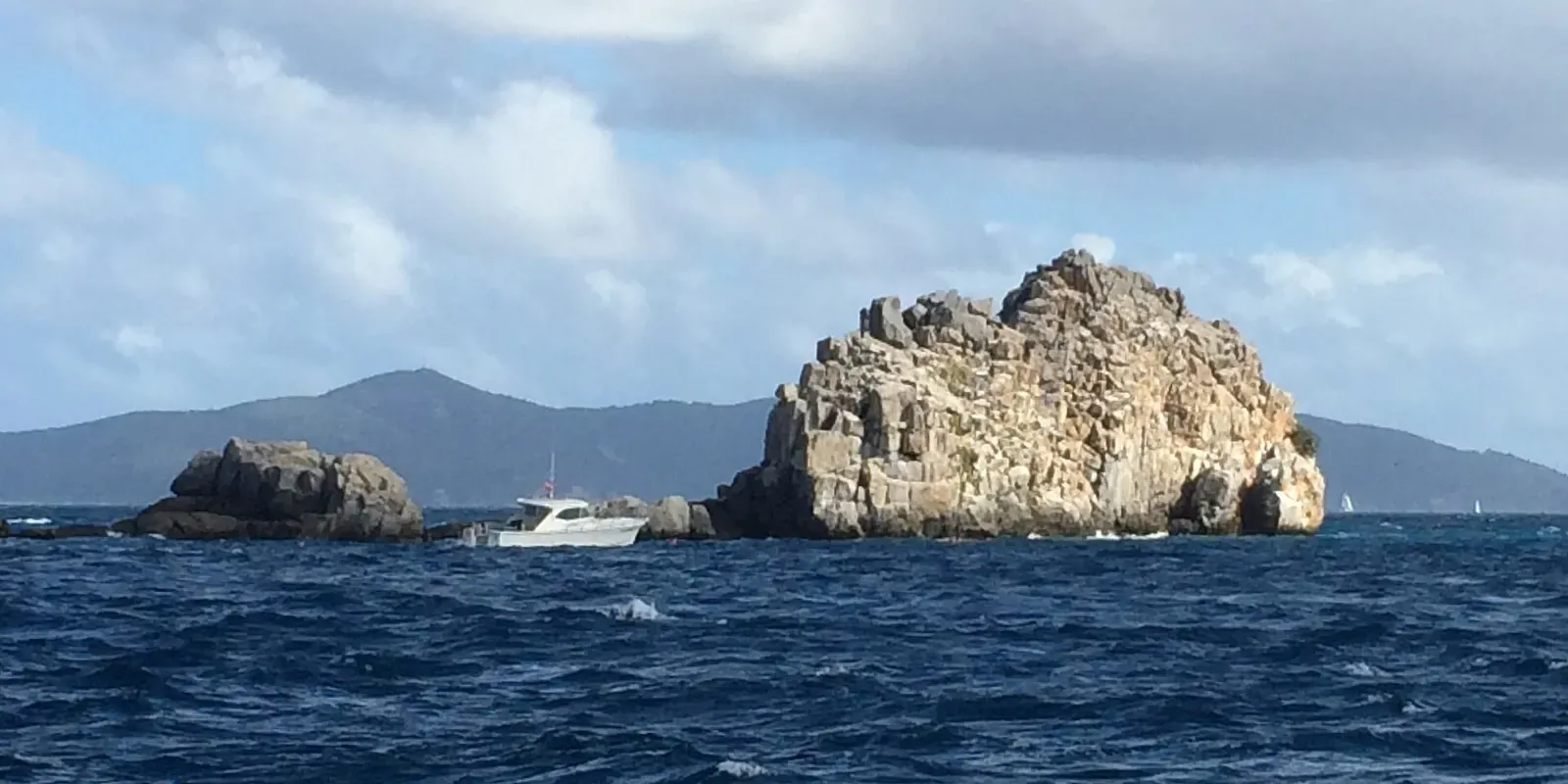
A canyon with almost vertical walls on the north side
Reef
A series of swim-throughs cut through the rock
Wreck
A former hospital ship and office complex lying on her side
Pinnacle
Lots of barracudas around rocks in the middle of the cut
Reef
Huge barrel sponges on terraced rock groupings
How to get to St. Thomas
Flights land at Cyril E. King Airport on St. Thomas, and taxis and buses run from there to Charlotte Amalie and to Red Hook on the east end, where one dive centre sits in American Yacht Harbor; the other is at the Secret Harbour Beach Resort. Red Hook also has ferries to Cruz Bay on St. John.
Dive videos
Scuba Diving from Shore (Coki Beach - St. Thomas) · Triton's Realm on YouTube
Scuba Diving Buck Island (St. Thomas - US Virgin Islands) · Triton's Realm on YouTube
Questions divers ask
Is St. Thomas diving shore or boat?+
Boat. Red Hook boats leave daily for two-tank trips, with the crew choosing the sites by the weather and surface conditions, and the Secret Harbour shop reaches more than 40 sites on the Caribbean and Atlantic sides.
When is the best month to see sharks at St. Thomas?+
June, the shark breeding season, when sharks rest in groups under part of the Navy Barges wreck, the large ones 1.8 m (6 ft) or more. Large reef sharks are also often seen around the WIT Concrete.
Is St. Thomas good for new divers?+
Yes. A training site tops out at 14 m (45 ft) and most sites stay within 24 m (80 ft). The two big wrecks lie deeper, the Miss Opportunity in just over 27 m (90 ft) and the WIT Concrete in 30 m (100 ft).
How do divers get to the dive centres on St. Thomas?+
Fly into Cyril E. King Airport, then take a taxi or bus to Red Hook on the east end, where one centre's boat leaves from American Yacht Harbor; the other centre is at the Secret Harbour Beach Resort.
Sources
- Red Hook Dive Center — Red Hook Dive Center
- Red Hook Dive Center dive trips — Red Hook Dive Center
- Scuba Dive St. Thomas & Boat Charter Center — Aqua Action Dive Center
- Dive Sites | AAdivers — Aqua Action Dive Center
- Saint Thomas Average Sea Temperatures — seatemperature.org
- U.S. Virgin Islands — Wikivoyage
Photo credits
- Close-up of a lizardfish head with mottled green and brown skin, an orange-ringed eye and a long yellow-edged mouth by Becky A. Dayhuff, Environmental Educator, Public domain, via Wikimedia Commons
Embed
Run a dive centre, club or blog? Embed this map of 12 dive sites near St. Thomas on your own page.
Similar destinations
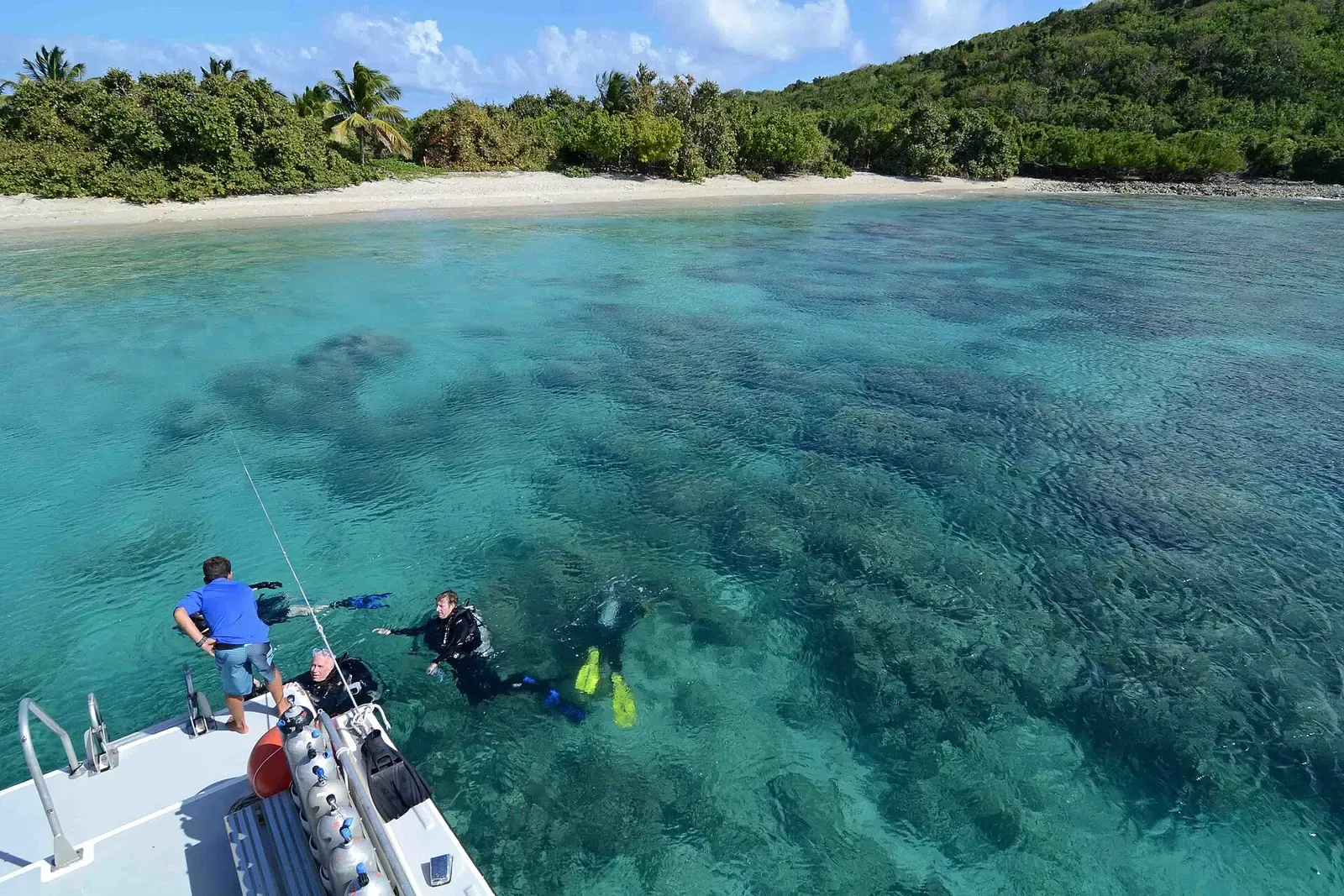
About 50 reef, wall and wreck sites, most under 20 minutes by boat
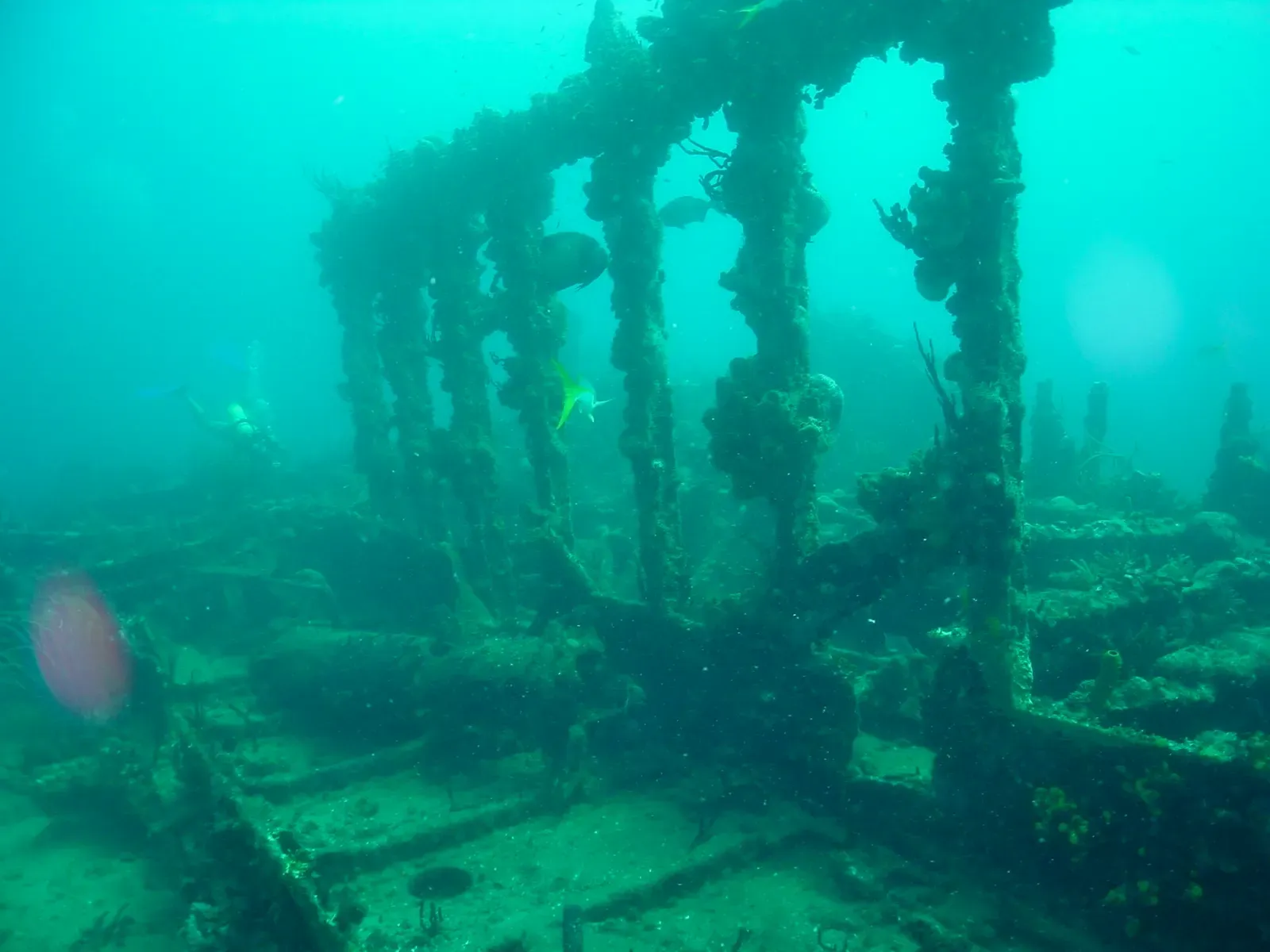
An 1867 mail steamer split between 9 m and 27 m off Salt Island

Arches, canyons and swim-throughs among the Dog Islands, a short boat ride out
Caribbean
St. John
U.S. Virgin Islands
Tarpon schools at Carval Rock and coral cays a short boat ride out