
Stewart Island · New Zealand · Pelagic & blue water · Channel & pass
Tītī / Muttonbird Islands
Muttonbird islets in a cold, tidal, shark-cage strait
Area photo: Annette Teng · CC BY 3.0
The Tītī or Muttonbird Islands are three chains of islets off the northern end of Stewart Island, and the north-eastern chain — Edwards, Jacky Lee, Herekopare, North and Women's Islands, The Bunker Islets and Fish Rock — is where the Foveaux Strait cage boat works its established spots. The strait around them is 18 to 46 m deep, tidal and cold, and it is charter ground rather than a mapped dive site.
Also known as Titi Islands, Muttonbird Islands.
Where it is and how deep
46.8500° S, 168.2000° EApproximate position — the dashed circle shows where the site lies; your operator's briefing has the mooring.
The dive
There is no described route here — the islands are charter ground rather than a mapped site. What is known is the water. Foveaux Strait varies between 18 and 46 m deep, the Southland Current runs through it, and tidal streams reach 80 cm per second, up to 120 cm per second on spring tides. Dives are built around slack water and a live boat, not around a plan you can read in advance.
The north-eastern chain sits in Foveaux Strait between Stewart Island and Ruapuke Island, and holds North, Women's, Edwards, Jacky Lee, Herekopare and Kanetetoe Islands, The Bunker Islets and Fish Rock. This is the same chain the cage operator uses for its established spots, which is the one form of diving here with a published shape. At least 24 species of cetacean and four species of pinniped have been recorded in the Foveaux Strait region.
Background
The name is tītī, the sooty shearwater, and it comes from the traditional seasonal harvest — muttonbirding — that Māori have long carried out on these islands. The group is clustered in three chains, and the southern Muttonbird Islands have been identified by BirdLife International as an Important Bird Area for their breeding seabirds: over a million breeding pairs of sooty shearwater nest there, along with mottled petrel.
Marine life and season
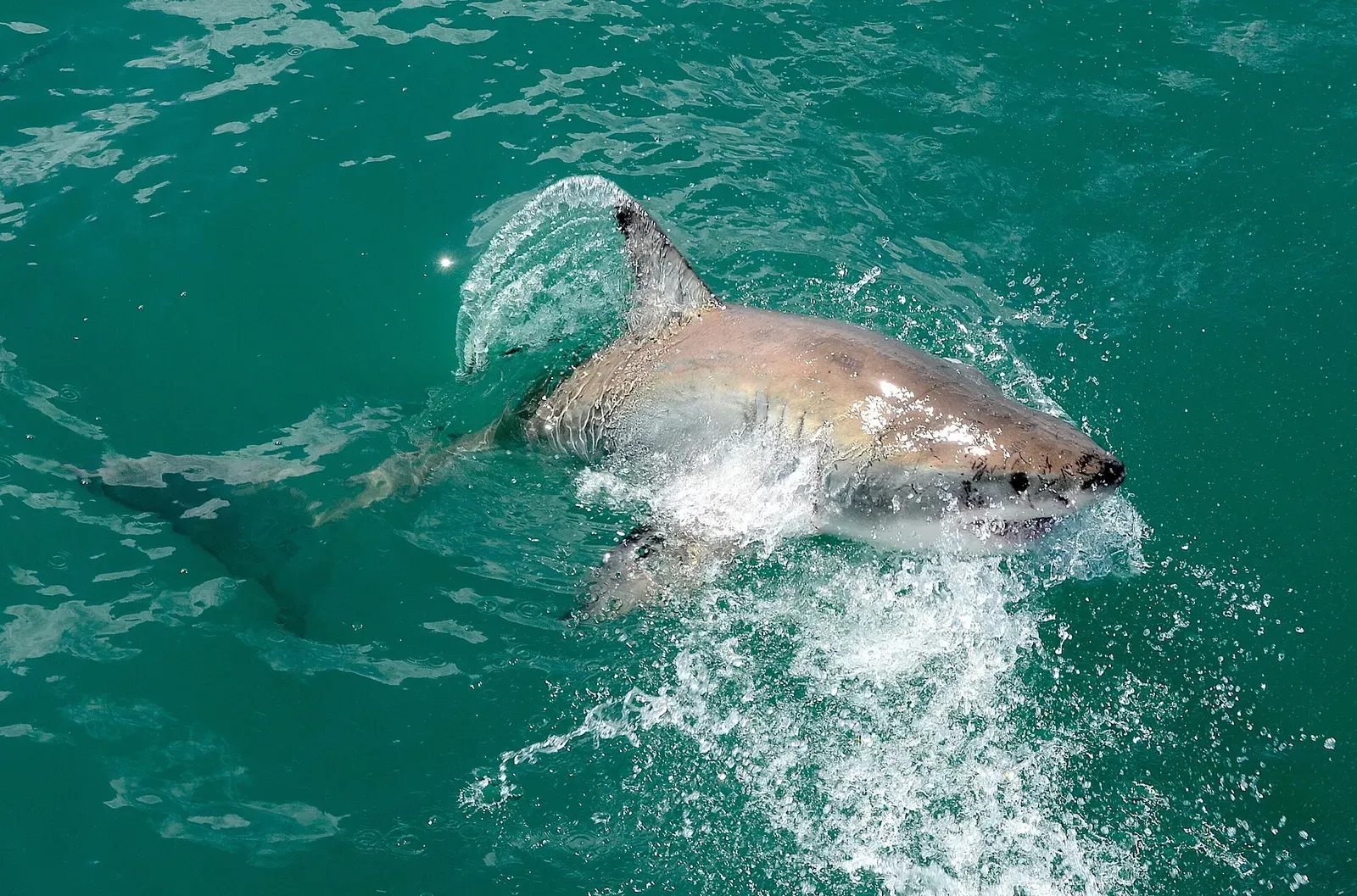
- Great whites
- Seals & sea lions
| Jan | Feb | Mar | Apr | May | Jun | Jul | Aug | Sep | Oct | Nov | Dec |
|---|---|---|---|---|---|---|---|---|---|---|---|
| Prime | Prime | Prime | Good | Good | Fair | Off-season | Off-season | Off-season | Off-season | Fair | Prime |
Season follows Stewart Island: The cage season runs roughly Dec–Jun under permit; winter weather in the Foveaux Strait shuts the crossing entirely.
Know before you go
- Westerlies of up to 130 km/h funnel through the strait, and swells average over 3 m and occasionally exceed 10 m — the crossing, not the dive, is what shuts this place down.
- Tidal streams run at 80 cm per second and up to 120 cm per second on spring tides, so entries are tied to slack water and the boat stays live.
Dive videos
White Sharks Of The Titi Islands · Saltyflyfish on YouTube
Questions divers ask
How deep is the water around the Tītī Islands?+
Foveaux Strait around the islands is 18 to 46 m deep. No recreational profile has been published for a specific site here, so dives are planned by charter skippers around the tide — streams reach 120 cm per second on spring tides.
Sources
- Tītī / Muttonbird Islands — Wikipedia
- Foveaux Strait — Wikipedia
- Shark Cage Diving — Shark Experience
- Great white shark — Wikipedia
In The Logbook
- Where to dive with tiger, bull and white sharksBig animals · 14 min read
More dive sites in Stewart Island
Pelagic & blue water
Great whites from a surface cage off a Tītī group islet
Kelp forest
No-take kelp reserve ten minutes from Golden Bay
Similar dives elsewhere

Great whites at the bars of a cage winched to 18 m
A surface cage in the channel where 60,000 seals once reliably drew great whites
Sea lion haul-outs below the old Lighthouse Island light

Decompression depths, strong current, whaler sharks