Tarifa & the Strait of Gibraltar · Spain · Wreck
Las Calderas
Three boilers still standing in an early-1900s wreck at 8–20 m
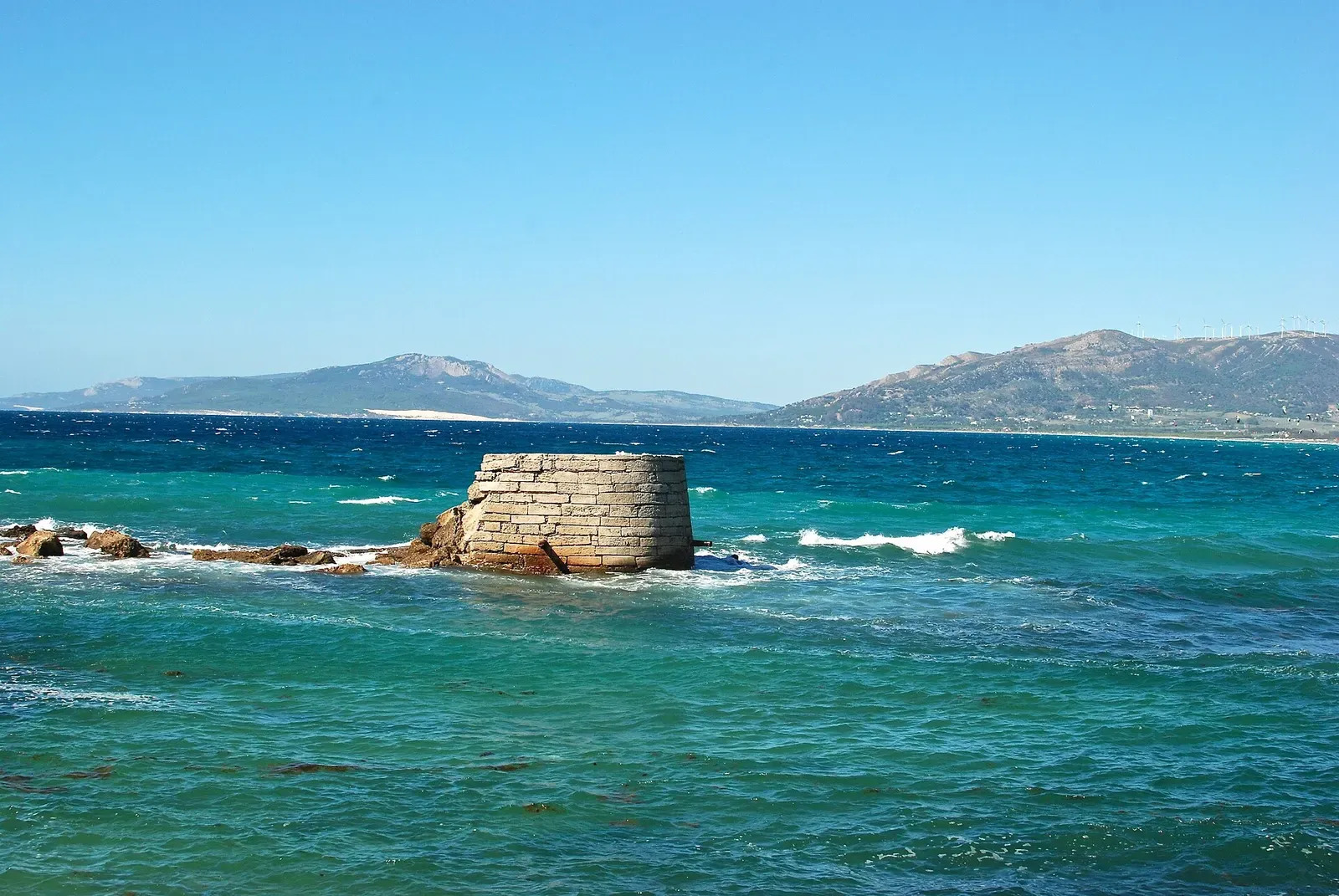
Area photo: Karan Jain from Washington, DC, USA · CC BY-SA 2.0
Las Calderas is a ship from the beginning of the 20th century on the Atlantic side of the island, named for the three boilers still recognisable in the wreckage. The dive runs 8–20 m, shallow enough that YellowSub takes beginners on it as well as experienced divers. Morays, congers and groupers live in the holes in the structure, with lobster and spider crabs on the plating.
Where it is and how deep
36.0025° N, 5.6131° WPublished position for this site.
The dive
The anchorage is tied to the wreck itself, so the descent puts you straight onto the structure. From there the route works along the deck and under the hull, with the three boilers — the reason for the name — the clearest surviving feature on it. León Marino gives the depth as 8–18 m and YellowSub 5–20 m, which makes this the shallowest of the wrecks Tarifa's centres dive.
The small holes in the plating are where the life is: morays and conger eels, groupers, octopus, nudibranchs, electric rays, snapper and dentex, with eagle rays and sand eels turning up now and then. Lobster, spider crabs and gorgonian growth cover the outside of the wreck. Nothing here asks for penetration — the dive is worked from outside the hull and under it, not inside.
The wreck
- Vessel
- Unidentified ship, known as Las Calderas
- Type
- Early 20th-century ship, three boilers surviving
- Cause
- Not recorded by the Tarifa operators or the site catalogue
- Lies
- On the bottom on the island's Atlantic side, deck and three boilers exposed, the hull clear enough to swim beneath
The ship's own name is gone. Scubago dates the vessel to the beginning of the 20th century, and both Tarifa centres call the site only Las Calderas, the boilers, after the three that still stand among the remains. No source records the ship's identity, its flag, what it was carrying or how it came to be on the bottom off the island's Atlantic side.
Marine life and season
- Macro critters
- Groupers
- Eagle rays
- Nudibranchs
- Octopus & cuttlefish
- Stingrays
| Jan | Feb | Mar | Apr | May | Jun | Jul | Aug | Sep | Oct | Nov | Dec |
|---|---|---|---|---|---|---|---|---|---|---|---|
| Fair | Fair | Fair | Fair | Good | Good | Good | Prime | Prime | Prime | Fair | Fair |
Season follows Tarifa & the Strait of Gibraltar: August to October holds the warmest water; visibility does not track it, and the strait's funnelled Levante and Poniente winds can stop boats in any month.
Sources
- Las Calderas (Wreck) — Scubago
- Las Calderas — León Marino Buceo Tarifa
- Pecio de las Calderas — YellowSub Tarifa
- Las Calderas — Wannadive
More dive sites in Tarifa & the Strait of Gibraltar
Reef
A grotto rock at 5–14 m that shelters lobsters and rays
Wall
Sand pools at 8 m under a wall worked from 15 up to 9 m
Wreck
A steamer on its side under gorgonian growth, at 18–31 m
Wreck
An upright steamer at 28 m with rudder and propeller visible
Wreck
An 1856 steamship broken across the bottom from 22 m to 30 m
Reef
Shore-accessible rock from 0 to 18 m over a Phoenician port
Roman grinding stones and amphorae at the foot of a 40 m point
Anchors from several centuries along a 14–35 m rock run
Similar dives elsewhere

Nearly 152 metres of liner (500 feet), broken across the reef in under 20 m
Wreck
Dori
Azores · Portugal
A 130-metre Liberty ship broken open in shallow water


The 1930 Nelson Line liner lost on Farilhão Grande
The fallback dive of the Berlengas: 1902 steamer ruins at 16–24 m