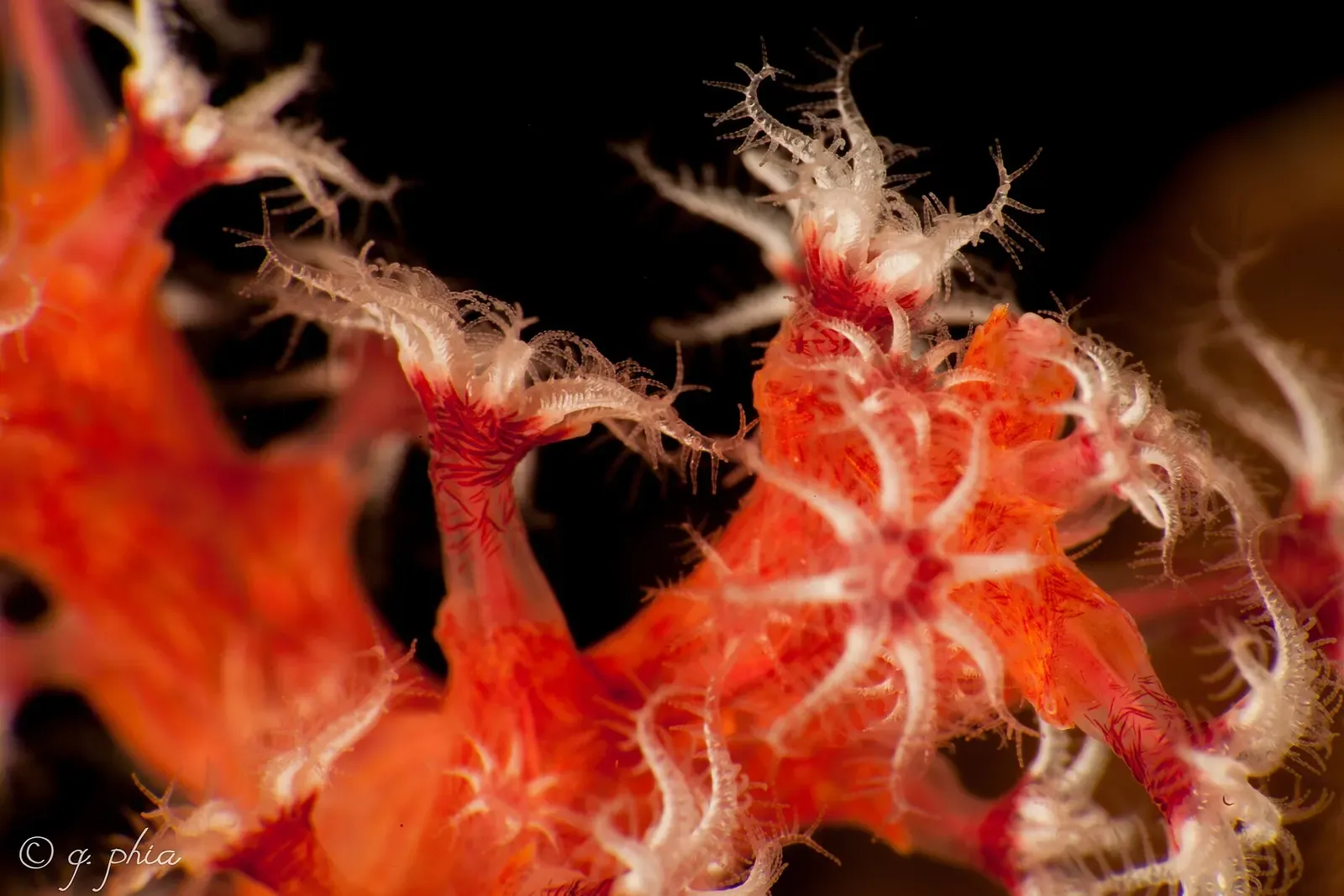
Cornucopia is a long stretch of reef dived as a leisurely drift, where a steep slope broken by several ridges turns into a sheer drop-off, the Great Wall of Cornucopia. Coral cover is heavy the whole way: huge fans, sponges, soft corals and dense black corals, with abundant macro life packed in among them and the published range running to 55 metres.
Where it is and how deep
No published position for this site — the map shows Wakatobi and its other sites; operators know the mooring.
The dive
The dive is run as a drift, with divers typically moving at a reasonably leisurely pace along a great stretch of reef, so you cover ground without working for it. It opens on a steep slope broken by several ridges crammed with different corals, then the seascape turns into a sheer drop-off, the Great Wall of Cornucopia, and the ground along the way is varied with walls, ledges and overhangs. The published range for the site is 0 to 55 metres.
Coral cover is the point here. Huge fans and sponges stand out from the reef, soft corals fill the gaps in oranges and yellows, and dense black corals grow along the wall. Amidst all that growth there is abundant macro life, which makes the drift slow work for anyone carrying a camera and a reason to run the site more than once.
The larger animals come and go along the same stretch: whitetip and nurse sharks, eagle rays and mobula rays. None of that is fixed on a given dive, so the site is planned as a coral drift rather than a search for anything in particular, and the reef itself is what holds attention between encounters.
Marine life and season
- Reef sharks
- Eagle rays
- Mobula rays
- Pristine corals
- Macro critters
| Jan | Feb | Mar | Apr | May | Jun | Jul | Aug | Sep | Oct | Nov | Dec |
|---|---|---|---|---|---|---|---|---|---|---|---|
| Fair | Fair | Good | Prime | Prime | Good | Good | Good | Prime | Prime | Prime | Good |
Season follows Wakatobi: Diveable all year; April–May and September–November are the peak months, and January and February the wettest.
Photos from Cornucopia
q.phia · CC BY 2.0
q.phia · CC BY 2.0
Questions divers ask
How deep is Cornucopia?+
The published range is 0 to 55 m. The wall drops well past recreational depth, but the reef runs all the way up to the surface, so the dive can be planned as a shallow drift finishing on the reef top.
Is Cornucopia a drift dive?+
Yes. Divers typically drift at a reasonably leisurely pace along a long stretch of reef, past slopes, ridges, walls, ledges and overhangs.
Sources
- Wakatobi's Dive Sites — Wakatobi Dive Resort
- Wakatobi Diving Sites, Indonesia — Dive The World
Photo credits
- Red soft coral polyps open wide with pale feeding tentacles extended by q phia, CC BY 2.0, via Wikimedia Commons
- Translucent commensal shrimp with thin purple legs on pale coral polyps by q.phia, CC BY 2.0, via Openverse
- Round pale sea urchin shell with knobbly bosses resting on the reef by q.phia, CC BY 2.0, via Openverse
More dive sites in Wakatobi
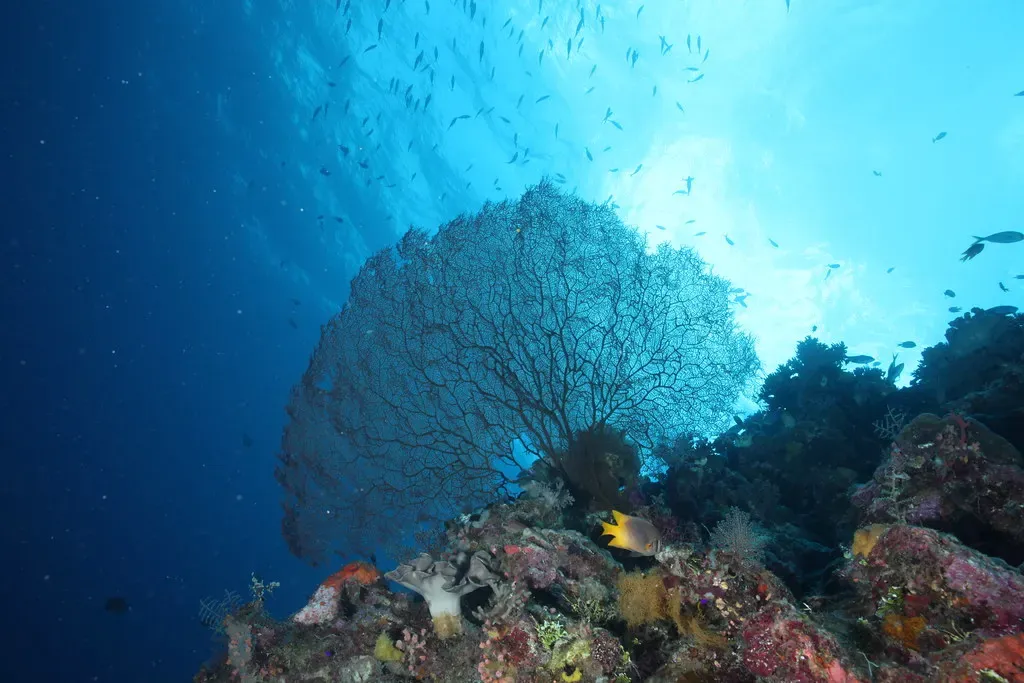
A serrated ridge in open blue water, falling away on both sides
A drop-off 80 m off the beach, from under 2 m to past 40 m
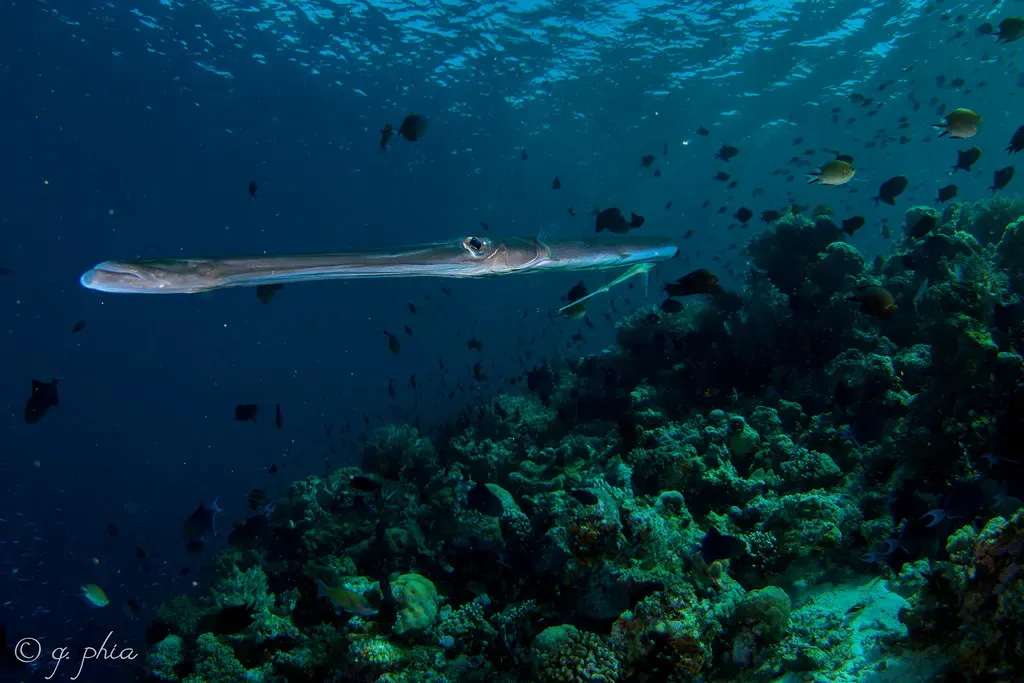
Banded sea snakes, sometimes counted in double figures
Reef
A coral ridge known for large frogfish, then macro on the fringing reef
Similar dives elsewhere
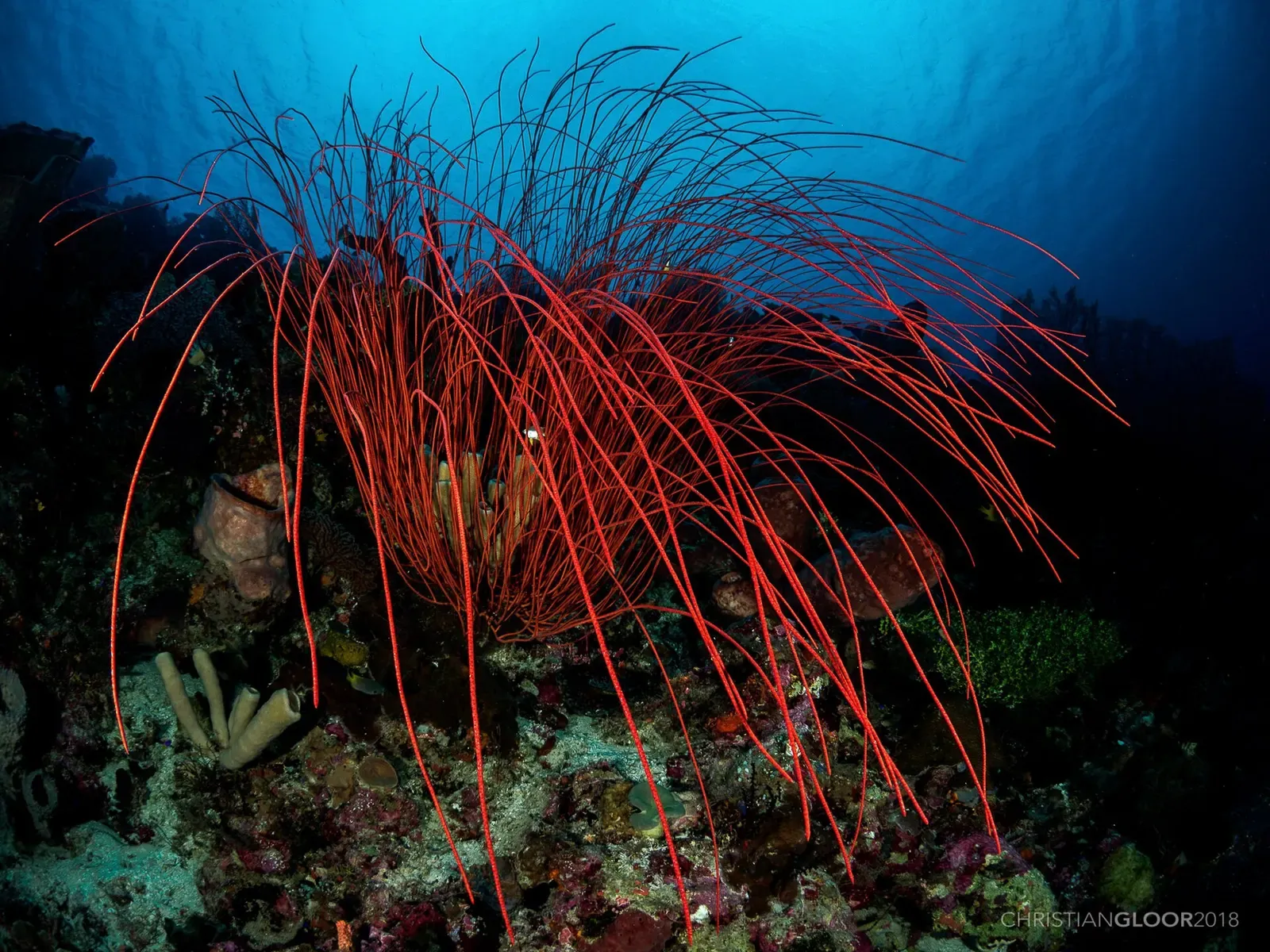
Whip corals along a drifted wall, with bumpheads passing

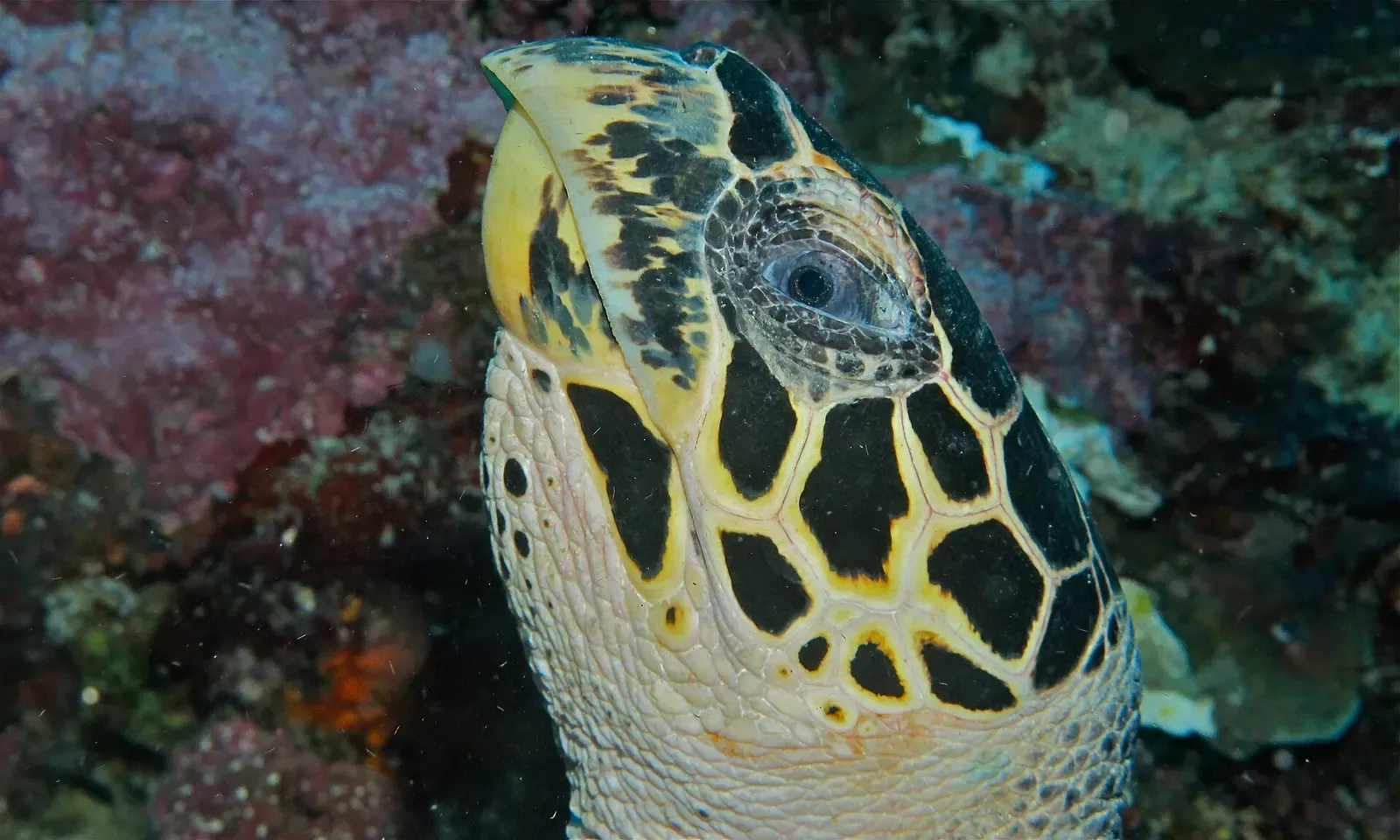
Sanctuary wall with small caves and steady turtle sightings

A drift from schooling fish on the point to macro on the slope
.jpg)
The corner where Cabilao's sharks are seen, wall to plateau to wall