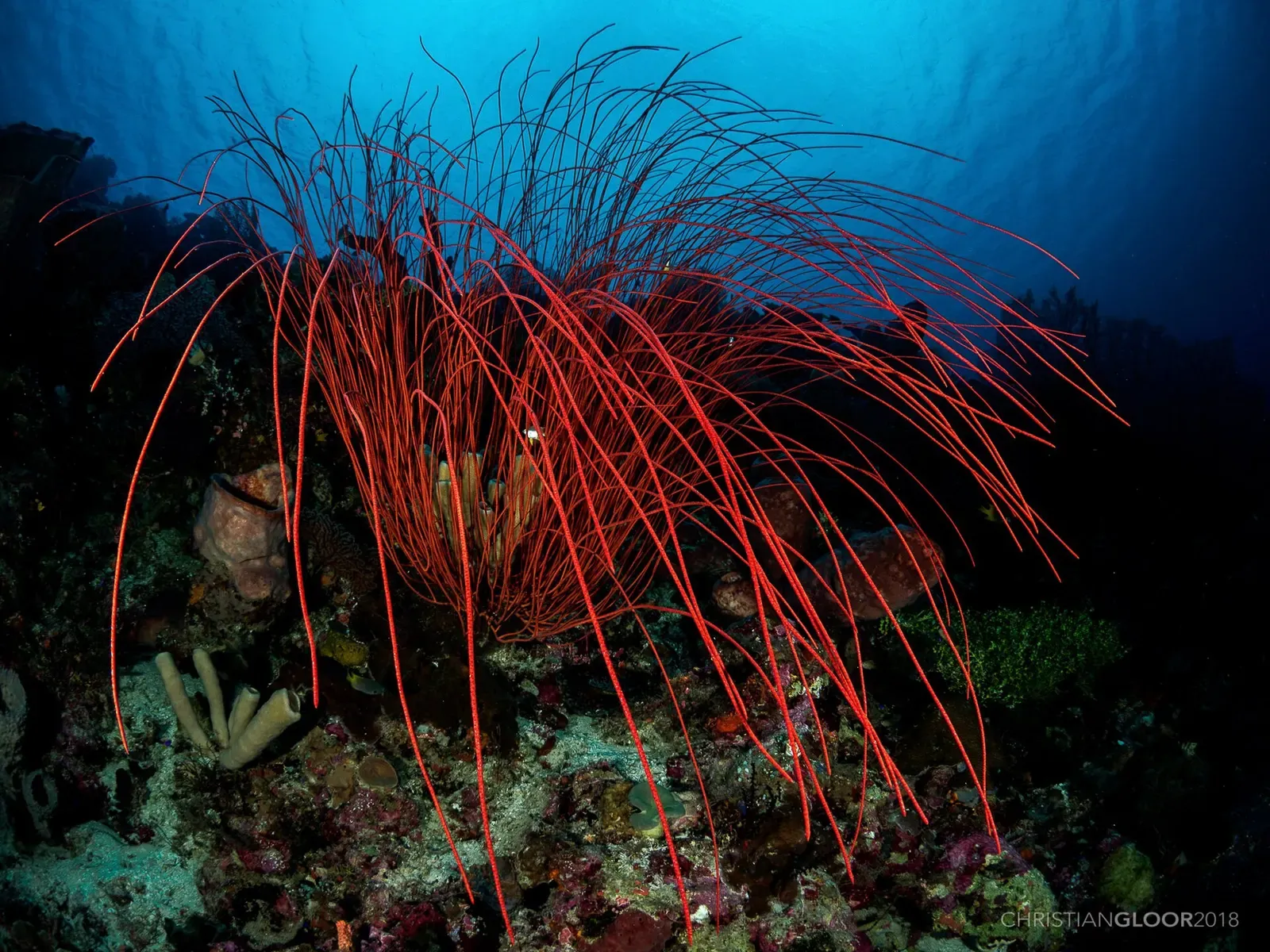
Wakatobi · Indonesia · Reef · Wall · Night
House Reef
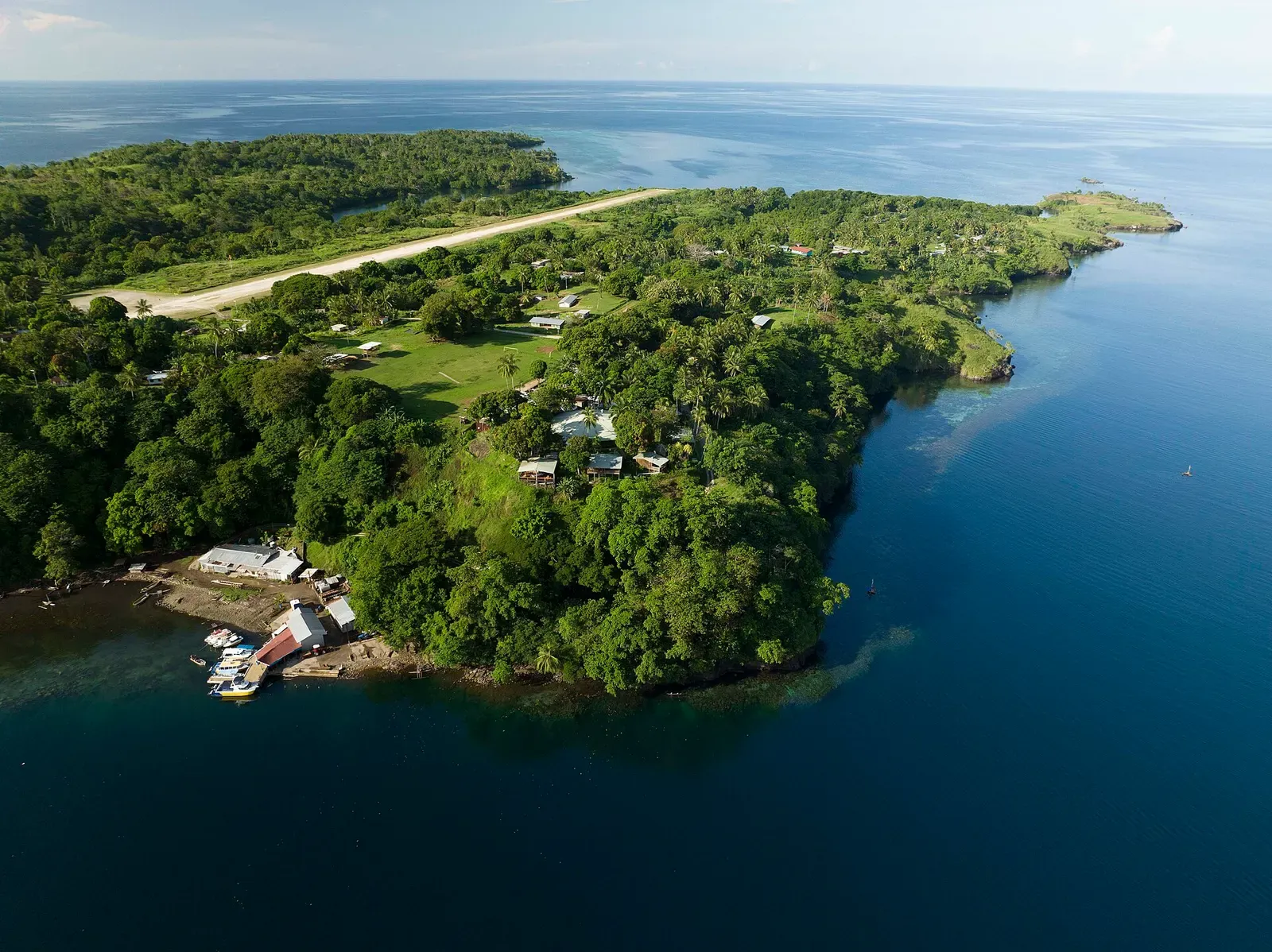
A drop-off 80 m off the beach, from under 2 m to past 40 m
Photo: Christian Gloor from Wakatobi Dive Resort, Indonesia · CC BY 2.0
Wakatobi's House Reef runs along the shore in front of the resort, where a seagrass flat in less than two metres of water ends at a drop-off 80 metres out that falls past 40 metres. It is dived without limit from the beach, the jetty ladder or the gully in front of the restaurant, day and after dark, and the reef sits inside a no-fishing zone agreed with the surrounding villages.
Also known as Wakatobi House Reef.
Where it is and how deep
5.7763° S, 123.8956° EApproximate position — the dashed circle shows where the site lies; your operator's briefing has the mooring.
The dive
Entry depends on the tide. At high water you can enter at numerous points along the beach; at low water divers use the jetty ladder or the canyon known as the second gully, in front of the resort restaurant. From there you drift over ground covered in sea grass, which is worked as a macro site in its own right, with snake eels and flounders in the sand and blue-spotted rays in the shallows, before carpets of hard and soft coral take over on the reef top.
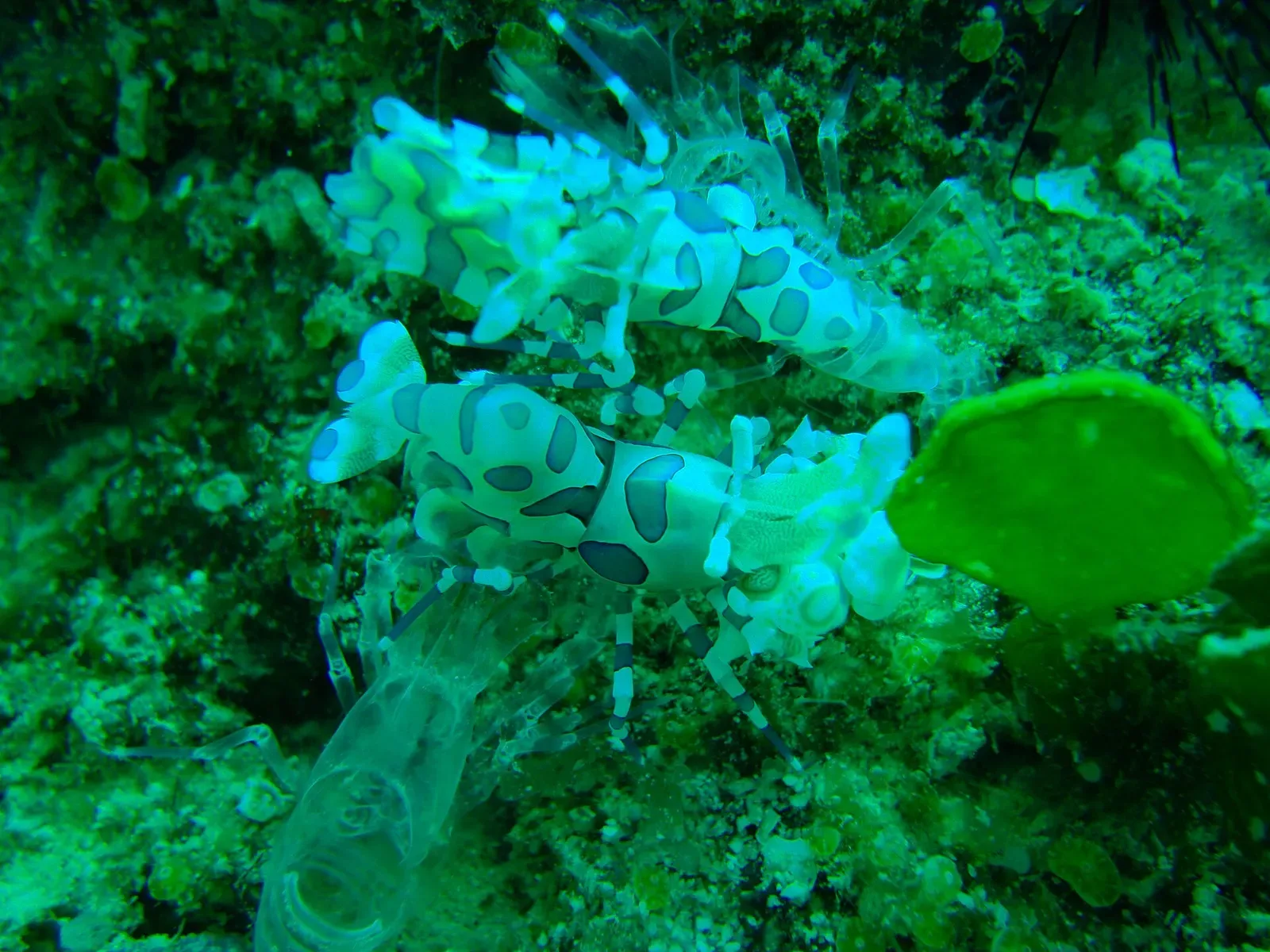
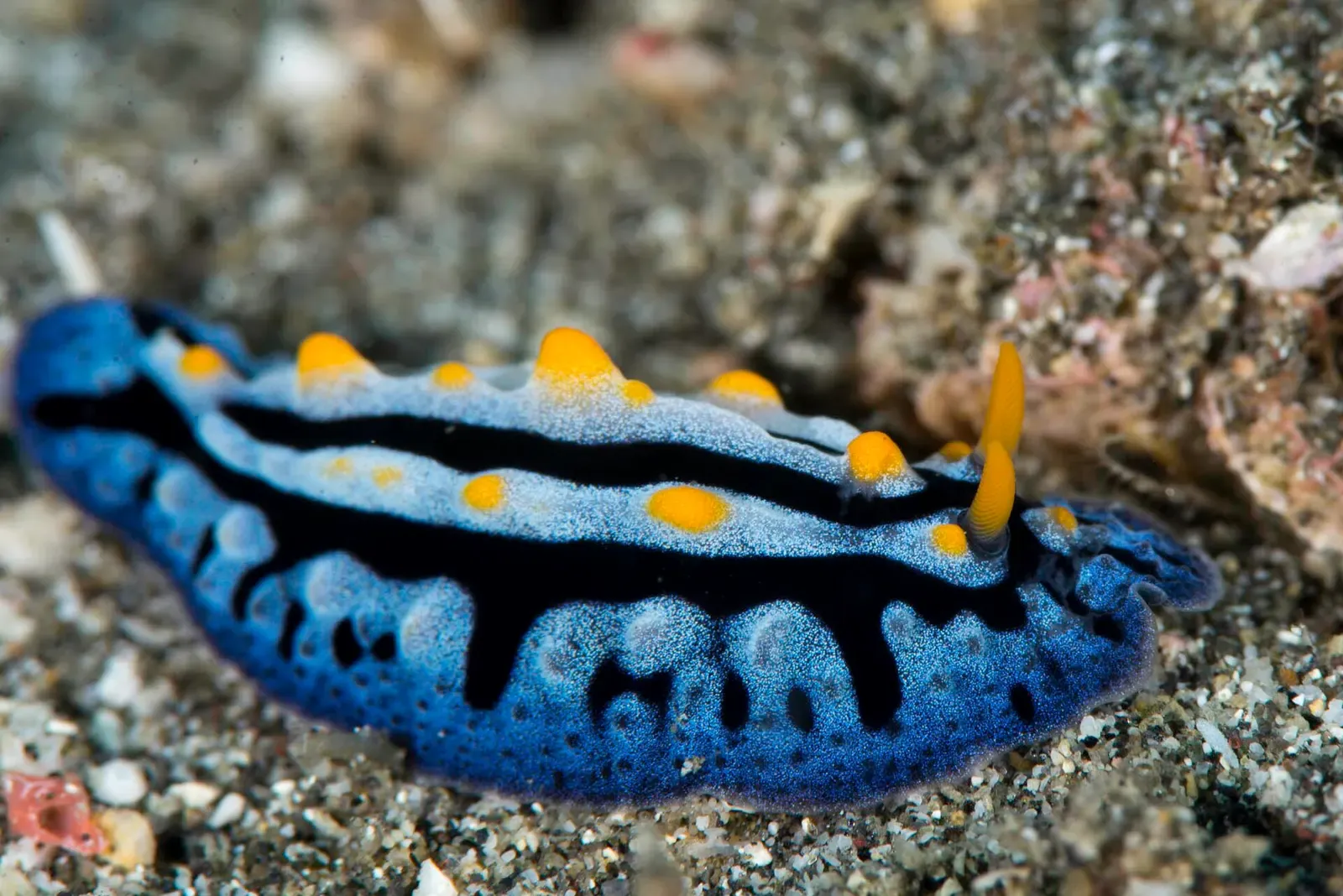
The reef top ends 80 metres out at the drop-off, which falls from less than two metres to more than 40. Slack water comes at both high and low tide, and mild to medium currents run along the outer slope on the tide change, so most divers take the reef in one direction rather than working back along it. Anemones hold shrimps, crabs and nudibranchs, turtles and batfish cross the slope, eagle rays pass along the edge, and an unnamed species of pygmy seahorse has been found here.
Because shore diving is unlimited, the reef is dived several times a day and again after dark, with night dives monitored by shore-based staff until 10 pm. The taxi boat extends the dive by dropping you as much as 500 metres north of the jetty, so you finish back at the ladder rather than turning around halfway. Lionfish and scorpionfish are among the reef's residents and both carry venomous spines, so watch where you put your hands.
Background
The reef in front of the resort is protected by an agreement with the people who live around it. A six-kilometre section was designated a marine sanctuary, with direct payments made to nearby villages and fishermen in exchange for honouring the no-fishing zone. The programme later grew to take in all 17 local communities around the resort, covering more than 20 km of reef.
Marine life and season
- Pygmy seahorses
- Sea turtles
- Eagle rays
- Stingrays
- Nudibranchs
- Macro critters
| Jan | Feb | Mar | Apr | May | Jun | Jul | Aug | Sep | Oct | Nov | Dec |
|---|---|---|---|---|---|---|---|---|---|---|---|
| Fair | Fair | Good | Prime | Prime | Good | Good | Good | Prime | Prime | Prime | Good |
Season follows Wakatobi: Diveable all year; April–May and September–November are the peak months, and January and February the wettest.
Know before you go
- Current on the outer slope ranges from mild to fairly wild depending on the tide; slack water comes at high and low tide, so time long swims around those windows.
- The drop-off falls past 40 m with no bottom in sight from the reef top, so agree a depth limit before descending rather than following the wall down.
- Lionfish and scorpionfish live on the reef and both carry venomous spines, so keep hands and fins clear of the coral on entries and exits.
Photos from House Reef
q.phia · CC BY 2.0
Christian Gloor from Wakatobi Dive Resort, Indonesia · CC BY 2.0
Stefan Dreesen · CC BY 4.0
Dive videos
Snorkeling On The Wakatobi House Reef · Wakatobi Dive Resort on YouTube
Questions divers ask
How deep is the Wakatobi House Reef?+
The reef top starts in less than two metres of water and the drop-off at its outer edge falls past 40 metres; the published range for the site is 0 to 40 m. Most of the dive is spent on the flat and the upper slope.
Can you dive the House Reef at night?+
Yes. Night dives are monitored by shore-based staff until 10 pm, and the seagrass ground near the entries is worked as a macro site.
How do you get in and out?+
At high tide there are numerous beach entry points. At low tide divers use the jetty ladder or the canyon known as the second gully, in front of the restaurant. A taxi boat also runs divers up to 500 m north of the jetty so they can work their way back.
Sources
- House Reef | Wakatobi Dive Resort — Wakatobi Dive Resort
- Wakatobi's Dive Sites — Wakatobi Dive Resort
- Collaborative Reef Conservation Program — Wakatobi Dive Resort
- Diving in Wakatobi — Divezone
- Wakatobi Diving Sites, Indonesia — Dive The World
- Wakatobi Dive Resort (OpenStreetMap) — OpenStreetMap
Photo credits
- A bouquet of red whip corals fanning out against blue open water on the reef by Christian Gloor from Wakatobi Dive Resort, Indonesia, CC BY 2.0, via Wikimedia Commons
- Blue ring octopus with vivid blue rings perched on sandy rubble by q.phia, CC BY 2.0, via Openverse
- Translucent commensal shrimp with long purple legs on a bubble coral by Christian Gloor from Wakatobi Dive Resort, Indonesia, CC BY 2.0, via Wikimedia Commons
- Camouflaged reef stonefish resting motionless among rubble and rock by Stefan Dreesen, CC BY 4.0, via Wikimedia Commons
In The Logbook
- Liveaboard vs resort diving: which suits you?Trip planning · 6 min read
- The best shore dives in the worldShore diving · 8 min read
More dive sites in Wakatobi
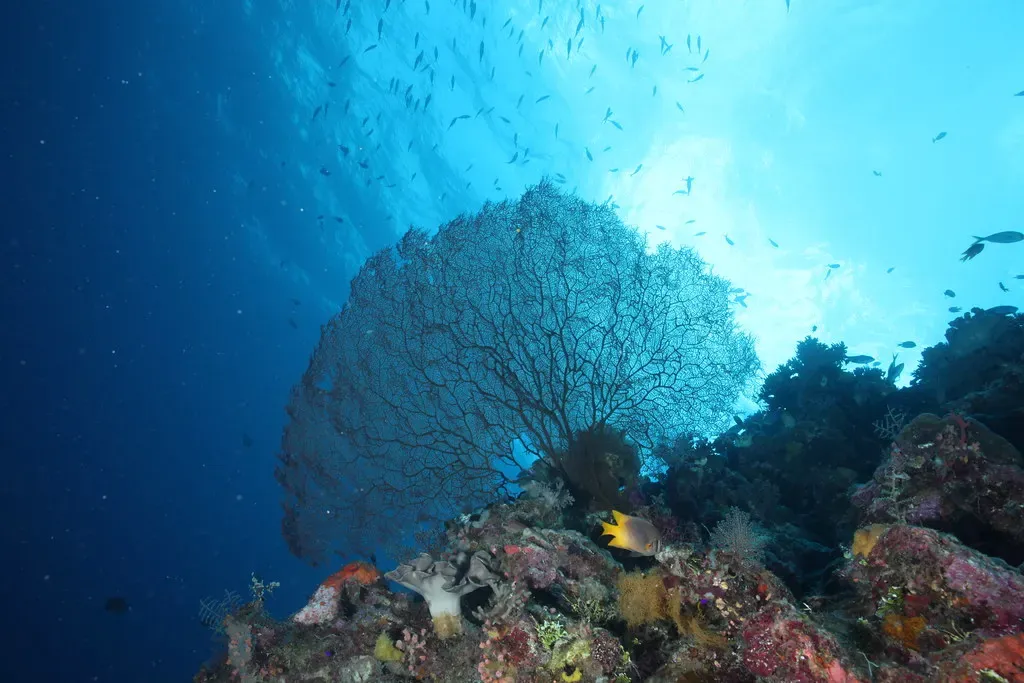
A serrated ridge in open blue water, falling away on both sides
The Great Wall of Cornucopia, a sheer drop-off at the end of the slope
Banded sea snakes, sometimes counted in double figures
Reef
A coral ridge known for large frogfish, then macro on the fringing reef
Similar dives elsewhere
Walls from 7 m to beyond 40 m under a seabird island
A wide shield reef with the wall starting at 5–7 m
Table corals from 3 m down to 40, and nudibranchs on all of it
.jpg)
.jpg)

Protected bay that serves as both training ground and night dive