
Wakatobi, a remote archipelago off south-east Sulawesi named for its four main islands, is a marine national park known above all for the condition of its coral. Walls, pinnacles and coral gardens such as Roma and Cornucopia carry dense hard and soft coral with pygmy seahorses on the fans, and the house reef off the main resort is dived around the clock. Currents are gentle at most sites and visibility is usually long, so the diving suits photographers and divers of every level.
About diving in Wakatobi
Most diving here is run from resorts. The best known sits on a small island off Tomia, with its own airstrip and a charter flight from Bali, and its boats run to sites around Tomia and the neighbouring islets, the furthest about 40 minutes out. Between boat dives the house reef is open without limit, day and night: a seagrass flat in under 2 m of water that ends at a drop-off about 80 m from the beach. Simpler lodges and dive centres on Hoga, off Kaledupa, and on Wangi-Wangi serve independent travellers, and Indonesian liveaboards visit the park on routes that can start in Bali, Alor or Flores.
The reefs grew on uplifted limestone in a dry climate, and with no rivers to carry soil into the sea the water stays clean. Fringing reefs, barrier reefs and atolls all occur inside the park, and the common pattern is a shallow reef flat breaking into slopes and walls that drop into deep water. Cornucopia is a long drift along ridges that turn into a sheer wall, Roma a pinnacle ringed by potato coral that reaches almost to the surface, and Blade a line of small seamounts in open water. A 2003 survey counted 396 coral species in the park, and the gorgonians and sponges on the walls are where guides find pygmy seahorses.
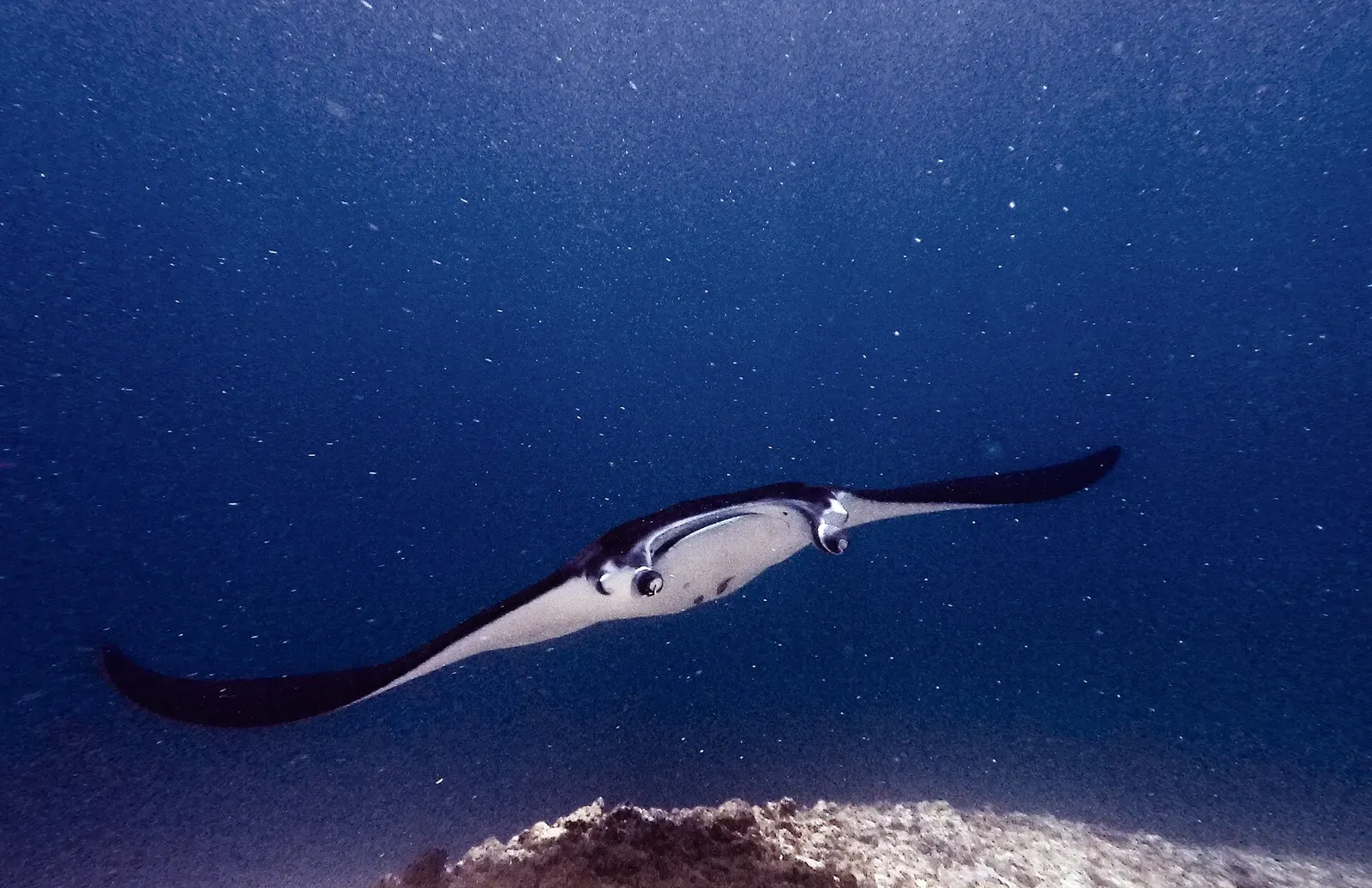
Wakatobi National Park, established in 2002 and a UNESCO biosphere reserve since 2012, covers all four main islands, Wangi-Wangi, Kaledupa, Tomia and Binongko, whose first syllables give the archipelago its name. The reefs are zoned, with no-take areas and traditional-use zones for local fishing, and near the resorts dive operators pay villages to leave stretches of reef unfished. The larger animals are incidental: reef sharks, eagle rays and turtles are regular on the walls, while mantas and whale sharks can pass at any time but cannot be planned for.
It suits divers who want long, easy dives on healthy coral, photographers working macro subjects, and mixed groups, since current is usually gentle and much of the reef is good for snorkelling too. It is not a big-animal destination; for current and schooling pelagics Komodo is the better choice, and for rare critters on sand, Lembeh. The remote location makes it an expensive trip, and every route in ends with a charter flight or a long connection through Kendari.
Best time to dive Wakatobi
| Jan | Feb | Mar | Apr | May | Jun | Jul | Aug | Sep | Oct | Nov | Dec | |
|---|---|---|---|---|---|---|---|---|---|---|---|---|
| Season | Fair | Fair | Good | Prime | Prime | Good | Good | Good | Prime | Prime | Prime | Good |
| Sea surface | 29°C84°F | 29°C84°F | 30°C86°F | 30°C86°F | 29°C84°F | 28°C82°F | 28°C82°F | 27°C81°F | 28°C82°F | 29°C84°F | 30°C86°F | 30°C86°F |
| Daytime high | 30°C86°F | 30°C86°F | 30°C86°F | 30°C86°F | 30°C86°F | 29°C84°F | 28°C82°F | 28°C82°F | 28°C82°F | 30°C86°F | 30°C86°F | 30°C86°F |
| Rain | 207 mm8.1 in | 182 mm7.2 in | 183 mm7.2 in | 153 mm6.0 in | 184 mm7.2 in | 170 mm6.7 in | 98 mm3.9 in | 30 mm1.2 in | 27 mm1.1 in | 35 mm1.4 in | 87 mm3.4 in | 196 mm7.7 in |
| Jan | Feb | Mar | Apr | May | Jun |
|---|---|---|---|---|---|
| Fair | Fair | Good | Prime | Prime | Good |
| Sea surface | |||||
| 29°C84°F | 29°C84°F | 30°C86°F | 30°C86°F | 29°C84°F | 28°C82°F |
| Daytime high | |||||
| 30°C86°F | 30°C86°F | 30°C86°F | 30°C86°F | 30°C86°F | 29°C84°F |
| Rain | |||||
| 207 mm8.1 in | 182 mm7.2 in | 183 mm7.2 in | 153 mm6.0 in | 184 mm7.2 in | 170 mm6.7 in |
| Jul | Aug | Sep | Oct | Nov | Dec |
|---|---|---|---|---|---|
| Good | Good | Prime | Prime | Prime | Good |
| Sea surface | |||||
| 28°C82°F | 27°C81°F | 28°C82°F | 29°C84°F | 30°C86°F | 30°C86°F |
| Daytime high | |||||
| 28°C82°F | 28°C82°F | 28°C82°F | 30°C86°F | 30°C86°F | 30°C86°F |
| Rain | |||||
| 98 mm3.9 in | 30 mm1.2 in | 27 mm1.1 in | 35 mm1.4 in | 87 mm3.4 in | 196 mm7.7 in |
2011–2025 averages. Sea surface: NOAA Coral Reef Watch, measured at the surface, so deeper water can run colder. Daytime high and rain: NASA POWER.
March to December is the main season, and within it April and May and September to November are the busiest months, when conditions are most consistently good. The water peaks at about 30 °C in October. July and August stay good but change character: the water drops to its low of about 25 °C, visibility dips and the wind can raise some surface chop, yet this is coral-spawning time and the best period for large numbers of fish. January and February are the wet season, though rain here is far lighter than in most of Indonesia, and with no rivers to carry run-off the visibility rarely suffers. Pilot whales are seen between November and April.
Best months: April, May, September, October, November
Wakatobi water temperature and weather by month
The sea surface runs from 27 °C (81 °F) in August to 30 °C (86 °F) in December. Most rain falls from December to June, peaking at about 210 mm (8.3 in) in January; August to October are the driest. Daytime highs sit around 29 °C (84 °F) all year. The coldest water here is about 25 °C (77 °F), so pack a 3 mm full suit.
Dive types & marine life
The dependable life is small and resident: pygmy seahorses on the gorgonians, frogfish, ghost pipefish and nudibranchs, with mandarinfish at dusk and hunting cuttlefish after dark near the resort reefs. Turtles, eagle rays and blacktip, whitetip and grey reef sharks are regular on the walls without being the reason to come. Pilot whales pass between November and April.
- Wall
- Reef
- Muck & macro
- Pristine corals
- Reef sharks
- Napoleon wrasse
- Pygmy seahorses
- Nudibranchs
- Frogfish
- Eagle rays
- Macro critters
Best dive sites in Wakatobi
- 1
House Reef
Wall 80 m off the resort beach, dived around the clock, with pygmy seahorses and resident trevally.
- 2
Roma
Pinnacle ringed by potato coral near the surface, rated by many as good as any site anywhere.
- 3
Cornucopia
Long drift over ridges and a sheer wall under heavy soft coral, with whitetips and eagle rays.
- 4
Coral Garden
Coral-filled bowl 40 m across, reached down a current-swept line to a ledge at 11 m.
- 5
Blade
Line of small seamounts in open water, the furthest regular site, with giant sponges and whip corals.
- 6
Trailblazer
Hard-coral ridge off Tomia known for large frogfish, above a sandy bay of barrel sponges.
Site guides
A serrated ridge in open blue water, falling away on both sides
The Great Wall of Cornucopia, a sheer drop-off at the end of the slope
A drop-off 80 m off the beach, from under 2 m to past 40 m
Banded sea snakes, sometimes counted in double figures
Reef
A coral ridge known for large frogfish, then macro on the fringing reef
How to get to Wakatobi
Guests of the main resort fly its charter from Bali straight to the airstrip on Tomia. Independent travellers route through Kendari in south-east Sulawesi, flying to Wangi-Wangi on the few weekly flights or taking the ferry of about 10 hours, then continue by local boat to Kaledupa, Hoga or Tomia.
Photos from Wakatobi
q.phia · CC BY 2.0
q.phia · CC BY 2.0
q.phia · CC BY 2.0
q.phia · CC BY 2.0
Dive videos
Indonesia's Hidden Paradise | Underwater Wakatobi 4K · Ocean First on YouTube
Scuba Diving Wakatobi Dive Resort Indonesia · Nadia Aly Underwater on YouTube
Questions divers ask
Is Wakatobi suitable for beginner divers?+
Yes. Currents are usually gentle, many reefs start in the shallows, and the house reef can be dived at whatever depth suits. A few outer sites, such as Ali Reef and Hoga Channel, carry strong current and are kept for experienced divers.
What is the water temperature in Wakatobi?+
It ranges from about 25 °C in August to 30 °C in October. The coolest weeks, in July and August, are also coral-spawning time and bring the densest fish life, so a slightly cooler dive is the price of the busiest reefs.
Is Wakatobi better by resort or by liveaboard?+
Both work. Resorts give unlimited house-reef diving and short boat runs to the sites around their island, while liveaboards cover more of the park, including remote outer atolls, and some itineraries add Alor, Flores or the Banda Sea for more pelagic action.
How do divers reach Wakatobi?+
By air or sea from Bali or Sulawesi. The main resort runs its own charter from Bali to Tomia; everyone else connects through Kendari, either flying to Wangi-Wangi or taking the long ferry, and moves between the islands by local boat.
Is Wakatobi a protected marine park?+
Yes. Wakatobi National Park covers the whole regency, about 1.4 million hectares, with no-take zones over reef and traditional-use zones for local fishing. Enforcement is uneven, and the best-kept reefs are those that dive operators pay nearby villages to leave unfished.
Sources
- Wakatobi dive sites — Dive The World
- Diving Wakatobi — Divezone
- Wakatobi National Park — Wikipedia
- Wakatobi biosphere reserve — UNESCO
- Wakatobi — Wikivoyage
- Wakatobi's dive sites — Wakatobi Dive Resort
Photo credits
- Sunlit coral bommie draped in pink gorgonian sea fans with schooling reef fish by q.phia, CC BY 2.0, via Openverse
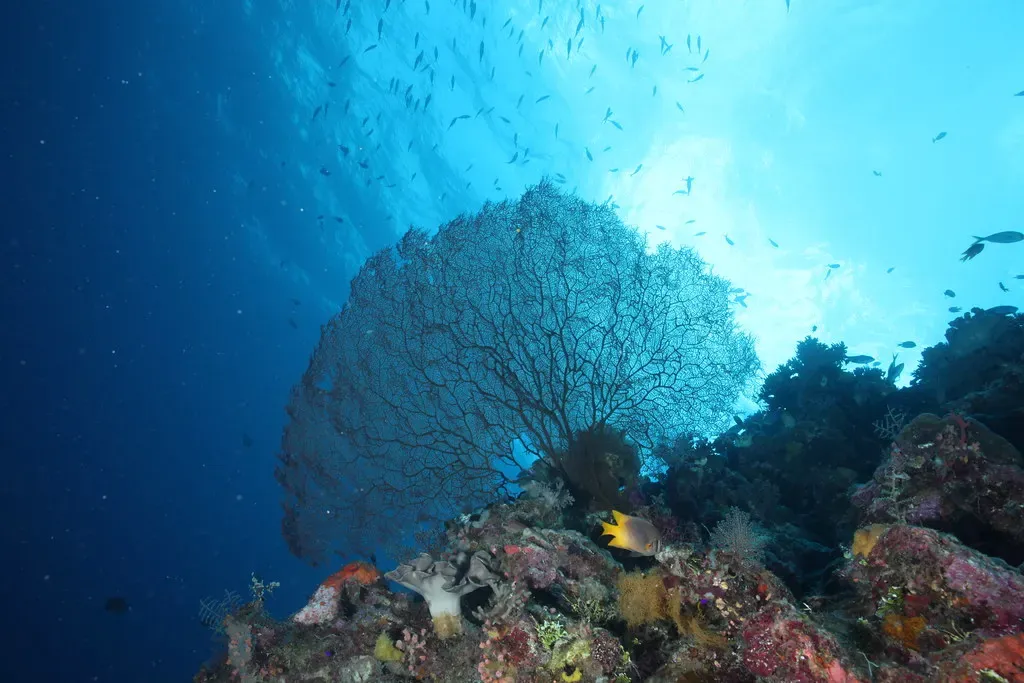
- Silhouette of a large black sea fan coral against sunlit blue water with schooling fish by q.phia, CC BY 2.0, via Openverse
- A hawksbill turtle gliding over a coral reef in clear blue water by q.phia, CC BY 2.0, via Openverse
- A blue, black and yellow Chromodoris nudibranch crossing the reef by q.phia, CC BY 2.0, via Openverse
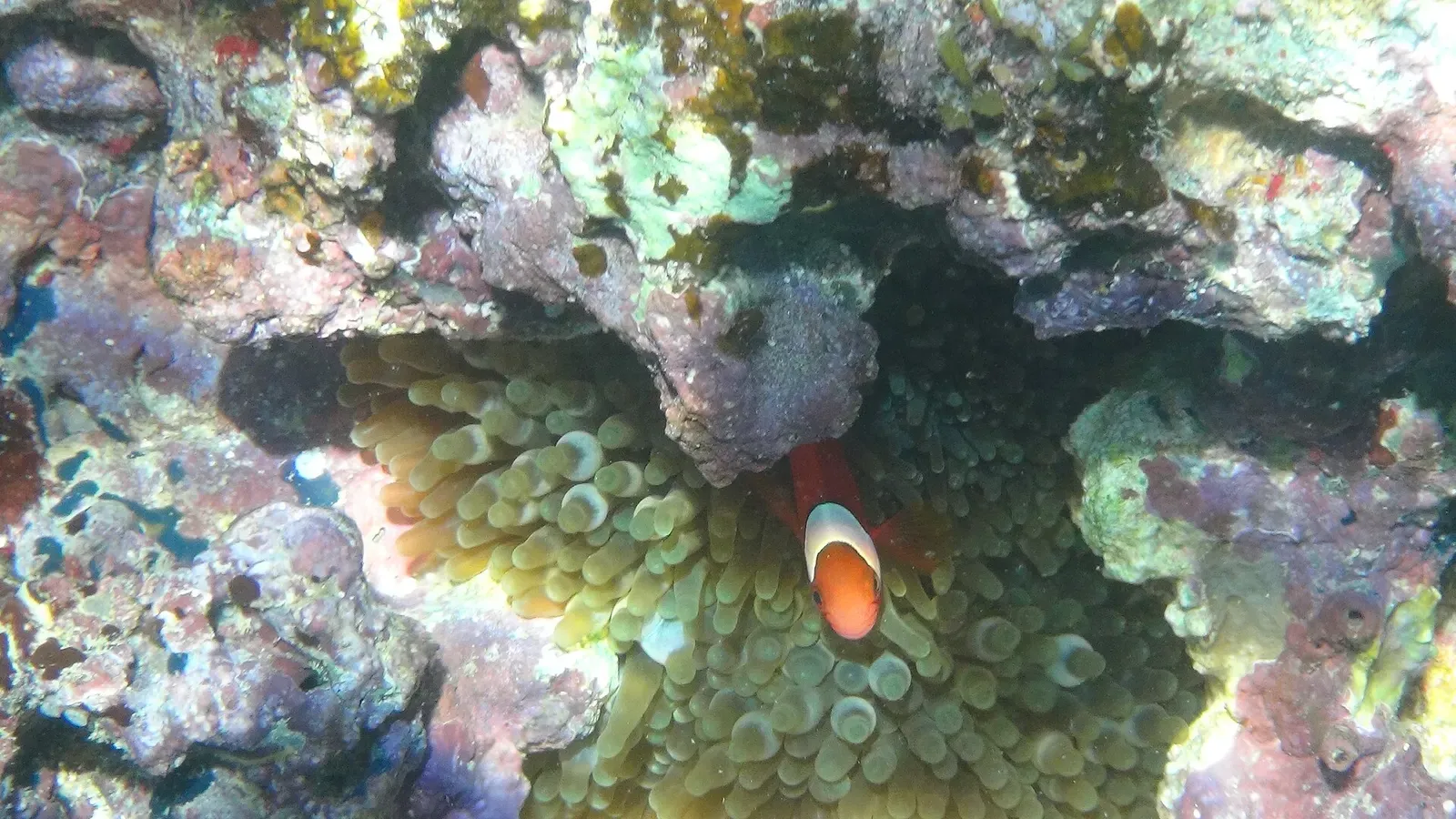
- A clownfish sheltering in the folds of a large pale anemone on the reef by q.phia, CC BY 2.0, via Openverse
Embed
Run a dive centre, club or blog? Embed this map of 2 dive sites near Wakatobi on your own page.
In The Logbook
- Night diving: the best night dives in the worldNight diving · 12 min read
- Liveaboard vs resort diving: which suits you?Trip planning · 6 min read
- The best shore dives in the worldShore diving · 8 min read
Similar destinations

Strong straits sweep past pristine coral cover between remote volcanic islands.
Walls from 5 m past 60, and a dive base of its own
Drift dives past sharks and tuna on current-swept seamounts

Bali's best walls, sheltered enough to dive in almost any weather