
Caribbean · U.S. Virgin Islands
St. Croix
Swim off a beach onto a wall that drops past 900 metres
Photo: NOAA Photo Library · CC BY 2.0
St. Croix packs three unrelated kinds of diving into one small island. Cane Bay Wall starts about 90 m off a public beach and falls away from 12 m to more than 900 m, one of the few walls in the Caribbean reachable by swimming out from the sand. Salt River Canyon cuts a submarine gorge into the north shore. And Frederiksted Pier, a working cruise dock, is a night dive of genuine international standing, with seahorses, frogfish and batfish among the pilings.
About diving in St. Croix
The island is dived by car as much as by boat. North-shore shops run guided dives straight off roadside beaches, and Cane Bay's mooring buoy sits about 90 m out in 8 m, close enough to swim to. Plenty of divers rent tanks, drive to a beach and go in on their own. Boats leave Christiansted and the Salt River marina for the canyon, Buck Island and the Butler Bay wrecks. Frederiksted Pier, a 465 m cruise pier, is entered from the beach beside it and is usually dived with a guided night group.
Along the north coast the drop runs roughly parallel to the road, so separate entries reach different stretches of the same edge, each with a swim out over sand chutes and coral gardens to a lip at about 12 m. Salt River cuts back into that shore as a drowned canyon with a wall on either side, normally reached by boat. Buck Island, a national monument off the north-east coast, allows scuba only at two designated moorings, with dives of 9 to 12 m around an elkhorn barrier reef. The west end is the opposite sort of dive: sheltered lee, sand, and structure that is mostly sunk ships.
The pier is what brings divers back. Its pilings stand in about 7 m of water and, with years of encrusting growth, behave like a muck site: seahorses, batfish and frogfish live on them, and most of what lives there is small, camouflaged and easiest to find after dark. Butler Bay adds the wrecks, from the Northwind's wheelhouse at 5 m to the Rosaomaira, a 54 m Venezuelan freighter (177 feet) whose deepest point is 36 m. A photographer can shoot the wall wide-angle in the morning and go macro under the pilings the same night.
It suits divers who like driving themselves around, photographers who want two disciplines on one trip, and groups with non-divers, since this is US territory with US currency and US phone service. Surge and swell on the north-shore swim-outs can stir the shallows, and rain run-off cuts visibility at Cane Bay, when the sheltered west end covers the gap. Divers hunting dependable big pelagics should temper their expectations; St. Croix is a wall, pier and wreck destination.
Best time to dive St. Croix
| Jan | Feb | Mar | Apr | May | Jun | Jul | Aug | Sep | Oct | Nov | Dec | |
|---|---|---|---|---|---|---|---|---|---|---|---|---|
| Season | Prime | Prime | Prime | Prime | Prime | Good | Good | Fair | Fair | Fair | Good | Prime |
| Sea surface | 27°C81°F | 27°C81°F | 26°C79°F | 27°C81°F | 28°C82°F | 28°C82°F | 29°C84°F | 29°C84°F | 29°C84°F | 29°C84°F | 29°C84°F | 28°C82°F |
| Daytime high | 28°C82°F | 27°C81°F | 28°C82°F | 28°C82°F | 29°C84°F | 29°C84°F | 30°C86°F | 30°C86°F | 30°C86°F | 30°C86°F | 29°C84°F | 28°C82°F |
| Rain | 28 mm1.1 in | 26 mm1.0 in | 30 mm1.2 in | 40 mm1.6 in | 74 mm2.9 in | 62 mm2.4 in | 70 mm2.8 in | 98 mm3.9 in | 109 mm4.3 in | 110 mm4.3 in | 107 mm4.2 in | 45 mm1.8 in |
| Jan | Feb | Mar | Apr | May | Jun |
|---|---|---|---|---|---|
| Prime | Prime | Prime | Prime | Prime | Good |
| Sea surface | |||||
| 27°C81°F | 27°C81°F | 26°C79°F | 27°C81°F | 28°C82°F | 28°C82°F |
| Daytime high | |||||
| 28°C82°F | 27°C81°F | 28°C82°F | 28°C82°F | 29°C84°F | 29°C84°F |
| Rain | |||||
| 28 mm1.1 in | 26 mm1.0 in | 30 mm1.2 in | 40 mm1.6 in | 74 mm2.9 in | 62 mm2.4 in |
| Jul | Aug | Sep | Oct | Nov | Dec |
|---|---|---|---|---|---|
| Good | Fair | Fair | Fair | Good | Prime |
| Sea surface | |||||
| 29°C84°F | 29°C84°F | 29°C84°F | 29°C84°F | 29°C84°F | 28°C82°F |
| Daytime high | |||||
| 30°C86°F | 30°C86°F | 30°C86°F | 30°C86°F | 29°C84°F | 28°C82°F |
| Rain | |||||
| 70 mm2.8 in | 98 mm3.9 in | 109 mm4.3 in | 110 mm4.3 in | 107 mm4.2 in | 45 mm1.8 in |
2011–2025 averages. Sea surface: NOAA Coral Reef Watch, measured at the surface, so deeper water can run colder. Daytime high and rain: NASA POWER.
December to May is the calmest and clearest stretch and falls in the dry season, with the wet season running from August to November. March and April add a chance of seeing or hearing humpback whales as they migrate along the Puerto Rico Trench past the Cane Bay wall. June and July stay good, warm and settled, though the Atlantic hurricane season has begun. August to October is the weak stretch, the wet heart of hurricane season, when rain run-off clouds the north-shore sites and the pier and west-end wrecks in the lee are the fallback. November improves as the rain eases. The sea stays between about 25 and 30 °C all year.
Best months: January, February, March, April, May, December
St. Croix water temperature and weather by month
The sea surface runs from 26 °C (79 °F) in March to 29 °C (84 °F) in September. Most rain falls from July to November, peaking at about 110 mm (4.3 in) in October; January to March are the driest. Daytime highs sit around 29 °C (84 °F) all year. The coldest water here is about 25 °C (77 °F), so pack a 3 mm full suit.
Dive types & marine life
The pier after dark is the macro draw, with frogfish, octopus and nudibranchs on the pilings through the year; seahorses are part of its reputation but a lucky find rather than a given. Turtles and eagle rays work the wall tops and sand chutes, grouper hold on the Butler Bay wrecks, and reef sharks are an occasional sighting on the drop rather than a plan. Nov-Jun is calmest and clearest.
- Wall
- Wreck
- Muck & macro
- Night
- Reef
- Drift
- Sea turtles
- Frogfish
- Macro critters
- Nudibranchs
- Octopus & cuttlefish
- Reef fish swarms
- Eagle rays
- Groupers
- Reef sharks
Best dive sites in St. Croix
- 1
Cane Bay Wall
Shore-dived wall about 90 m off the beach; the lip sits at 12 m, then the drop runs past 900 m.
- 2
Frederiksted Pier
Cruise-pier pilings in 7 m with seahorses, batfish and frogfish; the island's night dive.
- 3
Salt River Canyon
Drowned canyon with two facing walls; the West Wall is the most requested boat dive on the island.
- 4
Butler Bay Wrecks
West-end wreck cluster, from the Northwind's wheelhouse at 5 m to the Suffolk Maid at 24 m.
- 5
Buck Island
National monument reef off the north-east coast; scuba only at two designated moorings.
Site guides
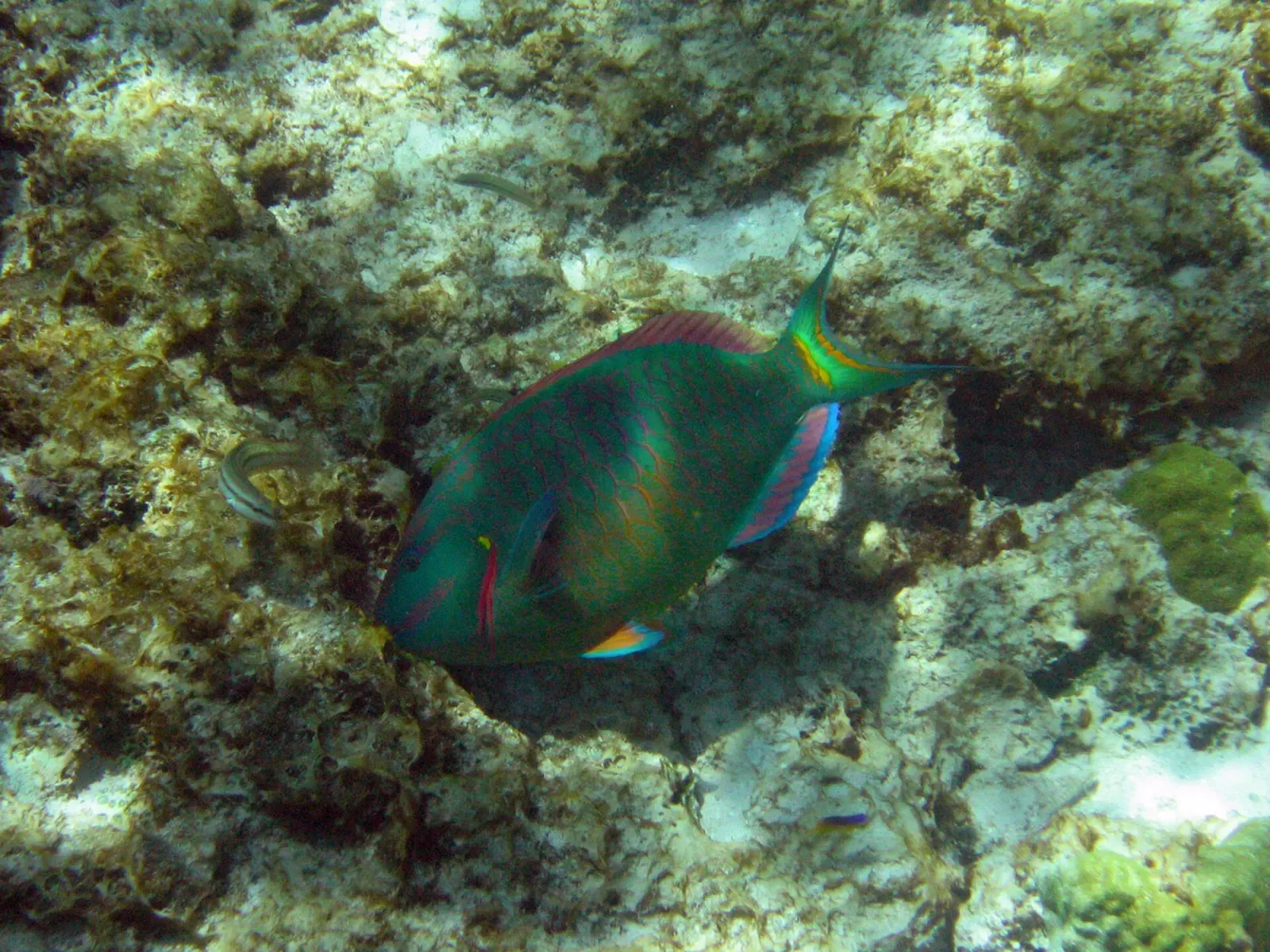
One of only three marked underwater trails in the United States
Wreck
Three sunk ships and a retired underwater habitat in one bay
Wall
Nineteenth-century anchors lie along a wall that drops past 975 m
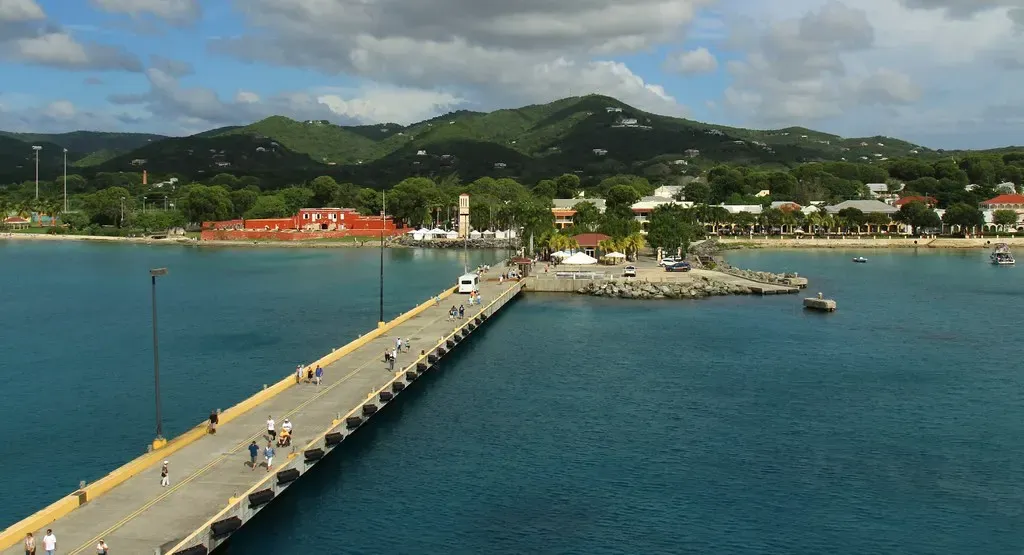
A 7 m shore dive that photographers run day and night
Two facing walls a quarter mile apart, cut by a prehistoric river
How to get to St. Croix
Flights reach St. Croix from the US mainland or via San Juan, with short hops from St. Thomas. Christiansted, Frederiksted and the Cane Bay strip are the usual bases. Rent a car, since the sites are spread along the north and west coasts, and note that the USVI drives on the left in left-hand-drive cars.
Photos from St. Croix
Alchematics · CC BY-SA 4.0
NOAA Photo Library · CC BY 2.0
SNORKELINGDIVES.COM · CC BY 2.0
NOAA Photo Library · CC BY 2.0
Dive videos
Turtles, Sharks, and 1 Amazing Reef (Scuba Diving Cane Bay Travel Vlog: St. Croix, USVI) · Triton's Realm on YouTube
Scuba Diving St. Croix's Most Diverse Site! (Frederiksted Pier Underwater Family Travel Vlog) · Triton's Realm on YouTube
Questions divers ask
Can divers shore dive the wall at St. Croix?+
Yes. At Cane Bay the mooring buoy sits about 90 m off the beach in 8 m, and sand chutes lead from it to the lip of the wall at about 12 m, where the bottom falls away past 900 m. Surge and swell on the swim out are the main thing to plan for.
Is Frederiksted Pier a good night dive?+
It is the island's best-known night dive. The pilings stand in about 7 m of water and hold seahorses, batfish and frogfish, and the shallow, sandy floor suits novice divers. It is entered from the beach beside the pier.
What certification do I need to dive St. Croix?+
Open Water covers the pier, Buck Island and the tops of the north-shore walls. The Salt River canyon walls and the deep Butler Bay wrecks, where the Rosaomaira reaches 36 m, suit Advanced divers, and the walls have no bottom, so depth discipline matters.
Is scuba diving allowed at Buck Island?+
Yes, but only at the two designated scuba moorings inside Buck Island Reef National Monument, with dives of about 9 to 12 m around an elkhorn coral barrier reef. Fishing and collecting are banned throughout the monument.
How do divers get to St. Croix?+
Fly into Henry E. Rohlsen International Airport, which has regular flights from the US mainland, Puerto Rico and the eastern Caribbean. Base in Christiansted, Frederiksted or near Cane Bay and hire a car; traffic keeps left, although nearly all cars are left-hand drive.
Sources
- Saint Croix, U.S. Virgin Islands — Wikipedia
- St. Croix Dive Sites — GoToStCroix.com
- Cane Bay Wall — GoToStCroix.com
- Salt River Canyon West Wall (Grouper Grotto) — GoToStCroix.com
- Deep Wrecks at Butler Bay — GoToStCroix.com
- Frederiksted Pier — Wikipedia
- Buck Island Reef National Monument: Outdoor Activities — National Park Service
- Atlantic hurricane season — Wikipedia
Photo credits
- Blue tang graze among elkhorn coral branches on a shallow St. Croix reef. by NOAA Photo Library, CC BY 2.0, via Openverse
- Aerial view of the mangrove-lined inlet and reef flats of Salt River Bay on St. Croix's north shore. by Alchematics, CC BY-SA 4.0, via Wikimedia Commons
- A nurse shark rests on the sandy bottom beneath a coral ledge off St. Croix. by NOAA Photo Library, CC BY 2.0, via Openverse
- A southern stingray glides over seagrass beside a coral outcrop at Davis Bay, St. Croix. by SNORKELINGDIVES.COM, CC BY 2.0, via Openverse
- A dense school of blue tang crowds over gorgonian sea fans on a St. Croix reef. by NOAA Photo Library, CC BY 2.0, via Openverse
Embed
Run a dive centre, club or blog? Embed this map of 5 dive sites near St. Croix on your own page.
In The Logbook
- Where to see reef sharks on your first divesBig animals · 14 min read
- Why things look bigger underwaterOcean science · 12 min read
- The best wall dives in the worldWalls & drop-offs · 11 min read
- Ships sunk on purpose, and where to dive themWrecks · 14 min read
- Frogfish: species, behaviour and where to diveMacro & muck · 12 min read
- What is surge in diving, and how deep it goesOcean science · 8 min read
- Why is the sea blue? Water filters out redOcean science · 7 min read
- Why your ears hurt diving, and how to stop itBody & health · 8 min read
- Cheapest places to scuba dive, and the catchTrip planning · 15 min read
- The best muck diving in the worldMacro & muck · 6 min read
- The best shore dives in the worldShore diving · 8 min read
Similar destinations

Lava flows, old wreck sites and night turtles in a marine park

Shore and boat reefs, plus wrecks from a shallow tug to a harbour-mouth hull
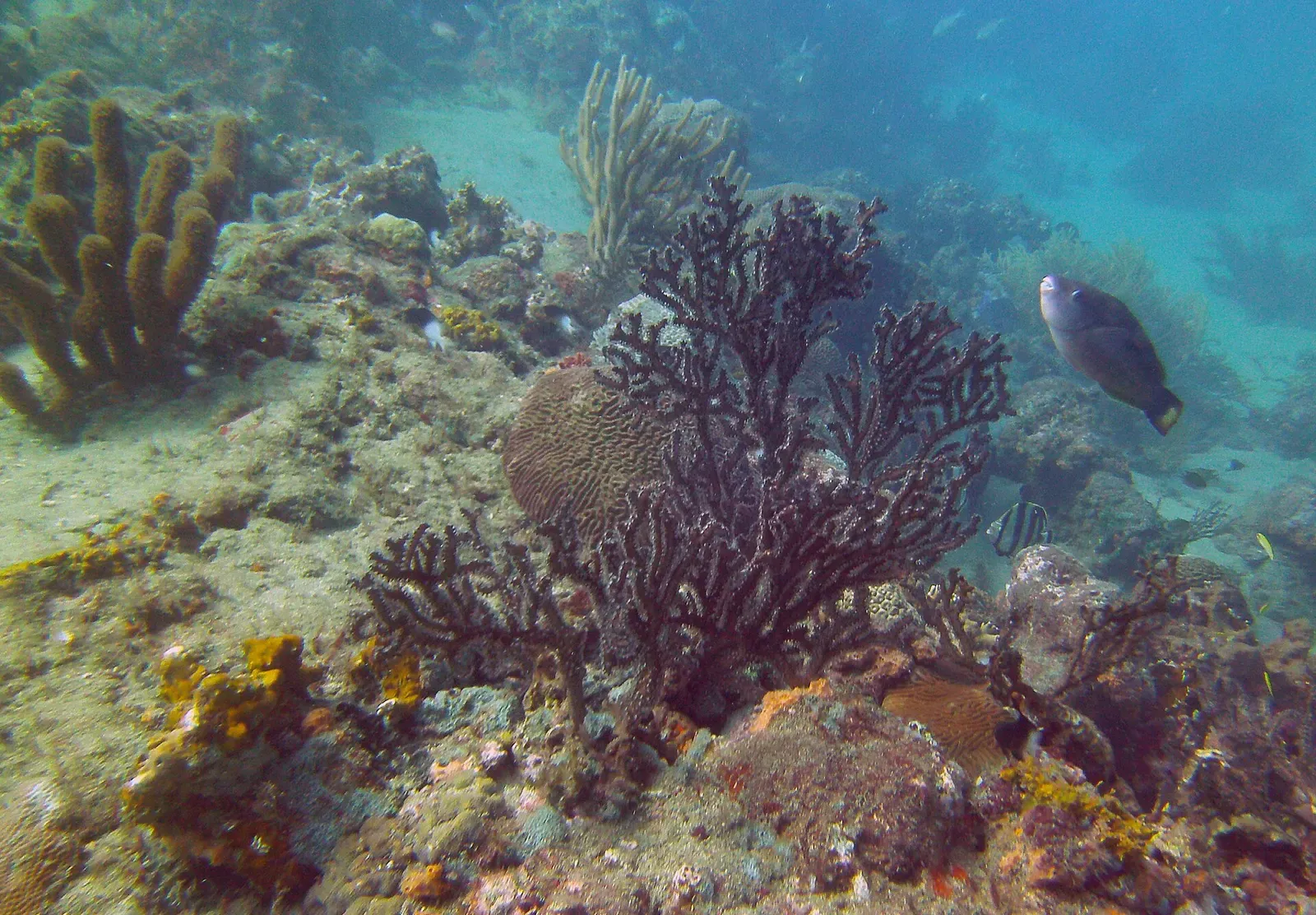

Cold upwelling makes Colombia's Caribbean coast unexpectedly productive
Caribbean
Tobago — Crown Point & Mount Irvine
Trinidad and Tobago
A critter wall on the calm Caribbean side and drift dives at the Atlantic south end