
Anilao · Philippines · Muck & macro · Sand slope
Basura
Debris slope from 3 to 18 m, dived for frogfish and nudibranchs
Area photo: andre oortgijs · CC BY-SA 3.0
Basura, also called Muck & Macro, is one of the Anilao muck-diving classics: a shallow slope where the debris on the bottom is exactly what attracts the animals. The diving depth runs from 3 to 18 metres, and the site is dived almost entirely by photographers working slowly across the rubble for frogfish, seahorses and rare nudibranchs.
Also known as Muck & Macro.
Where it is and how deep
13.7569° N, 120.9220° EApproximate position — the dashed circle shows where the site lies; your operator's briefing has the mooring.
The dive
The diving depth is 3 to 18 metres, and the deep end is not where the site earns its name. Groups drop onto the slope and then move at walking pace, or slower, across a bottom of debris and rubble that would look like nothing on any other dive. That debris is the point: it is what the critters shelter in, and Basura is most suited to macro photographers who are happy to spend a full tank inside a small patch of it.
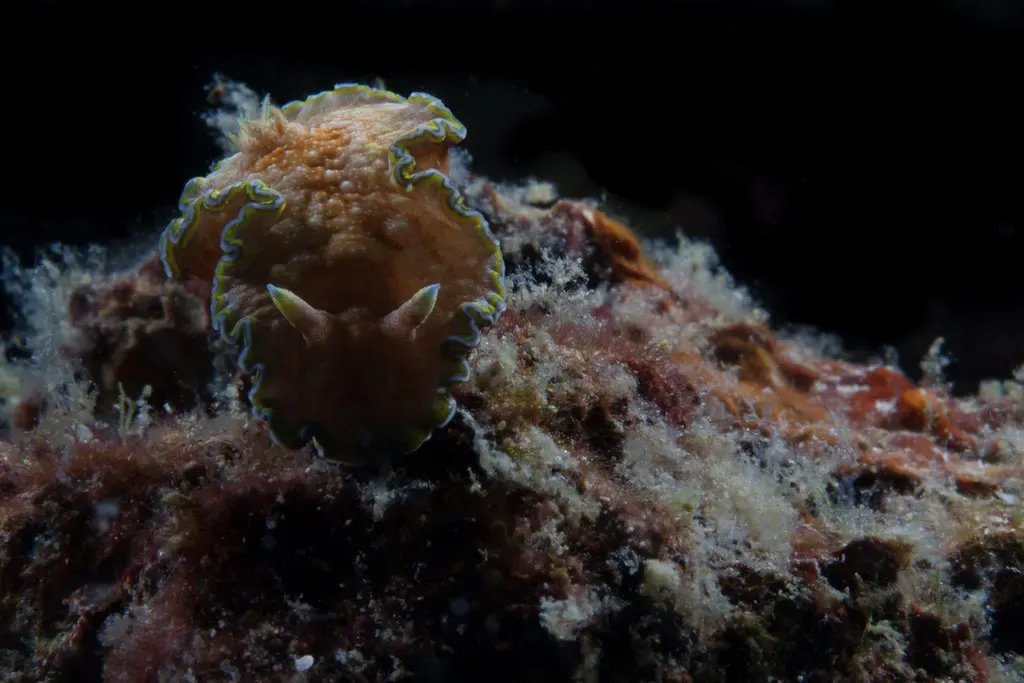
What you are looking for is frogfish, mimic octopuses, seahorses, harlequin shrimps, pipefish, ghost pipefish, squid, bobbit worms, crocodile snake eels and the rare nudibranchs the area is known for. Guides work ahead of the group and point; the discipline is to hover off the bottom while you shoot, because sediment lifts easily on a muck slope and takes the next diver's photograph with it. The shallow end at 3 metres means gas rather than depth usually ends the dive.
Marine life and season
- Frogfish
- Octopus & cuttlefish
- Squid
- Nudibranchs
- Macro critters
| Jan | Feb | Mar | Apr | May | Jun | Jul | Aug | Sep | Oct | Nov | Dec |
|---|---|---|---|---|---|---|---|---|---|---|---|
| Prime | Prime | Prime | Prime | Good | Fair | Fair | Fair | Fair | Fair | Good | Prime |
Season follows Anilao: Diveable year-round; July–October typhoon season can bring rough surface conditions and trip cancellations.
Questions divers ask
How deep is Basura?+
The diving depth is 3 to 18 metres. Most of the time is spent shallow on the debris slope, so dives here are long and limited by gas rather than by no-decompression time.
What can you see at Basura?+
Frogfish, mimic octopuses, seahorses, harlequin shrimps, pipefish, ghost pipefish, squid, bobbit worms, crocodile snake eels and the rare nudibranchs Anilao is known for, all on the shallow rubble slope.
Sources
- Basura - Scubago — Scubago
- Anilao, Batangas dive sites — Dive The World
More dive sites in Anilao
A 35 m hull, then an SUV and a helicopter on the way back
Pinnacle
Drop-offs and channels with a pinnacle rising from 14 m to 8 m
Walk-in slope of coral patches, rubble and sand, dived for macro
Golden pygmy seahorses on the gorgonians of a short wall
Wall
Protected wall to 35 m with fan corals and giant trevally
Reef
Current-swept corner with a pinnacle at 21 m for watching pelagics
One-way wall run that surfaces at the next resort along
Muck & macro
Mimic and blue-ringed octopus over Anilao's best-known muck slope
Similar dives elsewhere

The strait's only white-sand muck site, with coral in the shallows

Black sand to 20 metres with regular rhinopias sightings
Sand, rubble and algae on a point that pulls in nutrient-rich water

.jpg)
Chromodoris, phyllidia and pyjama slugs over sand and rubble