A snail that gave up the shell
A nudibranch is a sea snail without the shell. It starts life as a swimming larva with a small coiled shell, like any other snail, and sheds it at metamorphosis. The name means “naked gills”, and it describes the animal well: what a diver sees is a soft body, a pair of horns on the head and, on most species, gills or finger-like growths out in the open on the back. About 3,000 species are known. They run from a few millimetres long to the Spanish dancer, which commonly reaches 25 cm (10 in).
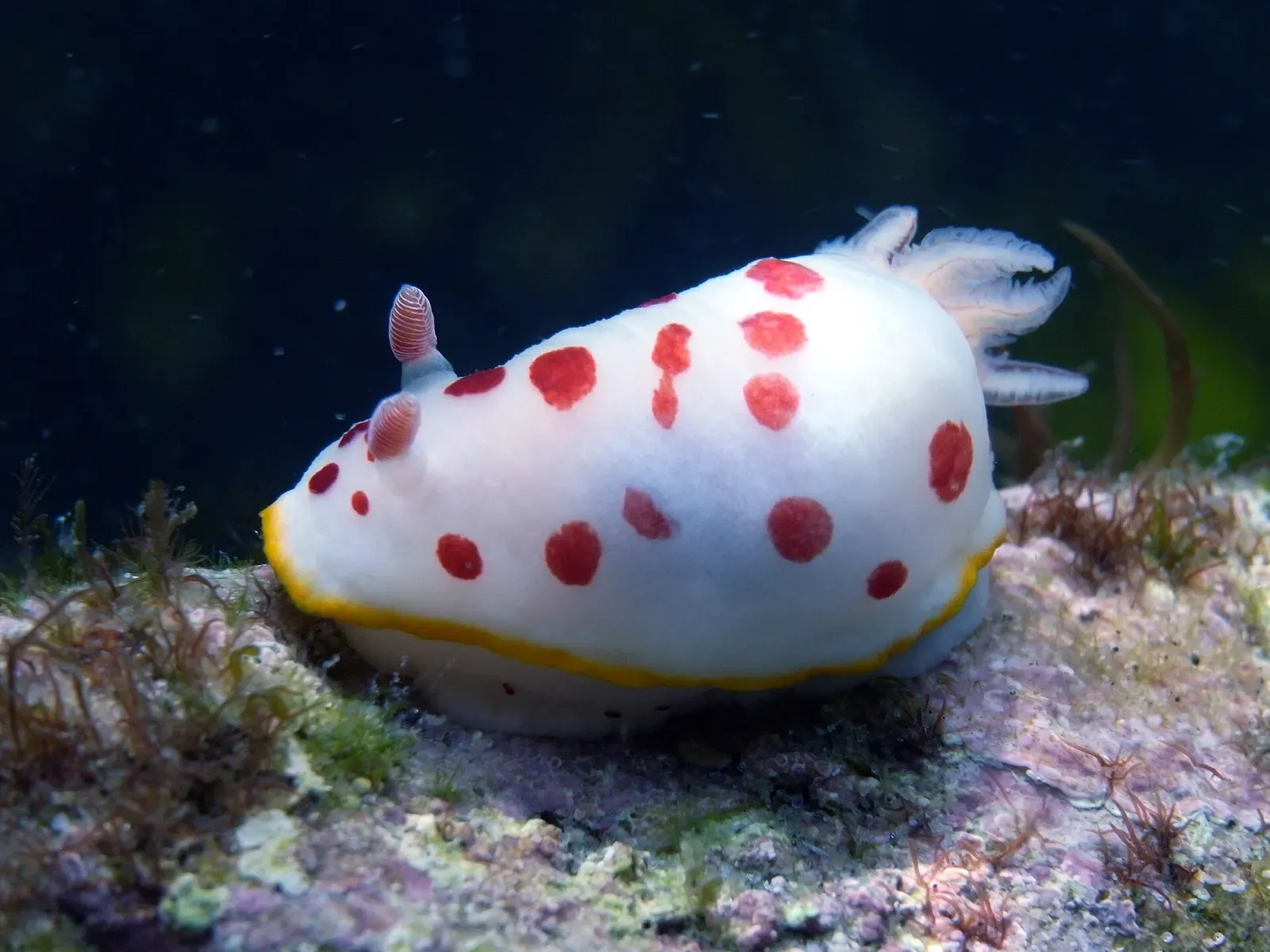
Divers meet two main shapes. Dorids carry their gills as a feathery plume, a rosette on the rear half of the back around the anus. Most of the fat, brightly patterned slugs on a tropical reef are dorids: Chromodoris, Goniobranchus, Nembrotha, the Spanish dancer. Aeolids have no plume. Instead the back is covered in cerata, rows of slender, often colourful fingers that give the animal the look of a small anemone on the move. The Mediterranean’s purple flabellinas and the red-and-blue Cratena are aeolids.
The classification is being redrawn. A 2025 study would keep the name Nudibranchia for the aeolid side and put the dorids in an order of their own. Divers, dive guides and identification books still call both nudibranchs, and so does this guide.
Losing the shell cost a snail its armour, and the rest of this guide is mostly about what replaced it: chemistry, camouflage and colour. It also made nudibranchs easy to see. There is nothing to hide inside, so a nudibranch that is not camouflaged is out on the rock in full view, which is why they are so often the first small animals a new macro diver learns to spot.
It cannot see you
A nudibranch has eyes, but they are simple and tiny, and they tell light from dark and little more. The two horns on the head, the rhinophores, are what it uses instead. They are chemical sensors: rhinophores detect smell, and the smaller oral tentacles by the mouth taste and feel. A nudibranch finds its food, finds a mate and notices a predator mostly by scent.
That changes how you dive with one. Eyes that register only light and dark cannot make out a diver or a camera, so a lens held close does not alarm it by sight. What it does notice is a touch, a surge of water from a fin, or being lifted off its food. A nudibranch that suddenly pulls its rhinophores or gills in has been disturbed.
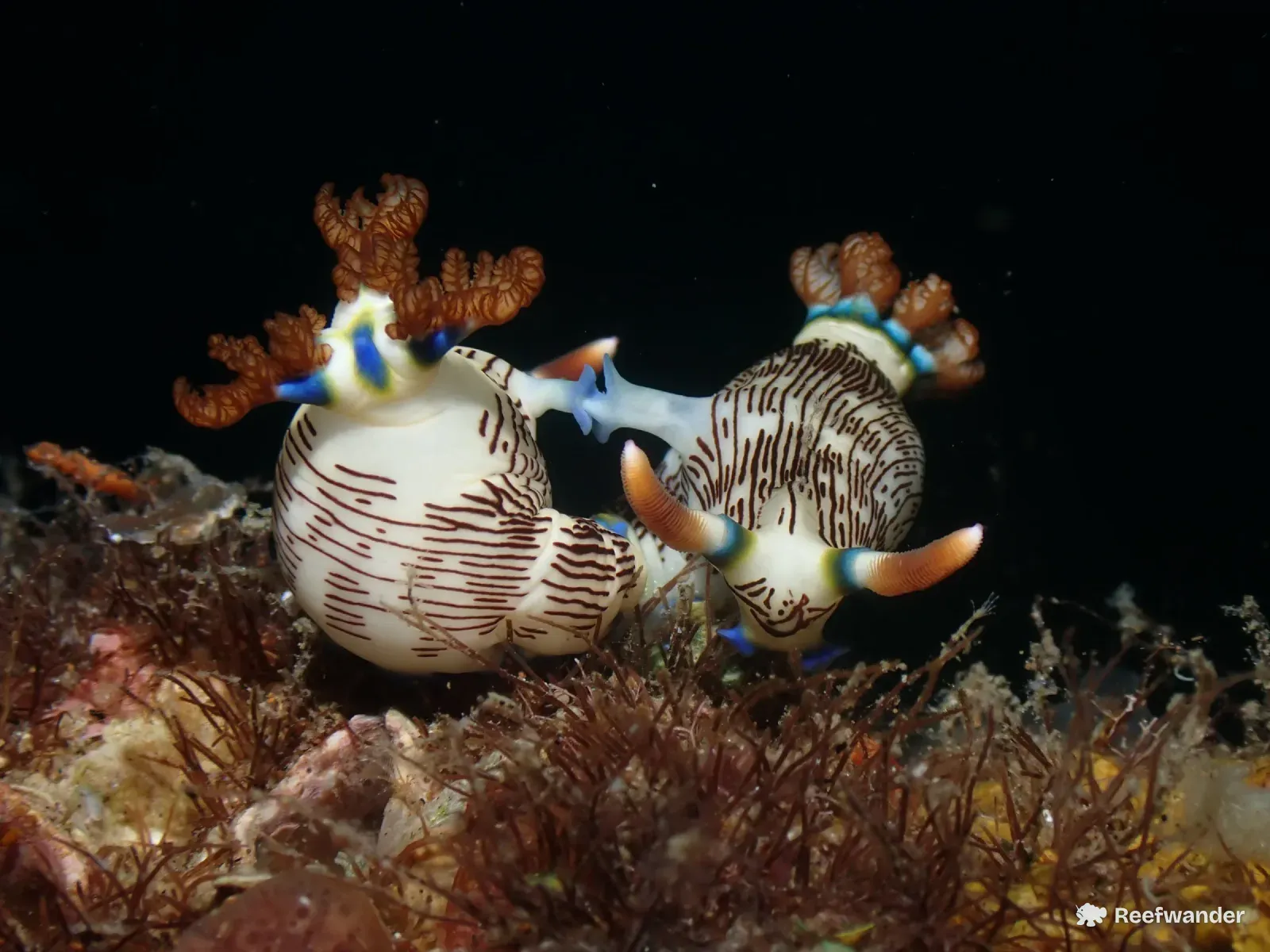
Every nudibranch is both male and female at once. That does not mean it can manage alone: a nudibranch cannot fertilise itself, so it still has to find another of its species, by scent, across a reef where each animal is a few centimetres long. Two animals that meet line up side by side to mate, as the pair above is doing.
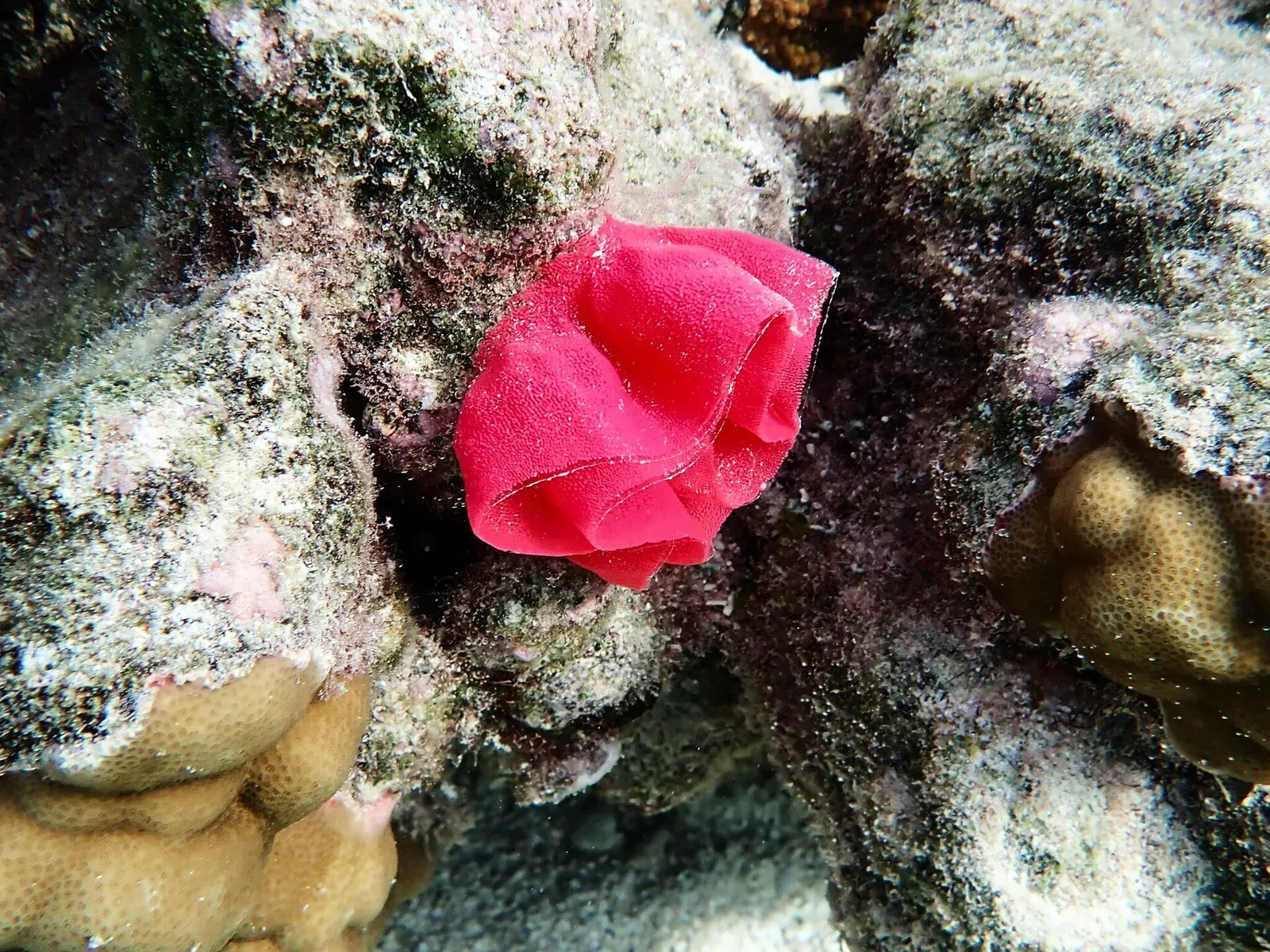
The eggs come out as a ribbon. Most nudibranchs lay them in a gelatinous spiral stuck to the rock, a coil or a frill in white, yellow, orange or red, and the ribbon is sometimes bigger and easier to see than the animal that laid it.
Stolen weapons
A soft, slow animal with no shell and bright colours should be easy prey. Most nudibranchs are not, and the reason is what they eat. All known nudibranchs are carnivores, and many specialise in food that is itself defended: sponges full of toxic chemicals, hydroids armed with stinging cells, sea squirts. The nudibranch eats the defence along with the food, and keeps it.
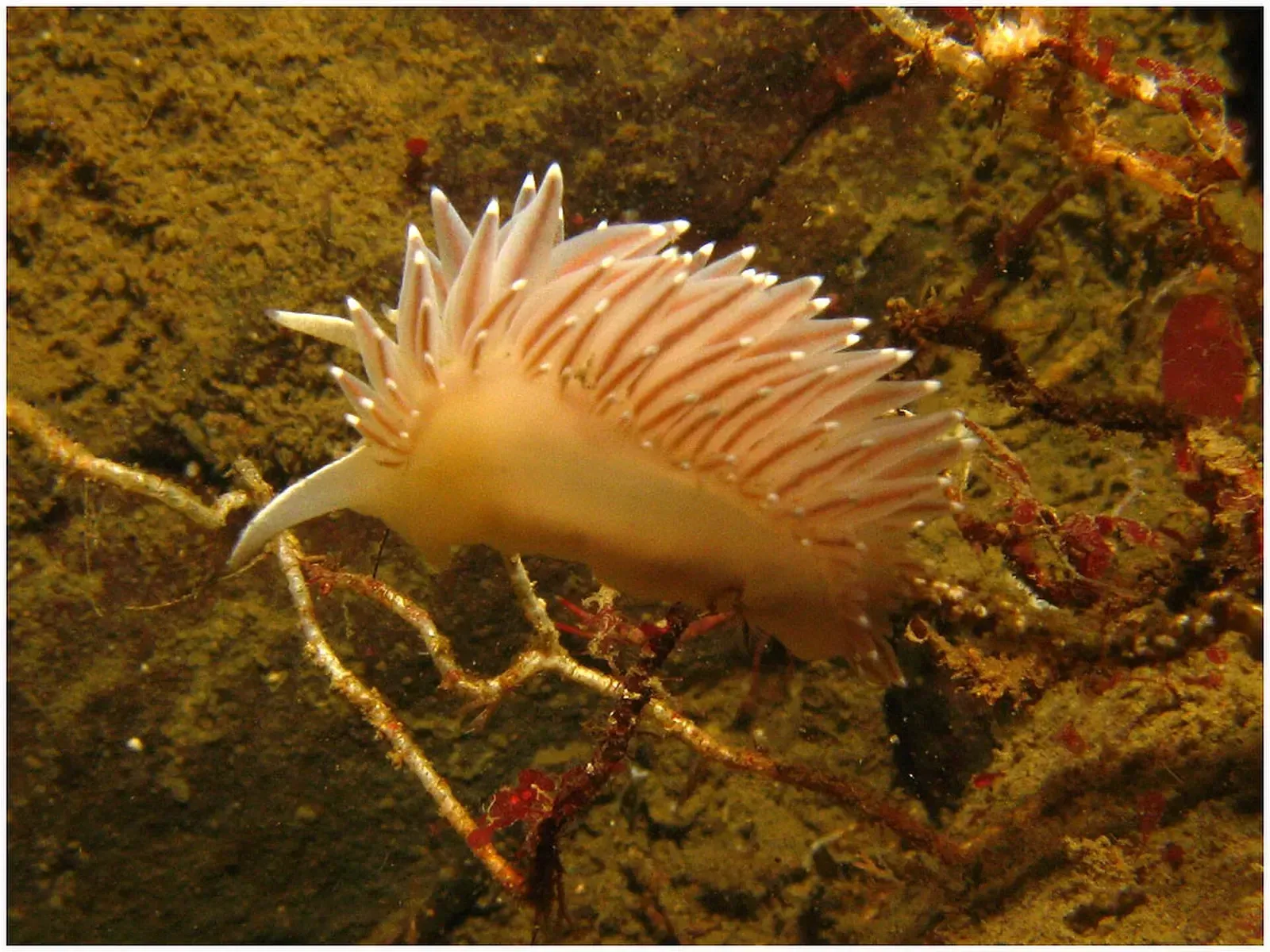
The aeolids do it with stings. An aeolid that feeds on hydroids, the small, feathery relatives of jellyfish that grow on rock and wrecks, passes the hydroid’s stinging cells through its gut unfired. They collect in sacs at the tips of the cerata, where they are known as kleptocnidae: stolen nettles. A fish that bites an aeolid can get a mouthful of the hydroid’s stings.
The dorids do it with chemistry. Many sponge-eating dorids concentrate the sponge’s defensive compounds in their own bodies and become distasteful. The chromodorids go further, moving the compounds into special storage glands in the mantle. Some species make their own defensive chemicals instead of taking them from food.
The Spanish dancer takes it one step further. It feeds on sponges, turns their chemistry into its own defence, and passes those compounds into its egg ribbons, so that a spiral of eggs that cannot move or hide is chemical-proofed as well. The work, published in 1988, traced the compounds in the eggs back to the sponge diet.
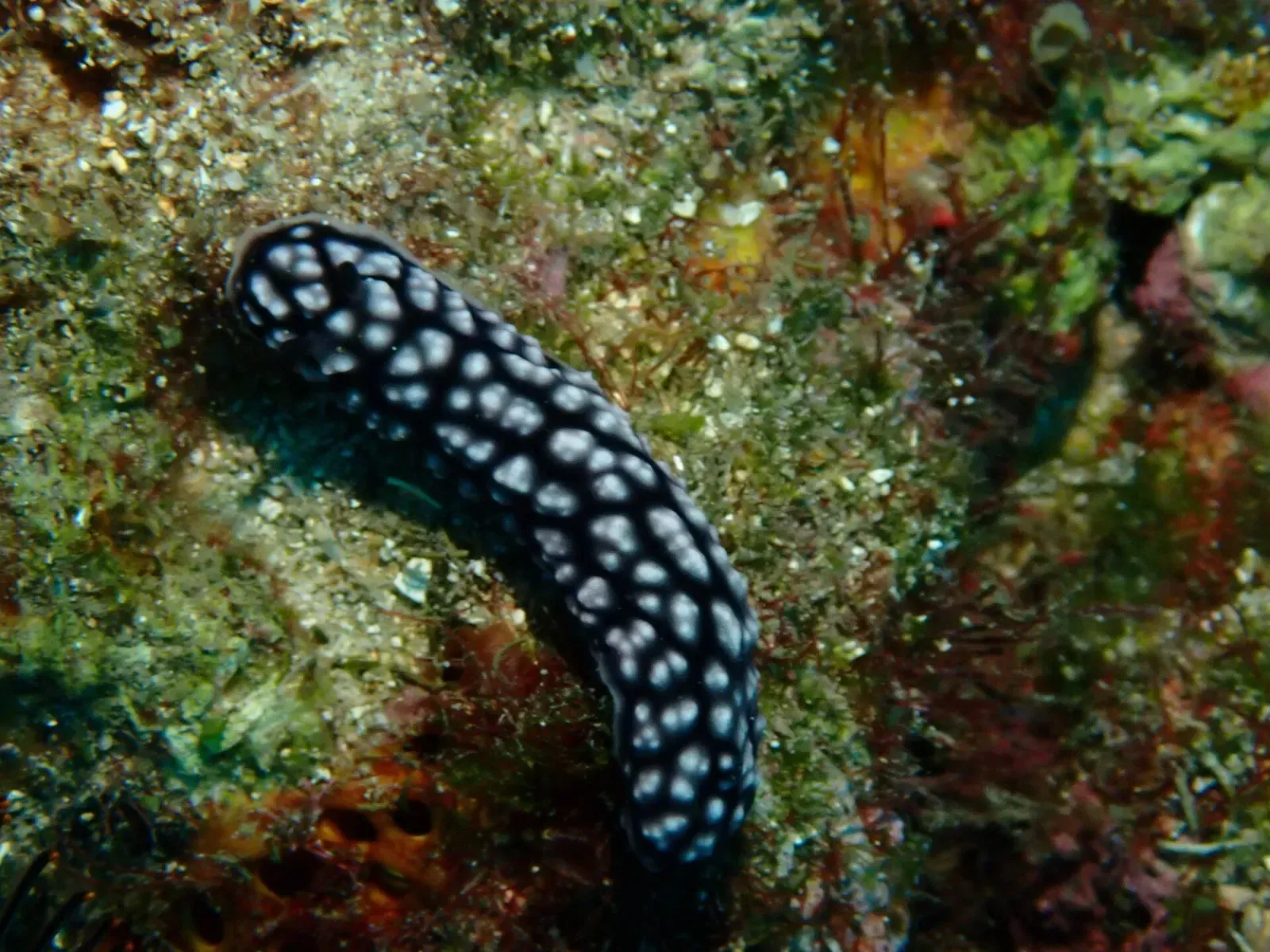
The bright colours are usually read as a warning to predators, and in some families, the phyllidiids among them, that reading has good support. For nudibranchs as a whole the evidence has been contested since at least 1991. Many bright nudibranchs are distasteful, but colour alone does not prove it.
The nudibranchs you are likely to meet
Nobody learns 3,000 species. A handful of names cover a good share of what divers are shown, and the table sorts them by shape and by where divers usually meet them.
| Group | Shape | Where divers meet them | What to look for |
|---|---|---|---|
| Chromodoris and Goniobranchus | Dorid | Indo-Pacific | Smooth, brightly patterned bodies with a gill plume at the back, on or near the sponges they eat |
| Phyllidiids (Phyllidia, Phyllidiella, Phyllidiopsis) | Dorid | Indo-Pacific | Backs covered in hard, coloured tubercles; no gill plume on top |
| Nembrotha | Dorid | Indo-Pacific | Large, often vividly coloured, usually on the sea squirts it eats |
| Spanish dancer (Hexabranchus) | Dorid | Indo-Pacific and Red Sea | Red or orange, 25 cm and more; mostly out at night; can swim |
| Tambja | Dorid | Indo-Pacific and temperate Australia | Slender, often green, yellow or blue; eats bryozoans |
| Thecacera | Dorid | Indo-Pacific | Small, with orange-tipped horns and gill appendages |
| Flabellina affinis | Aeolid | Mediterranean and eastern Atlantic | Violet cerata under a white ring, to about 50 mm, on the hydroid Eudendrium |
| Cratena peregrina | Aeolid | Mediterranean and eastern Atlantic | White body, orange marks on the head, red cerata with electric-blue tips |
| Coryphella trophina | Aeolid | North Pacific | Pale pink or white with white-tipped cerata, on hydroids |
| Dirona albolineata | Other | North-east Pacific | Translucent, with flattened white-edged cerata |
The two groups divers tend to meet first are the chromodorids and the phyllidiids, because they are common, slow and out in the open on almost any Indo-Pacific reef. Nudibranch Meadow at Mabul promises both in its first five minutes, then Nembrotha chamberlaini in electric blue and orange on the rubble. Phyllidiids have no gill plume on top at all; a first-timer’s reading of one is often a lumpy stone.
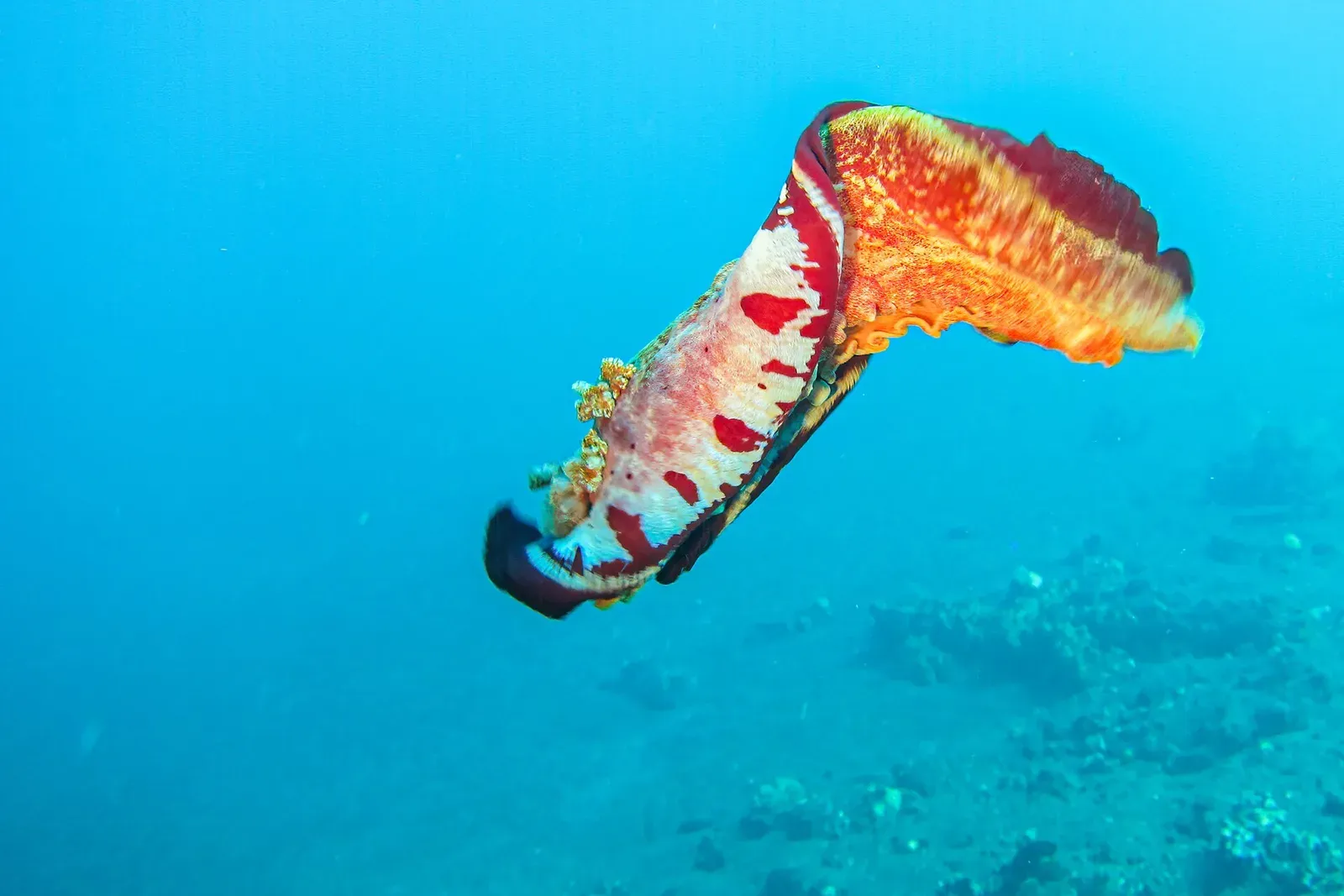
The Spanish dancer breaks the pattern. It is one of the largest nudibranchs, commonly to 25 cm with reports past 40 cm in the Red Sea, and it is mostly seen at night. Disturbed, it unrolls the edges of its mantle and swims away in slow undulations, which is where the name comes from. The Mabul site record says as much: the Spanish dancer is there, but you will likely only see it after dark. A 2023 study found that the single name Hexabranchus sanguineus had been covering at least five species, so the red dancer in one ocean may not be the same animal as in another.
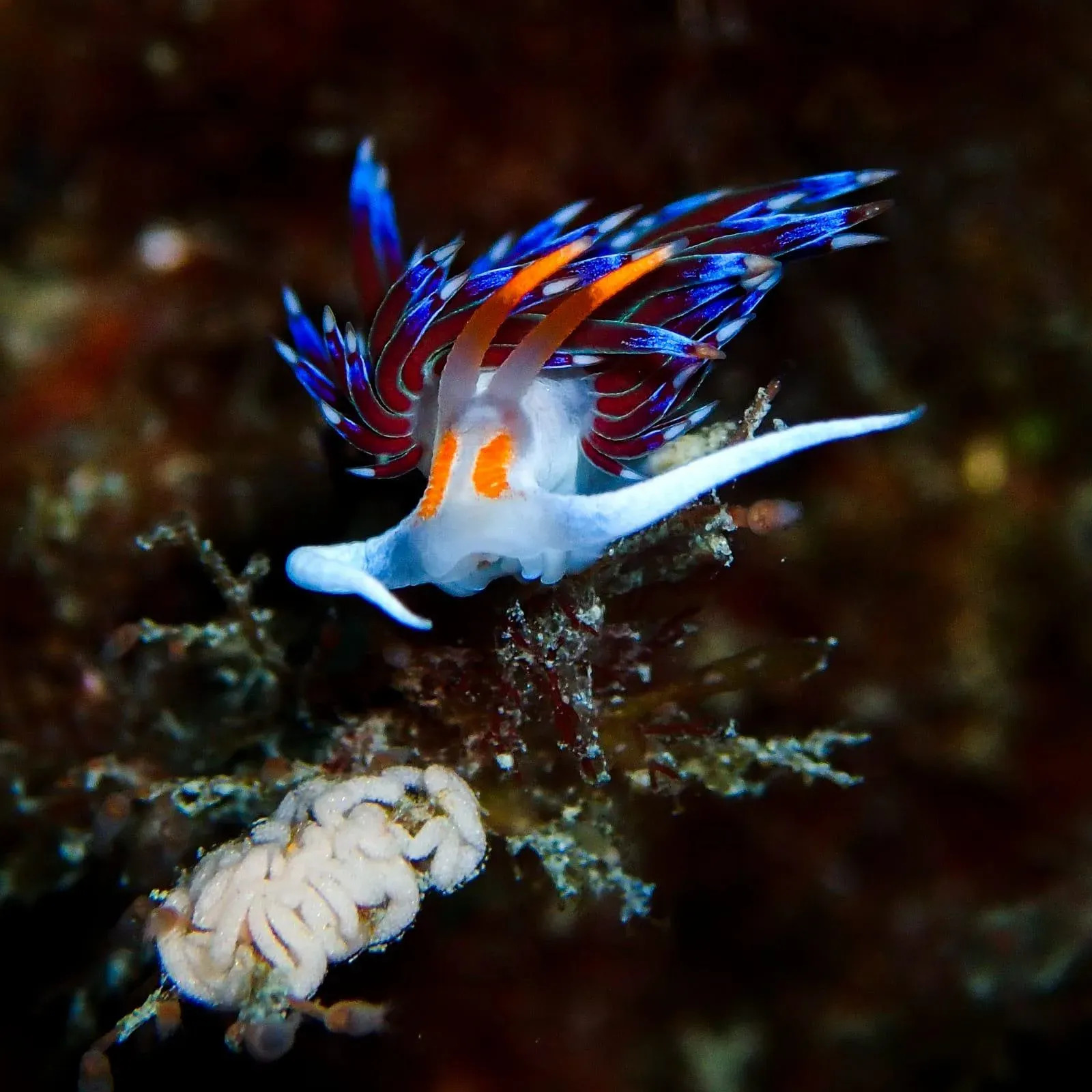
In the Mediterranean, two aeolids are worth learning first. Flabellina affinis has violet cerata under a white ring and grows to about 50 mm; Cratena peregrina is white with orange marks on the head and red cerata tipped in electric blue. Both feed on the hydroid Eudendrium, which is common on Mediterranean rock, so both turn up wherever that hydroid grows. The site record for Preza in the Cyclades names both.
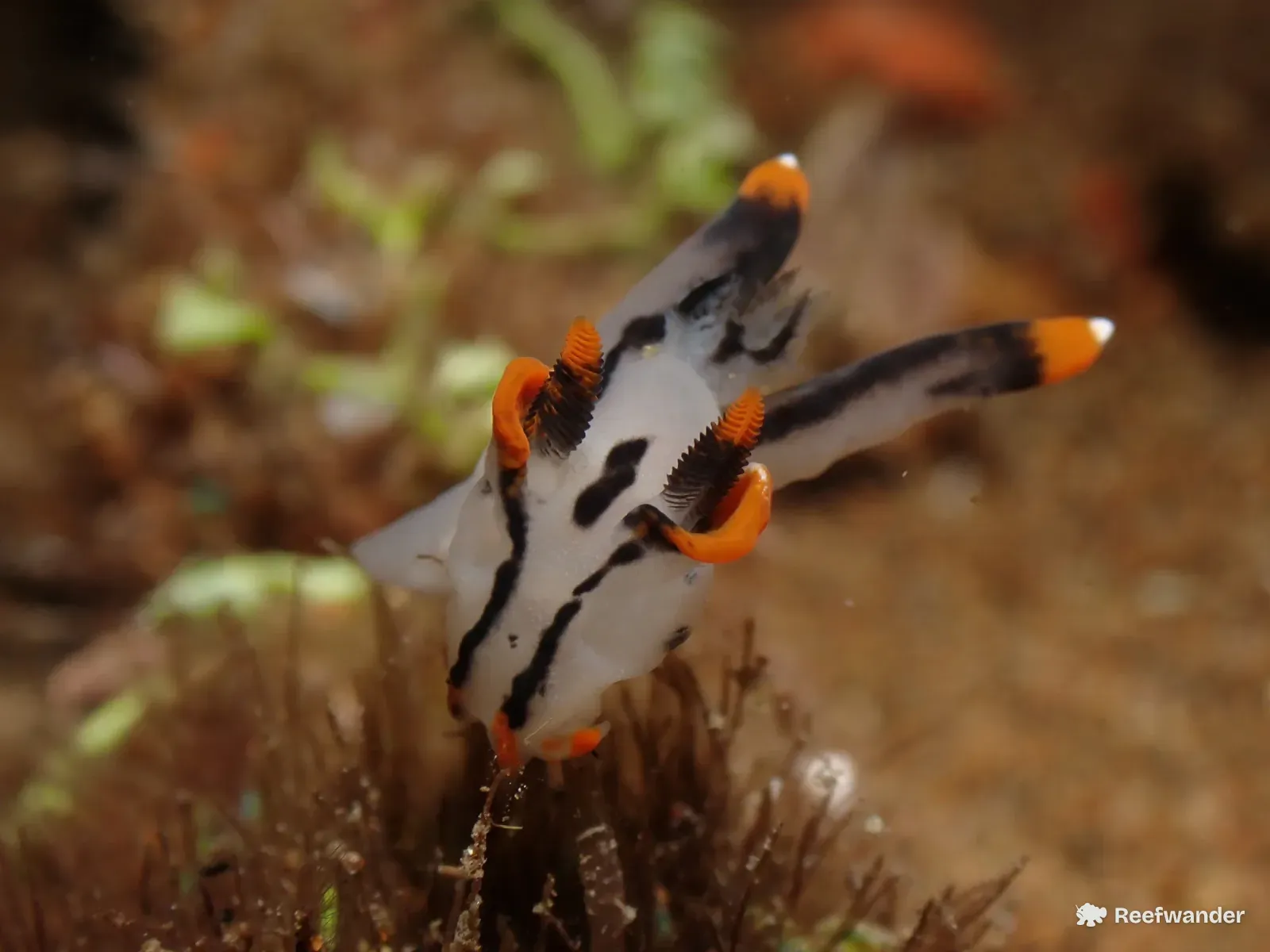
The animal at the top of this page is Thecacera picta, first described from Suruga Bay in Japan: white, striped in black, with orange tips. It is sometimes called a Pikachu nudibranch, but Wikipedia gives that nickname to a relative, Thecacera pacifica, a translucent orange animal with black tips to its horns and gills that looks much more like the cartoon. The two are easy to confuse, so a dive-shop Pikachu may be either.
Two impostors
Not every slug on a dive briefing is a nudibranch. The first impostor is a flatworm. Flatworms come in the same electric colours, and a dive guide at Mabul will point out both on the same slope. A flatworm is paper-thin and glides flat against the rock; a nudibranch has a body with some height to it and, in most species, gills or cerata on the back.
The second is a divers’ favourite. The Shaun the sheep, also called the leaf sheep, is Costasiella kuroshimae, 5 to 10 mm long, and it is not a nudibranch at all. It belongs to the Sacoglossa, a separate branch of sea slugs that suck the contents out of algae cells. It eats one genus of green alga and keeps the alga’s chloroplasts working inside its own cells for a while afterwards, which is why it is as green as the leaf it sits on. The research on its genus shows those stolen chloroplasts keep photosynthesising for a short time; it does not show that the slug lives on light. It is a sea slug that steals from plants, not a nudibranch and not a plant.
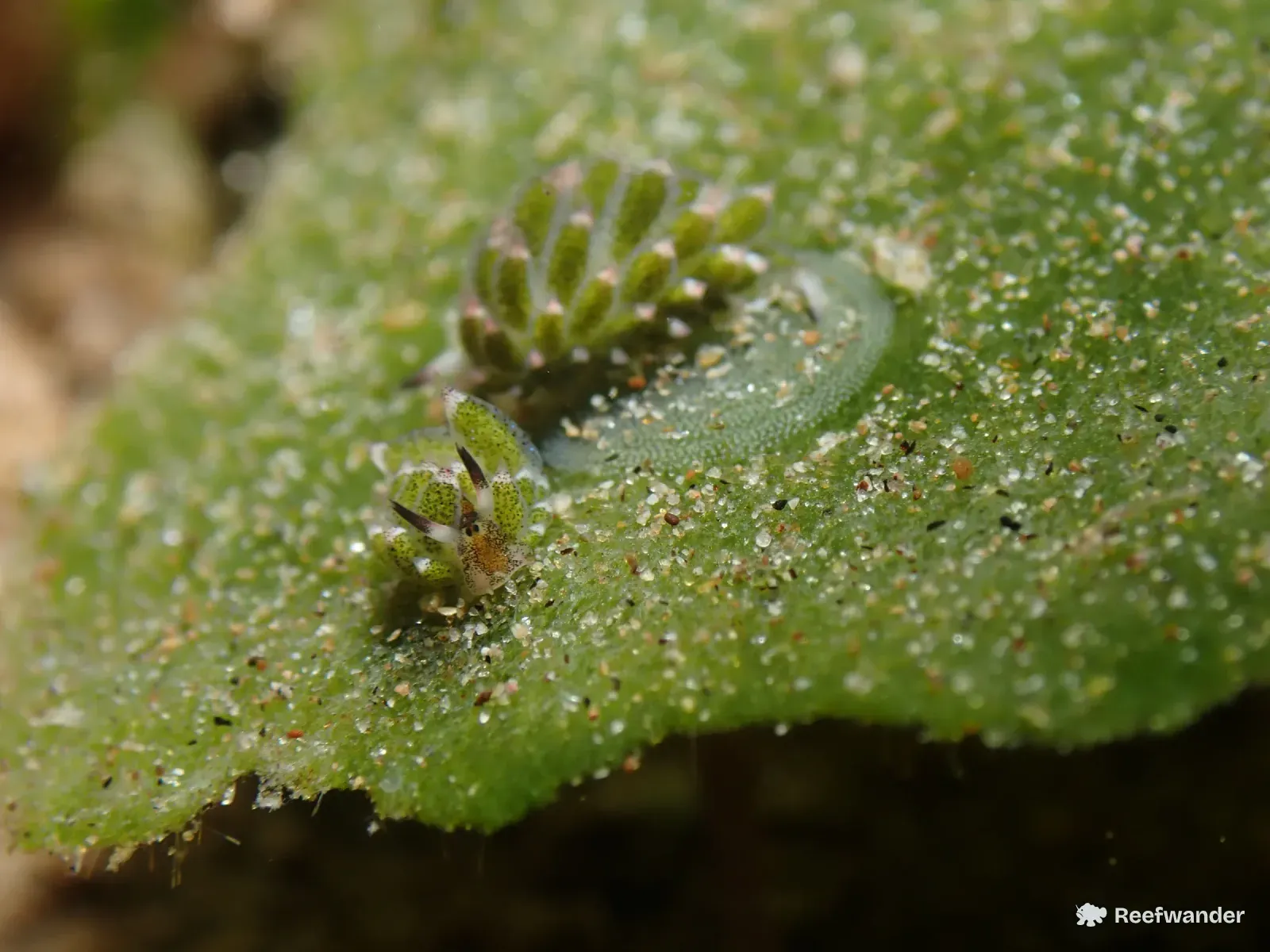
The site record for Ao Yui off Pattaya names Costasiella among its sand-flat finds, alongside real nudibranchs such as Janolus, Doto, Bornella and Melibe.
Look under the pier
The two richest nudibranch counts we hold are not from a Coral Triangle reef. They are from under a pier on Port Phillip, near Melbourne, and a road bridge in Florida, and neither is deeper than 8 m.
Blairgowrie Pier in Port Phillip is a walk-in shore dive along pylons in no more than about 7 m (23 ft) of water, and more than a hundred species of nudibranch have been identified there. At Blue Heron Bridge in Palm Beach County, dived from the beach in the tide window at 1.5 to 6 m under the western span, more than 100 species of nudibranch and sea slug have been recorded, most of them tiny, unlike the big Indo-Pacific slugs.
Neither number proves that a pier is richer than Lembeh. Nobody has run the same census in both places, and a Coral Triangle slope with a local guide will usually put more big, bright species in front of you on one dive. What the counts do prove is that nudibranch diving does not need depth, a boat or a tropical flight. Pilings, jetties and bridge columns grow sponges, hydroids and sea squirts on every surface, and every surface is inside easy gas limits.
The same pattern runs through the rest of our records. About half of the sites in the tables below are listed at 20 m (66 ft) or shallower. In Subic Bay, the San Quentin, a Spanish gunboat scuttled in 1898, lies in 10 to 16 m with over 20 nudibranch species recorded on the wreck. At Segara in Tulamben, the whole dive happens around artificial reef structures at nine metres, and Nudibranch City off Mafia Island is a 9 m reef 300 m off the beach.
Scuba Diving Under Blairgowrie Pier , Port Phillip Bay Victoria Australia · SurfnPics on YouTube
Where to find nudibranchs
The sites below are those whose own record is built around nudibranchs, grouped by the kind of ground they are dived on and sorted from shallow to deep within each group. Depth and level come from each site’s record; the best months are the area’s ratings, not a nudibranch season.
Piers, bridges and shore entries
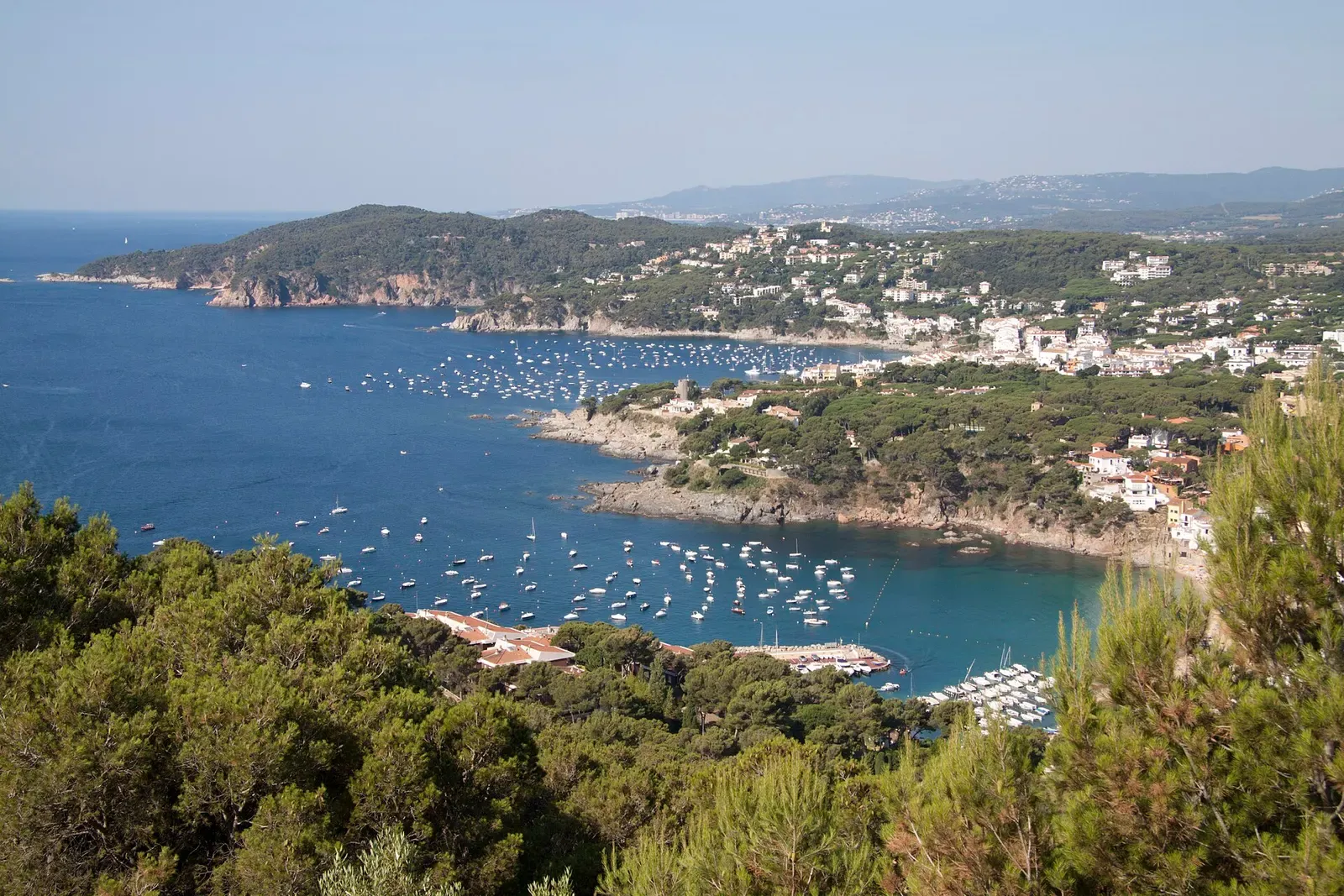
The shallowest nudibranch diving is from the shore. Beyond Blairgowrie and Blue Heron Bridge, Cala Margarida in Palamós on the Costa Brava is entered by a pool ladder into a cove from 2 m, and an outfall pipe leads out to rock where nudibranchs are numerous. The Pipeline at Nelson Bay is a swim out over seagrass to a submerged pipe where nudibranchs are everywhere, among them Polycera capensis, known locally as the Punk. Osezaki on Japan’s Izu Peninsula is a walk-in onto sand that runs to 40 m, and PADI’s site listing says the variety of life there changes with the seasons.
| Site | Depth | Level | Best months |
|---|---|---|---|
| West Bridge Span Blue Heron Bridge · United States | 1.5–6 m | Beginner | Apr–Aug |
| Blairgowrie Pier Port Phillip · Australia | to 7 m | Beginner | May–Jul |
| Segara Tulamben · Indonesia | to 9 m | Beginner | Apr–Jul |
| Nudibranch City Mafia Island · Tanzania | to 9 m | Intermediate | Oct–Feb |
| Cala Margarida Costa Brava · Spain | 2–12 m | Beginner | Jul–Aug |
| The Pipeline Nelson Bay · Australia | to 18 m | Intermediate | Apr–Aug |
| Middle Reef Point Lobos · United States | 6–20 m | Intermediate | Sep–Nov |
| Osezaki Bay Izu Peninsula · Japan | to 40 m | Intermediate | Sep–Nov |
Black sand, rubble and muck
These are muck and rubble slopes, most of them in the Coral Triangle, dived slowly with a guide and a torch. Basura in Anilao is a debris slope from 3 to 18 m dived almost entirely by photographers, and Twin Rocks nearby is worked to 18 m for bobtail squid and Spanish dancers. In Lembeh, Nudi Falls is a mini-wall whose face is packed with the ascidians and sponges the nudibranchs feed on, and Nudi Retreat is a shallow coral bowl over a sandy slope. Dapdap in Anda, Bohol, is a wall that runs down onto muck at 25 m, and that muck is where the nudibranchs are.
| Site | Depth | Level | Best months |
|---|---|---|---|
| Ao Yui Pattaya & the Sattahip Wrecks · Thailand | 5–12 m | Intermediate | May–Jul |
| Nudibranch Meadow Mabul & Kapalai · Malaysia | 8–18 m | Beginner | Mar–Oct |
| Basura Anilao · Philippines | 3–18 m | Beginner | Dec–Apr |
| Twin Rocks Anilao · Philippines | to 18 m | Beginner | Dec–Apr |
| Nudi Falls Lembeh Strait · Indonesia | to 25 m | Intermediate | Jul–Nov |
| Dapdap Anda · Philippines | to 25 m | Intermediate | Nov–May |
| Nudi Retreat Lembeh Strait · Indonesia | to 28 m | Intermediate | Jul–Nov |
| Telsie's Garden Romblon · Philippines | to 30 m | Intermediate | Nov–Apr |
Mediterranean and Atlantic rock
In the Mediterranean the site records name the species. Preza, a plateau at 8 to 12 m in the strait between Paros and Antiparos, has Flabellina affinis and Cratena peregrina on the rock and big barracuda schools passing over it. Nudi Rock in the Alonissos marine park is named for the number of nudibranchs on it, flabellinas above all, though its zone of interest runs to 35 m and it is an advanced dive. At Labyrinth, off the southern tip of Antiparos, the site’s listing says the rock swarms with nudibranchs of several species late in the season. Orange Cliff in Croatia ends in swim-throughs full of them, and in Portugal Arcanzil near Cabo Espichel has them in the growth on a rock that breaks the surface.
| Site | Depth | Level | Best months |
|---|---|---|---|
| Preza Paros & Naxos · Greece | 8–12 m | Beginner | Jun |
| Arcanzil Sesimbra & the Arrábida · Portugal | to 15 m | Intermediate | Aug–Oct |
| Punta dell'Indiano Portofino Marine Reserve · Italy | 12–20 m | Beginner | Jun–Sep |
| Anse de la Mauresque Banyuls-sur-Mer & the Côte Vermeille · France | to 20 m | Beginner | Jun–Sep |
| Labyrinth Paros & Naxos · Greece | to 25 m | Intermediate | Jun |
| Orange Cliff Primošten & Rogoznica · Croatia | 10–30 m | Intermediate | Jun–Sep |
| Nudi Rock Alonissos & the Peristera Wreck · Greece | 10–35 m | Advanced | Jun–Sep |
Reefs, walls and wrecks
The rest are reef, wall and wreck dives where nudibranchs are the named reason to slow down. Old Woman Island off Mooloolaba is a sheltered ledge from 16 m up to 5 m, thick with nudibranchs. Hugo’s Trench at Julian Rocks is a gutter at 15 to 18 m with Spanish dancers on its walls. In Komodo, Cannibal Rock, in the south of the park, is a low-current macro dive, unlike the northern pinnacles, with a huge variety of nudibranchs on the rock. Agus on Mactan has them on the table corals from 3 m and down the wall to 40 m, so the depth there is a choice, not a requirement.
| Site | Depth | Level | Best months |
|---|---|---|---|
| San Quentin (Sunken Tin) Subic Bay · Philippines | 10–16 m | Beginner | Nov–May |
| Old Woman Island Mooloolaba · Australia | 5–16 m | Beginner | Jul–Oct |
| Hòn Dăm Ngoài Phú Quốc · Vietnam | to 18 m | Beginner | Dec–Apr |
| Hugo's Trench Julian Rocks · Australia | 15–18 m | Intermediate | Jun–Sep |
| Kevs Ledge Ponta do Ouro · Mozambique | 21–24 m | Intermediate | Jul–Oct |
| Cannibal Rock Komodo · Indonesia | 10–25 m | Advanced | Jun–Oct |
| Toyapakeh Nusa Penida · Indonesia | 10–25 m | Intermediate | Jul–Oct |
| Snapper's Cave Anda · Philippines | to 25 m | Intermediate | Nov–May |
| Moray Reef Watamu & Malindi · Kenya | 10–27 m | Intermediate | Nov–Feb |
| Sri Nahkota Tenggol Island · Malaysia | 5–30 m | Intermediate | Aug–Sep |
| Coral Garden East Romblon · Philippines | to 35 m | Advanced | Nov–Apr |
| Agus Mactan & Olango · Philippines | 3–40 m | Intermediate | Mar–May |
One name to ignore: Nudi Rock in Misool, Raja Ampat, is named for its shape. From a distance the islet looks like a nudibranch; the dive itself is a current-swept plateau with barracuda, trevally and grey reef sharks, and it is not in the tables above.
When to go
Nudibranchs do not migrate or gather on a calendar the way whale sharks or mantas do, and our records give no nudibranch calendar for almost any of these sites. The question is when the sea, and the dive centres, let you dive.
| Site | Jan | Feb | Mar | Apr | May | Jun | Jul | Aug | Sep | Oct | Nov | Dec |
|---|---|---|---|---|---|---|---|---|---|---|---|---|
| PrezaParos & Naxos | Off-season | Off-season | Off-season | Fair | Good | Prime | Good | Good | Prime | Good | Off-season | Off-season |
| Nudi RockAlonissos & the Peristera Wreck | Off-season | Off-season | Off-season | Fair | Good | Prime | Prime | Prime | Prime | Good | Off-season | Off-season |
| Anse de la MauresqueBanyuls-sur-Mer & the Côte Vermeille | Fair | Fair | Fair | Fair | Good | Prime | Prime | Prime | Prime | Good | Fair | Fair |
| Nudibranch MeadowMabul & Kapalai | Good | Good | Prime | Prime | Prime | Prime | Prime | Prime | Prime | Prime | Good | Good |
| Nudi FallsLembeh Strait | Good | Good | Good | Good | Good | Good | Prime | Prime | Prime | Prime | Prime | Good |
| BasuraAnilao | Prime | Prime | Prime | Prime | Good | Fair | Fair | Fair | Fair | Fair | Good | Prime |
| Blairgowrie PierPort Phillip | Good | Good | Good | Good | Prime | Prime | Prime | Good | Good | Good | Good | Good |
| West Bridge SpanBlue Heron Bridge | Good | Good | Good | Prime | Prime | Prime | Prime | Prime | Good | Good | Good | Good |
Every site inherits its area’s ratings, which mix sea state, access and, in places, the headline animals: Port Phillip’s prime months are its May to July spider-crab gathering, and Lembeh’s follow its critter peak. None of them rates nudibranchs. The Greek sites are summer dives because the operators on Paros and Alonissos run from spring to autumn; our records say nothing about what the slugs do in winter. Anilao’s weaker months, June to October, cover the rains and its July to September typhoon season. Mabul, Lembeh, Blairgowrie and Blue Heron Bridge are rated good or prime in every month, and the Banyuls coast is at least fair all year, though its sea is around 12 °C in February. The only seasonal nudibranch claims we hold are listings’ lines: “late in the season” at Labyrinth on Antiparos, and a cast that changes with the seasons at Osezaki.
How to find one yourself
Pick a depth and stay there. Nudibranchs are found by covering a small patch slowly, not by swimming a reef. The shallow sites in this guide are ideal: at 7 or 9 m, gas lasts long enough to go over the same pylon or coral head twice, and the second pass usually finds more than the first.
Look at the food, not for the animal. Every nudibranch lives on or beside what it eats. Look for sponges for the chromodorids and phyllidiids, feathery hydroids for many aeolids, sea squirts for Nembrotha, lacy bryozoans for Tambja, and green algae for the sacoglossans. In the Mediterranean, the bushy hydroid Eudendrium on the rock is where the violet flabellinas will be.
Look for the egg ribbon. A coil or frill of eggs on the rock is sometimes easier to see than the animal, and the animal that laid it may still be close by.
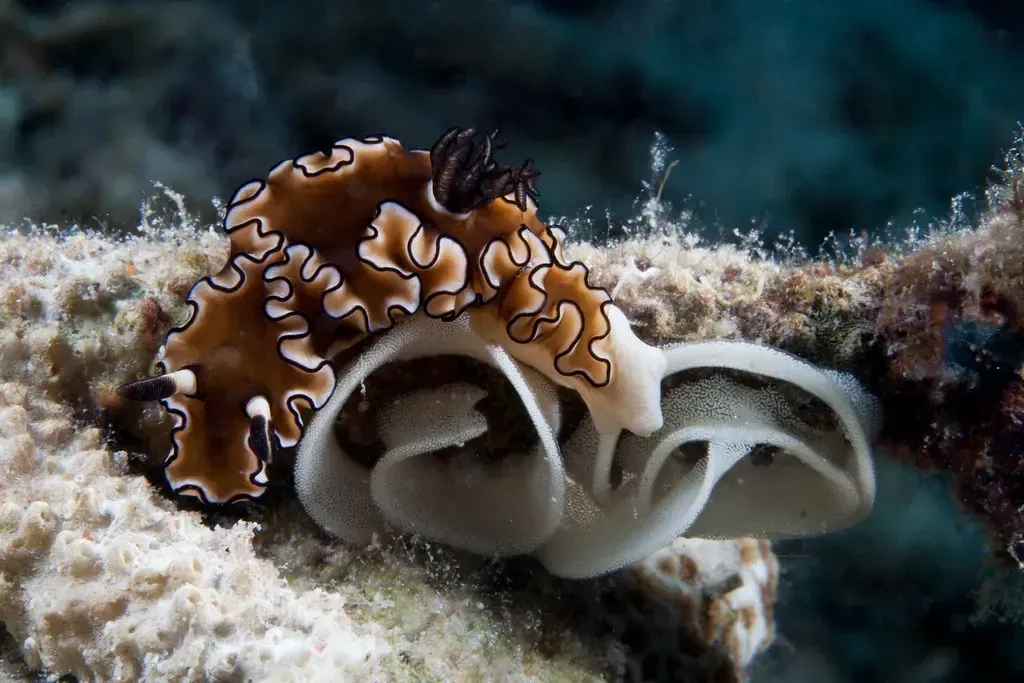
Use a torch. Colour drains out of the water with depth, and a light brings it back. Nudibranchs do not visibly mind one.
Never move one. Do not lift a nudibranch off its food, turn it for a better angle or blow it into the open with a fin. Hold your buoyancy clear of the bottom, keep your fins up, and wait for it to crawl into the shot. If it pulls its horns in, you are too close.
Where this connects in the Logbook
Nudibranchs share their best sites with the rest of the small animals. Our guide to the best muck diving covers the black-sand slopes of Lembeh, Anilao and Mabul and the temperate piers that rival them, and our frogfish guide is the other half of the same slow dive, often on the same sponge.