
Coral Triangle · Philippines
Anilao
Rubble slopes near Manila hold an outsized range of nudibranchs and seahorses.
Photo: andre oortgijs · CC BY-SA 3.0
Anilao, on the Batangas coast a few hours south of Manila, was one of the original muck diving destinations and remains a weekend staple for Philippine and international underwater photographers. Sandy and rubble slopes at sites like Secret Bay and Basura hold seahorses, frogfish, and an unusually wide range of nudibranchs and cephalopods in a small area, thanks to nutrient flow through the Verde Island Passage. Most sites are a short boat ride from shore-based dive resorts.
About diving in Anilao
Days here follow the resort rather than a boat schedule. Outriggers launch off the beach or the resort steps, run a few minutes along the coast and come back between dives, so divers surface, unload cameras, eat and go again, three or four times over, plus a dusk or night dive. Many of the resorts are stacked up a steep hillside, which means stairs with a camera rig in hand, and most keep a camera room and dedicated rinse tanks.
Not all of it is muck. The bays and slopes hold the dark silty sand the area is known for, while the exposed points and offshore islets are hard-bottom coral reef with more current running through and the schooling fish that come with it. Guides pick by tide and wind rather than working a fixed rotation, so a normal day mixes the two. Some operators also run blackwater dives offshore after dark, drifting alongside a lit line for open-ocean larvae risen from depth.
Anilao is regarded as the birthplace of scuba diving in the Philippines, and its reputation now rests on a long record of small animals. After decades of cyanide and dynamite fishing, the first marine sanctuaries were set up at Bagalangit and San Teodoro in 1991, and more than 560 nudibranch species have since been identified, which is why local operators call it the nudibranch capital of the world. The name is now used loosely for the dive coast of Mabini, Tingloy and Bauan, not just the two barangays that carry it, and annual macro photography competitions keep the resorts built around cameras.
It suits photographers, patient divers, and anyone who wants a lot of diving without a long journey to reach it. Most dives sit between about 5 and 25 m in mild current, so an hour on one slope is normal and gas, not the profile, ends the dive; Mainit Point is the exception, where current can run hard. Sites near the busiest resorts can hold several groups at once on peak-season weekends. Divers after walls and schooling fish can take day trips to Verde Island or across the passage to Puerto Galera.
Best time to dive Anilao
| Jan | Feb | Mar | Apr | May | Jun | Jul | Aug | Sep | Oct | Nov | Dec | |
|---|---|---|---|---|---|---|---|---|---|---|---|---|
| Season | Prime | Prime | Prime | Prime | Good | Fair | Fair | Fair | Fair | Fair | Good | Prime |
| Sea surface | 27°C81°F | 26°C79°F | 27°C81°F | 28°C82°F | 30°C86°F | 30°C86°F | 29°C84°F | 29°C84°F | 29°C84°F | 29°C84°F | 28°C82°F | 28°C82°F |
| Daytime high | 29°C84°F | 30°C86°F | 31°C88°F | 33°C91°F | 33°C91°F | 32°C90°F | 31°C88°F | 31°C88°F | 31°C88°F | 31°C88°F | 30°C86°F | 30°C86°F |
| Rain | 72 mm2.8 in | 56 mm2.2 in | 52 mm2.0 in | 58 mm2.3 in | 162 mm6.4 in | 345 mm13.6 in | 474 mm18.7 in | 365 mm14.4 in | 361 mm14.2 in | 351 mm13.8 in | 195 mm7.7 in | 206 mm8.1 in |
| Jan | Feb | Mar | Apr | May | Jun |
|---|---|---|---|---|---|
| Prime | Prime | Prime | Prime | Good | Fair |
| Sea surface | |||||
| 27°C81°F | 26°C79°F | 27°C81°F | 28°C82°F | 30°C86°F | 30°C86°F |
| Daytime high | |||||
| 29°C84°F | 30°C86°F | 31°C88°F | 33°C91°F | 33°C91°F | 32°C90°F |
| Rain | |||||
| 72 mm2.8 in | 56 mm2.2 in | 52 mm2.0 in | 58 mm2.3 in | 162 mm6.4 in | 345 mm13.6 in |
| Jul | Aug | Sep | Oct | Nov | Dec |
|---|---|---|---|---|---|
| Fair | Fair | Fair | Fair | Good | Prime |
| Sea surface | |||||
| 29°C84°F | 29°C84°F | 29°C84°F | 29°C84°F | 28°C82°F | 28°C82°F |
| Daytime high | |||||
| 31°C88°F | 31°C88°F | 31°C88°F | 31°C88°F | 30°C86°F | 30°C86°F |
| Rain | |||||
| 474 mm18.7 in | 365 mm14.4 in | 361 mm14.2 in | 351 mm13.8 in | 195 mm7.7 in | 206 mm8.1 in |
2011–2025 averages. Sea surface: NOAA Coral Reef Watch, measured at the surface, so deeper water can run colder. Daytime high and rain: NASA POWER.
Mid-November to mid-April is the dry season, with calm surface conditions and visibility of about 15 to 20 m. January and February bring the coolest water of the year, around 24 °C and sometimes lower, and that cool water is when critter life on the muck slopes is at its most varied, with January the peak for blackwater dives. March to May warms to about 27 °C, and April and May are the peak season, when sites get crowded at weekends. The rains arrive in May, and July to September is typhoon season: the sea is often choppy and visibility drops to 10 to 15 m or less. Diving is possible all year, but November is when the main season returns.
Best months: January, February, March, April, December
Anilao water temperature and weather by month
The sea surface runs from 26 °C (79 °F) in February to 30 °C (86 °F) in June. Most rain falls from June to October, peaking at about 470 mm (19 in) in July; it stays largely dry from January to April. Daytime highs reach 33 °C (91 °F) in May and drop to 29 °C (84 °F) in January. The coldest water here is about 24 °C (75 °F), so pack a 3 mm full suit.
Dive types & marine life
Nudibranchs, frogfish, seahorses and cephalopods are on the slopes in any month. January, when the water is coolest, is the peak for critter variety and for blackwater dives. Mimic and blue-ringed octopus and rhinopias turn up at Secret Bay, pygmy seahorses on the gorgonians at Kirby's Rock, and barracuda, jacks and whitetip sharks in the current at Mainit Point.
- Muck & macro
- Night
- Reef
- Nudibranchs
- Frogfish
- Mandarinfish
- Octopus & cuttlefish
- Pygmy seahorses
- Macro critters
Best dive sites in Anilao
- 1
Secret Bay
Muck slope to about 24 m, rated among the world's best, with mimic and blue-ringed octopus.
- 2
Basura
Shallow debris slope where junk shelters frogfish, seahorses and rare nudibranchs; a true classic.
- 3
Kirby's Rock
Short wall from 16 m to 30 m, the classic site for golden pygmy seahorses on gorgonians.
- 4
Twin Rocks
Gentle shore slope dived to about 18 m, with bobtail squid, Spanish dancers and jawfish.
- 5
Sombrero Island
Hat-shaped island with coral valleys and pillars to 25 m under clouds of anthias.
- 6
The Cathedral
Concrete cross at 15 m between two pinnacles, planted in 1983, with tame reef fish.
- 7
Mainit Corner
Current-swept point with barracuda, trevally and whitetip sharks; Anilao's big-fish site.
- 8
Beatrice Rock
Underwater hill by Sombrero with a pinnacle rising from 14 m to 8 m, sponges and strong current.
Site guides
A 35 m hull, then an SUV and a helicopter on the way back
Muck & macro
Debris slope from 3 to 18 m, dived for frogfish and nudibranchs
Pinnacle
Drop-offs and channels with a pinnacle rising from 14 m to 8 m
Walk-in slope of coral patches, rubble and sand, dived for macro
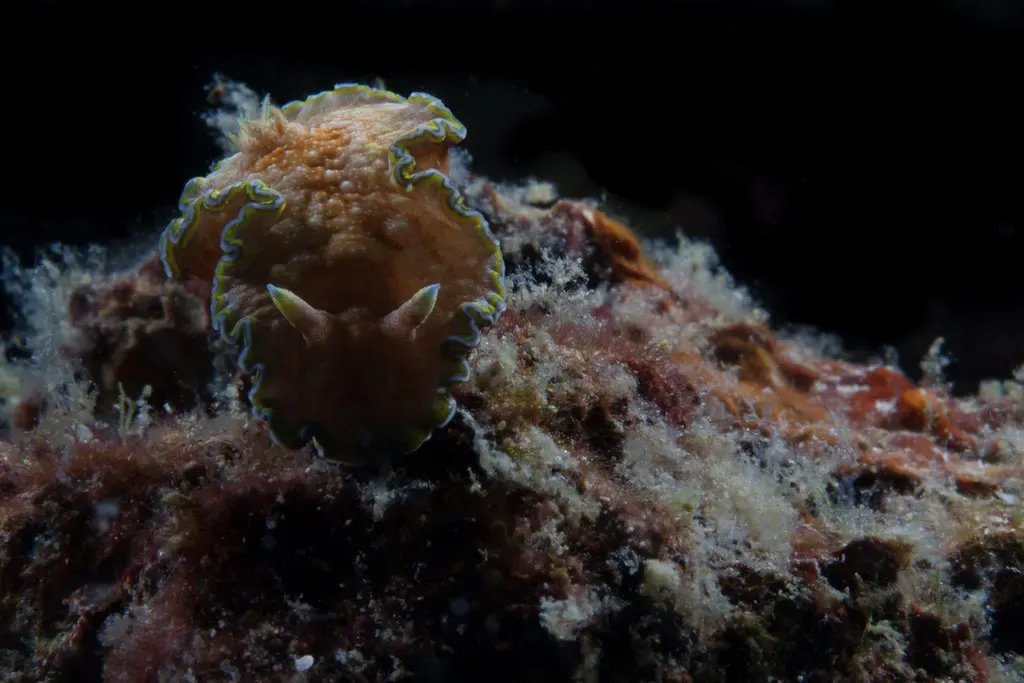
Golden pygmy seahorses on the gorgonians of a short wall
Wall
Protected wall to 35 m with fan corals and giant trevally
Reef
Current-swept corner with a pinnacle at 21 m for watching pelagics
One-way wall run that surfaces at the next resort along
Muck & macro
Mimic and blue-ringed octopus over Anilao's best-known muck slope
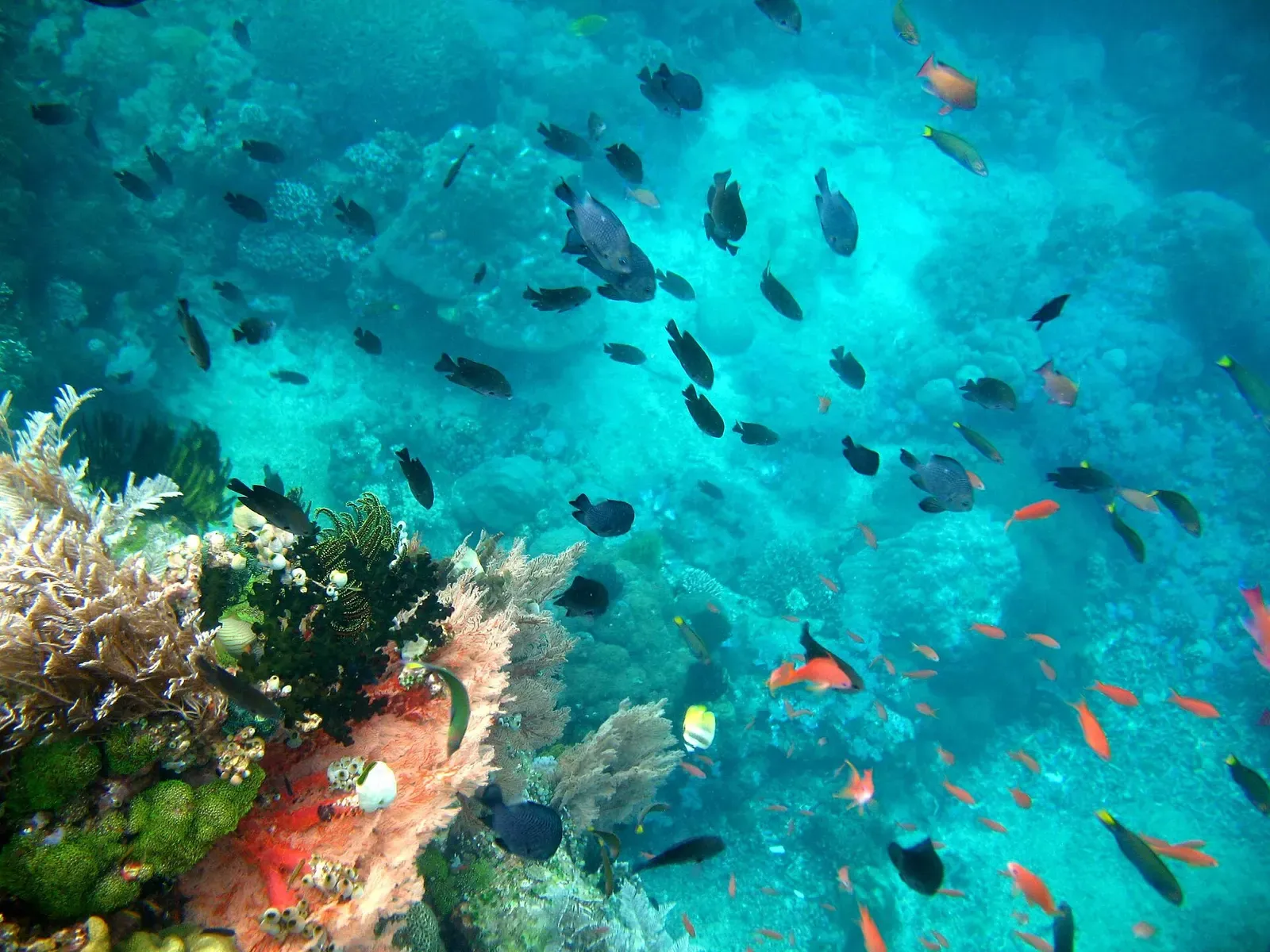
Coral valleys and pillars in the current, no deeper than 25 m
Pinnacle
A concrete cross set between two pinnacles at 15 m
Reef
Shallow slope worked to 18 m for bobtail squid and Spanish dancers
How to get to Anilao
Drive about two and a half hours from Manila down the STAR Tollway toward Batangas City, then along the coast road through Mabini to the resorts on the western shore. There are no buses to Mabini; without a car, take a bus to the Batangas City Grand Terminal and the Batangas–Mabini jeepney on to Anilao.
Photos from Anilao
Kris Mikael Krister · CC BY 3.0
andre oortgijs · CC BY-SA 3.0
andre oortgijs · CC BY-SA 3.0
Jnpet · CC BY-SA 3.0
Dive videos
2024 | Dive Into Anilao | Philippines | A World of Underwater Critters | Fish & Critter ID | 4K · Diver's Lens on YouTube
Macro Diving ANILAO. Out of the Black & Into the Blue (CHAPTER #3). · Naucrates Underwater Videography on YouTube
Questions divers ask
Can beginners dive in Anilao?+
Yes. Many sites are shallow slopes with gentle current, and conditions are easy enough that Anilao is a long-standing place to learn. Mainit Point and the day trips to Verde Island are the exceptions, with currents that suit experienced divers.
What is the water temperature in Anilao?+
It drops to about 24 °C in January and February, and lower on some days, then warms to about 27 °C from March to May and close to 30 °C by June. Plenty of divers move up to a 5 mm suit, or add a hood and vest, for the cool months.
When is the diving season in Anilao?+
Mid-November to May is the main season. April and May are the peak and busiest months, January is best for critter variety and blackwater, and July to September is typhoon season, with choppy seas and poor visibility.
How far is Anilao from Manila?+
About two and a half hours by road in normal traffic, via the STAR Tollway to Batangas and the coast road through Mabini. Weekend and peak-season traffic can make the drive considerably longer.
Is Anilao good for snorkelling?+
Yes. The reef starts close to shore, snorkelling is easy directly in front of most resorts, and boats run island-hopping trips to spots such as Sombrero Island and Maricaban. The shallow coral gardens suit snorkellers better than the muck slopes.
Sources
- Anilao dive sites — Dive The World
- Batangas diving: Anilao and Verde Island — Dive The World
- Diving Anilao, Batangas — Divezone
- Anilao — Wikipedia
- Mabini — Wikivoyage
- Diving the Philippines in January — Philippine Dives
Photo credits
- A dense coral garden of sponges and hard corals in many colors covers the reef at Mabini, Anilao. by andre oortgijs, CC BY-SA 3.0, via Wikimedia Commons
- A yellow nudibranch with purple-ringed spots crosses the rubble on a muck dive in Anilao. by Kris Mikael Krister, CC BY 3.0, via Wikimedia Commons
- A pair of clownfish shelter among the tentacles of a host anemone off Batangas, Anilao. by andre oortgijs, CC BY-SA 3.0, via Wikimedia Commons
- A bright blue sea star rests on rubble a short swim from an Anilao dive resort. by andre oortgijs, CC BY-SA 3.0, via Wikimedia Commons
- A ribboned sweetlips with bold black and gold stripes hovers beside a coral overhang in Anilao. by Jnpet, CC BY-SA 3.0, via Wikimedia Commons
Embed
Run a dive centre, club or blog? Embed this map of 12 dive sites near Anilao on your own page.
In The Logbook
- Nudibranchs: species, habits and where to diveMacro & muck · 13 min read
- Where to dive in DecemberTrip planning · 10 min read
- Frogfish: species, behaviour and where to diveMacro & muck · 12 min read
- Bioluminescence: why the sea glows at nightNight diving · 7 min read
- What stings you underwater, and how to avoid itBody & health · 8 min read
- Night diving: the best night dives in the worldNight diving · 12 min read
Similar destinations

A narrow strait holds one of the highest recorded densities of shore fish on Earth.

The endemic psychedelic frogfish lives on Ambon's harbour slopes
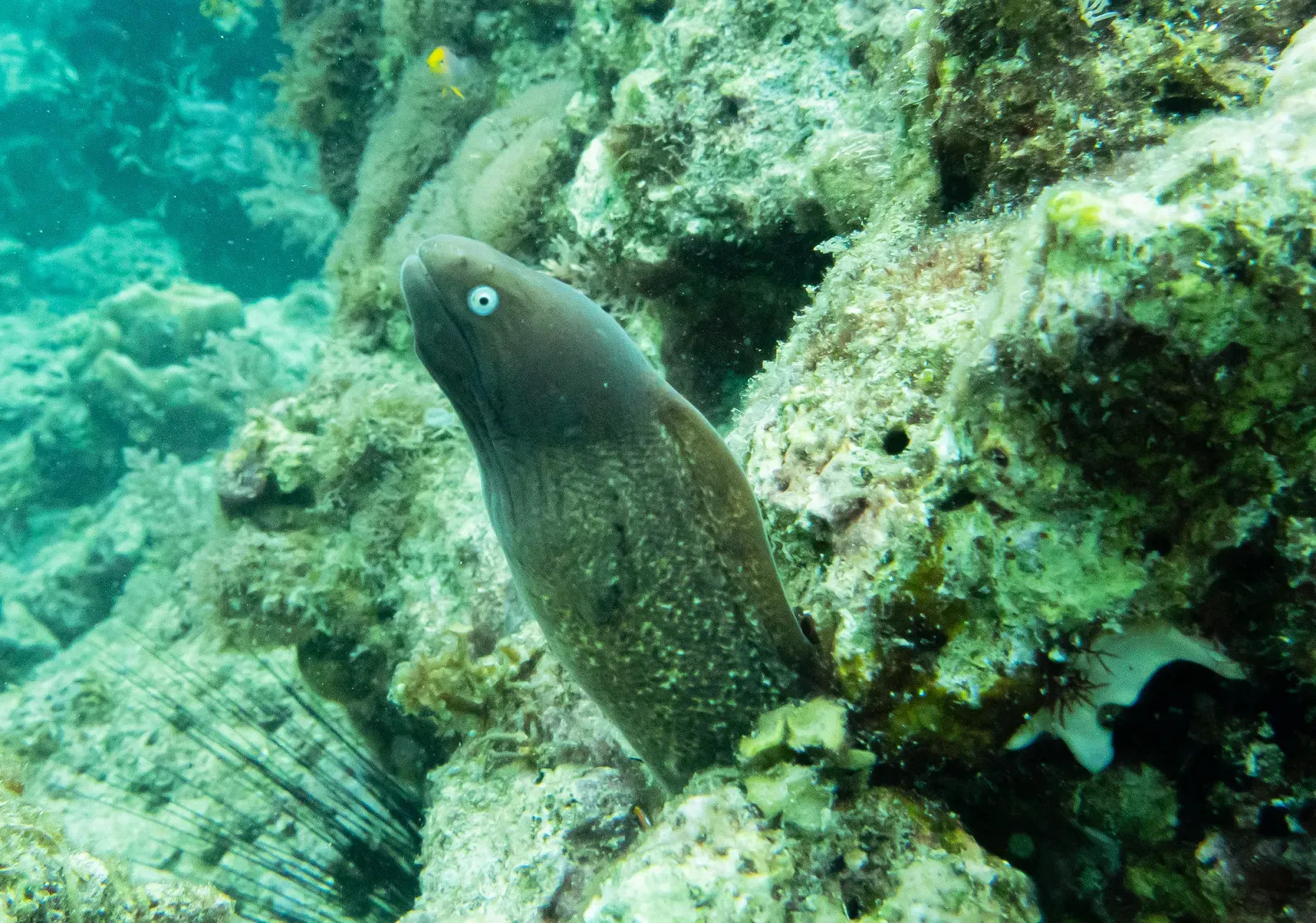
A limestone wall the length of the coast, dived by almost nobody

.jpg)
.jpeg)


Black-sand shore muck with mandarinfish spawning at dusk