Barkley Sound is a wide bay of islands, coves and inlets on the west coast of Vancouver Island, its western Broken Group part of Pacific Rim National Park. Every dive starts from a boat, on pinnacles, walls and wrecks such as Kyen Point, Seddall Wall and the Vanlene, with most dives between 9 and 30 m (100 ft). The draw is cold, invertebrate-covered rock with wolf eels, octopuses and sea lions.
About diving in Barkley Sound
Short of a floatplane, every site in the Sound is reached by boat. Charters run day trips into the Sound from Bamfield, and lodge guests usually stay two to seven days and make two to three dives a day. Around the Broken Group, unpredictable currents mean a boat tender covers every dive. Sites closer to the mouth of the Sound can carry surge, though strong currents are rare at most spots.
Underwater the Sound is a maze of seamounts, pinnacles and walls, with thick kelp beds in the sheltered shallows. Rockfish, salmon, herring, squid, giant octopuses, seals and sea lions are permanent residents, wolf eels are regular, and the Vanlene and Thiepval wrecks add steel to the rock. Sitting on the doorstep of the open Pacific, the Sound holds life subtly different from other British Columbia dive areas.
The Sound suits divers comfortable in a drysuit, semidry or full 7 mm wetsuit in cold water. Sites range from relatively easy ones for newer divers to demanding dives for experienced, advanced divers, and there is no need to go below 30 m (100 ft). Divers who want warm water, shore entries or reliably clear water every month should look elsewhere: visibility swings between 3 and 18 m (10 and 60 ft) by site and season.
Best time to dive Barkley Sound
| Jan | Feb | Mar | Apr | May | Jun | Jul | Aug | Sep | Oct | Nov | Dec |
|---|---|---|---|---|---|---|---|---|---|---|---|
| Good | Good | Good | Good | Good | Fair | Good | Good | Prime | Prime | Good | Good |
Barkley Sound is a year-round destination: its islands, coves and inlets give shelter from winter storms, and winter brings the best visibility, at 30 m (100 ft) and more, in water of 8–10 °C (48–50 °F). In June algae blooms can cut visibility in the top layer to 10 m (30 ft), though it usually stays good below 12 m (40 ft). Summer warms the top 20 m (66 ft) to around 19 °C (70 °F). Autumn, before the winter storms, is the prime time to dive the Sound.
Dive types & marine life
Wolf eels and octopuses are seen consistently at Renate Reef, Kyen Point and Mahk Reef. Sixgill sharks turn up occasionally, one at Tyler Rock. Bull sea lions can behave aggressively, especially while defending harems in the mating season, and close approaches are best avoided.
- Wall
- Wreck
- Seals & sea lions
- Octopus & cuttlefish
- Macro critters
Best dive sites in Barkley Sound
- 1
Tyler Rock
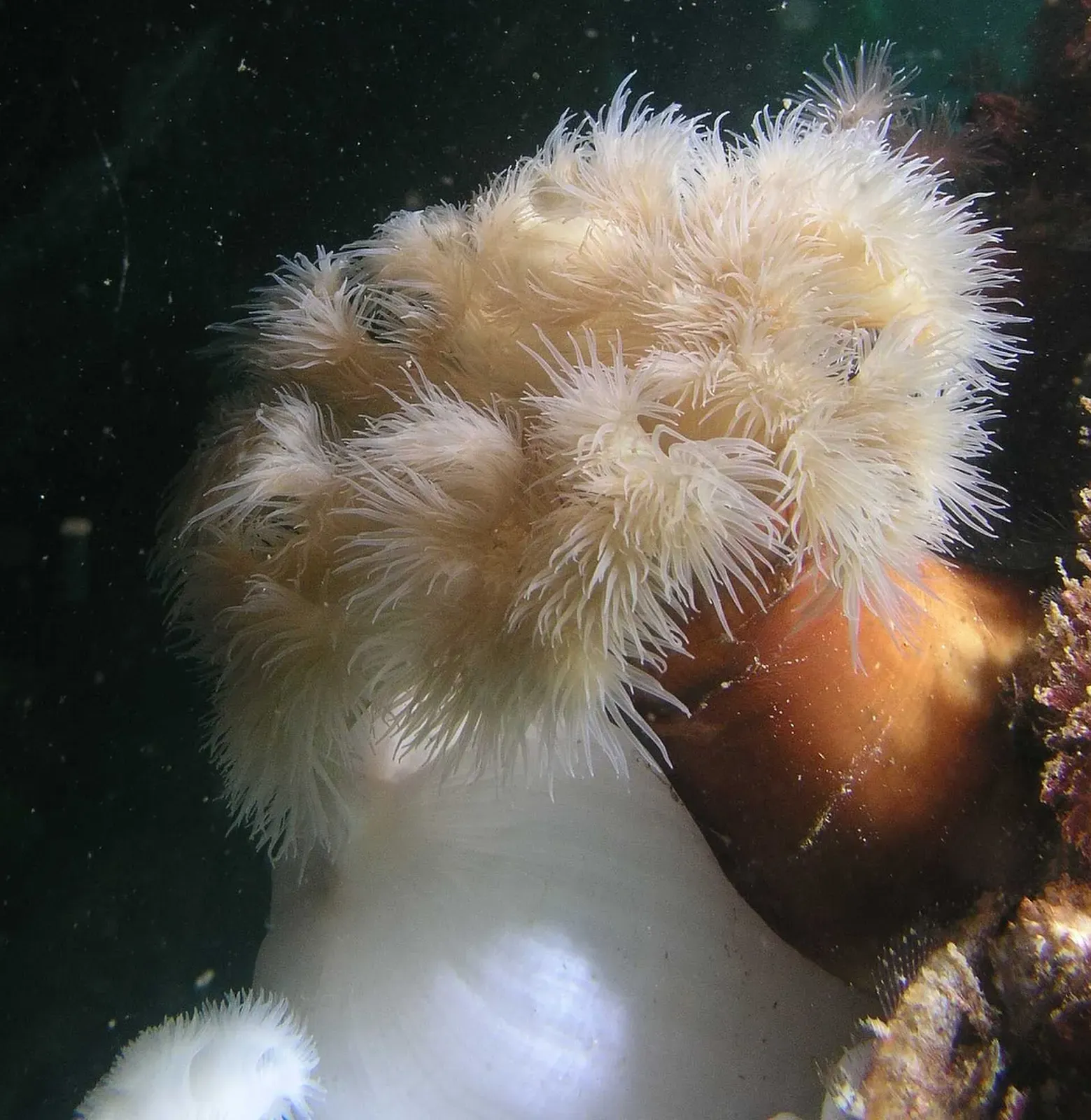
Classic site in the far eastern Sound, with a canyon carpeted in white plumose anemones.
- 2
Seddall Wall
Wall frequented by mosshead and decorated warbonnets.
- 3
MV Vanlene
Steel motor vessel wrecked off Austin Island, lying in two sections at 9–40 m.
- 4
Plumose Gardens
Steep rock walls off Gibraltar Island, clothed in huge mussels and plumose anemones.
- 5
Pinnacle Rock
Exposed rock pillars and a canyon to 28 m, dived only in certain sea conditions.
- 6
Kyen Point
Two pinnacles split by a sand channel, with a large wall of strawberry anemones.
- 7
Chup Point
Critter-rich shallow reef in the far eastern Sound, a favourite with macro photographers.
- 8
Renate Reef
Flat-topped pinnacle with dense invertebrate life and plenty of fish.
Site guides
Pinnacle
Twin pinnacles crowded with anemones, nudibranchs and sea pens
Wreck
A 1950 Japanese-built freighter broken in two on the Austin Island reef
Pinnacle
Rock pillars and a great canyon cut into the outer Broken Group
Wall
Short cliffs off Gibraltar Island over a steep shell-sand slope
Reef
A shallow circuit around a sheltered Broken Group islet
Reef
A canyon lined top to bottom with giant white plumose anemones
How to get to Barkley Sound
Most divers start in Nanaimo and drive an hour west to Port Alberni. A ferry runs down Alberni Inlet to Bamfield three times weekly, on Tuesday, Thursday and Saturday, and from May 1 to September 30 seaplanes fly to Bamfield from Vancouver (45 minutes) and Port Alberni (15 minutes).
Photos from Barkley Sound
Roy Luck · CC BY 2.0
Roy Luck · CC BY 2.0
Dive videos
Barkley Sound Scuba Diving - June 2018 · Cold Water Films on YouTube
Diving in the Barkley Sound, Canada · DuikeninBeeld on YouTube
Questions divers ask
When is the best time to dive Barkley Sound?+
Autumn, before the winter storms. The Sound is dived all year, winter gives the clearest water at 30 m (100 ft) and more, and a June algae bloom can cut visibility near the surface.
How do divers get to Barkley Sound?+
Most drive from Nanaimo to Port Alberni, about an hour west, then take the Alberni Inlet ferry to Bamfield on Tuesday, Thursday or Saturday. Seaplanes fly from Vancouver and Port Alberni from May 1 to September 30.
Is Barkley Sound diving shore or boat?+
Boat. Short of a floatplane, every site is reached by boat, and around the Broken Group unpredictable currents mean a boat tender covers every dive.
What exposure protection does Barkley Sound need?+
A drysuit, semidry or full 7 mm wetsuit. The water is 8–10 °C (48–50 °F) in winter and around 19 °C (70 °F) in the top 20 m (66 ft) in summer.
Sources
- Barkley Sound Diving — Rendezvous Dive Adventures
- Pacific Rim National Park: Diving — VancouverIsland.com
- Emerald in the Rough — Scuba Diving
- Scuba Charters — Emerald Ocean Charters
- MV Vanlene — Historic Places
- Bamfield — Wikivoyage
Photo credits
- Brown kelp fronds below clear blue water in front of a rocky islet, with forested islands behind by Roy Luck, CC BY 2.0, via Wikimedia Commons
- Low rocky islets topped with conifers in calm grey water, with cloud-capped mountains behind by Roy Luck, CC BY 2.0, via Wikimedia Commons
Embed
Run a dive centre, club or blog? Embed this map of 5 dive sites near Barkley Sound on your own page.
Similar destinations

Sweden's only cold-water coral reefs, inside its first marine national park
England's first marine reserve, and its grey seals follow divers around
Cold-water walls, wrecks and wolf eels in Puget Sound and Hood Canal

.jpg)
.jpg)
The Rondo stands almost vertical, stern at 15 m and bow at 50