Eastern Pacific · Panama
Coiba
Humpback whale song carries underwater during the mid-year migration season
Photo: laszlo-photo · CC BY 2.0
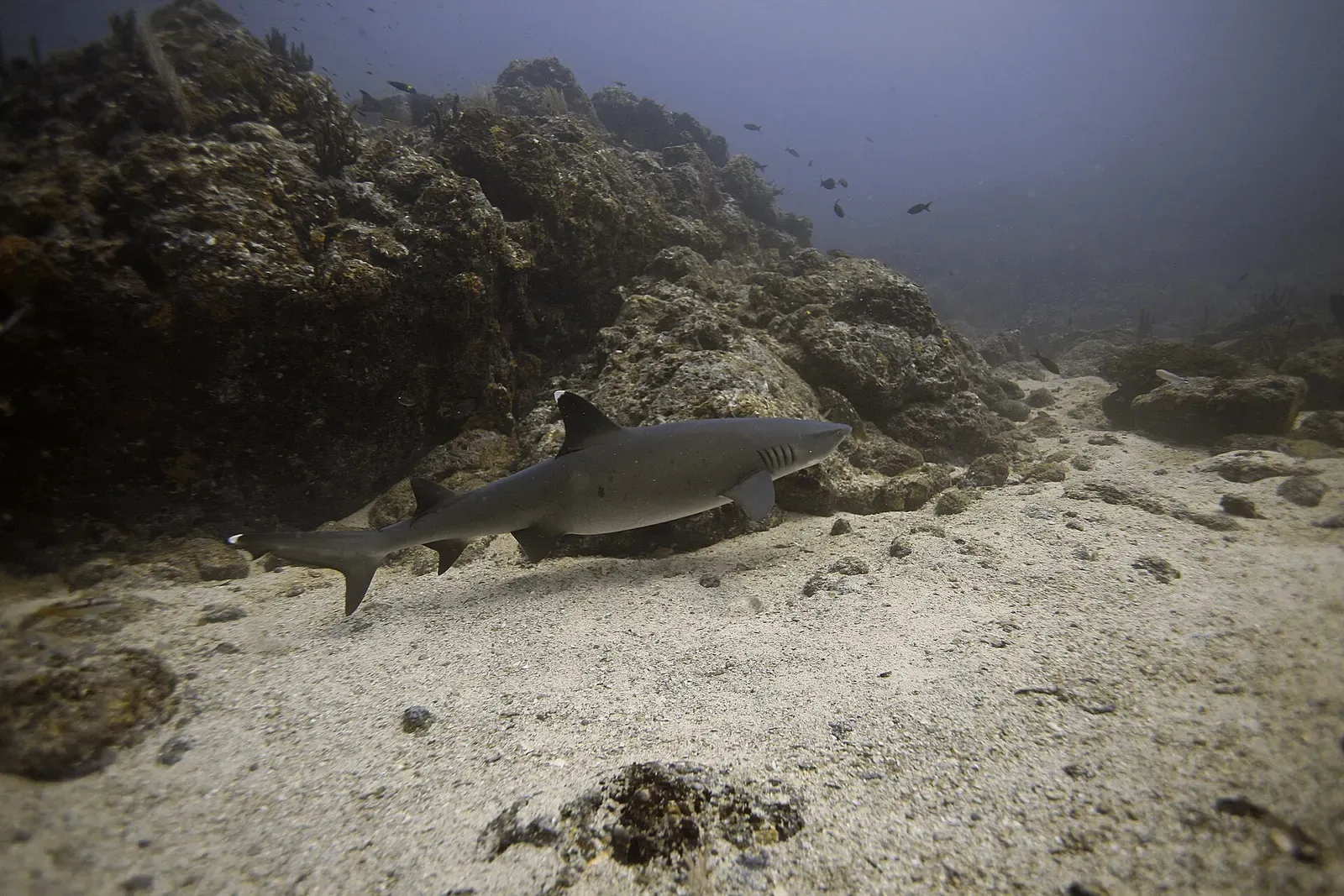
Coiba National Park protects the largest island in the Eastern Tropical Pacific and its surrounding reefs off Panama's Pacific coast, a UNESCO World Heritage site reached by boat from Santa Catalina. Whitetip reef sharks rest in numbers on sandy patches at sites like Wahoo Rock and Islas Contreras, whale sharks pass through in the early months of the year, and humpback whales migrate through mid-year, sometimes audible underwater. Shallow coral gardens such as Granito de Oro suit newer divers, while the outer seamounts demand current experience.
About diving in Coiba
Diving here is a day out of Santa Catalina, a small surf town at the end of a long road, and the boat ride is a real part of it — an hour or more each way in an open panga over water that can be flat or genuinely bouncy. Trips are usually two tanks with the surface interval spent ashore on a beach inside the park, so the day runs long even though the diving itself is undemanding. A handful of liveaboards work the same waters and the banks further offshore on longer schedules.
Sites divide by how far out they sit. Close in, around the main island and its islets, the ground is rock and hard coral in reasonably sheltered water, shallow enough to make a long, slow dive of it. Further out the rocks are bare, exposed and current-driven, and those dives are shorter, deeper and about whatever turns up out of the blue. Clarity varies a lot — this is a productive, plankton-fed stretch of the Pacific, and a cold layer can slide in mid-dive and take both the temperature and the view down with it.
That mix makes Coiba unusual for this coast. Most of the big-animal diving in the Eastern Tropical Pacific costs a multi-day ocean crossing; here it comes on a day trip, and what you trade for the convenience is consistency rather than scale. The format has its own limits — when the swell is up, the outer rocks are the first thing dropped from the plan and the day retreats inshore. Park fees are collected at the ranger station and are normally folded into the trip price.
What Coiba does not do is guarantee. The whale sharks, the hammerheads and the humpbacks are passing traffic rather than residents, and a week inside the right window can go by without producing any of them. The dependable part is what lives here: reef sharks, turtles and fish schools thick enough to close down the view. It is also a sensible place to log current dives before committing to one of the region's long offshore trips, where that experience is assumed rather than taught.
Best time to dive Coiba
| Jan | Feb | Mar | Apr | May | Jun | Jul | Aug | Sep | Oct | Nov | Dec | |
|---|---|---|---|---|---|---|---|---|---|---|---|---|
| Season | Prime | Prime | Prime | Good | Fair | Good | Good | Good | Good | Good | Fair | Good |
| Sea surface | 29°C84°F | 29°C84°F | 29°C84°F | 29°C84°F | 29°C84°F | 29°C84°F | 29°C84°F | 29°C84°F | 28°C82°F | 28°C82°F | 28°C82°F | 29°C84°F |
| Daytime high | 31°C88°F | 32°C90°F | 32°C90°F | 32°C90°F | 31°C88°F | 29°C84°F | 30°C86°F | 29°C84°F | 29°C84°F | 28°C82°F | 29°C84°F | 30°C86°F |
| Rain | 45 mm1.8 in | 19 mm0.7 in | 28 mm1.1 in | 185 mm7.3 in | 341 mm13.4 in | 345 mm13.6 in | 403 mm15.9 in | 419 mm16.5 in | 371 mm14.6 in | 414 mm16.3 in | 369 mm14.5 in | 170 mm6.7 in |
| Jan | Feb | Mar | Apr | May | Jun |
|---|---|---|---|---|---|
| Prime | Prime | Prime | Good | Fair | Good |
| Sea surface | |||||
| 29°C84°F | 29°C84°F | 29°C84°F | 29°C84°F | 29°C84°F | 29°C84°F |
| Daytime high | |||||
| 31°C88°F | 32°C90°F | 32°C90°F | 32°C90°F | 31°C88°F | 29°C84°F |
| Rain | |||||
| 45 mm1.8 in | 19 mm0.7 in | 28 mm1.1 in | 185 mm7.3 in | 341 mm13.4 in | 345 mm13.6 in |
| Jul | Aug | Sep | Oct | Nov | Dec |
|---|---|---|---|---|---|
| Good | Good | Good | Good | Fair | Good |
| Sea surface | |||||
| 29°C84°F | 29°C84°F | 28°C82°F | 28°C82°F | 28°C82°F | 29°C84°F |
| Daytime high | |||||
| 30°C86°F | 29°C84°F | 29°C84°F | 28°C82°F | 29°C84°F | 30°C86°F |
| Rain | |||||
| 403 mm15.9 in | 419 mm16.5 in | 371 mm14.6 in | 414 mm16.3 in | 369 mm14.5 in | 170 mm6.7 in |
2011–2025 averages. Sea surface: NOAA Coral Reef Watch, measured at the surface, so deeper water can run colder. Daytime high and rain: NASA POWER.
Jan-Mar's dry season brings the clearest water alongside whale sharks; humpback whales pass through Jun-Oct during the wetter season, with a quieter gap in Nov.
Best months: January, February, March
Coiba water temperature and weather by month
The sea surface stays between 28 and 29 °C (82–84 °F) all year. Most rain falls from May to November, peaking at about 420 mm (17 in) in August; January to March are the driest. Daytime highs reach 32 °C (90 °F) in March and drop to 28 °C (82 °F) in October. Below the surface the water can drop to about 20 °C (68 °F), so pack a 5 mm suit.
Dive types & marine life
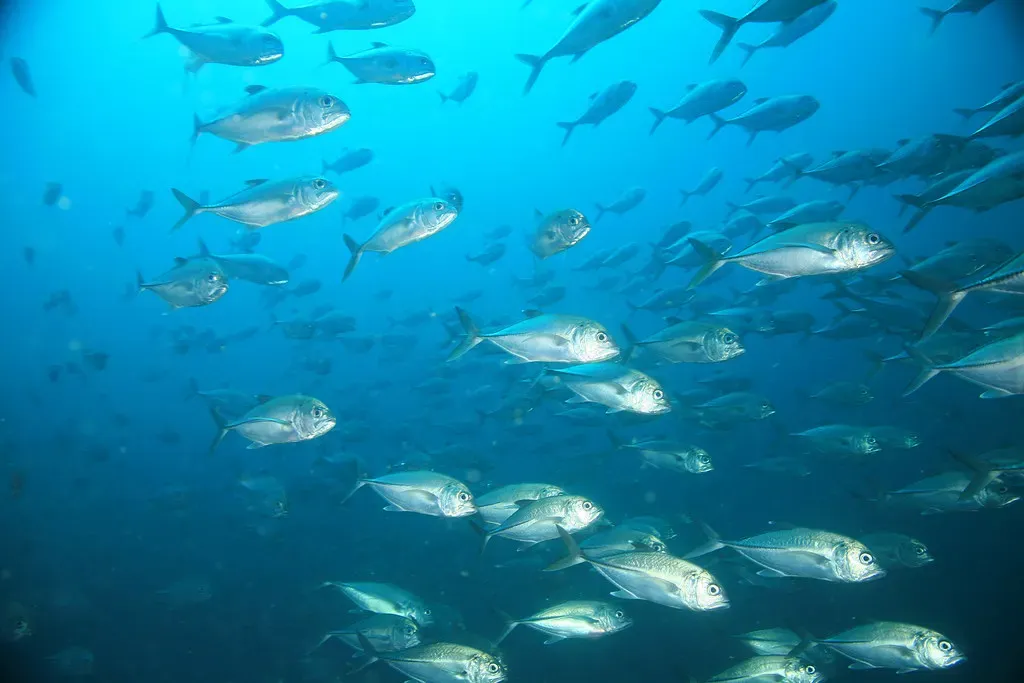
Turtles over the shallow coral, schools of jacks and snapper, and reef sharks on most dives are the year-round baseline, with mobula and eagle rays passing through. Whale sharks are likeliest in the clear January-to-March window, humpbacks move through from June to October, and hammerheads are an outer-pinnacle prospect rather than an inshore one.
- Reef
- Coral garden
- Drift
- Pelagic & blue water
- Reef sharks
- Whale sharks
- Whales
- Hammerheads
- Mobula rays
- Eagle rays
- Sea turtles
- Dolphins
- Reef fish swarms
Best dive sites in Coiba
A canyon and swim-through back to the island from 30 m
Reef
Calm 22 m reef with frogfish, sea snakes and passing mantas
Wahoo Rock
Exposed seamount with strong current and big pelagic encounters
Roca Viuda
Rocky pinnacle around 20 m deep with reef sharks and schooling fish
Islas Contreras
Deep offshore pinnacles for hammerheads and manta rays in strong current
Granito de Oro
Shallow coral garden with turtles and huge reef fish schools
Punta Peligro
Sharky reef known for abundant sharks and large fish schools
How to get to Coiba
Most divers fly into Panama City and travel overland to Santa Catalina, the usual base — roughly six hours by road via Santiago and Soná, with the shops and boats concentrated in the village. Boca Chica, reached from David, gives a second approach along the Gulf of Chiriquí. Everything in the park is boat access.
Photos from Coiba
Alex Proimos · CC BY 2.0
laszlo-photo · CC BY 2.0
Dronepicr · CC BY 3.0
laszlo-photo · CC BY 2.0
Dive videos
9 Incredible Dives in Coiba National Park (Panama’s Hidden Gem) · Divemaster Austin on YouTube
Photo credits
- Forested islets rise from a turquoise bay inside Coiba National Park, Panama. by Alex Proimos, CC BY 2.0, via Wikimedia Commons
- A dense school of jacks swirls together in blue water off Coiba. by laszlo-photo, CC BY 2.0, via Openverse
- Striped yellow and blue snapper pack tightly together over a rocky reef. by laszlo-photo, CC BY 2.0, via Openverse
- Several whitetip reef sharks glide low over a sandy bottom studded with boulders. by Dronepicr, CC BY 3.0, via Wikimedia Commons
- A spotted round stingray rests on the sand beside a coral-covered rock. by laszlo-photo, CC BY 2.0, via Openverse
In The Logbook
- When and where to dive with hammerheadsBig animals · 16 min read
Similar destinations

Hundreds of whitetip reef sharks pile up in the shallows at El Remolino

Hannibal Bank rises from 400 m and pulls in billfish and tuna

Hundreds of scalloped hammerheads overhead on the Bajo Alcyone seamount

_(8371374375).jpg)

Schooling hammerheads over the rocky walls and slopes of Wolf and Darwin