
Eastern Pacific · Costa Rica
Cocos Island
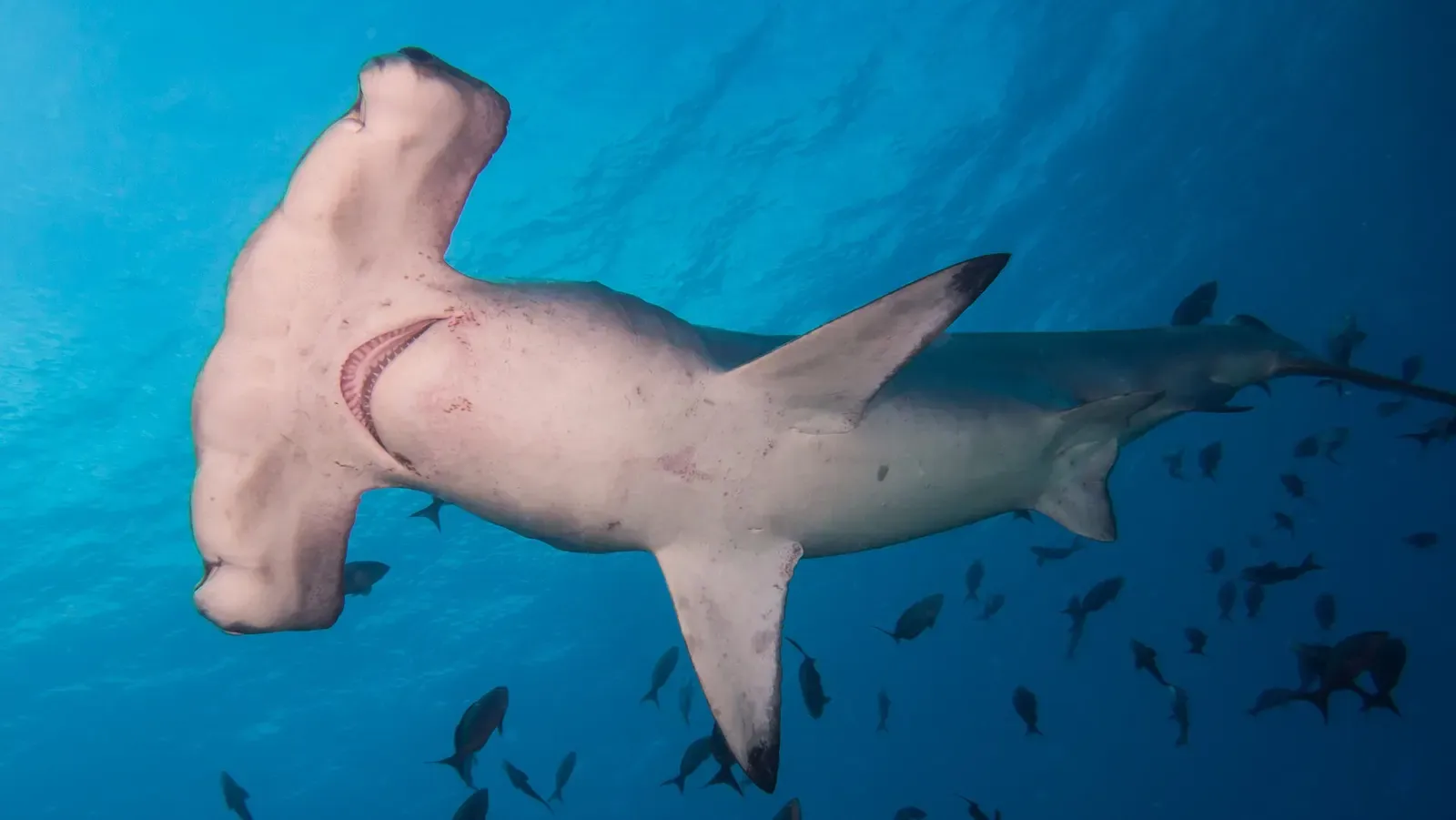
Hundreds of scalloped hammerheads overhead on the Bajo Alcyone seamount
Photo: Barry Peters · CC BY 2.0
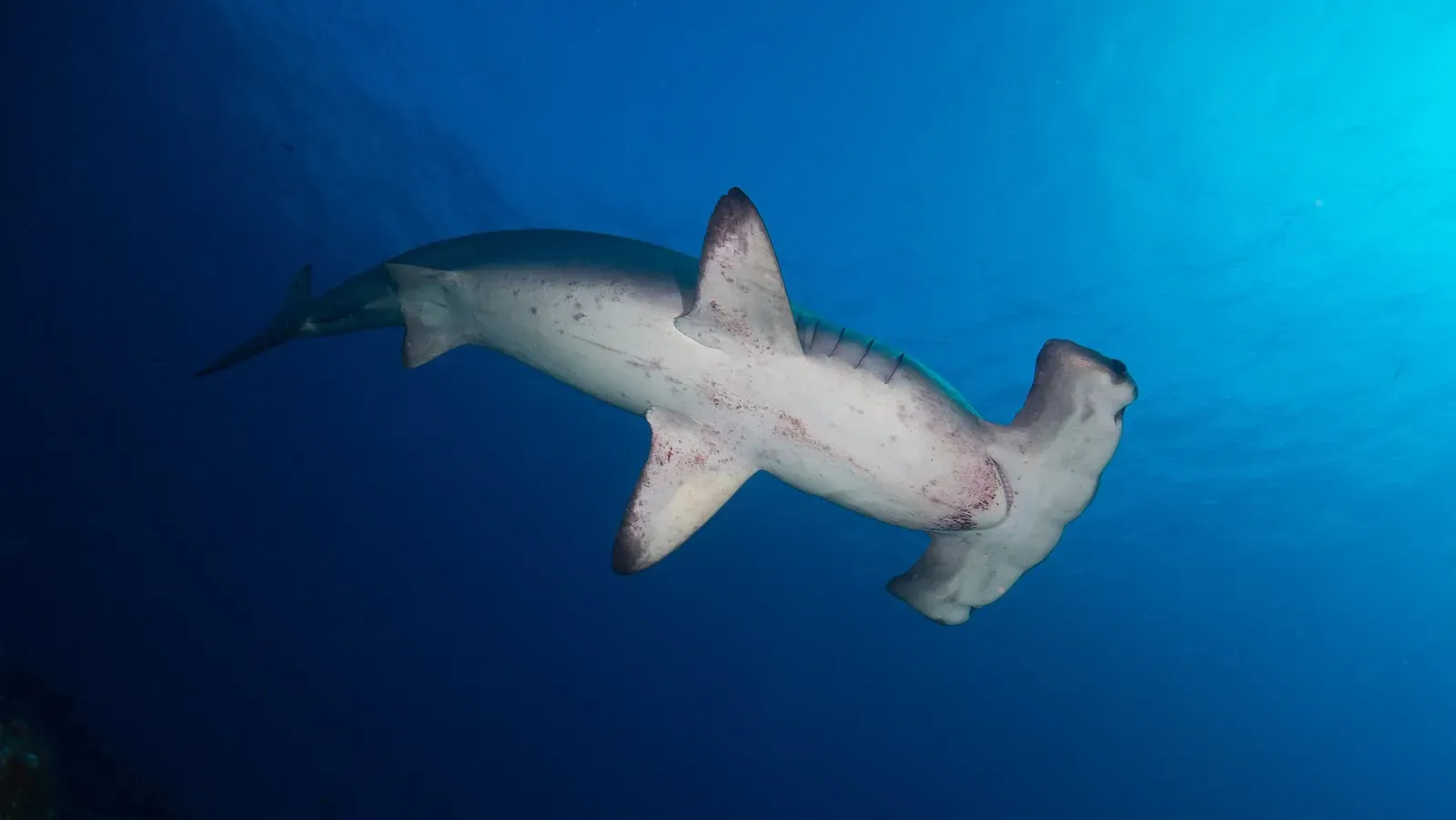
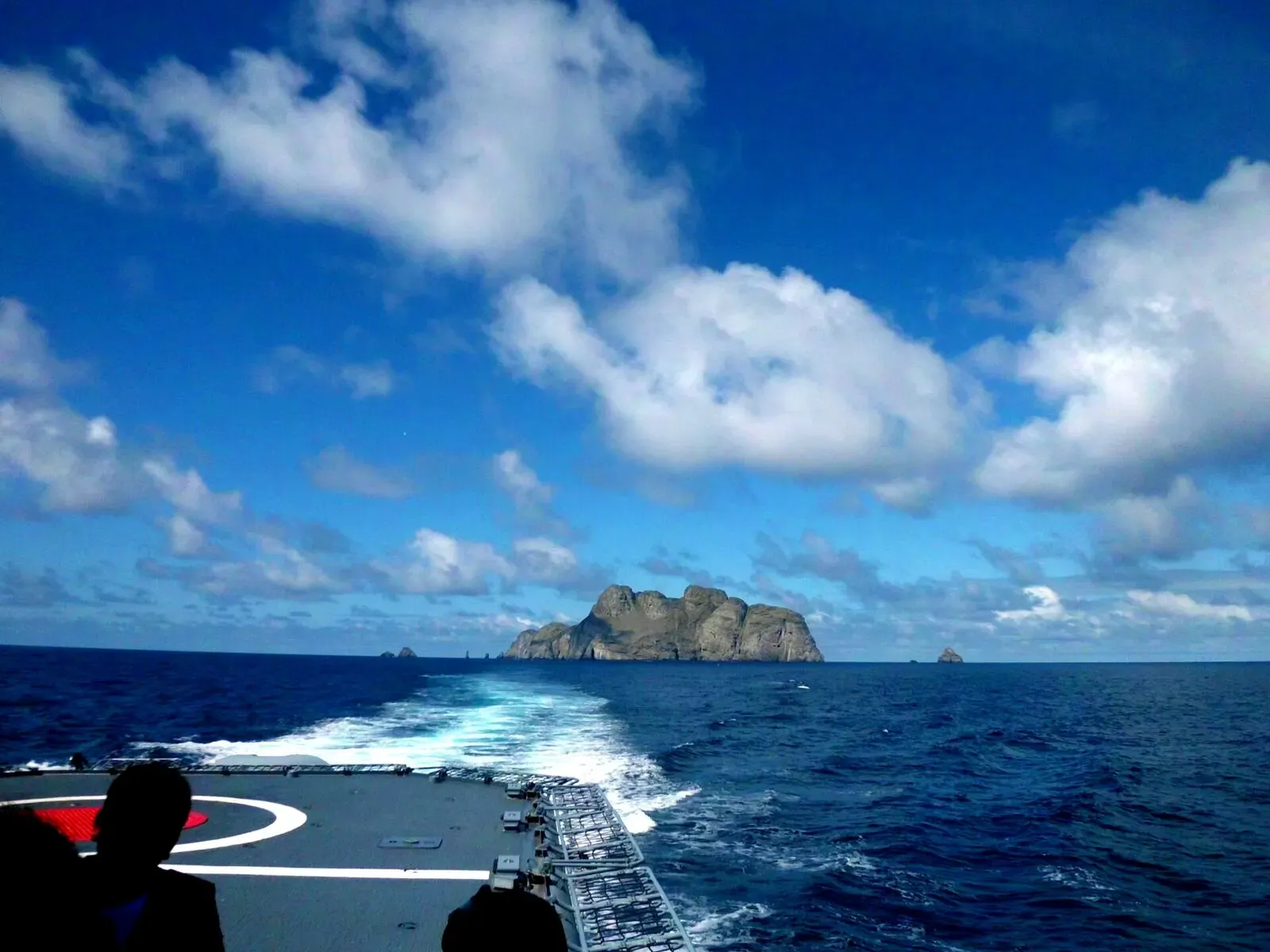
Cocos Island rises alone in the open Pacific far off Costa Rica, a national park and UNESCO World Heritage Site that divers reach only by liveaboard. Scalloped hammerheads are its fame: hundreds hang over the seamount at Bajo Alcyone, and schools work the boulders at Dirty Rock. Tiger sharks, whitetip reef sharks, mantas and whale sharks share the same water, and the open-ocean setting brings current and surge that test experienced divers.
About diving in Cocos Island
Every trip sails from Puntarenas on Costa Rica's Pacific coast, and the crossing covers 300 nautical miles of open ocean, about 36 hours one way when the waves, tides and currents allow. The liveaboard is the base for the whole trip, and around 20 sites lie close together around the island. Most boats plan at least one dive a day at one of the three sites around the small Manuelita Island. Descents and ascents are made in open water in current, except at two sites with mooring lines, and most dives end drifting into the blue with the guide and group.
The sites range from shallow but steep vertical walls to deep pinnacles that drop past 40 m (130 ft), with drift dives and dives out in the blue. On the submerged mountain at Bajo Alcyone, manta and mobula rays swirl into the cleaning stations while hammerheads descend below the thermocline. Bigeye and cottonmouth jacks gather in huge schools at some sites, giant trevally hunt the reef slopes and walls, and tuna and blacktip sharks swerve around the boulders at Dirty Rock. Marble and eagle rays are regulars, and green and hawksbill turtles visit.
Cocos is not a place for inexperienced divers. Much of the diving can be easy, but on some days the open-ocean currents, wave action and surge test even experienced divers, especially in the summer rains, and the current can run very strong in mid-channel at Manuelita. Good buoyancy control matters most, and deploying a surface marker buoy is a necessary skill. It suits divers who are comfortable in current and at depth and who come for the big shark encounters.
Best time to dive Cocos Island
| Jan | Feb | Mar | Apr | May | Jun | Jul | Aug | Sep | Oct | Nov | Dec | |
|---|---|---|---|---|---|---|---|---|---|---|---|---|
| Season | Good | Good | Good | Good | Good | Prime | Prime | Prime | Prime | Prime | Good | Good |
| Sea surface | 28°C82°F | 29°C84°F | 30°C86°F | 30°C86°F | 29°C84°F | 28°C82°F | 28°C82°F | 28°C82°F | 28°C82°F | 27°C81°F | 27°C81°F | 27°C81°F |
| Daytime high | 28°C82°F | 29°C84°F | 29°C84°F | 29°C84°F | 29°C84°F | 28°C82°F | 28°C82°F | 28°C82°F | 27°C81°F | 27°C81°F | 27°C81°F | 28°C82°F |
| Rain | 174 mm6.9 in | 118 mm4.6 in | 155 mm6.1 in | 285 mm11.2 in | 346 mm13.6 in | 295 mm11.6 in | 328 mm12.9 in | 286 mm11.3 in | 226 mm8.9 in | 189 mm7.4 in | 163 mm6.4 in | 184 mm7.2 in |
| Jan | Feb | Mar | Apr | May | Jun |
|---|---|---|---|---|---|
| Good | Good | Good | Good | Good | Prime |
| Sea surface | |||||
| 28°C82°F | 29°C84°F | 30°C86°F | 30°C86°F | 29°C84°F | 28°C82°F |
| Daytime high | |||||
| 28°C82°F | 29°C84°F | 29°C84°F | 29°C84°F | 29°C84°F | 28°C82°F |
| Rain | |||||
| 174 mm6.9 in | 118 mm4.6 in | 155 mm6.1 in | 285 mm11.2 in | 346 mm13.6 in | 295 mm11.6 in |
| Jul | Aug | Sep | Oct | Nov | Dec |
|---|---|---|---|---|---|
| Prime | Prime | Prime | Prime | Good | Good |
| Sea surface | |||||
| 28°C82°F | 28°C82°F | 28°C82°F | 27°C81°F | 27°C81°F | 27°C81°F |
| Daytime high | |||||
| 28°C82°F | 28°C82°F | 27°C81°F | 27°C81°F | 27°C81°F | 28°C82°F |
| Rain | |||||
| 328 mm12.9 in | 286 mm11.3 in | 226 mm8.9 in | 189 mm7.4 in | 163 mm6.4 in | 184 mm7.2 in |
2011–2025 averages. Sea surface: NOAA Coral Reef Watch, measured at the surface, so deeper water can run colder. Daytime high and rain: NASA POWER.
Diving is good all year at Cocos, and the year splits into two seasons. The dry season runs from December to May, with calmer seas and visibility that typically passes 30 m. The rains set in from June and last through December, and the nutrient upwellings they bring draw manta rays and whale sharks. From June through October the rainy season also brings the showpiece schools of scalloped hammerheads, and many divers prefer the wet months despite the rougher surface.
Best months: June, July, August, September, October
Cocos Island water temperature and weather by month
The sea surface runs from 27 °C (81 °F) in November to 30 °C (86 °F) in March. Most rain falls from April to August, peaking at about 350 mm (14 in) in May; February is the driest. Daytime highs sit around 28 °C (82 °F) all year. Below the surface the water can drop to about 23 °C (73 °F), so pack a 5 mm suit.
Dive types & marine life
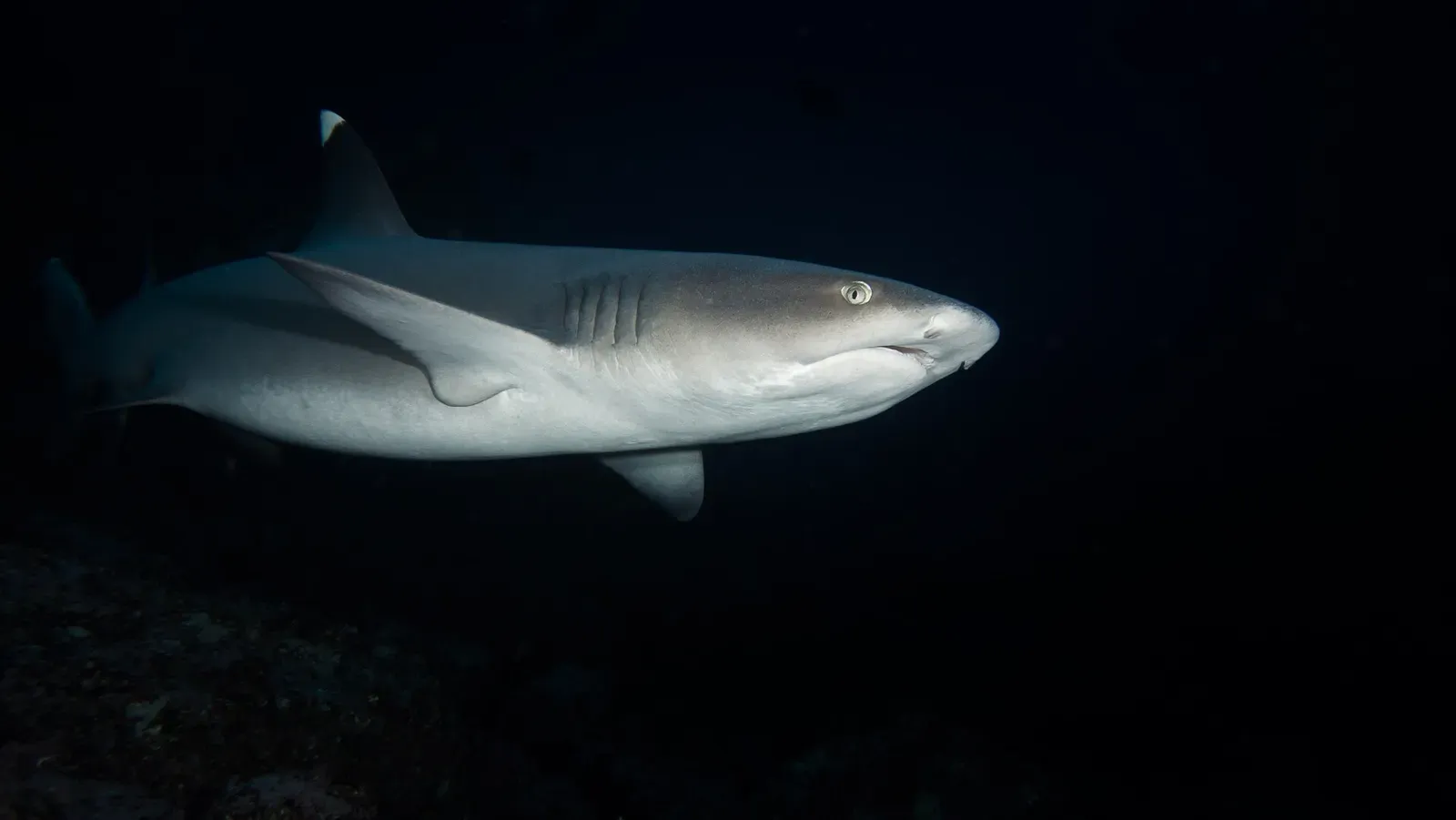
Scalloped hammerheads are seen in large numbers most of the year, in hundreds over Bajo Alcyone and in schools at Dirty Rock, where bottlenose dolphins also feed. Manta, eagle and marble rays visit regularly with green and hawksbill turtles, whale sharks are frequent visitors, tiger sharks call often at Dos Amigos Grande, and whitetip reef sharks rest on the bottom by day at Manuelita.
- Pelagic & blue water
- Seamount
- Wall
- Drift
- Hammerheads
- Whale sharks
- Tiger sharks
- Reef sharks
- Manta rays
- Eagle rays
- Stingrays
- Trevally & jacks
- Tuna
- Dolphins
- Sea turtles
Best dive sites in Cocos Island
- 1
Bajo Alcyone
Submerged seamount whose high points lie near 27 m (90 ft), with hammerheads by the hundred
- 2
Dirty Rock
Boulders and pinnacles around a sheltered channel, with schooling hammerheads and feeding dolphins
- 3
Dos Amigos Grande
The larger of the two rocks, with a large arch in its southwest corner and visiting tiger sharks
- 4
Punta Maria
Underwater mountain off the southwest coast, never shallower than 18-20 m (60-65 ft)
- 5
Manuelita
Islet off Chatham Bay whose protected east side holds a coral garden, one of the few coral reef dives
Site guides
Wedge into a crevice at 25 m and wait for the hammerheads
Hammerheads and marble rays swim right up to you at 20-25 m
An arch wide enough for the whole group, with hammerheads coming through
Reef
Whitetips hunt the coral garden by torchlight
Galapagos sharks over a crown with no shallow water anywhere
How to get to Cocos Island
International flights land at Juan Santamaría International Airport (SJO) in San José. The dive vessels arrange the road transfer from San José to Puntarenas, the port town on the western coast, with pickup and drop-off at several hotels in the area, and the liveaboards sail from there.
Photos from Cocos Island
Kris Mikael Krister · CC BY 3.0
Kris Mikael Krister · CC BY 3.0
Kris Mikael Krister · CC BY 3.0
Kris Mikael Krister · CC BY 3.0
Dive videos
Diving Cocos Island in 2025... (Shot in 8K) · Dive Hard on YouTube
Night of the Hunting Sharks! | JONATHAN BIRD'S BLUE WORLD · BlueWorldTV on YouTube
Questions divers ask
Can Cocos Island be dived without a liveaboard?+
No. Diving at Cocos is only possible aboard the Costa Rican liveaboards that sail from Puntarenas, about 36 hours away.
How is diving managed in Cocos Island National Park?+
The park headquarters in Chatham Bay schedules every dive so that each site holds only one group at a time, and every divemaster must have park service authorization.
How long has Cocos Island been protected?+
It became a Costa Rican national park in 1978, a UNESCO World Heritage Site in 1997 and a Ramsar wetland for its seabirds in 1998.
Sources
- Your best guide to Cocos Island scuba diving, Costa Rica: Schooling hammerhead sharks and more — Dive The World
- Cocos Island — Divers Alert Network
- Scuba dive amongst sharks in the waters of Cocos Island, Costa Rica — Aggressor Adventures
Photo credits
- A scalloped hammerhead shark swims through a school of fish over the reef at Cocos Island. by Barry Peters, CC BY 2.0, via Wikimedia Commons
- A tiger shark glides over the reef in open blue water off Cocos Island. by Kris Mikael Krister, CC BY 3.0, via Wikimedia Commons
- A group of whitetip reef sharks rests together in a rocky crevice at night. by Kris Mikael Krister, CC BY 3.0, via Wikimedia Commons
- A round ribbontail ray rests on the rocky bottom near Cocos Island. by Kris Mikael Krister, CC BY 3.0, via Wikimedia Commons
- A chestnut moray eel opens its jaws from a rocky crevice with orange fish behind it. by Kris Mikael Krister, CC BY 3.0, via Wikimedia Commons
Embed
Run a dive centre, club or blog? Embed this map of 4 dive sites near Cocos Island on your own page.
In The Logbook
- Where to see reef sharks on your first divesBig animals · 14 min read
- Where to dive in every month of the yearTrip planning · 14 min read
- What is decompression sickness (the bends)?Body & health · 18 min read
- Night diving: the best night dives in the worldNight diving · 12 min read
- How long to wait before flying after divingBody & health · 8 min read
- Why your ears hurt diving, and how to stop itBody & health · 8 min read
- Air, nitrox or trimix: which gas, and when?Gear & kit · 15 min read
- When and where to dive with hammerheadsBig animals · 16 min read
- Liveaboard vs resort diving: which suits you?Trip planning · 6 min read
Similar destinations
Hammerhead schools of 200-plus circle La Nevera's cold-water cleaning station

Hannibal Bank rises from 400 m and pulls in billfish and tuna


.jpeg)
.jpeg)
.jpeg)
.jpeg)
Schooling hammerheads over the rocky walls and slopes of Wolf and Darwin
Eastern Pacific
Bat Islands
Costa Rica
Bull sharks cruise past divers settled on the bottom at the Big Scare