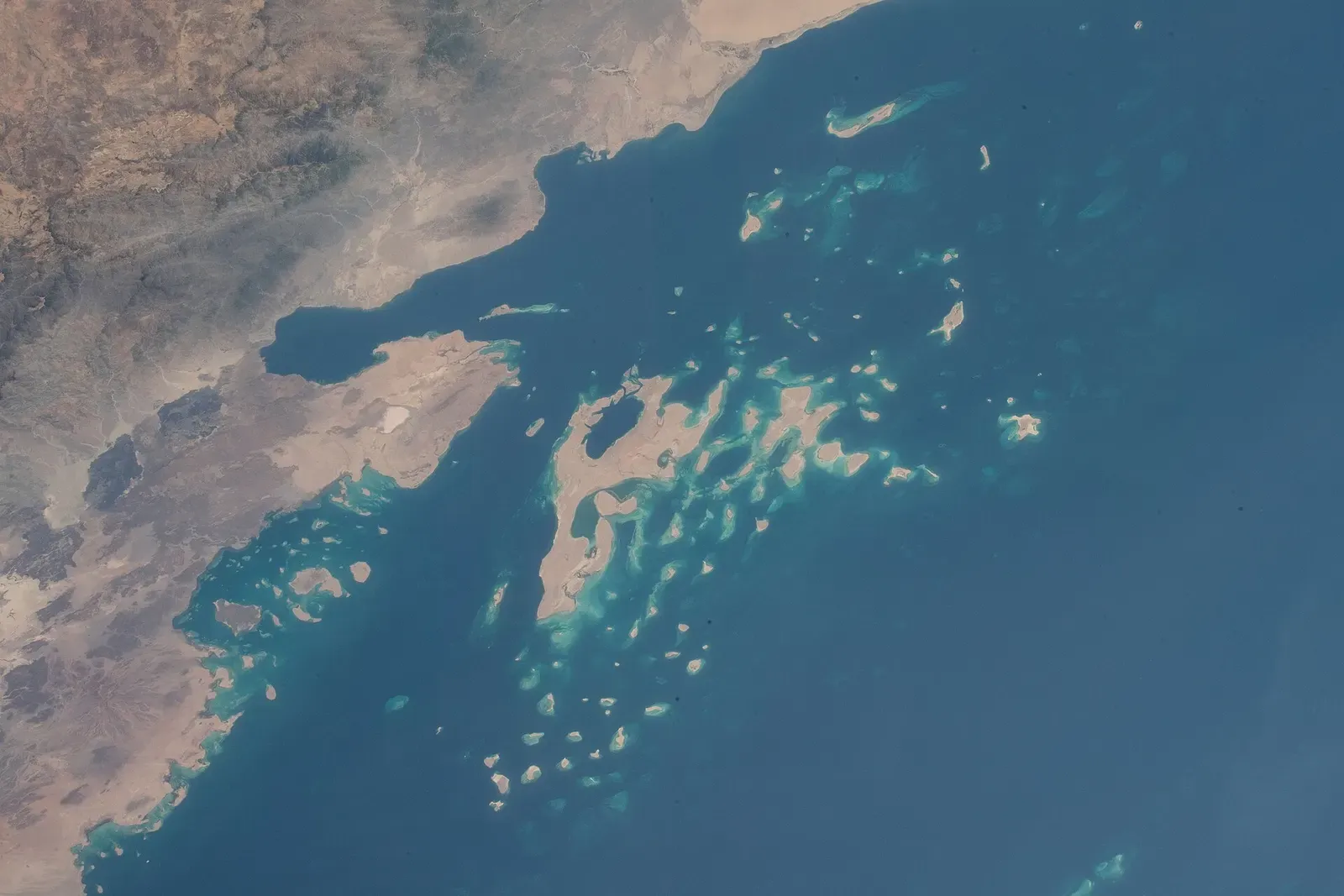
Dahlak Archipelago · Eritrea · Reef
Dissei Island
Granite underwater landscape, unlike the rest of the Red Sea
Area photo: Earth Science and Remote Sensing Unit, Lyndon B. Johnson Space Center · Public domain
An island reef in the Dahlak Archipelago, sitting in water that is often cloudy because of the large presence of plankton. Coral growth is maintained down to about 30 m, and the seabed below is rich in life, with migratory fish moving through the area. Much of the underwater landscape is granite, which sets it apart from the coral architecture found elsewhere in the Red Sea.
Also known as Seil Rock.
Where it is and how deep
15.5000° N, 39.8000° EApproximate position — the dashed circle shows where the site lies; your operator's briefing has the mooring.
The dive
The ground is what divers remember here: a lot of granite underwater landscape, very different from the coral architecture elsewhere in the Red Sea. Coral growth is maintained down to around 30 m, which sets the bottom of any sensible profile, and the shallower rock carries the reef life. How far you work along the island before turning back into the shallows is effectively the whole dive plan, because no single named feature has ever been published to aim for.
Expect cloudy water rather than clear blue. Plankton is often dense enough to cut the visibility, which flattens the wide scenery and pushes your attention onto the rock at close range. The seabed is rich in life and migratory fish pass through, so time spent watching the open water off the reef is not wasted, even when there is not much of a view into it.
Marine life and season
The sources we used don't single out particular species here.
| Jan | Feb | Mar | Apr | May | Jun | Jul | Aug | Sep | Oct | Nov | Dec |
|---|---|---|---|---|---|---|---|---|---|---|---|
| Prime | Prime | Good | Fair | Off-season | Off-season | Off-season | Off-season | Off-season | Good | Prime | Prime |
Season follows Dahlak Archipelago: October-April offers bearable heat and settled seas; in summer air tops 40°C, water can pass 32°C, and no boats run.
Know before you go
- Plankton can leave the water genuinely cloudy, so keep the group tight and navigate off the reef itself rather than on sight lines across open water.
Questions divers ask
How deep is the diving at Dissei Island?+
Coral growth on the island is maintained down to about 30 m, and nothing published suggests a reason to go below it. Like the rest of the archipelago, it is dived in a shallow 5-30 m band.
What is the visibility like at Dissei?+
Often cloudy. The water here carries a large amount of plankton, which keeps the visibility down, so plan for close-range subjects rather than wide reefscapes.
Sources
- Dissei — Wikipedia
- Scuba diving in Eritrea — ScubaBoard
More dive sites in Dahlak Archipelago
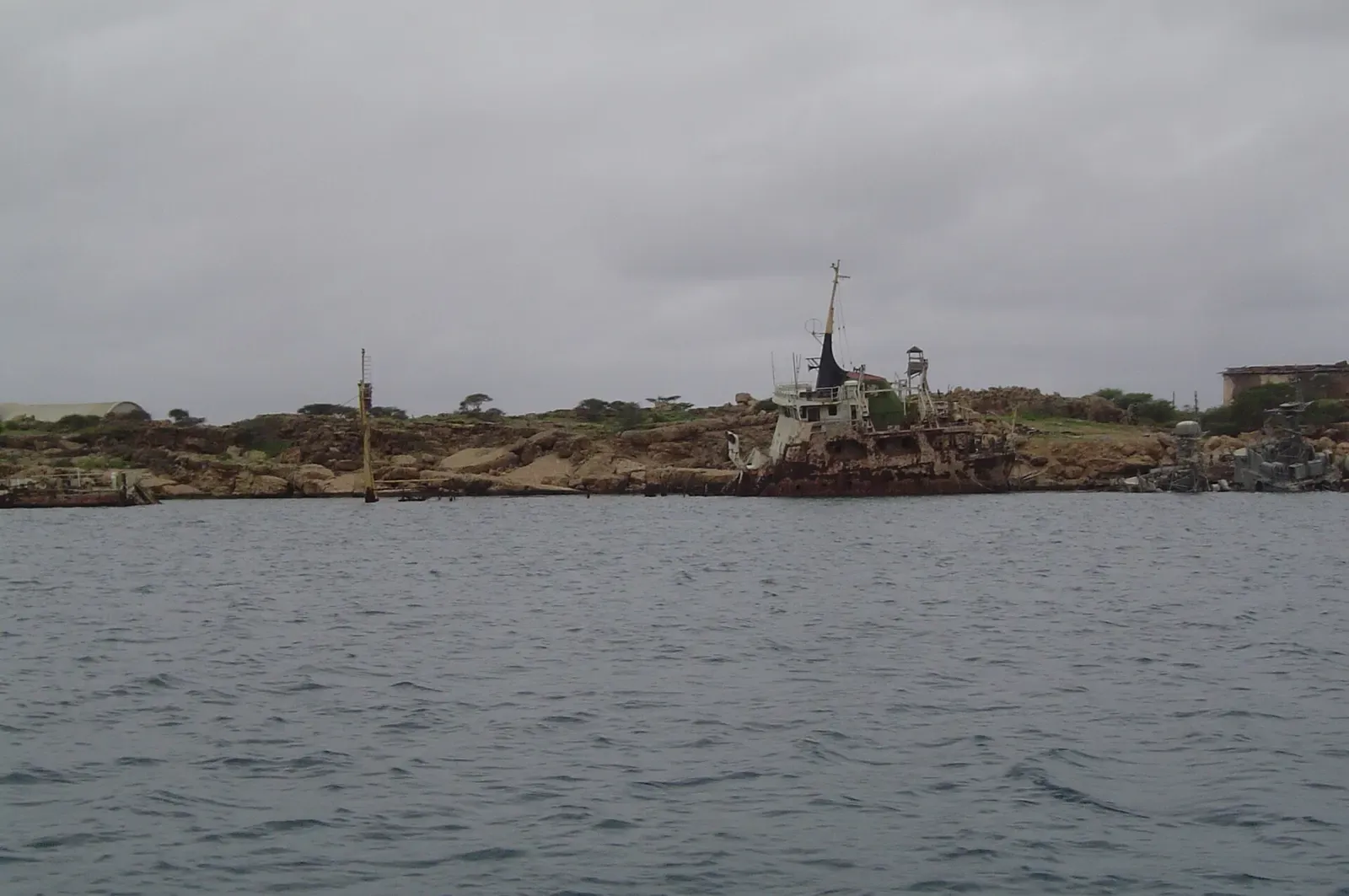
Coral-grown hulls off an island with a 10th-century necropolis
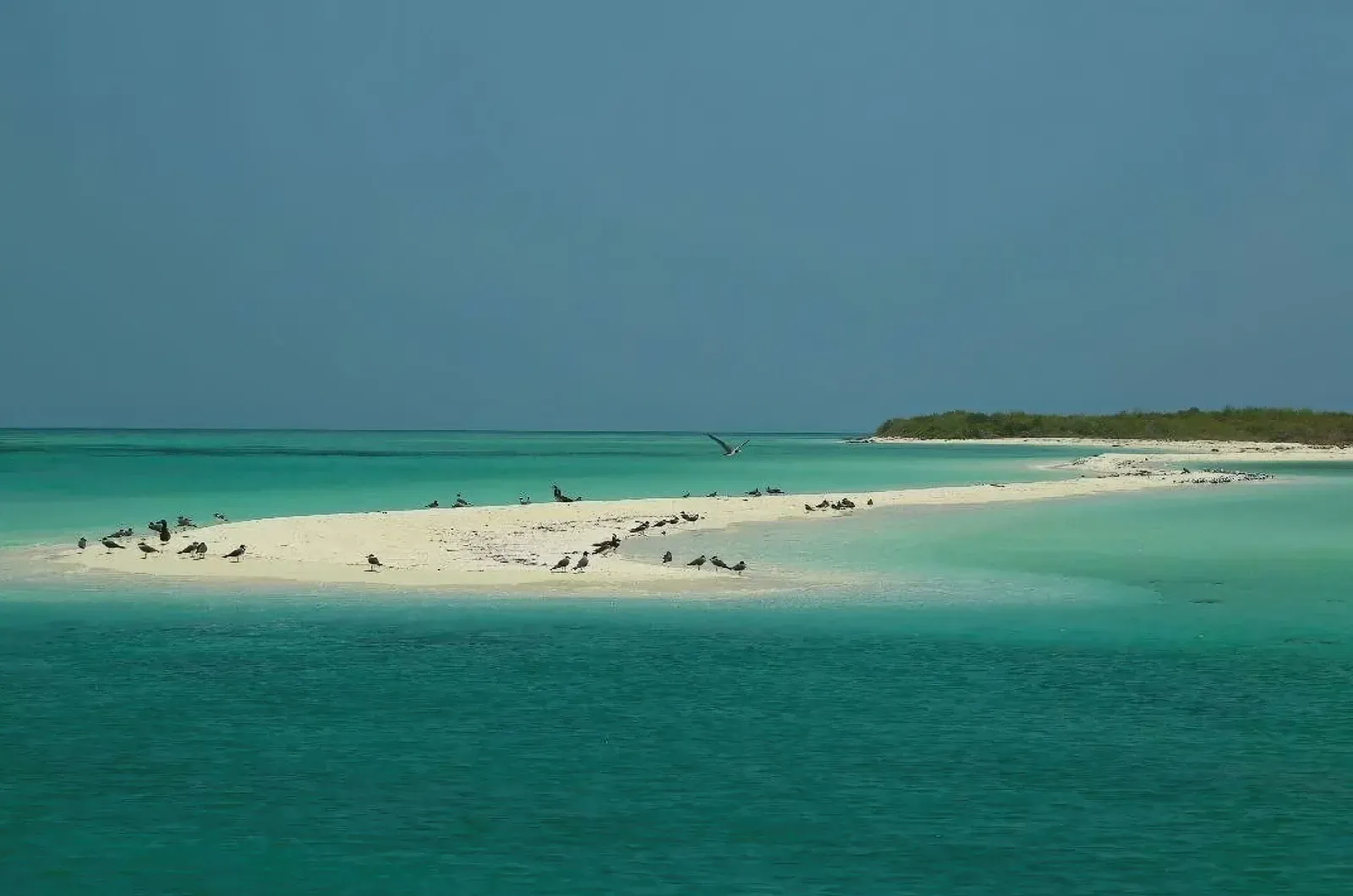
A low island dived on whatever the crew can reach that day
Artificial reef
Hulls left when the Soviet Navy abandoned its base in 1991
Similar dives elsewhere
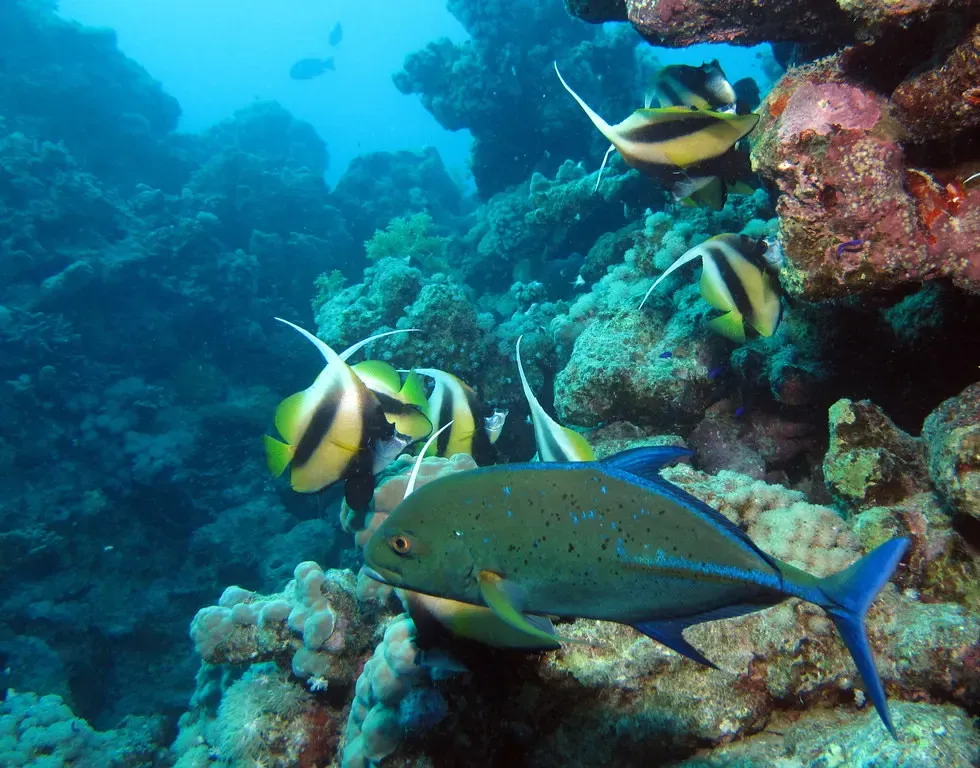
Four small reefs around a lagoon, canyon terrain, mild current
A table-coral channel from the lagoon out to a pelagic drop-off
Green turtles grazing the seagrass above a reef of cleaning stations

Short caverns at 7 m under an overnight mooring