Durban · South Africa · Reef · Cave & cavern
Blood Reef
Sandstone ledges and caves where raggies rest on migration.
Area photo: Peter Southwood · CC BY-SA 4.0
A stretch of eroded sandstone close to shore on the Bluff, named for the blood and offal of Durban's whaling days. Birthday Ledges, the premier site on the Bluff, and Big Cave are ledges and caves between 14 and 18 m with frogfish and pipefish, and ragged-tooth sharks from July to September.
Also known as Birthday Ledges, Big Cave.
Where it is and how deep
29.8967° S, 31.0500° EApproximate position — the dashed circle shows where the site lies; your operator's briefing has the mooring.
The dive
Birthday Ledges is a sandstone ledge facing out to sea off "the fence" on the Bluff, about 14 m on top and 18 m at its deepest. The dive starts at a cave, then swims north with the ledge on the left shoulder, past gullies and small holes. The top of the reef carries red thistle coral, hard corals and tube worms.
From Birthday Ledges divers can swim on to Big Cave, a ledge running perpendicular to the shore in 18 m off the Water Tower. Of its two caves, the large one with an opening in the roof is where ragged-tooth sharks shelter as they migrate along the coast. Gullies and holes around it hold frogfish, pipefish and moray eels.
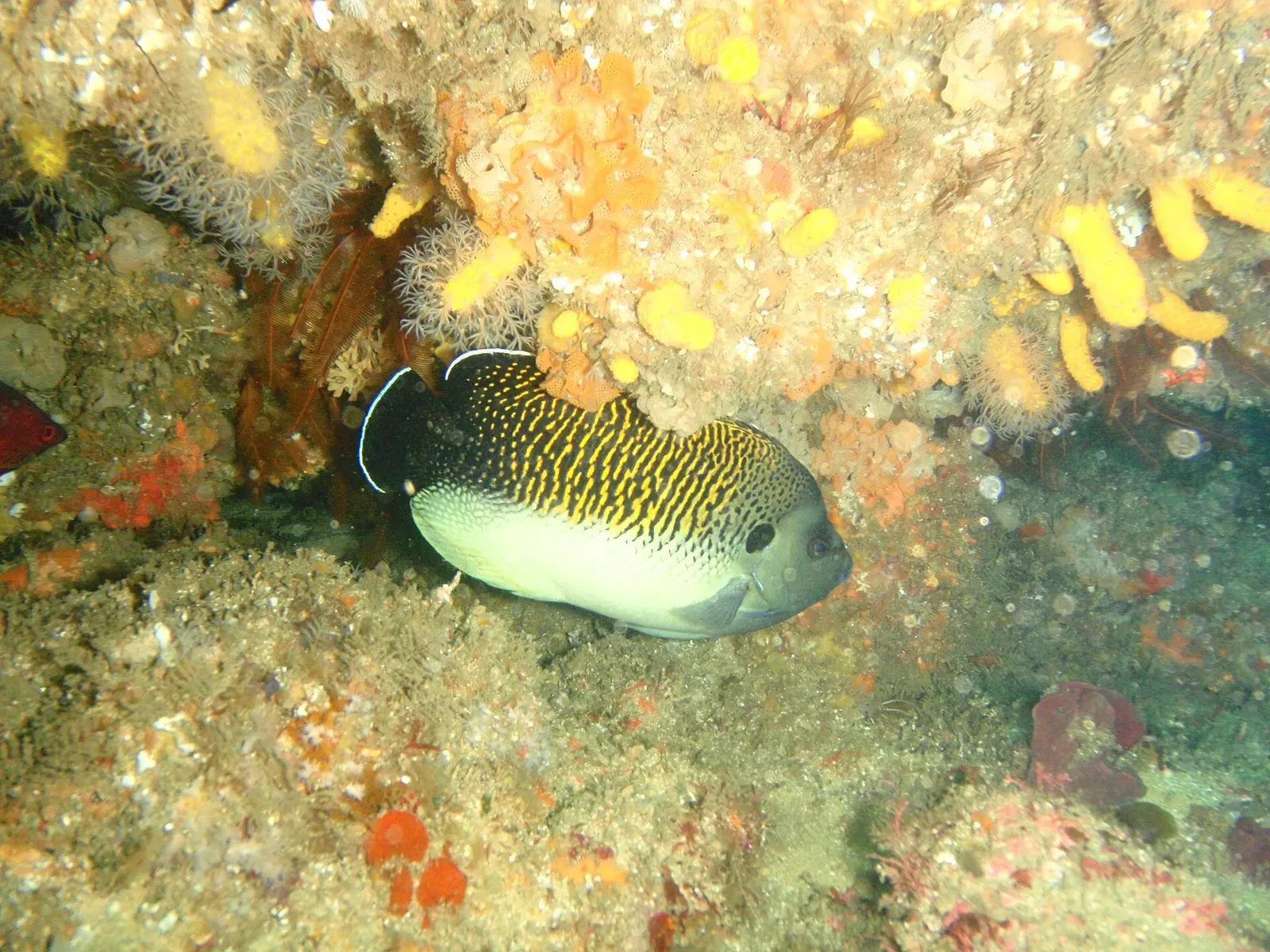
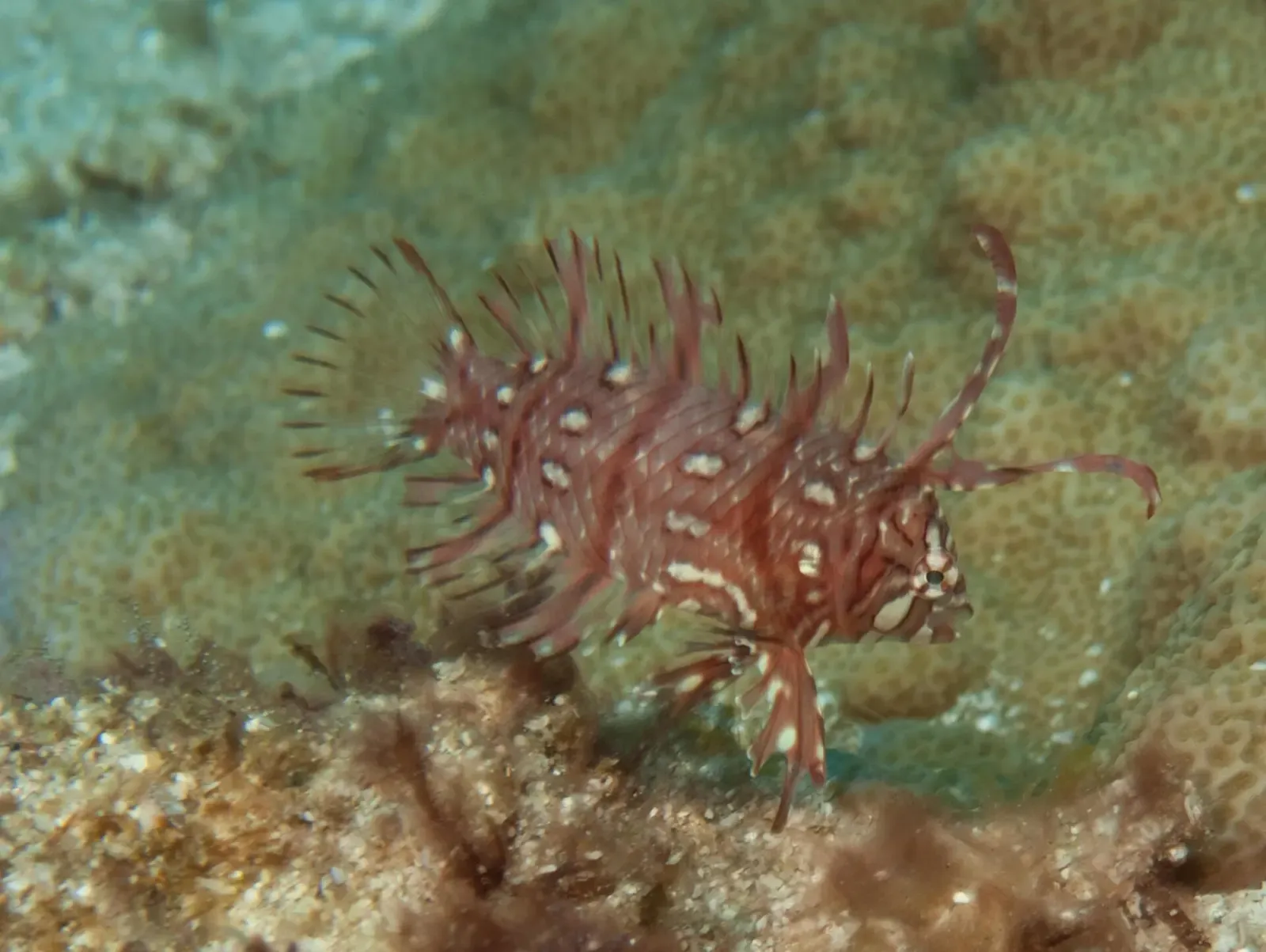
Across the reef, the finds include leafy scorpionfish, pineapple fish, banded pipefish and frogfish. From July through September, ragged-tooth sharks pass on their annual migration north to the warmer reefs of Sodwana. The sandstone bedrock has eroded into ledges and caves, and a slow pace turns up more of the small life in them.
Background
Blood Reef takes its name from the large amount of blood and offal that clouded the water off the Bluff in the days of whaling from Durban. Its best-known site, Birthday Ledges, was discovered by a local diver on his birthday in 2002 and is the premier dive spot on the Bluff.
Marine life and season
- Sand tiger sharks
- Frogfish
- Sea turtles
| Jan | Feb | Mar | Apr | May | Jun | Jul | Aug | Sep | Oct | Nov | Dec |
|---|---|---|---|---|---|---|---|---|---|---|---|
| Good | Good | Prime | Prime | Prime | Prime | Prime | Good | Fair | Fair | Fair | Fair |
Season follows Durban: March to July is best: low rainfall and south-westerlies bring clear water. Spring rain (September to December) clouds the water near the harbour and Umlaas canal mouths.
Know before you go
- Strong currents may occur; plan the dive for the conditions and carry a deploy buoy.
- The Caves site on this reef has a roof that blocks an emergency ascent, and a big swell surges through it.
Dive videos
Doug's Cave on the Blood Reef · Nathan Friesen on YouTube
Questions divers ask
When can ragged-tooth sharks be seen on Blood Reef?+
From July through September, ragged-tooth sharks pass Blood Reef on their annual migration north to the warmer reefs of Sodwana.
How deep is Birthday Ledges?+
The ledge is about 14 m on top and 18 m at its deepest.
Sources
- Durban Dive Sites – Reefs — Durban Undersea Club
- Diving in Durban — Wikivoyage
More dive sites in Durban
Wreck
A nameless 76 m steamship whose origin and sinking remain a mystery.
Wreck
A 34.5 m prawn trawler wrapped in shoals of bait fish.
Reef
One of the few places to see the endemic harlequin goldie.
Reef
A shallow ledge reef reached by a swim across the sand from Vetch's.
Reef
Durban's deep offshore reef, with caves used by migrating raggies.
Wreck
The boilers of a 1940 sugar ship, reached from Addington Beach.
Artificial reef
A 48-compartment concrete barge with a steel gantry at the T junction.
Wreck
Boilers, mast, bow and stern all visible from the surface.
Similar dives elsewhere
A 600 m reef cut by caves, gullies and drop-offs

Linked bowls joined by caves, overhangs and gullies
Two kilometres of ledges, pinnacles and gullies, diveable in most weather

Big caves among round boulders off Robberg's island