Africa · South Africa
Durban
Wrecks and sandstone ledges off the Bluff and Umhlanga, launched from Vetch's Pier.
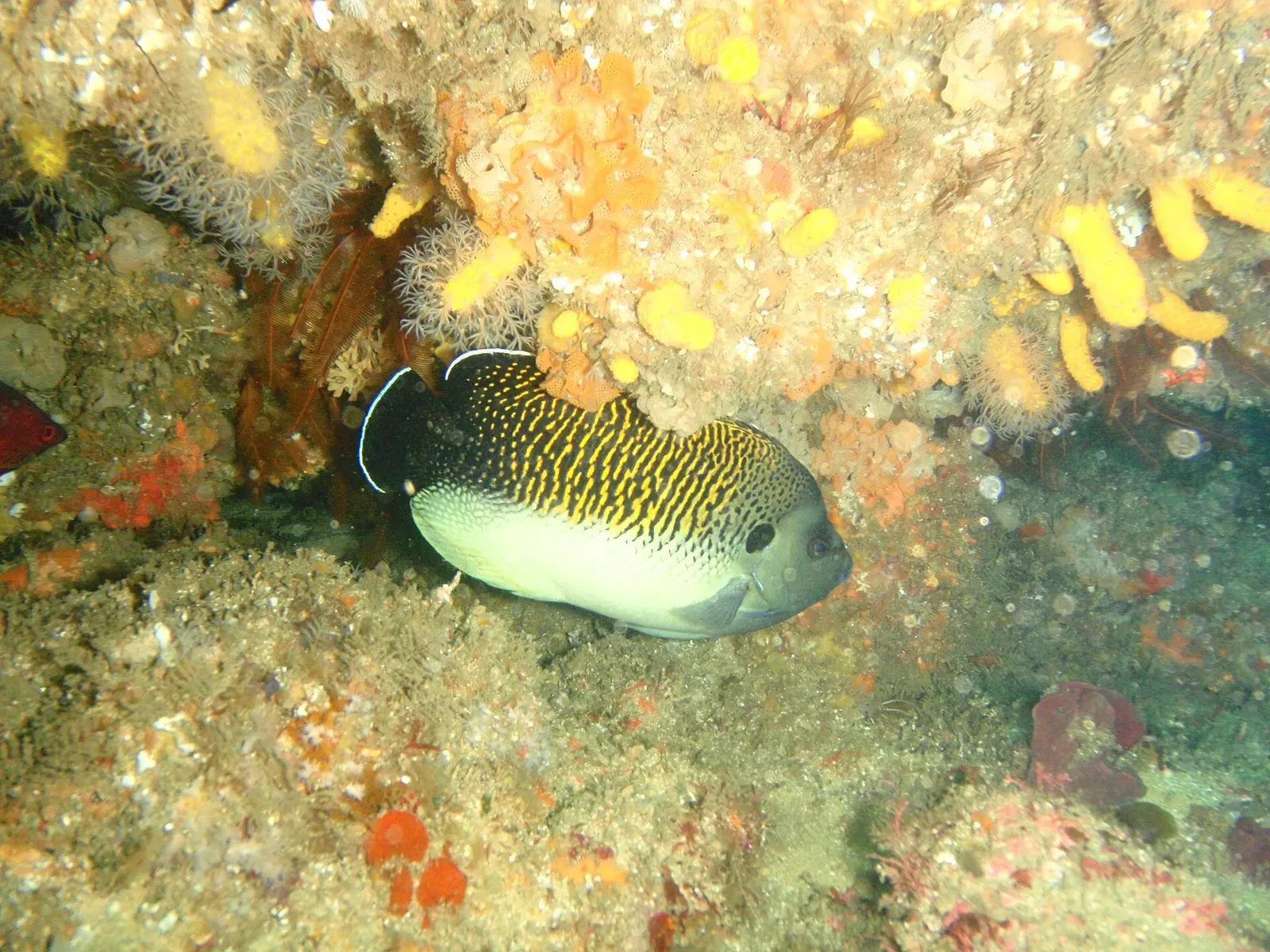
Photo: Peter Southwood · CC BY-SA 4.0
Durban dives a coast of sandstone ledges and sunken ships from a launch at Vetch's Pier on the Point. Boats run from the Fontao, a prawn trawler sunk as an artificial reef off Umhlanga Rocks, south to the Coopers Light wreck at 29 m off the Bluff, with the T-Barge, Blood Reef and Birthday Ledges between. The pier itself is a 1-6 m shore dive, while No.1 Reef, 5 km out by the shipping lane, runs from 20 to 30 m and is an advanced dive.
About diving in Durban
Diving runs out of the Point, where boats launch from Vetch's Pier. The Durban Undersea Club runs boat dives from the Fontao wreck in the north down to the Coopers Light wreck off the Bluff, and Durban Scuba also packages transfers and accommodation. Site depths run from the pier, a shore dive in its own right at 1 to 6 m, to 30 m on the deepest wrecks and reefs, and the Limestone reef beside the pier is reached by shore entry.
The reefs are rocky rather than coral, cut from eroded sandstone into ledges and caves. Blood Reef off the Bluff takes its name from the blood and offal of the old whaling days, and The Caves lie off the two pillars of the former whaling station. Ragged-tooth sharks shelter in the caves as they migrate along the coast, and flapnose hound sharks, morays and turtles rest under the ledges. The harlequin goldie, endemic to KwaZulu-Natal, lives here. The wreck list runs from the Fontao and the T-Barge to Coopers Light at 29 m.
Durban suits a diver who wants wrecks and ledge dives close to a city, from the pier's comfortable shore entry to wrecks at 25 to 30 m. No.1 Reef is the exception: depth, changing visibility, strong currents and passing ships make it an advanced dive, with a safety stop at 10 m. Run-off from the harbour entrance and the Umlaas canal still clouds the water near their mouths, so the site is picked on the day.
Best time to dive Durban
| Jan | Feb | Mar | Apr | May | Jun | Jul | Aug | Sep | Oct | Nov | Dec |
|---|---|---|---|---|---|---|---|---|---|---|---|
| Good | Good | Prime | Prime | Prime | Prime | Prime | Good | Fair | Fair | Fair | Fair |
March to July is best: low rainfall and south-westerlies bring clear water. Spring rain (September to December) clouds the water near the harbour and Umlaas canal mouths.
Dive types & marine life
Ragged-tooth sharks use the caves on their migration along the coast, and flapnose hound sharks, morays and turtles rest under the Bluff ledges. The endemic harlequin goldie is a local find. Out on No.1 the list runs to mantas, eagle rays, marlin and kingfish, on a deep and current-swept reef.
- Wreck
- Reef
- Drift
- Cave & cavern
- Sand tiger sharks
- Sea turtles
- Eagle rays
- Manta rays
Best dive sites in Durban
- 1
Coopers Light Wreck
Wreck off the Bluff at 29 m, the most interesting one in Durban's recreational range.
- 2
Birthday Ledges
The premier Bluff site, found by a local diver on his birthday in 2002.
- 3
No.1 Reef
Reef about 5 km out by the shipping lane; deep, strong currents, an advanced drift.
- 4
Fontao
Artificial reef sunk by the Oceanographic Research Institute on 8 August 1991.
- 5
T-Barge
Offshore wreck where visibility may be significantly better than at the inshore sites.
- 6
Vetchie's Pier
Durban Undersea Club's house reef, a shore dive from 1 to 6 m.
Site guides
Reef
Sandstone ledges and caves where raggies rest on migration.
Wreck
A nameless 76 m steamship whose origin and sinking remain a mystery.
Wreck
A 34.5 m prawn trawler wrapped in shoals of bait fish.
Reef
One of the few places to see the endemic harlequin goldie.
Reef
A shallow ledge reef reached by a swim across the sand from Vetch's.
Reef
Durban's deep offshore reef, with caves used by migrating raggies.
Wreck
The boilers of a 1940 sugar ship, reached from Addington Beach.
Artificial reef
A 48-compartment concrete barge with a steel gantry at the T junction.
Wreck
Boilers, mast, bow and stern all visible from the surface.
Artificial reef
An 1860 rubble pier with a high concentration of moray eels.
How to get to Durban
King Shaka International Airport (DUR) lies 35 km north of Durban, between Umhlanga and Ballito. Boats launch from Vetch's Pier at the Point, and Durban Scuba can arrange transfers, pickups and accommodation as part of a package.
Dive videos
Durban Is Weird - Best of Durban Diving 2020 · South Africa Underwater on YouTube
Durban Night Dives 12/2020 · South Africa Underwater on YouTube
Questions divers ask
What certification does No.1 Reef at Durban need?+
No.1 is an advanced drift at 20 to 30 m with strong currents. Some deep wrecks are for rebreather or trimix divers only; elsewhere certification should match the depth.
When is the best time to dive Durban?+
March to July is best, when low rainfall and south-westerlies bring clear water. Spring rain from September to December clouds the water near the harbour and Umlaas canal mouths.
Where are ragged-tooth sharks seen at Durban?+
Ragged-tooth sharks use the caves on their migration along the coast, while flapnose hound sharks, morays and turtles rest under the Bluff ledges. Mantas and eagle rays turn up out on No.1.
How do Durban boat dives launch, and is there shore diving?+
Boats launch from Vetch's Pier at the Point. Vetchie's Pier itself is a shore dive from 1 to 6 m, and King Shaka International Airport lies 35 km north of Durban.
Sources
- Durban Undersea Club: wrecks — Durban Undersea Club
- Durban Undersea Club: reefs — Durban Undersea Club
- Umhlanga Scuba: dive sites — Umhlanga Scuba
- Diving in Durban — Wikivoyage
- Durban — Wikivoyage
- Durban Scuba: Durban — Durban Scuba
- Durban water temperature — seatemperature.org
Photo credits
- A tiger angelfish with yellow and black stripes shelters under an overhang of orange sponges and encrusting growth by Peter Southwood, CC BY-SA 4.0, via Wikimedia Commons
Embed
Run a dive centre, club or blog? Embed this map of 12 dive sites near Durban on your own page.
Similar destinations

Ragged-tooth sharks congregate to mate from July to November

East Africa's last viable dugong population, in a 1971 national park
Africa
Diani Beach
Kenya
Whale sharks from November to February and 29 sites within 40 minutes


Manta cleaning stations on the reefs and whale sharks at the surface all year