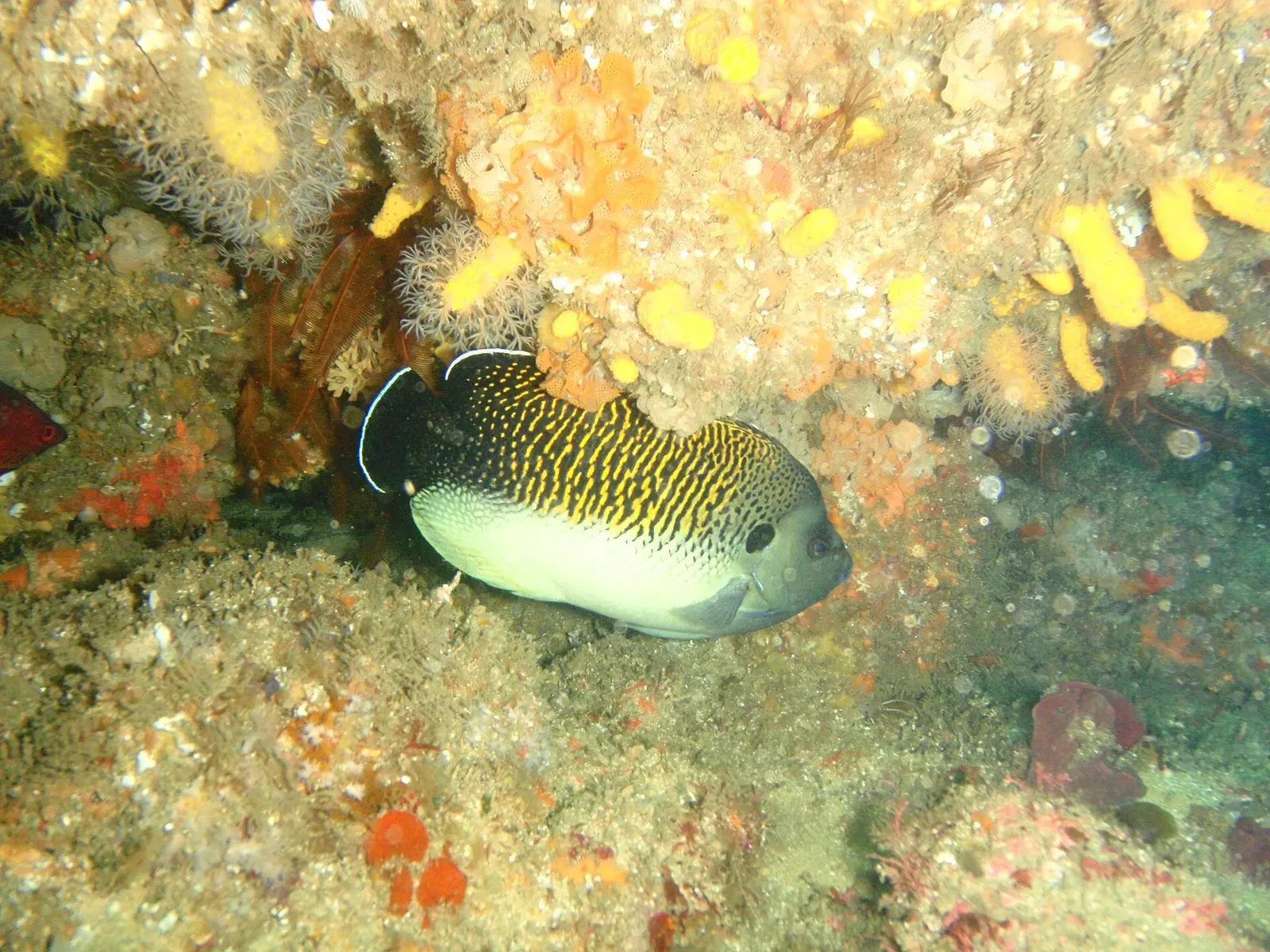
Durban · South Africa · Reef · Drift
No.1 Reef
Durban's deep offshore reef, with caves used by migrating raggies.
Area photo: Peter Southwood · CC BY-SA 4.0
An extensive offshore rocky reef about 5 km out to sea, dived south of the Bell Buoy that marks Durban's shipping lane. Drop-offs of 10 m, large caves and scattered anchors run from 20 to 30 m. Strong currents, changing visibility and passing ships make it an advanced dive.
Also known as No. 1 Reef, Number 1.
Where it is and how deep
29.8460° S, 31.0940° EApproximate position — the dashed circle shows where the site lies; your operator's briefing has the mooring.
The dive
No.1 lies about 5 km out to sea, and most diving takes place south of the Bell Buoy that marks the shipping lane into the harbour. The reef holds 10 m drop-offs, large caves, black coral trees and marine artefacts: ships' anchors and chains, rudders and ammunition. Dives run from 20 m on the ledges to 30 m on the sand, with strong currents common.
Raggies is a large ledge, 22 m on top and 30 m on the sand, undercut into two big caves where ragged-tooth sharks rest on their migration along the coast. Nev's Ledge starts with an 8 m drop-off into a small amphitheatre holding an old anchor and a rudder, with caves and swim-throughs beyond. Zambezi, blacktip and copper sharks are among the fish seen on the reef.
The ascent is on a deploy buoy, with a safety stop at 10 m as an avoidance measure against ships going in and out of the harbour: ships can pass within 100 m of the buoy line. In a strong current the isolated sections, such as Dave's Cave at 27 m, are hard to reach.
Marine life and season
- Sand tiger sharks
- Bull sharks
- Manta rays
- Eagle rays
| Jan | Feb | Mar | Apr | May | Jun | Jul | Aug | Sep | Oct | Nov | Dec |
|---|---|---|---|---|---|---|---|---|---|---|---|
| Good | Good | Prime | Prime | Prime | Prime | Prime | Good | Fair | Fair | Fair | Fair |
Season follows Durban: March to July is best: low rainfall and south-westerlies bring clear water. Spring rain (September to December) clouds the water near the harbour and Umlaas canal mouths.
Know before you go
- Ships pass within 100 m of the buoy line; stop at 10 m and ascend on a deploy buoy.
- Strong currents and changing visibility; plan an advanced, Nitrox profile.
- Unexploded ammunition from the dump off the Bluff lies on the reef; leave any shell alone.
Dive videos
No.1 Reef Durban - Thorny Seahorse and Night Dive 12-13/12/2020 · South Africa Underwater on YouTube
Questions divers ask
How deep is No.1 Reef in Durban?+
Dives on No.1 run from about 20 m on the ledges to 30 m on the sand, about 5 km out to sea.
Is No.1 Reef a beginner dive?+
No. Depth, changing visibility, strong currents and nearby shipping lanes make it an advanced, if not technical, dive.
Sources
- Durban Dive Sites – Reefs — Durban Undersea Club
- Diving in Durban — Wikivoyage
More dive sites in Durban
Reef
Sandstone ledges and caves where raggies rest on migration.
Wreck
A nameless 76 m steamship whose origin and sinking remain a mystery.
Wreck
A 34.5 m prawn trawler wrapped in shoals of bait fish.
Reef
One of the few places to see the endemic harlequin goldie.
Reef
A shallow ledge reef reached by a swim across the sand from Vetch's.
Wreck
The boilers of a 1940 sugar ship, reached from Addington Beach.
Artificial reef
A 48-compartment concrete barge with a steel gantry at the T junction.
Wreck
Boilers, mast, bow and stern all visible from the surface.
Similar dives elsewhere
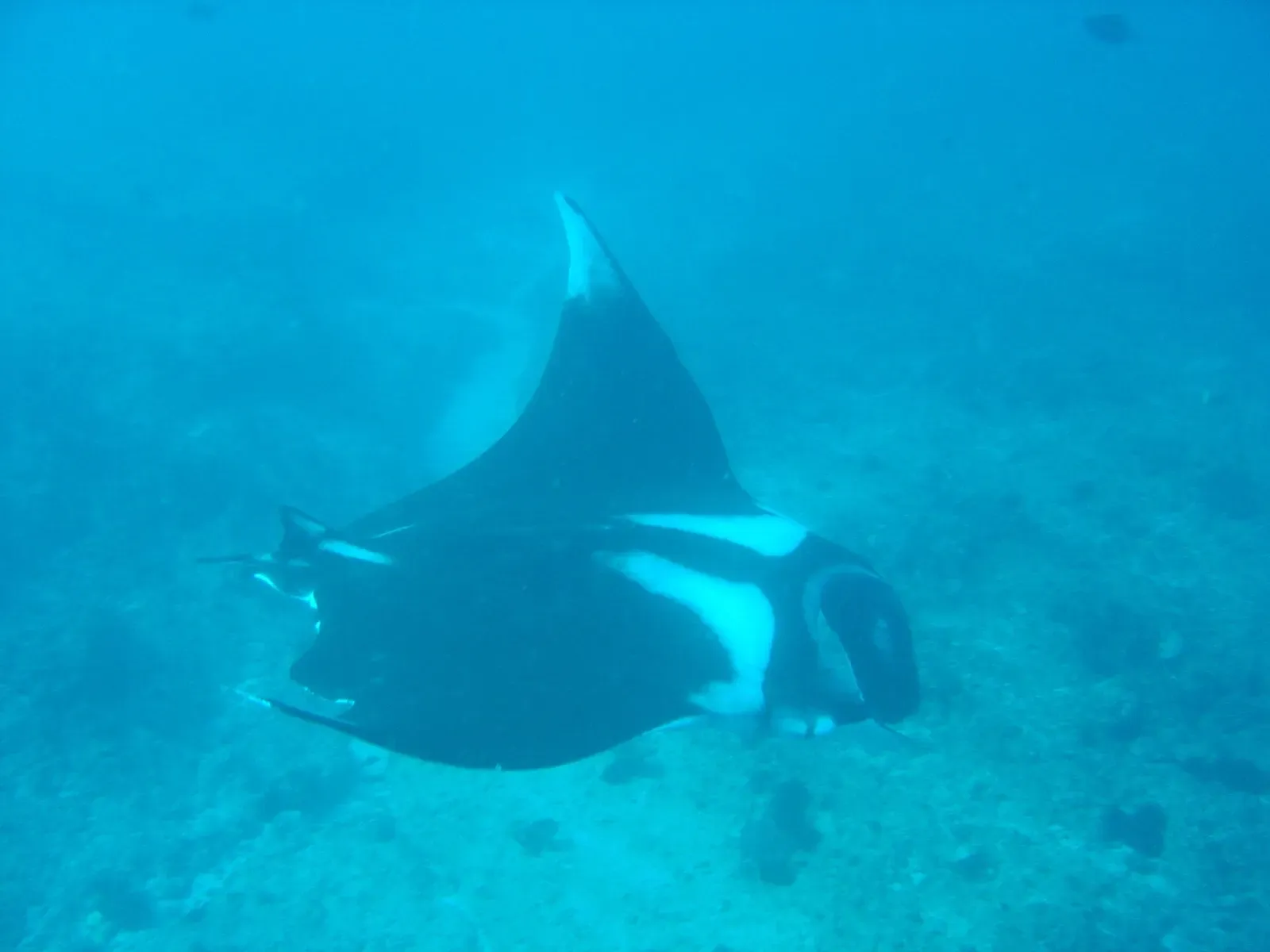
Manta cleaning stations on an amphitheatre of rock at 21-26 m
Reef
Mwanyaza
Diani Beach · Kenya
Turtles and blue-spotted rays on a long sloping reef
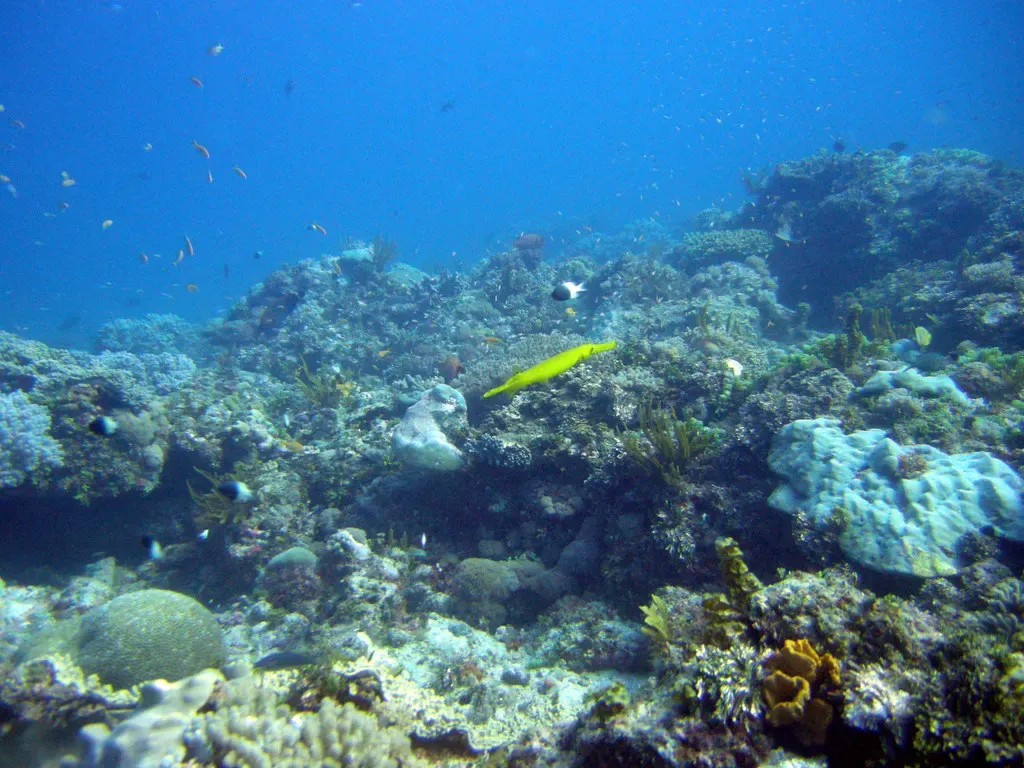
Table corals crowded with sweetlips and unicornfish


Turtles, reef sharks and devil rays, dived flat or as a drift