Galápagos West (Isabela & Fernandina) · Ecuador · Wall · Pelagic & blue water · Drift
Cabo Marshall
A manta cleaning station on Isabela's shoreline, current gentler than Darwin or Wolf
Area photo: Edgard Dias Magalhães · CC BY-SA 3.0
Cabo Marshall sits on Isabela Island's northeastern coast, in the shadow of the still-active Wolf Volcano, and the dive follows the shoreline past a plateau at around 10-12 metres that doubles as an oceanic manta cleaning station. It is the western circuit's best-documented manta site, with hammerheads, eagle rays and tuna working the same stretch of wall in current that is noticeably gentler than at Darwin or Wolf.
Where it is and how deep
0.0233° S, 91.2008° WApproximate position — the dashed circle shows where the site lies; your operator's briefing has the mooring.
The dive
Cabo Marshall sits on Isabela's northeastern coast, in the shadow of the still-active Wolf Volcano, and the dive follows the shoreline rather than circling a fixed mooring. Pangas drop divers close to a rocky plateau at around 10 to 12 metres, and the recommended entry is a negative descent straight onto it — swell at the surface here can be heavy enough to make anything slower uncomfortable. From the plateau the wall continues down past 30 metres for those who follow it, though most of a dive is spent holding shallow and watching the blue.
The plateau functions as a cleaning station and is the best-documented manta site on the western circuit: oceanic manta rays, the largest ray species alive, circle it on their own schedule rather than a predictable timetable, sometimes passing within a few feet of a diver holding still. Scalloped hammerheads, spotted eagle rays, yellowfin tuna and schools of Pacific creolefish work the same stretch of wall and open water, and liveaboards often schedule two dives here across a day to improve the odds of a manta pass.
Visibility can shift within a single dive as the tide turns — divers report everything from a few murky metres to open water later in the same session — and the current, while genuinely present, runs noticeably gentler than the surge at Darwin or Wolf. Guides brief on current direction before each entry and adjust the route along the shoreline accordingly.
Marine life and season
- Manta rays
- Hammerheads
- Eagle rays
- Tuna
- Reef fish swarms
| Jan | Feb | Mar | Apr | May | Jun | Jul | Aug | Sep | Oct | Nov | Dec |
|---|---|---|---|---|---|---|---|---|---|---|---|
| Prime | Prime | Prime | Prime | Good | Fair | Fair | Fair | Fair | Fair | Fair | Good |
Season follows Galápagos West (Isabela & Fernandina): Dec-Apr's warmer, calmer water is the easiest diving; the colder, current-driven upwelling of Jun-Nov cuts visibility and deepens the thermocline but is when mola mola and penguins are most active.
Know before you go
- Surface swell at the shoreline entry is often heavy; a fast negative descent onto the plateau is the standard approach rather than a surface swim.
- Visibility can turn murky with little warning, particularly early in a dive, before improving later or on a repeat visit.
Questions divers ask
Are manta ray sightings guaranteed at Cabo Marshall?+
No. Oceanic mantas move through the cleaning station on their own schedule, so sightings are common but not certain on any one dive. Liveaboards often schedule two visits here to improve the odds.
How strong is the current at Cabo Marshall?+
Generally moderate and noticeably gentler than Darwin or Wolf, though it can shift with the tide. Guides brief on current direction before each entry and adjust the route along the shoreline.
Sources
- Cabo Marshall Liveaboard Diving — Liveaboard.com
- Galapagos Dive Sites — Dive The World
- Isabela (Ecuador) — Wikivoyage
- Giant oceanic manta ray — Wikipedia
In The Logbook
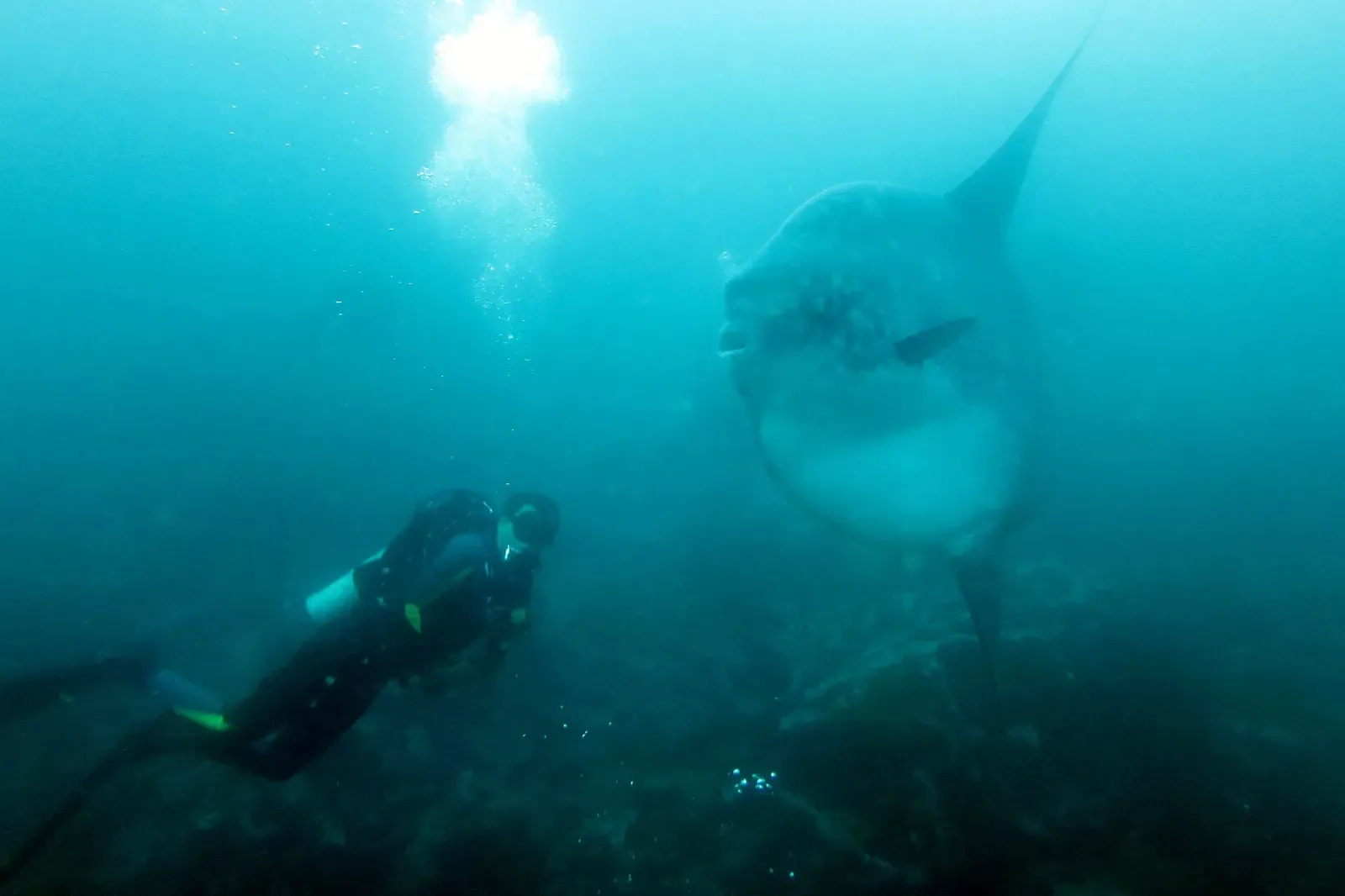
- Mola mola: where to dive with sunfishBig animals · 11 min read
More dive sites in Galápagos West (Isabela & Fernandina)
The archipelago's most reliable mola mola wall, in some of its coldest water
Similar dives elsewhere

Giant manta rays over an offshore bank, 16 m at its deepest
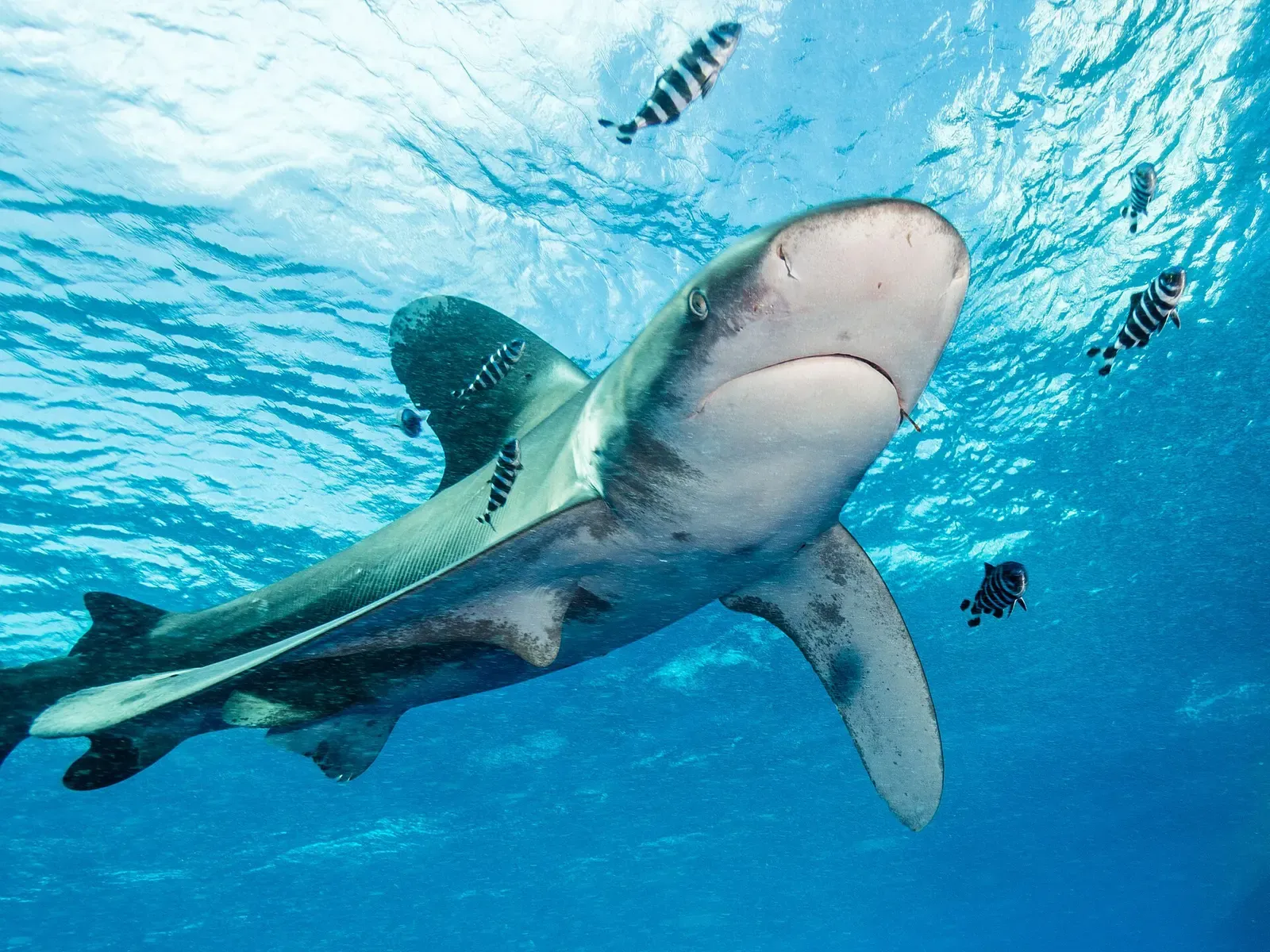
Best chances of oceanic whitetips run from October to December.

A 20 m-wide ridge to 60 m off Big Brother's shark-patrolled point
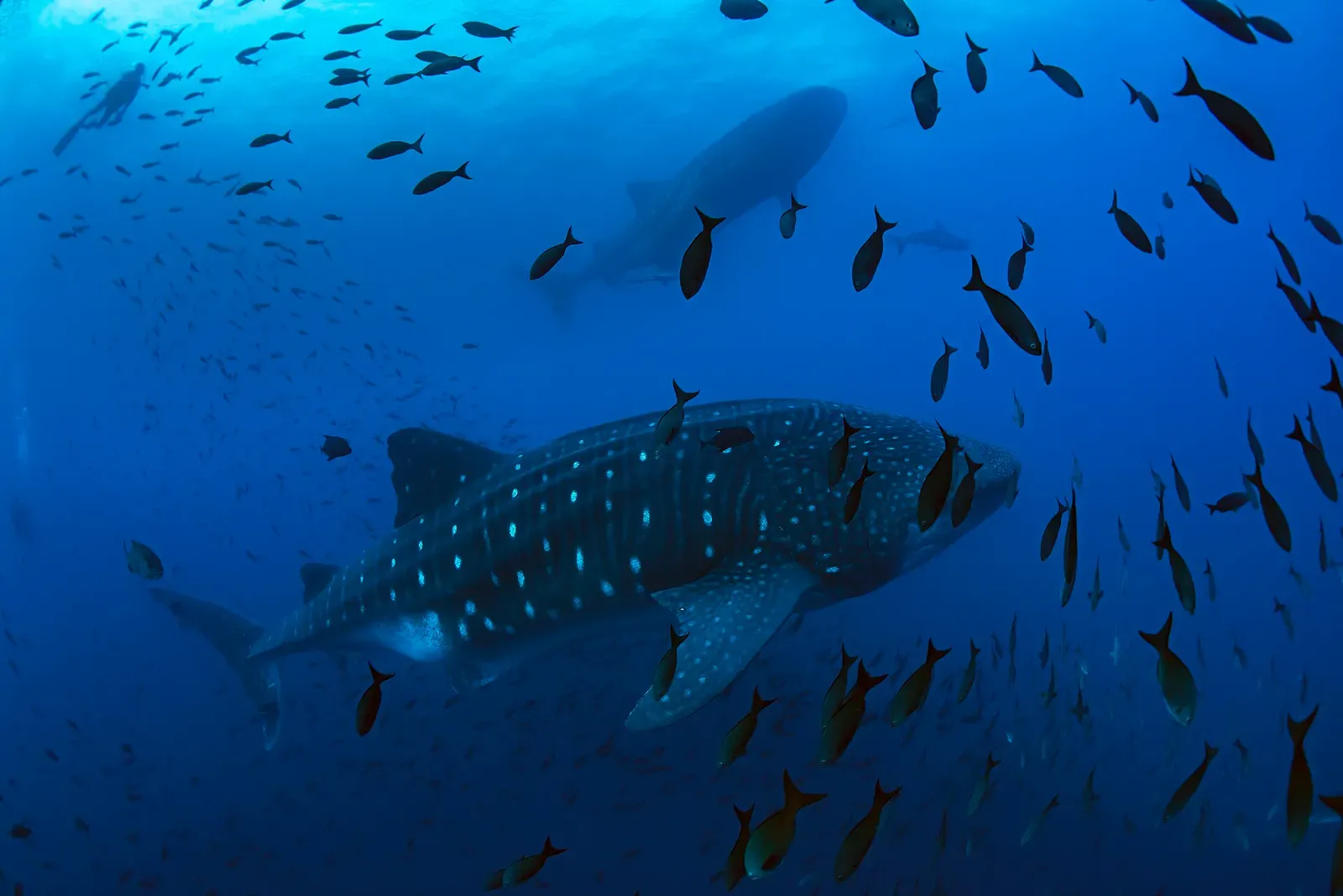

Hold position at 18–24 m while hammerhead schools pass the plateau