Maui, Molokini & Lānaʻi · United States · Wall · Drift · Pelagic & blue water
Molokini Back Wall
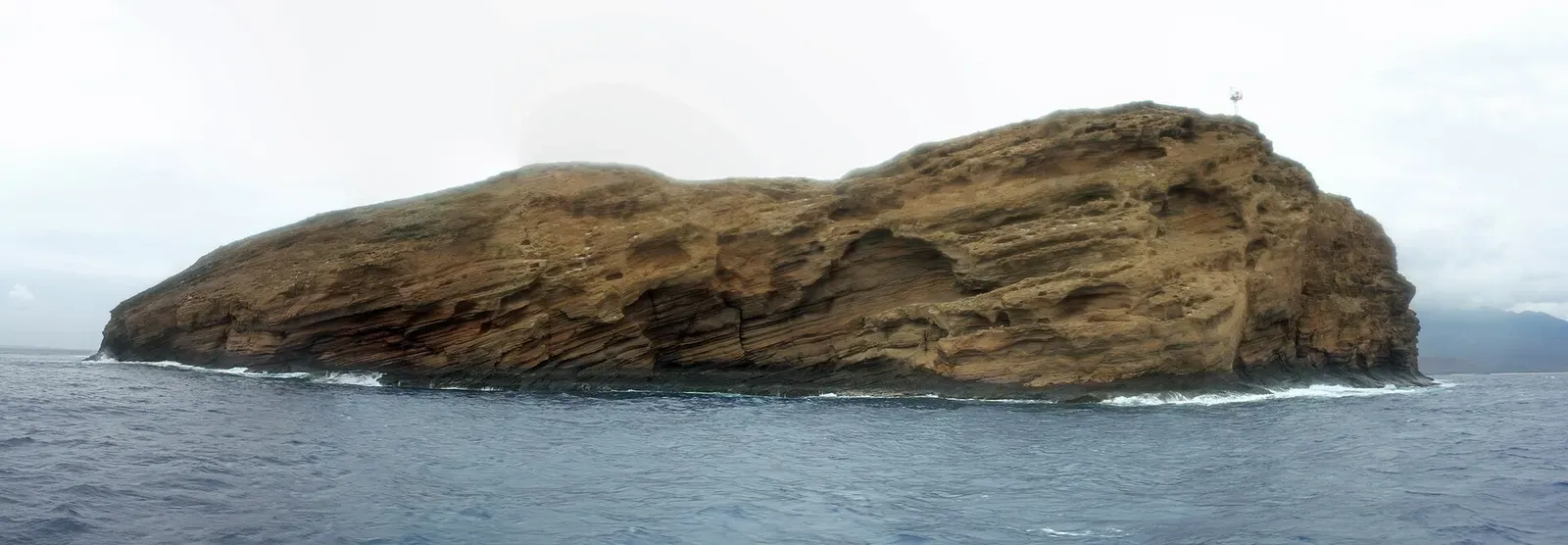
The outer rim's face drops 91 m into open ocean
Photo: Tom Walsh · CC BY-SA 3.0
The seaward face of Molokini's crater rim, where the reef edge ends and the rock keeps going: PADI puts the drop at 300 feet (91 m), and the channel floor beyond it is 360 feet (110 m) down. It is run as a drift, with the boat setting divers in at one end and open ocean off one shoulder the whole way along the face.
Also known as Back Wall, Molokini Backwall.
Where it is and how deep
20.6307° N, 156.4948° WPublished position for this site.
The dive
This is a drift rather than a swim. The boat puts you in at one end of the outer rim and the current does the work along the face. PADI lists the site's maximum depth as 30 feet (9 m), so the dive is run high on a wall that carries on to 300 feet (91 m) beneath you, which is why its guidance for the site is blunt about buoyancy control: there is no bottom under the group to catch a diver who sinks. Stay in contact with your group and your guide from the moment you leave the surface.
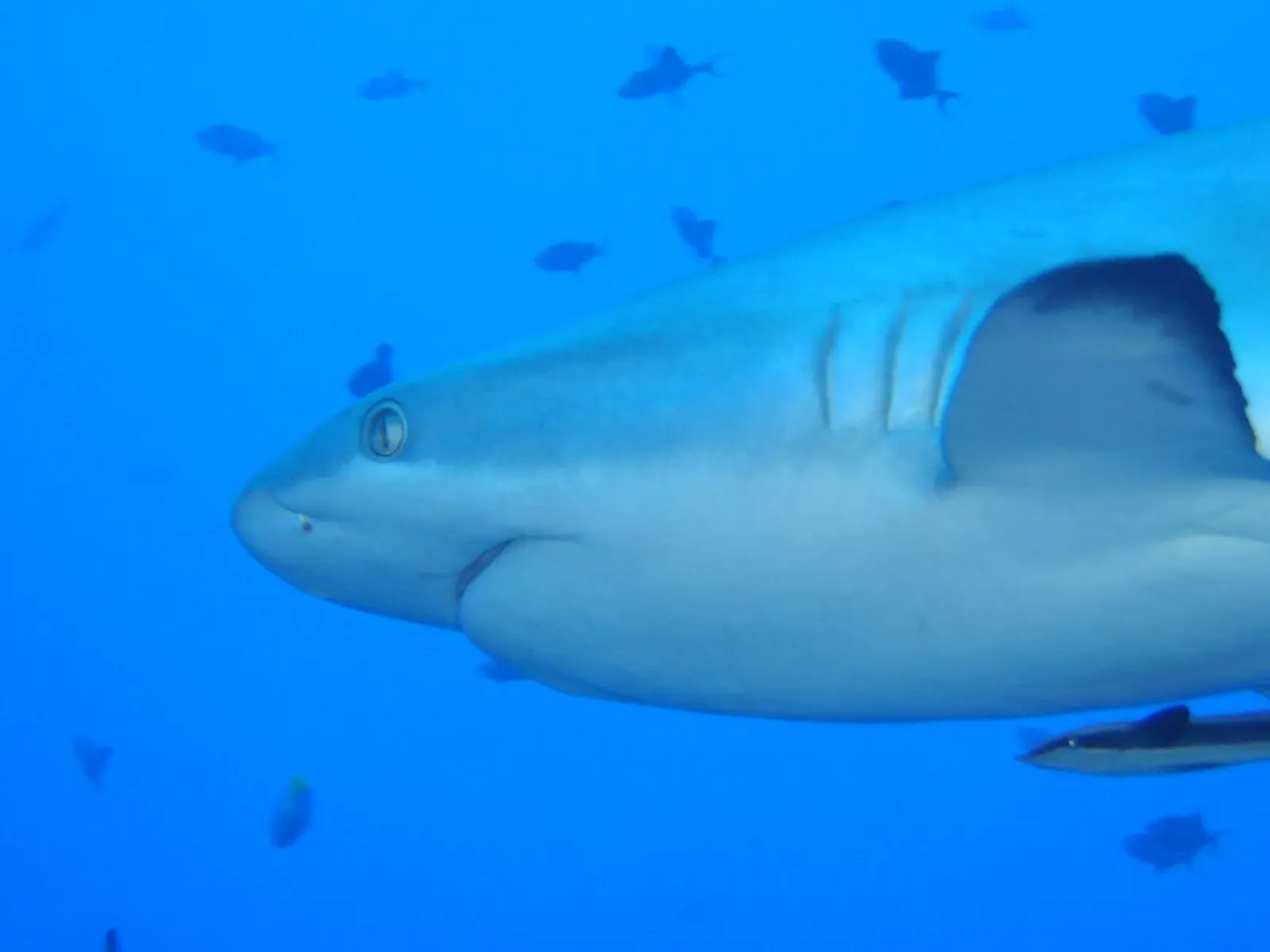
The wall itself repays close attention, with nudibranchs, scorpionfish, moray eels and octopus in the crevices at arm's length, but much of the dive is spent watching the water off your other shoulder. Grey reef sharks and Galapagos sharks patrol the blue here and whitetip reef sharks turn up along the face; a manta ray, an eagle ray or, with luck, a whale shark comes past. The dive ends with the group together in open water and an ascent off the wall.
The crescent of rim shelters the inside of the crater from the waves and from the channel's currents. The seaward face has none of that cover, so the back wall is a site you dive when the channel allows it. Boats cross from Māʻalaea Harbor and the Kīhei Boat Ramp, about three miles out, and the best conditions at Molokini come in the early morning.
Background
Molokini is a partially submerged volcanic crater standing in the Alalakeiki Channel between Maui and Kahoʻolawe. The islet, the crater and the surrounding 77 acres (31 ha) of underwater terrain were declared a Marine Life Conservation District in 1977. Scubadiving.com has named the back wall one of the top 100 diving destinations in the world.
Marine life and season
- Reef sharks
- Manta rays
- Whale sharks
- Eagle rays
- Octopus & cuttlefish
- Nudibranchs
| Jan | Feb | Mar | Apr | May | Jun | Jul | Aug | Sep | Oct | Nov | Dec |
|---|---|---|---|---|---|---|---|---|---|---|---|
| Good | Good | Good | Prime | Prime | Prime | Prime | Prime | Prime | Prime | Good | Good |
Season follows Maui, Molokini & Lānaʻi: April to October is the calm dry season; winter swells hit the north coast while south-facing sites stay open.
Know before you go
- The face drops to 91 m with nothing under the group, so buoyancy control and an agreed depth limit matter more here than anywhere else at Molokini.
- It is a drift on an exposed outer wall with nothing to hold on to: stay with your group and guide from entry to ascent.
Dive videos
Molokini Crater back wall dives, Maui · Diver Diary on YouTube
Why you don't dive alone... Molokini Back Wall Shark Encounter and a 350 foot drop off. 🦈 🤿 · Neptune’s Ocean TV on YouTube
Questions divers ask
How deep is the Molokini Back Wall?+
PADI lists a maximum depth of 30 feet (9 m) for the dive, but the wall itself drops about 300 feet (91 m) below the outer rim and the channel floor beyond it is 360 feet (110 m) down. The profile is set by the guide, not by the terrain.
What certification do I need for the Back Wall?+
PADI lists Advanced Open Water Diver and Enriched Air Diver as the recommended training. It is a drift along an exposed outer wall with no bottom in sight, which is not a place to be sorting out buoyancy for the first time.
Sources
- Molokini Back Wall Dive Site — PADI
- Molokini — Wikipedia
- Diving in the United States — Wikivoyage
- Maui — Wikivoyage
Photo credits
- The steep, eroded south-facing cliff of Molokini's crater rim dropping straight into the ocean by Tom Walsh, CC BY-SA 3.0, via Wikimedia Commons
In The Logbook
- Hearing underwater: why sound has no directionOcean science · 14 min read
- Where to dive with whale sharks, month by monthBig animals · 16 min read
More dive sites in Maui, Molokini & Lānaʻi
Reef
Five to ten green turtles on a dive, in 11 m off the beach
Cave & cavern
A skylit lava cavern with a fallen-rock altar
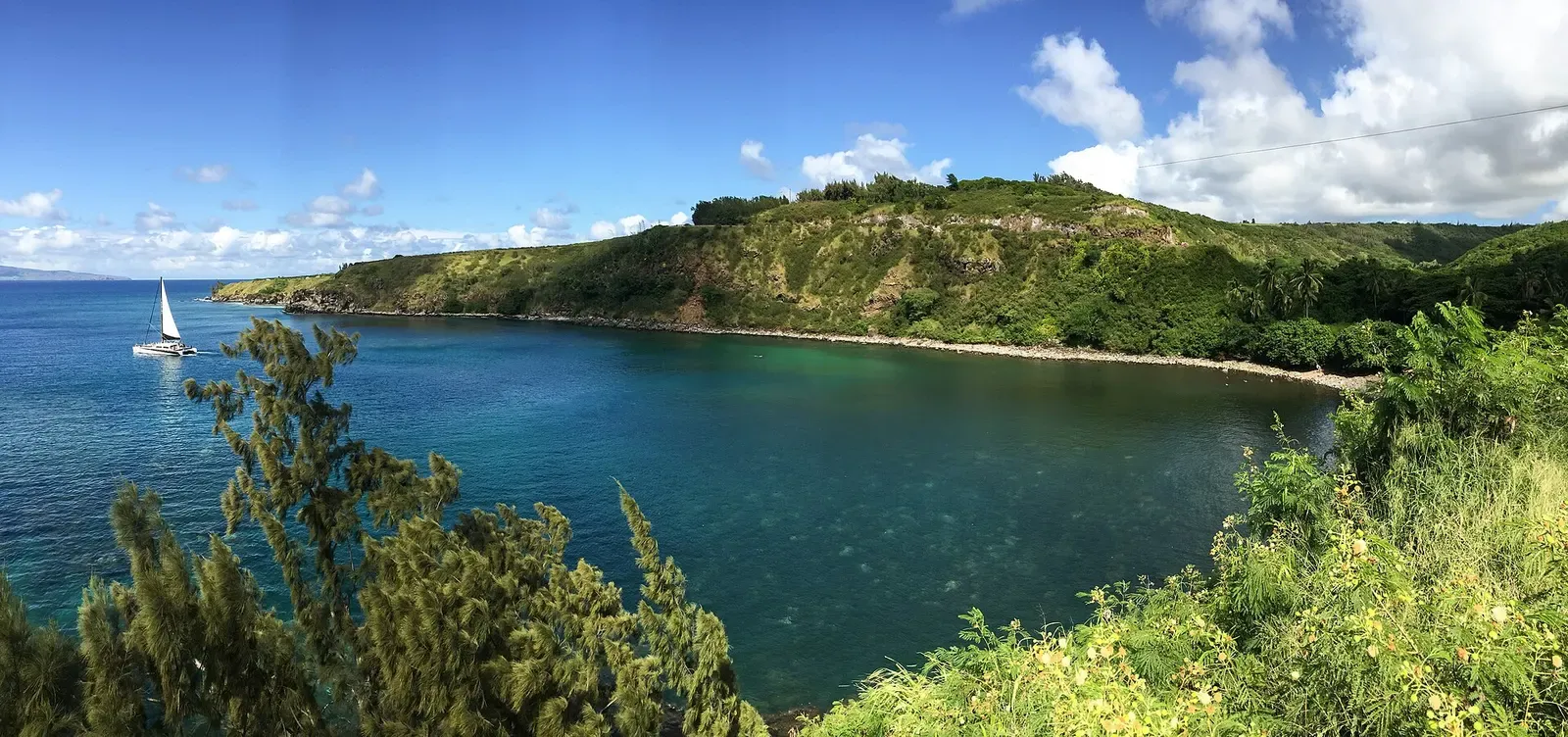
A protected bay 4 m deep, reached on foot by trail
A reef running for miles, dived from 6 m down to 24 m
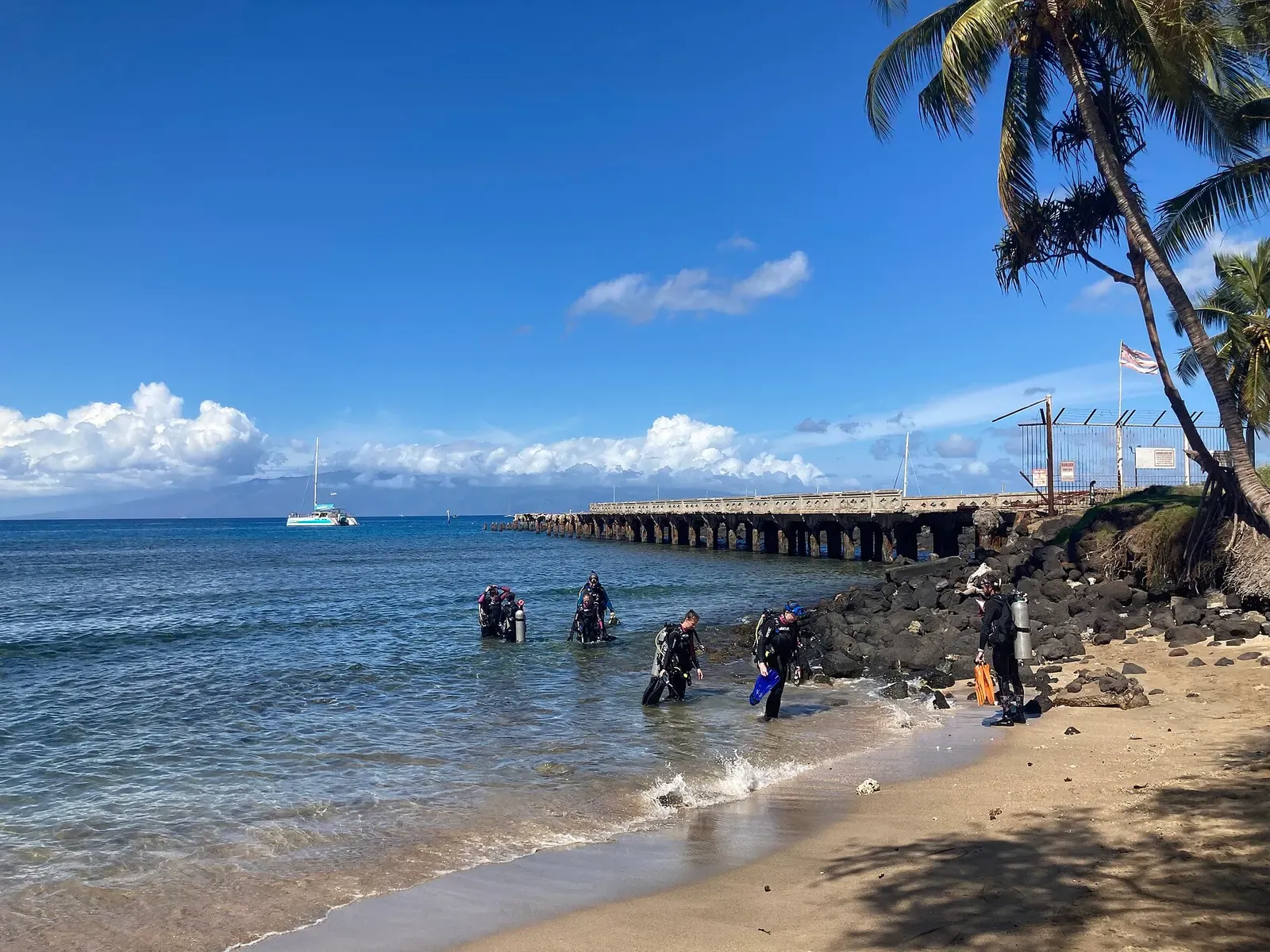
A hurricane-flattened pier turned artificial reef
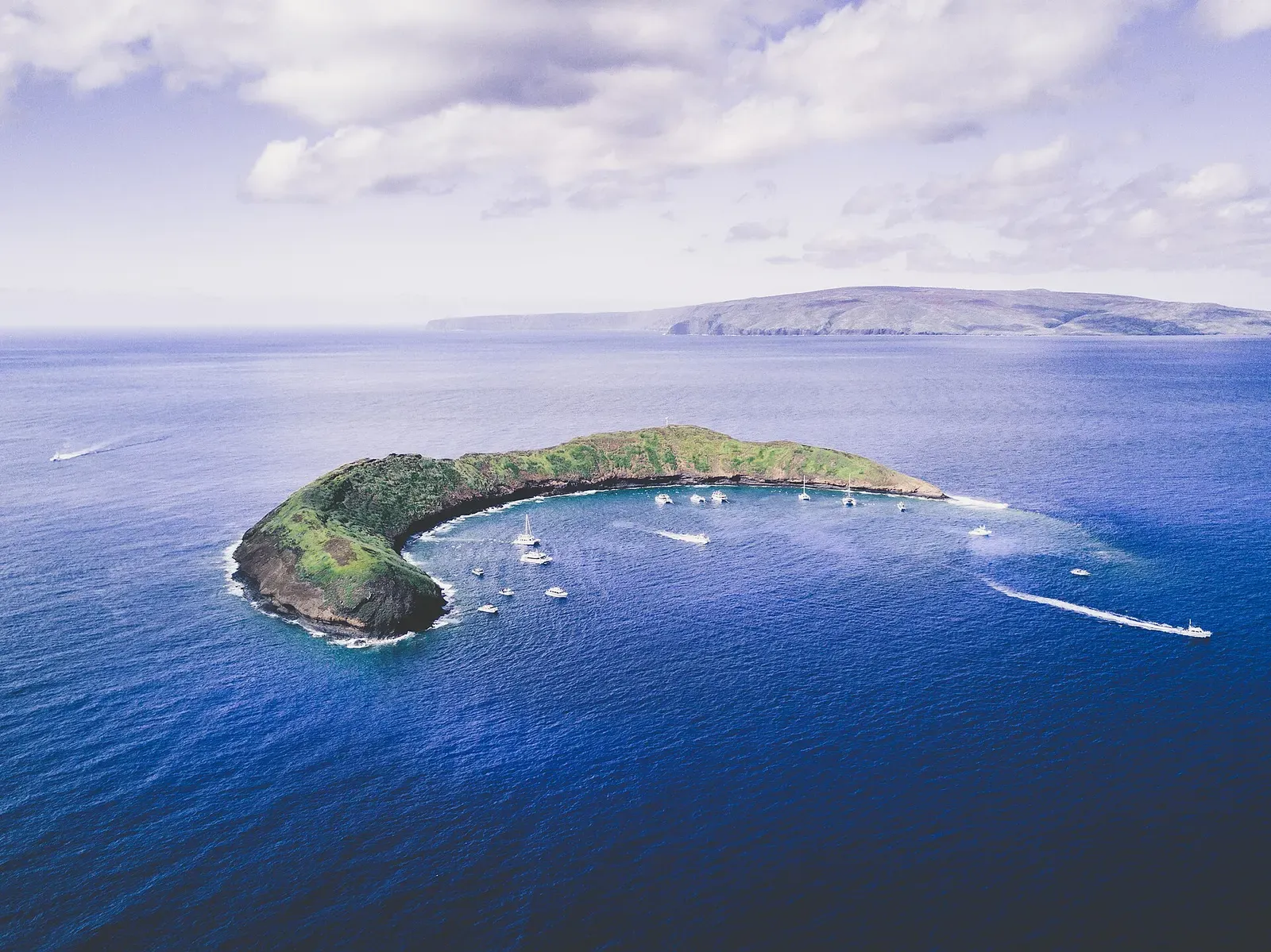
250 fish species in a bowl the swell cannot reach
Reef
Fingered shallow reefs averaging about 4.6 m, in calm water
Similar dives elsewhere
Hook into the plateau lip and let the sharks stack up off the edge
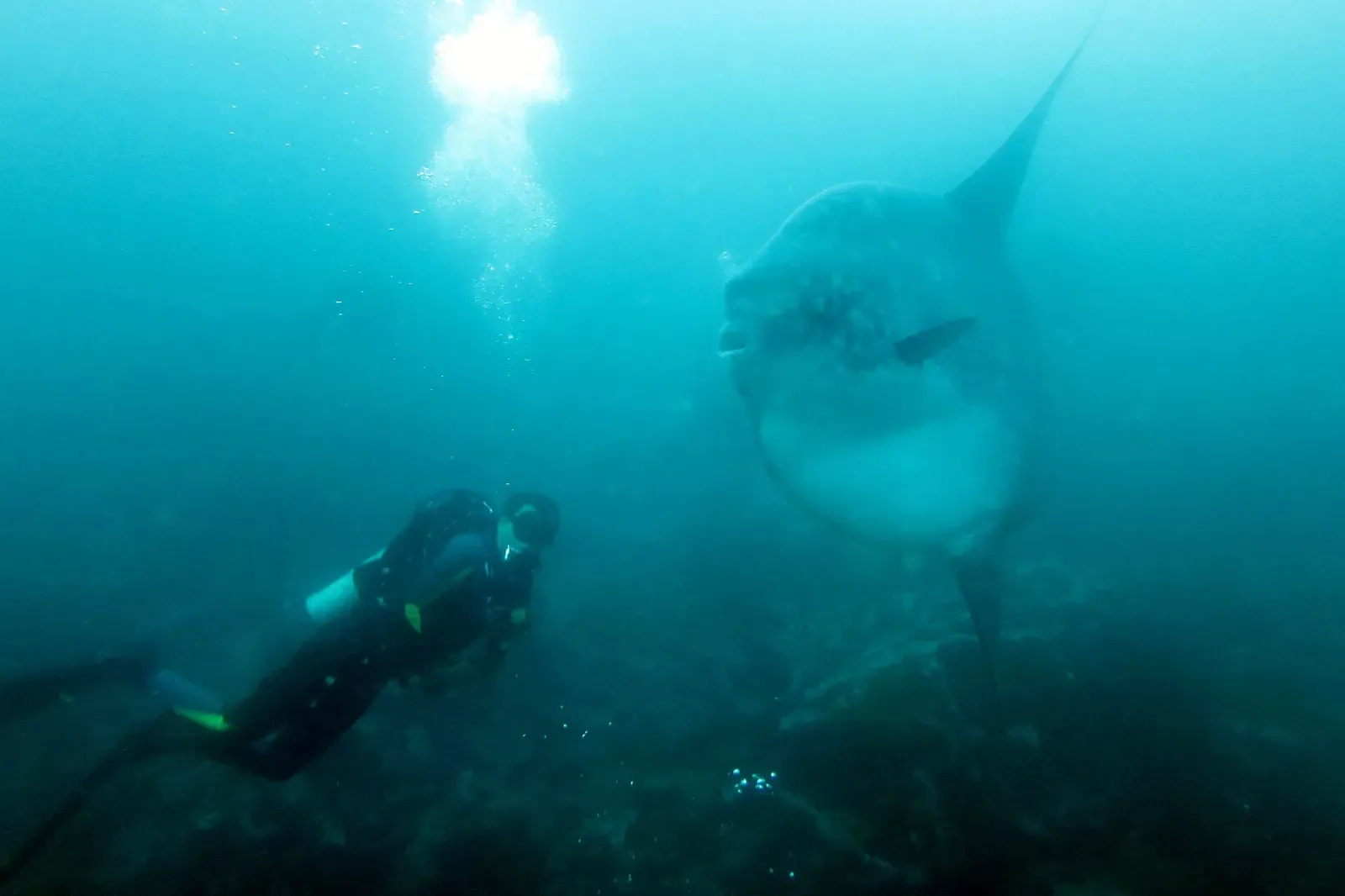
A manta cleaning station on Isabela's shoreline, current gentler than Darwin or Wolf
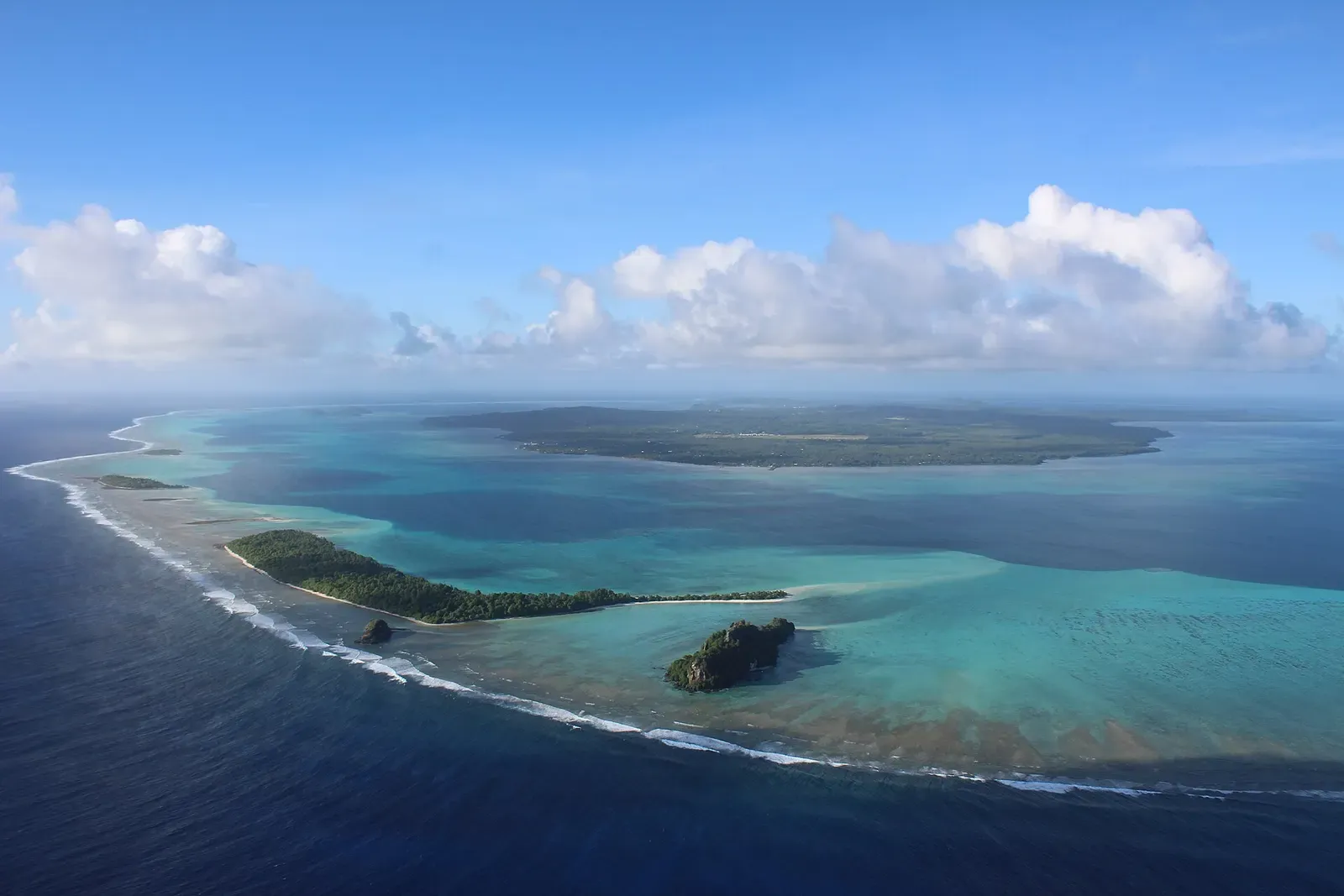
Whaling-ship anchors below a soft-coral drop-off


A school of about 70 grey reef sharks on a drifting wall