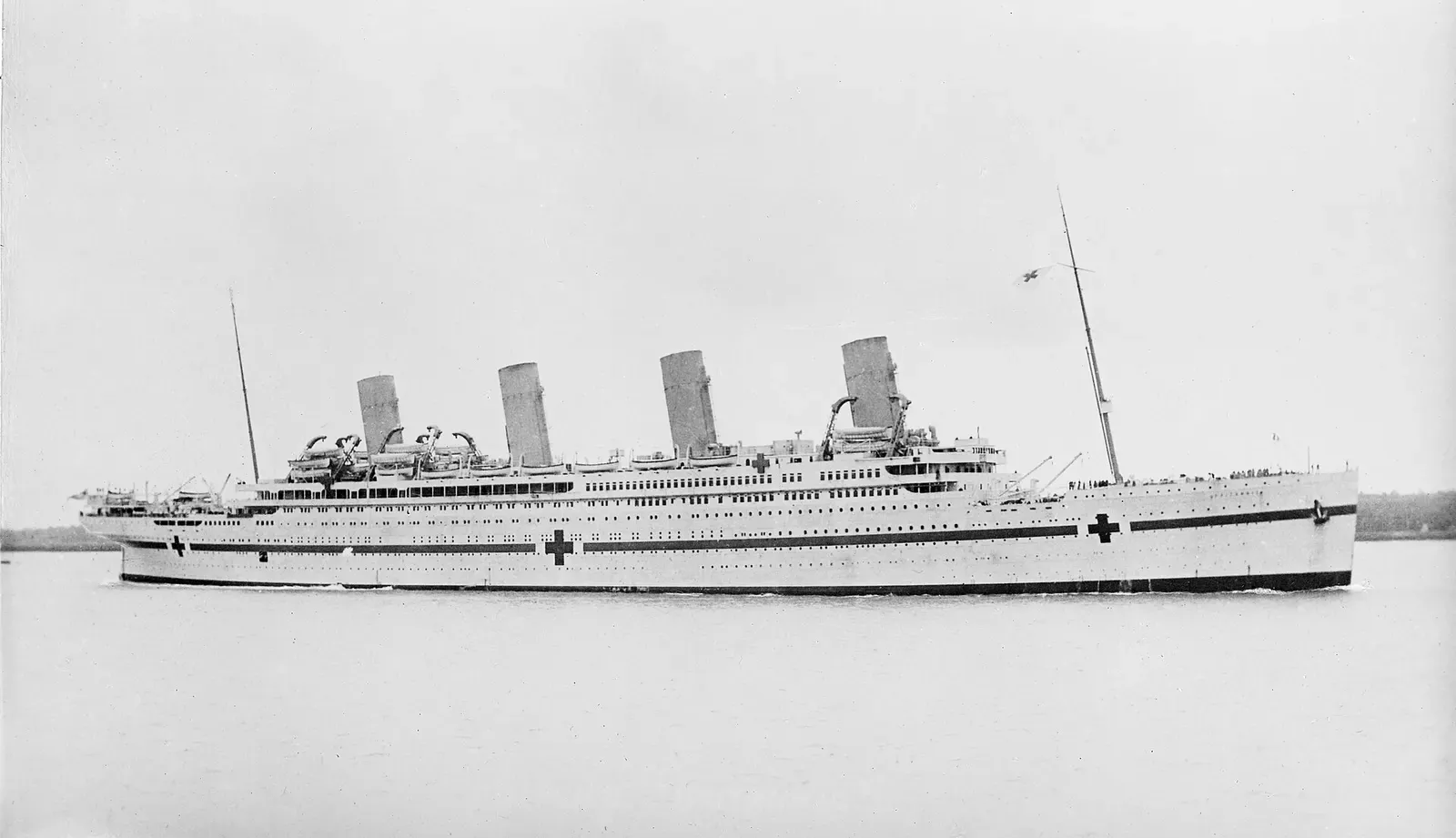
Kea Channel · Greece · Wreck
SS Burdigala
Sunk by the same minefield as HMHS Britannic, seven days before her
Area photo: Allan C. Green · Public domain
A 183 m German liner, launched in 1897 as Kaiser Friedrich, that failed the speed contract meant to win it the Blue Riband, was mothballed for a decade, then sold to France in 1912 and renamed Burdigala. Requisitioned as a troop carrier, she struck a mine off Kea on 14 November 1916, a week before HMHS Britannic sank in the same minefield. Lost and unidentified for decades, the wreck was found and named in 2008; it lies upright and broken in two, deck around 53 to 60 m, seabed near 70 m.
Also known as SS Kaiser Friedrich.
Where it is and how deep
37.6607° N, 24.3051° EApproximate position — the dashed circle shows where the site lies; your operator's briefing has the mooring.
The dive
Burdigala's story starts as a failure. Built by Schichau at Danzig and launched in 1897 as Kaiser Friedrich for Norddeutscher Lloyd, she was meant to take the Blue Riband for the fastest Atlantic crossing and never got close, managing barely 20 knots against a contracted 22; her German owners rejected her within a year and she spent a decade mothballed in Hamburg before the French line Sud-Atlantique bought her in 1912 and renamed her Burdigala, after the Latin name for Bordeaux. War service followed fast: from 1914 she ran troops from Toulon to the Dardanelles and Thessaloniki, and in December 1915 was fitted with deck guns as an armed cruiser.
On 14 November 1916, sailing empty from Thessaloniki back to Toulon, she was hit amidships about two nautical miles off Kea. Her captain thought she had twenty minutes; a second explosion broke her in two roughly fifteen minutes after the order to abandon ship, and by most accounts only one man was lost. Her captain reported firing on a submarine periscope and always maintained she had been torpedoed, and the French government's official record agreed, but the diving team who eventually found her argued from mine-laying records that she most likely struck one of the same U-73 mines that would sink Britannic seven days later, in almost the same patch of water.
The wreck itself was lost track of for the better part of a century. In 2008 an expedition called the Kea Dive Expedition located what they initially logged only as the 'Unknown Shipwreck of Kea' and, working from her machinery and fittings, identified her as Burdigala over several further missions through 2012. She lies upright and broken across the seabed, her deck reported at 53 to 60 m depending on the source and the seabed itself near 70 m — a serious trimix dive, but a more approachable one than her neighbour, since the whole wreck sits within reach on a single set of tanks rather than needing the multi-day staging Britannic requires.
The wreck
- Vessel
- SS Burdigala
- Type
- Ocean liner, later armed troop transport
- Length
- 183 m (600 ft)
- Built
- 1897
- Sunk
- 1916
- Cause
- Struck a mine laid by the German submarine U-73 in the Kea Channel (French accounts of the time held she was torpedoed)
- Lies
- Broken in two, upright on the seabed about two nautical miles from HMHS Britannic; deck near 53–60 m, seabed near 70 m
Launched in 1897 as Kaiser Friedrich for Norddeutscher Lloyd, the ship failed its speed contract and passed briefly to Hamburg America Line before a decade mothballed in Hamburg. The French Compagnie de Navigation Sud-Atlantique bought her in 1912 and renamed her Burdigala. Commandeered for French war service in 1914 and armed as an auxiliary cruiser in 1915, she was carrying no cargo or troops when she struck a mine off Kea on 14 November 1916 and sank in about fifteen minutes after the second of two explosions. The wreck went unidentified for over ninety years until the Kea Dive Expedition located and named her in 2008, publishing further findings through 2012.
Marine life and season
The sources we used don't single out particular species here.
| Jan | Feb | Mar | Apr | May | Jun | Jul | Aug | Sep | Oct | Nov | Dec |
|---|---|---|---|---|---|---|---|---|---|---|---|
| Off-season | Off-season | Off-season | Fair | Good | Prime | Good | Good | Prime | Good | Fair | Off-season |
Season follows Kea Channel: Expeditions run roughly May–October; the Aegean meltemi blows hardest in July–August and the strait closes over winter.
Know before you go
- 70 m of water with mandatory decompression: this is a trimix dive with no direct ascent from the deeper sections of the wreck.
- Published depths for the deck disagree by roughly 10 m between sources; plan and brief on the deeper figure.
- As a wreck more than fifty years old, diving requires a permit from Greece's Ephorate of Underwater Antiquities; nothing may be removed from the site.
Questions divers ask
How deep is the SS Burdigala wreck?+
Sources disagree on the exact figure for the deck, reporting 53 to 60 m, while the seabed and the deepest parts of the broken hull sit close to 70 m. Either way it is a trimix dive with staged decompression.
Was the Burdigala torpedoed or mined?+
The French government's 1919 report held she was torpedoed, based on her captain's account of firing on a periscope. The team who identified the wreck in 2008 concluded from German minefield records that a mine from U-73 — the same minefield that sank HMHS Britannic a week later — is the more likely cause.
Sources
- SS Burdigala — Wikipedia
- Kea (island) — Wikipedia
- Kea Channel — Wikipedia
- The sad story of S/S Burdigala, former S/S Kaiser Friedrich — S/S Burdigala Project, via Wayback Machine
- WWI sinkings of Burdigala and Britannic commemorated on Kea — eKathimerini
- Ephorate of Underwater Antiquities — Wikipedia
More dive sites in Kea Channel
Wreck
A scattered cargo wreck on a reef running from 2 m to 35 m
Wreck
Largest intact passenger shipwreck on any seabed, found by Jacques Cousteau in 1975
The canyon exit opens onto a wall that falls to 45 m
Wreck
An 1868 paddle steamer, broken in two with a paddle wheel still in place
Wreck
An intact light aircraft on the bottom between 16 and 22 m
Similar dives elsewhere

Airframe on sand at 65 to 72 m, visibility to 40 m

A battleship lost on 18 March 1915, upside down at 68 m
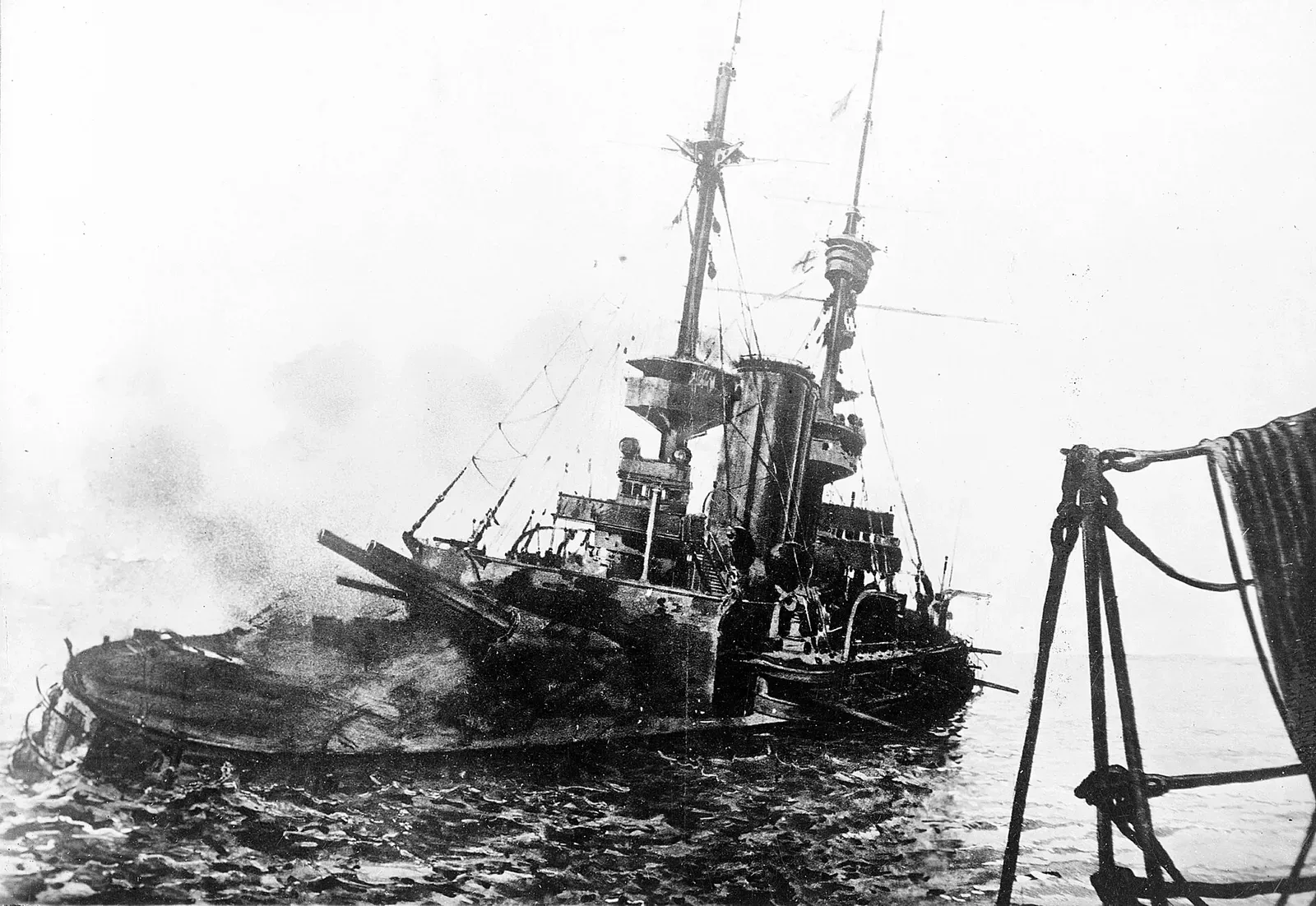
A mined 1898 battleship at 65 m, technical divers only
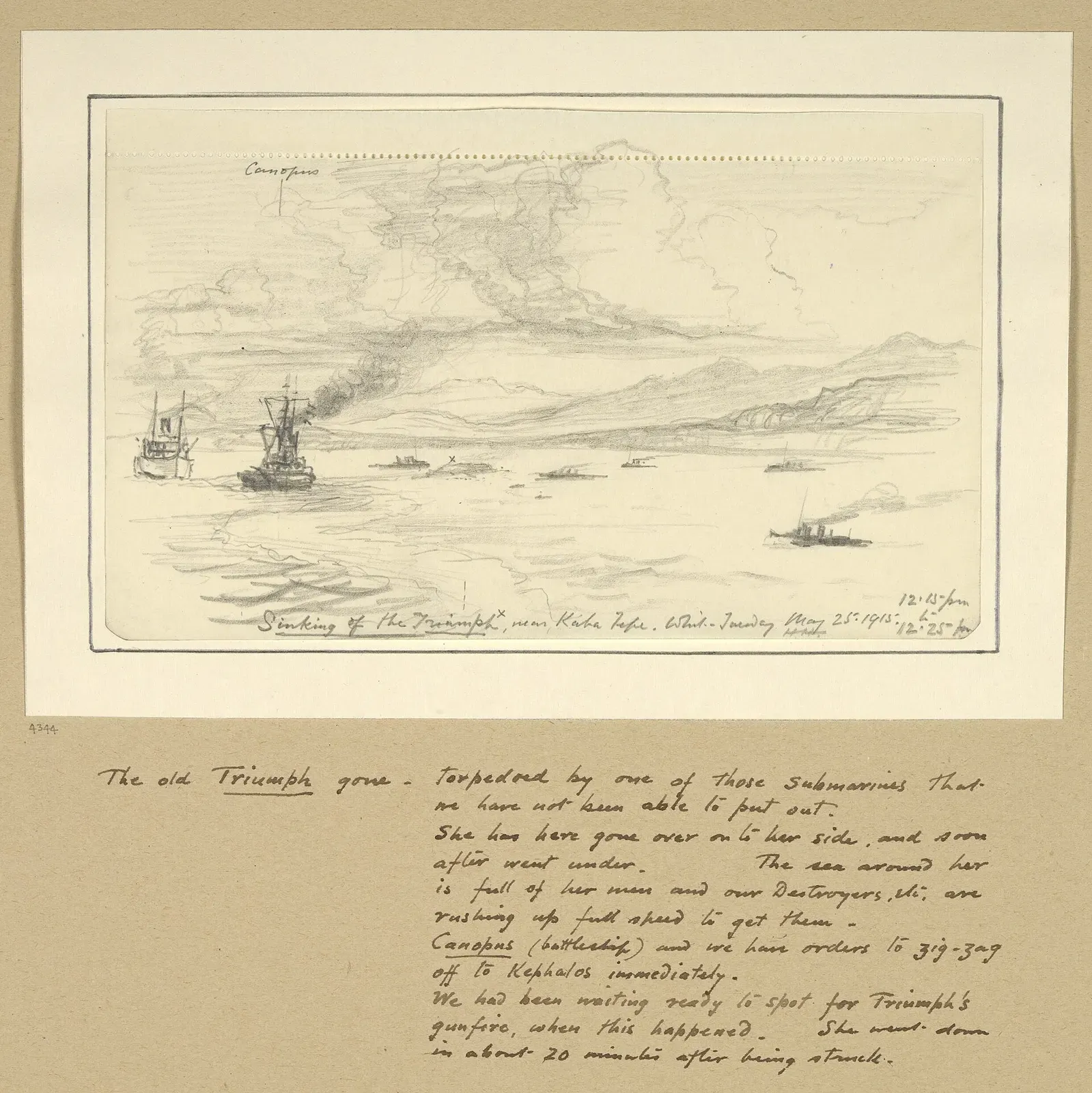

A 1903 battleship at 73 m, torpedoed off Gaba Tepe by U-21