Mediterranean · Greece
Kea Channel
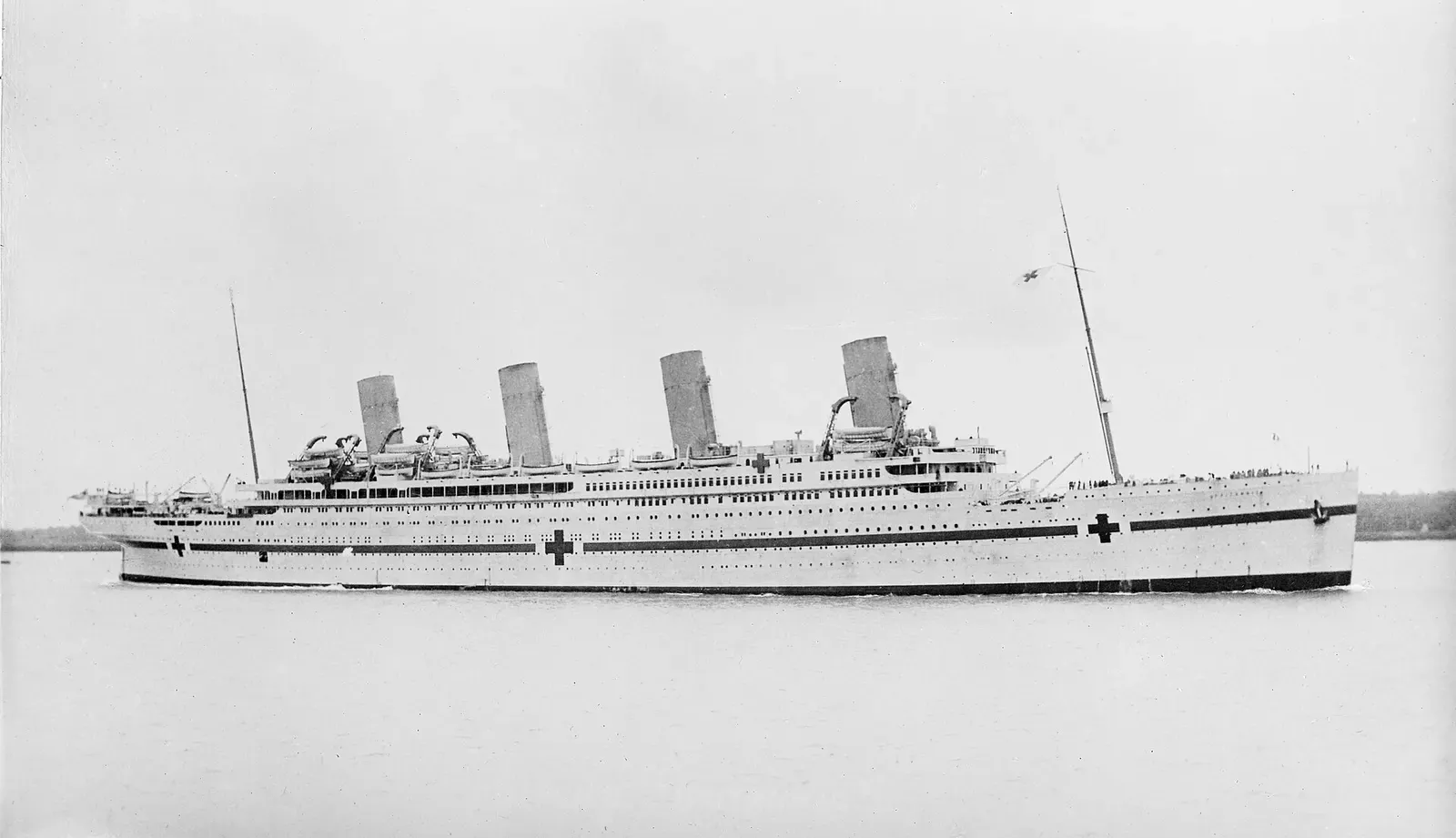
Titanic's sister ship, HMHS Britannic, rests largely intact at up to 122 m
Photo: Allan C. Green · Public domain
Two liners requisitioned for the First World War went down in this strait between Kea and Cape Sounion within two weeks of each other in November 1916, both mined by the German submarine U-73. HMHS Britannic, Titanic's sister ship and the largest intact passenger wreck on any seabed, lies undisturbed between 80 and 122 m. SS Burdigala, a former transatlantic liner, lies broken in two about two nautical miles away, deck around 53 to 60 m and seabed near 70 m. Neither is a walk-up charter: both sit under Greek antiquities jurisdiction, dived only as closed-circuit trimix expeditions.
About diving in Kea Channel
The Kea Channel, between the island of Kea and Cape Sounion on the Attic mainland, was an Allied shipping lane in the First World War and a German minefield at the same time. On 14 November 1916 the French troop carrier SS Burdigala struck a mine laid by U-73 and sank northwest of Kea; seven days later, on 21 November, the hospital ship HMHS Britannic hit the same minefield and went down 55 minutes later with the loss of 30 of the 1,066 people aboard. The two hulls now lie about two nautical miles apart, a First World War memorial that neither island nor divers can easily reach.
The two wrecks sort by depth and by what a team can actually do on them. Burdigala is upright and broken in two, her deck reported between about 53 and 60 m depending on the source and her seabed near 70 m — serious trimix diving but within reach of a strong technical team on a single tank of gas. Britannic is another order of problem: she lies on her starboard side largely intact, her shallowest point reported at 80 to 90 m by early expeditions and her deepest point close to 120 m, so every dive on her runs on closed-circuit rebreathers with staged decompression and a shot line placed section by section rather than a swim end to end.
Access to both wrecks runs through Greece rather than through any dive shop. Since 2003 Greece's Ephorate of Underwater Antiquities has held jurisdiction over any wreck more than fifty years old, so both sites need its permission, and Britannic additionally needs the agreement of British historian Simon Mills, who bought the wreck in 1996 and runs the Britannic Foundation. Both are dived look-only: a technical diver died on Britannic in 2019, and the one sanctioned removal from her — a 2025 recovery of the ship's bell and other artefacts for a new Piraeus museum — was carried out by an 11-diver team under that same permit.
When to dive Kea Channel
| Jan | Feb | Mar | Apr | May | Jun | Jul | Aug | Sep | Oct | Nov | Dec |
|---|---|---|---|---|---|---|---|---|---|---|---|
| Off-season | Off-season | Off-season | Fair | Good | Prime | Good | Good | Prime | Good | Fair | Off-season |
Expeditions run roughly May–October; the Aegean meltemi blows hardest in July–August and the strait closes over winter.
Dive types & marine life
- Wreck
Notable dive sites in Kea Channel
Wreck
A scattered cargo wreck on a reef running from 2 m to 35 m
Wreck
Largest intact passenger shipwreck on any seabed, found by Jacques Cousteau in 1975
The canyon exit opens onto a wall that falls to 45 m
Wreck
An 1868 paddle steamer, broken in two with a paddle wheel still in place
Wreck
An intact light aircraft on the bottom between 16 and 22 m
Wreck
Sunk by the same minefield as HMHS Britannic, seven days before her
Centenary memorial plaques
Two bronze plaques placed at 100 m near the wrecks for the 2016 centenary of both sinkings.
Getting there
Kea is reached by a roughly hour-long ferry from Lavrio, itself about an hour southeast of Athens by road; the port of Korissia is where charter boats leave from. There is no walk-up dive-shop trade at these depths — trips are private technical charters arranged well ahead, built around a settled weather window.
Photos from Kea Channel
Unknown author · Public domain
NASA · Public domain
Unknown author · Public domain
Photo credits
- Black-and-white photograph of the four-funnelled liner HMHS Britannic underway at sea, marked with a dark band and red crosses as a hospital ship. by Allan C. Green, Public domain, via Wikimedia Commons
- Sepia postcard photograph of the three-funnelled liner SS Burdigala steaming through calm water, her name visible on the bow. by Unknown author, Public domain, via Wikimedia Commons
- NASA astronaut photograph from orbit of the island of Kea, the narrow island of Makronisos, and Cape Sounion, with open blue water between them. by NASA, Public domain, via Wikimedia Commons
- Weathered black-and-white photograph of HMHS Britannic at anchor, her four funnels and hull with hospital-ship red cross markings reflected in calm water. by Unknown author, Public domain, via Wikimedia Commons
In The Logbook
- Diving with seals and sea lionsBig animals · 17 min read
- How a rebreather works, and what it buys youGear & kit · 6 min read
- How deep can you actually dive?Body & health · 13 min read
Similar destinations

Four thousand Classical amphorae still stacked on the seabed at 25 m
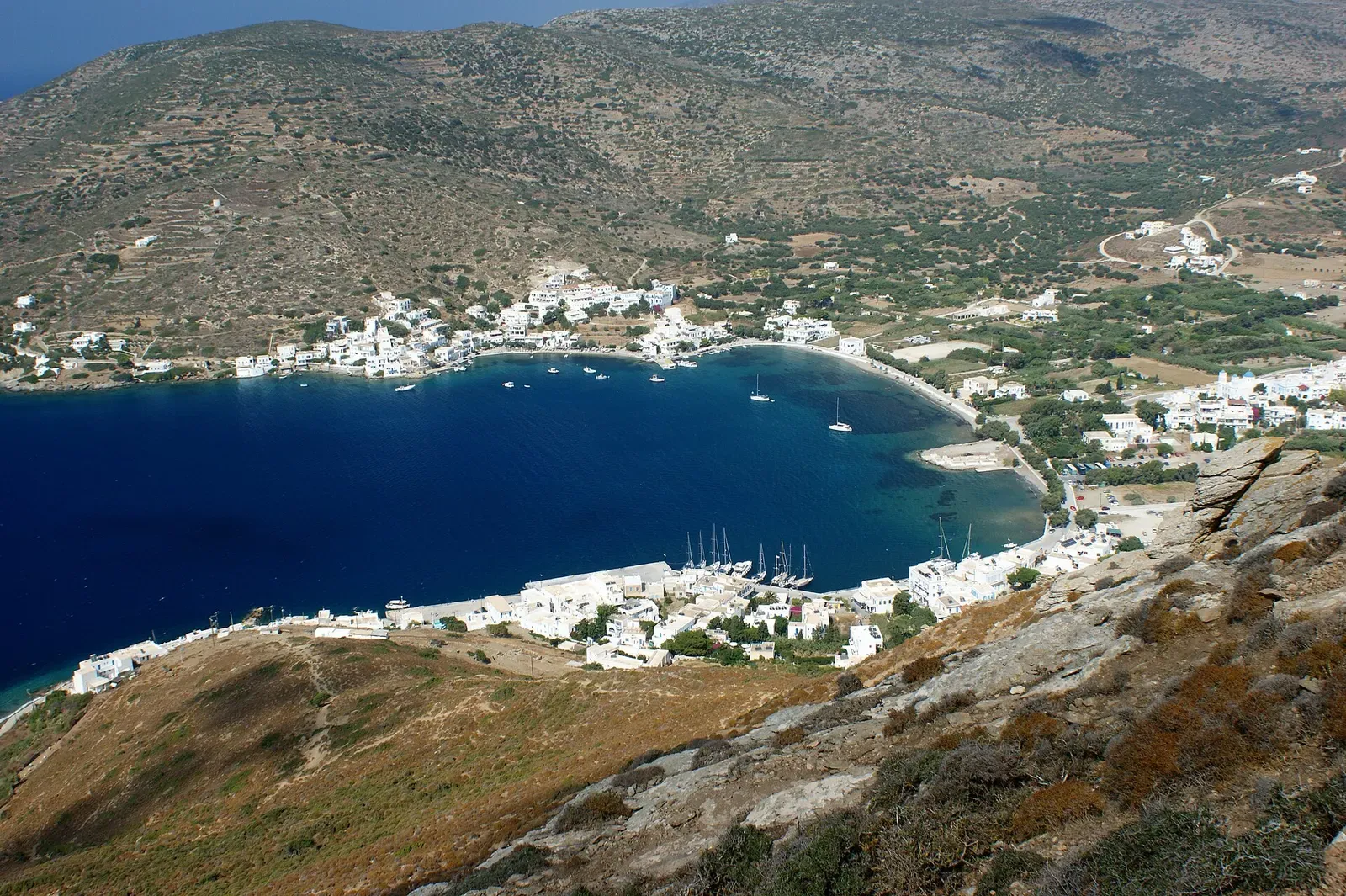
A 40 m wall under the monastery filmed in The Big Blue
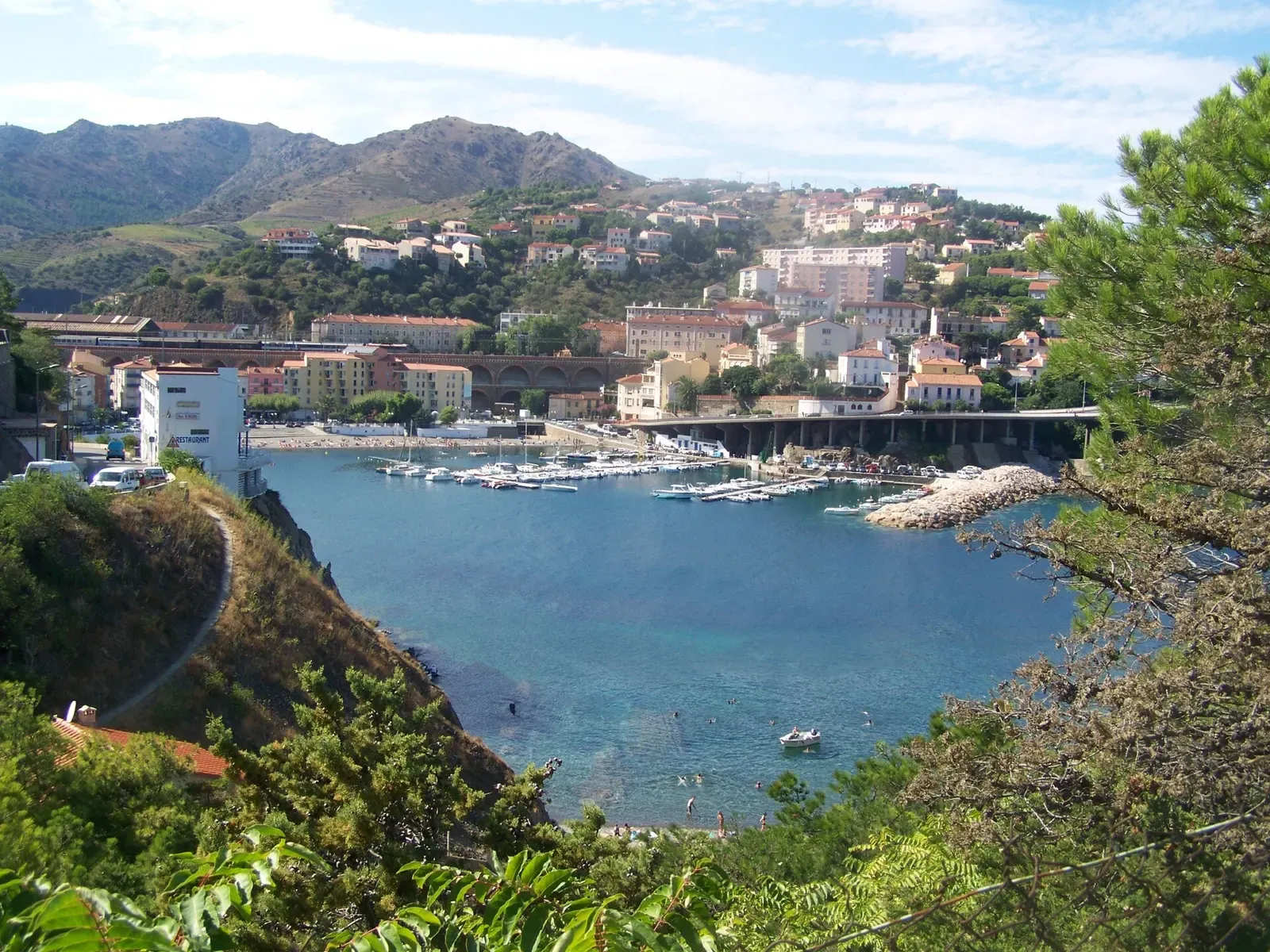
Reserve reef diving at Cerbère-Banyuls, France's first marine reserve
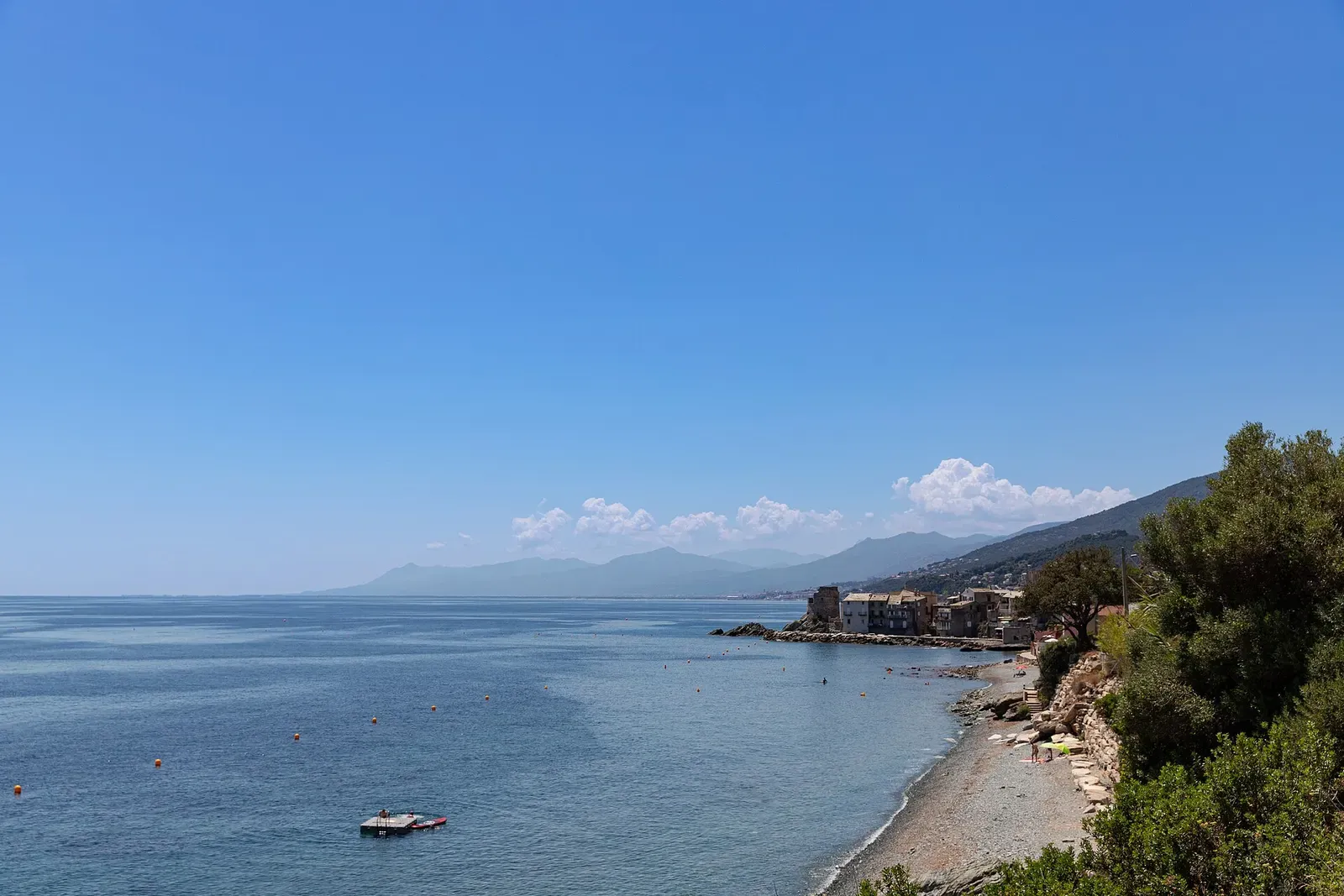


Two WWII P-47 fighter wrecks on a quiet coast in metropolitan France's largest marine park