
Lembeh Strait · Indonesia · Wreck
Mawali Wreck
A 60 m wartime cargo hull on its side under crinoids
Area photo: Bernard DUPONT · CC BY-SA 2.0
One of the few named wreck dives in a strait otherwise given over to sand: a Japanese Second World War steel cargo ship lying completely on its side in 15 to 30 m. The 60 m hull is fully reclaimed, covered in crinoids, black coral trees and soft corals, and it works as much as a structure dive as a wreck.
Where it is and how deep
No published position for this site — the map shows Lembeh Strait and its other sites; operators know the mooring.
The dive
The wreck lies completely on its side, with the shallow end of the structure at about 15 m and the deepest part at 30 m, so the dive is usually run deep first along the lower flank and shallow at the end. Sixty metres of hull gives plenty to follow in one direction and come back along in the other, and on a strait where most dives are a search across open sand, the fixed line of the ship is unusually easy navigation.
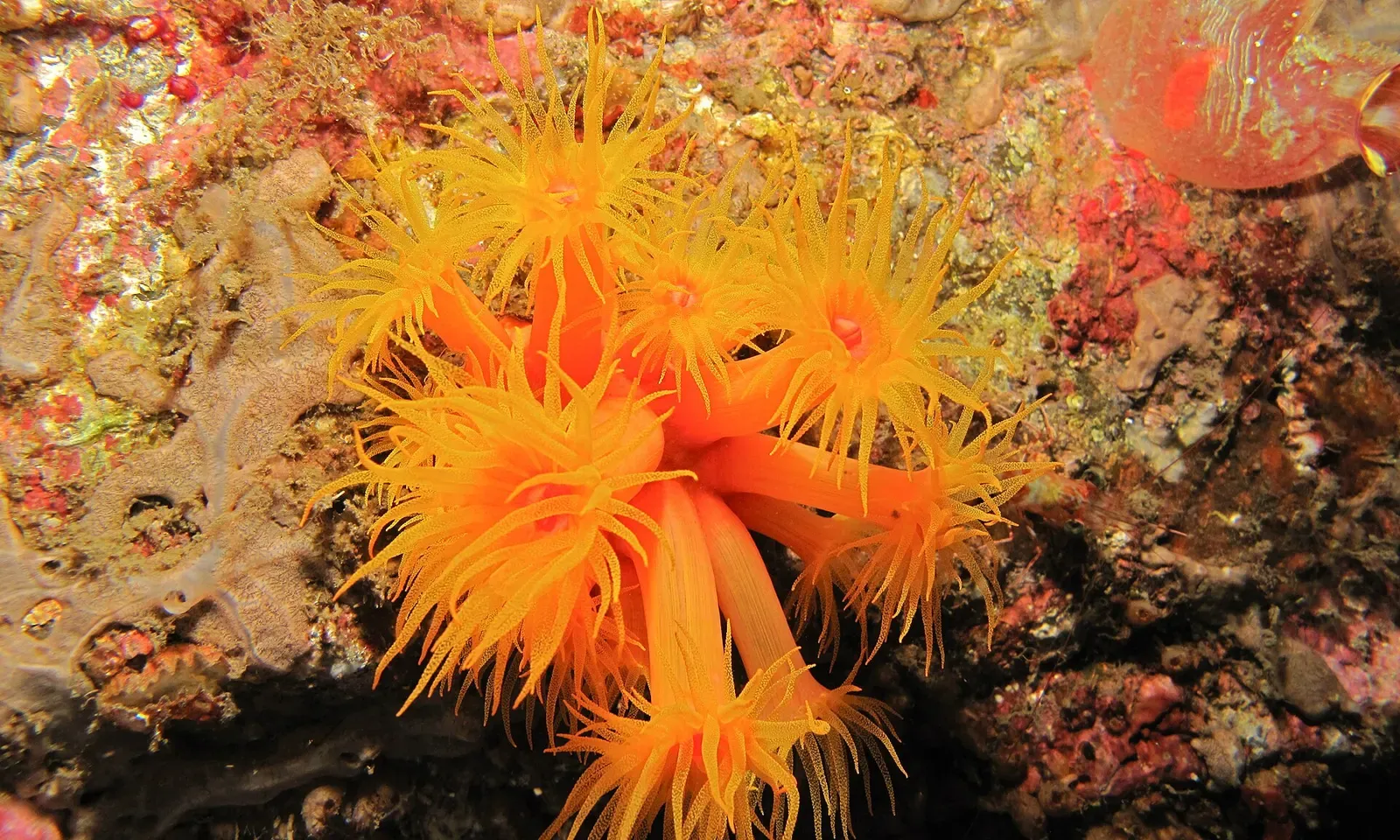
The plating is fully reclaimed rather than bare steel: crinoids, black coral trees and soft corals cover it, which is what makes it worth the depth. Enormous scorpionfish sit still against that growth and take finding, lionfish hold in the lee of the structure, and spotted barramundis use the shadowed sections. The wreck is the subject as much as anything on it, so the growth and the angles of the collapsed side are what most people come back with.
Depth is the limiting factor. At 30 m no-decompression time is short and there is no shallow reef nearby to drift off onto, so the profile is planned around leaving the lower flank early. Come up the structure to its shallow end for the last part of the dive rather than swimming off the wreck into open water.
The wreck
- Vessel
- Japanese Second World War steel cargo ship
- Type
- Cargo ship
- Length
- 60 m (197 ft)
- Cause
- Not recorded in published sources
- Lies
- Completely on its side, between 15 and 30 m
Marine life and season
- Macro critters
| Jan | Feb | Mar | Apr | May | Jun | Jul | Aug | Sep | Oct | Nov | Dec |
|---|---|---|---|---|---|---|---|---|---|---|---|
| Good | Good | Good | Good | Prime | Prime | Prime | Prime | Prime | Prime | Good | Good |
Season follows Lembeh Strait: Diveable year-round; May–October dry season brings marginally clearer water for photography.
Know before you go
- The deep flank sits at 30 m, which cuts no-decompression time sharply on air; plan the turn on the lower side early and finish on the shallow end of the hull.
Sources
- Lembeh Strait Dive Sites — Dive The World
More dive sites in Lembeh Strait
Pinnacle
A swim-through at 22 to 25 m lined with crinoids
Muck & macro
Sand, rubble and algae on a point that pulls in nutrient-rich water
Muck & macro
Zebra crabs sheltering in the spines of purple heart urchins
Sea fans on the mini-wall hold pygmy seahorses
Reef
A shallow coral bowl between two soft-coral mini walls
Muck & macro
The strait's only white-sand muck site, with coral in the shallows
Muck & macro
Banggai cardinalfish in the hundreds under a night torch
Muck & macro
Blue-ringed, coconut and mimic octopus on one black sand slope
Similar dives elsewhere

A cargo hull upright at 30 m, lit through its own skylights
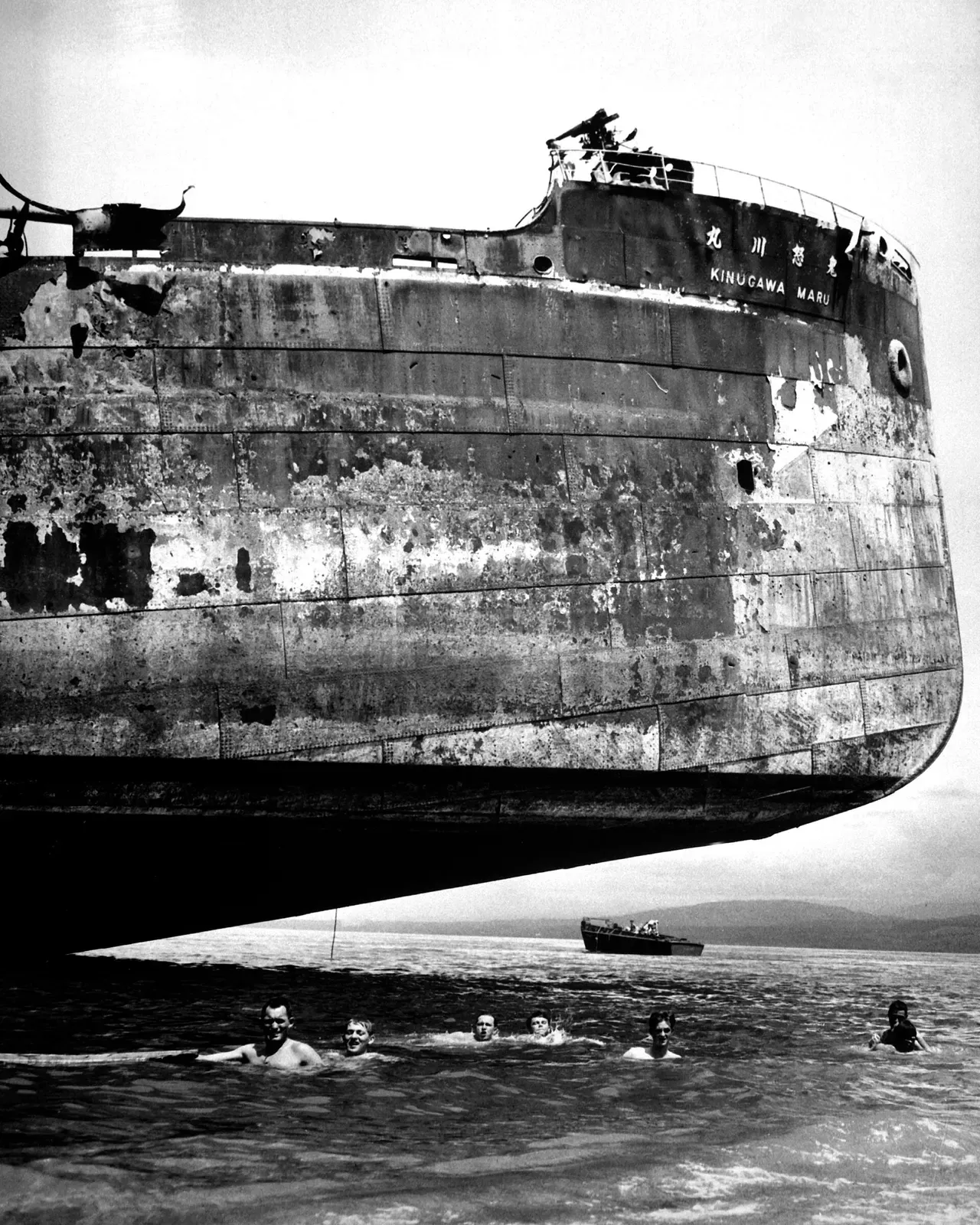
A 133 m transport whose engine still breaks the surface
Wreck
Cement Wreck
Brunei Wrecks · Malaysia
The shallowest of the Labuan wrecks: an upright 92 m freighter

_(6073606116).jpg)
A two-seat aircraft sunk on sand at 20 m, with a wall beyond