
Lembeh Strait · Indonesia · Muck & macro · Sand slope
Hairball
Sand, rubble and algae on a point that pulls in nutrient-rich water
Area photo: Bernard DUPONT · CC BY-SA 2.0
A gentle black volcanic sand slope on a point in the Lembeh Strait, dived in three numbered sections as Hairball 1, 2 and 3. There is no hard coral here at all: the bottom is sand, rubble, loose rocks, a few sunken logs and thick algae, and the whole dive is a slow, low search across it. The macro-productive band sits between 8 and 18 m.
Where it is and how deep
1.4639° N, 125.3028° EPublished position for this site.
The dive
You go in from the boat and drop onto a gentle slope of black volcanic sand scattered with rocks, debris and thick algae. The site sits on a point, which draws nutrient-rich currents across it, and the current itself stays very mild, so the dive is worked at walking pace rather than swum. The productive band is roughly 8 to 18 m, and the slope carries on down to about 28 m if a guide follows something deeper.
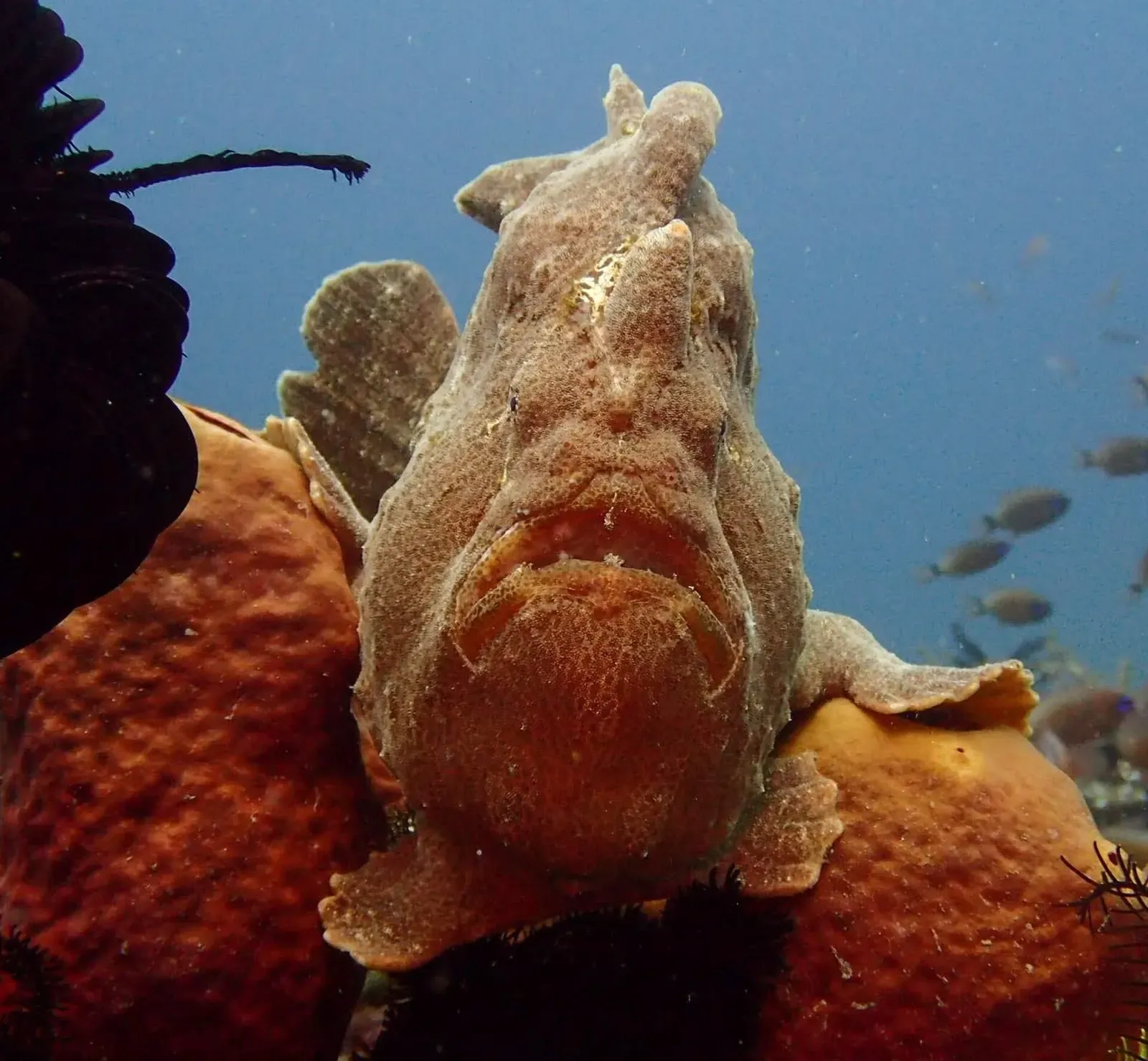
There is no reef structure to navigate by, so the route is whatever the search turns up: patches of algae, half-buried rubble, sunken logs and single rocks are each checked in turn. Several frogfish species and unusually large seahorses are the standing draw, and the question on this slope is how many rather than whether. Visibility runs 5 to 20 m, so subjects are found close in and framed close in.
After dark the same slope is a different dive. Stargazers lie buried with their eyes turned up, cuttlefish and their egg clusters are out on the open sand, and decorator crabs and Spanish dancers appear that the daylight dive does not turn up. Because there is no coral to hold position against, buoyancy over the bottom is what keeps the sand out of the water column and the subject visible for everyone behind you in the group.
Marine life and season
- Frogfish
- Octopus & cuttlefish
- Macro critters
| Jan | Feb | Mar | Apr | May | Jun | Jul | Aug | Sep | Oct | Nov | Dec |
|---|---|---|---|---|---|---|---|---|---|---|---|
| Good | Good | Good | Good | Prime | Prime | Prime | Prime | Prime | Prime | Good | Good |
Season follows Lembeh Strait: Diveable year-round; May–October dry season brings marginally clearer water for photography.
Questions divers ask
How deep is Hairball?+
The macro-productive band is about 8 to 18 m on the sand slope, and the site runs from 3 m down to roughly 28 m in total. Most dives here never need the deep end.
Is Hairball good for a night dive?+
Yes. Night dives on the slope turn up stargazers, cuttlefish and their eggs, decorator crabs and Spanish dancers, on the same very mild current as the daylight dives.
Sources
- Hairball dive site | PADI — PADI
- Lembeh Strait Dive Sites — Dive The World
More dive sites in Lembeh Strait
Pinnacle
A swim-through at 22 to 25 m lined with crinoids
Muck & macro
Zebra crabs sheltering in the spines of purple heart urchins
Wreck
A 60 m wartime cargo hull on its side under crinoids
Sea fans on the mini-wall hold pygmy seahorses
Reef
A shallow coral bowl between two soft-coral mini walls
Muck & macro
The strait's only white-sand muck site, with coral in the shallows
Muck & macro
Banggai cardinalfish in the hundreds under a night torch
Muck & macro
Blue-ringed, coconut and mimic octopus on one black sand slope
Similar dives elsewhere

Debris slope from 3 to 18 m, dived for frogfish and nudibranchs
Mimic and blue-ringed octopus over Anilao's best-known muck slope

Black sand to 20 metres with regular rhinopias sightings
_(6073606116).jpg)
Coleman shrimp on fire urchins, and the coast's smallest finds