
Nusa Penida · Indonesia · Drift · Wall
Blue Corner
Bali's other mola mola plateau, deeper and rougher than Crystal Bay
Area photo: Shrigusti · CC BY-SA 4.0
Blue Corner lies off the northwest tip of Nusa Lembongan, a steep slope with a plateau around 20 metres where most of the dive is worked closer to 30, with a maximum near 40. It shares Nusa Penida's July to October upwelling with Crystal Bay and pulls the same mola mola crowd, but the current here runs harder and less predictably, and the site is reserved for advanced, drift-experienced divers carrying a reef hook.
Where it is and how deep
8.6613° S, 115.4425° EApproximate position — the dashed circle shows where the site lies; your operator's briefing has the mooring.
The dive
Blue Corner sits off the northwest tip of Nusa Lembongan, a steep slope with a plateau around 20 metres where operators plan to spend the bulk of the dive, though the working depth runs closer to 30 metres and PADI lists a maximum near 40. It is worked as a drift and wall dive, dropped into moving water rather than swum as a circuit, and the current is the headline: strong enough that PADI's own site page calls it an adrenaline rush, and a reef hook is standard kit for holding position in the flow instead of fighting it. Visibility and water temperature both swing with the tide, and it is not unusual to drop into cold, cloudy water on one slack and clearer, warmer water an hour later.
The site shares Nusa Penida's July to October upwelling with Crystal Bay, and mola mola are the reason most divers book it, but a local operator is candid that the odds are no better here than anywhere else around the island: conditions have to line up, and on a bad day it is a dive with nothing to show for it, while a good one can turn up several sunfish. The current is the more consistent hazard, with down currents that can appear on the plateau with little warning, which is why some operators restrict the site to Advanced divers with dozens of logged dives and their own computer. Sharks, big rays, turtles, whales and dolphins are all logged here independent of the sunfish.
Marine life and season
- Mola mola
| Jan | Feb | Mar | Apr | May | Jun | Jul | Aug | Sep | Oct | Nov | Dec |
|---|---|---|---|---|---|---|---|---|---|---|---|
| Fair | Fair | Fair | Good | Good | Good | Prime | Prime | Prime | Prime | Good | Fair |
Season follows Nusa Penida: Mola mola show up on the same July-October upwelling as Crystal Bay, but one operator here is candid that the odds are no better than anywhere else around the island.
Know before you go
- Down currents can appear on the plateau with little warning; stay clear of the drop-off and be ready to swim away from the reef rather than let the water pull you down.
- Current is generally strong and can turn unpredictable; some operators restrict the site to divers with dozens of logged dives, and a reef hook is standard kit here.
- Visibility and water temperature both swing with the tide, and conditions can go from clear to poor within a single dive.
- Mola mola sightings are not more reliable here than elsewhere around Nusa Penida; treat one as a bonus rather than a given, even in the July-October window.
Questions divers ask
How deep is Blue Corner?+
The plateau sits around 20 metres, but most of the dive is worked closer to 30 metres and PADI gives a maximum of about 40 metres. It is deeper than the neighbouring Crystal Bay and Toyapakeh, and the depth is one reason the site is kept for advanced divers.
Is Blue Corner a reliable place to see mola mola?+
It sits on the same July-October upwelling as Crystal Bay, but one Nusa Penida operator describes it as an all-or-nothing dive: some trips log several sunfish, others none, and the odds are no better here than at the area's other sites in the same window.
What experience do I need for Blue Corner?+
PADI recommends Advanced Open Water with drift diving experience as the baseline. Some local operators set a higher bar of their own, such as a minimum logged-dive count and carrying your own dive computer, because the current can turn quickly and the site is sometimes called off.
Sources
- Blue Corner dive site — PADI
- Blue Corner dive site — Divezone
- Dive with Mola in Nusa Penida — Scuba Junkie Penida
- OpenStreetMap: Blue Corner — OpenStreetMap
In The Logbook
- Mola mola: where to dive with sunfishBig animals · 11 min read
More dive sites in Nusa Penida
Cave & cavern
A 200-metre cave ending in an air space full of bats
Wall
Shallow reef structure, infrequent hammerheads
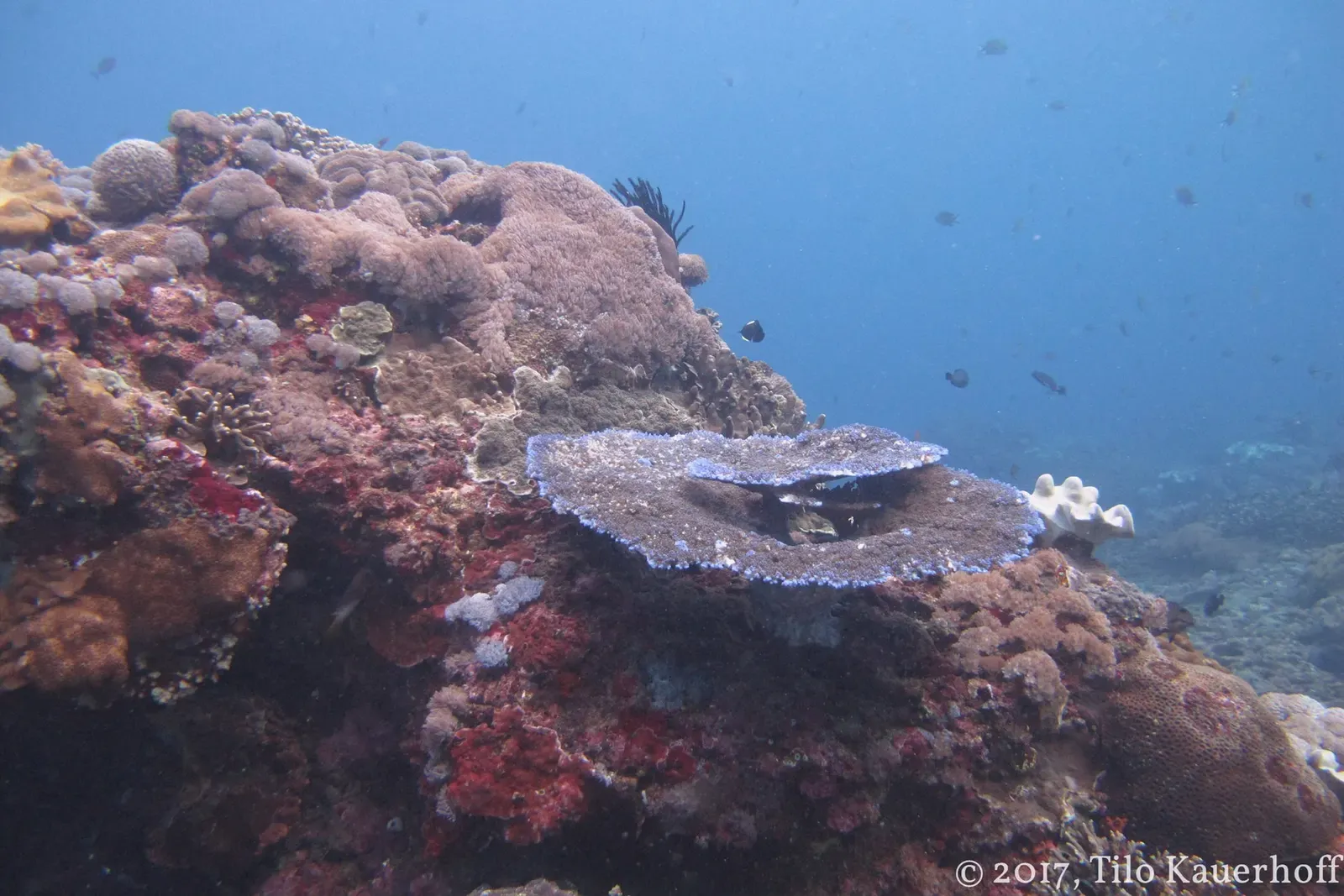
The mola mola site, in cold and sometimes downward current
Reef
West-coast slope where mola mola come up in season
Reef
Bommie-topped plateau above a fan-covered wall
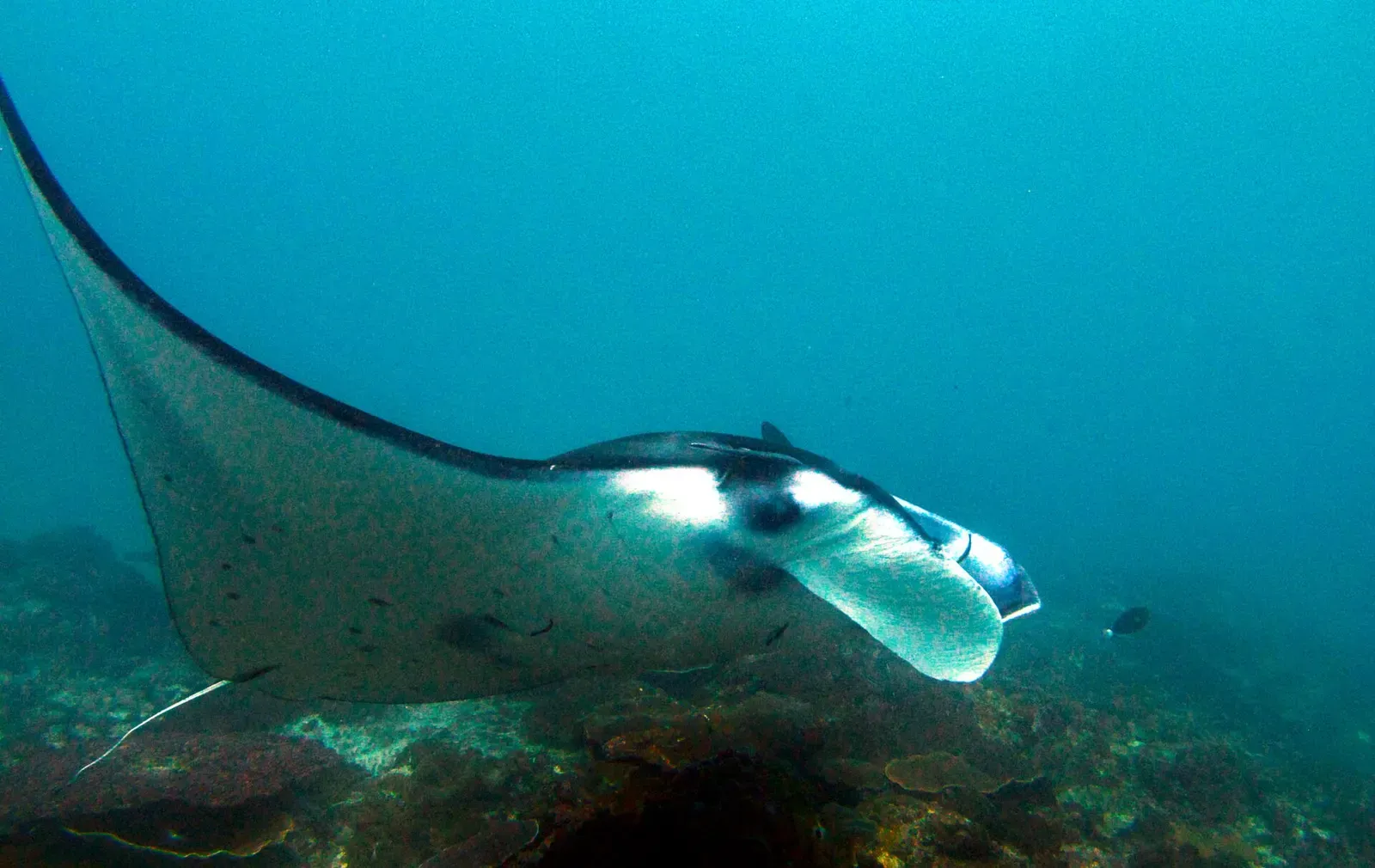
A manta cleaning station in 15 metres under limestone cliffs
Artificial reef
Planted restoration structures at 6 metres, shore entry
Reef
North-coast slope from 5 metres to past 40
Similar dives elsewhere

A current-washed plateau at 25–30 m, pelagics one day, pygmies the next
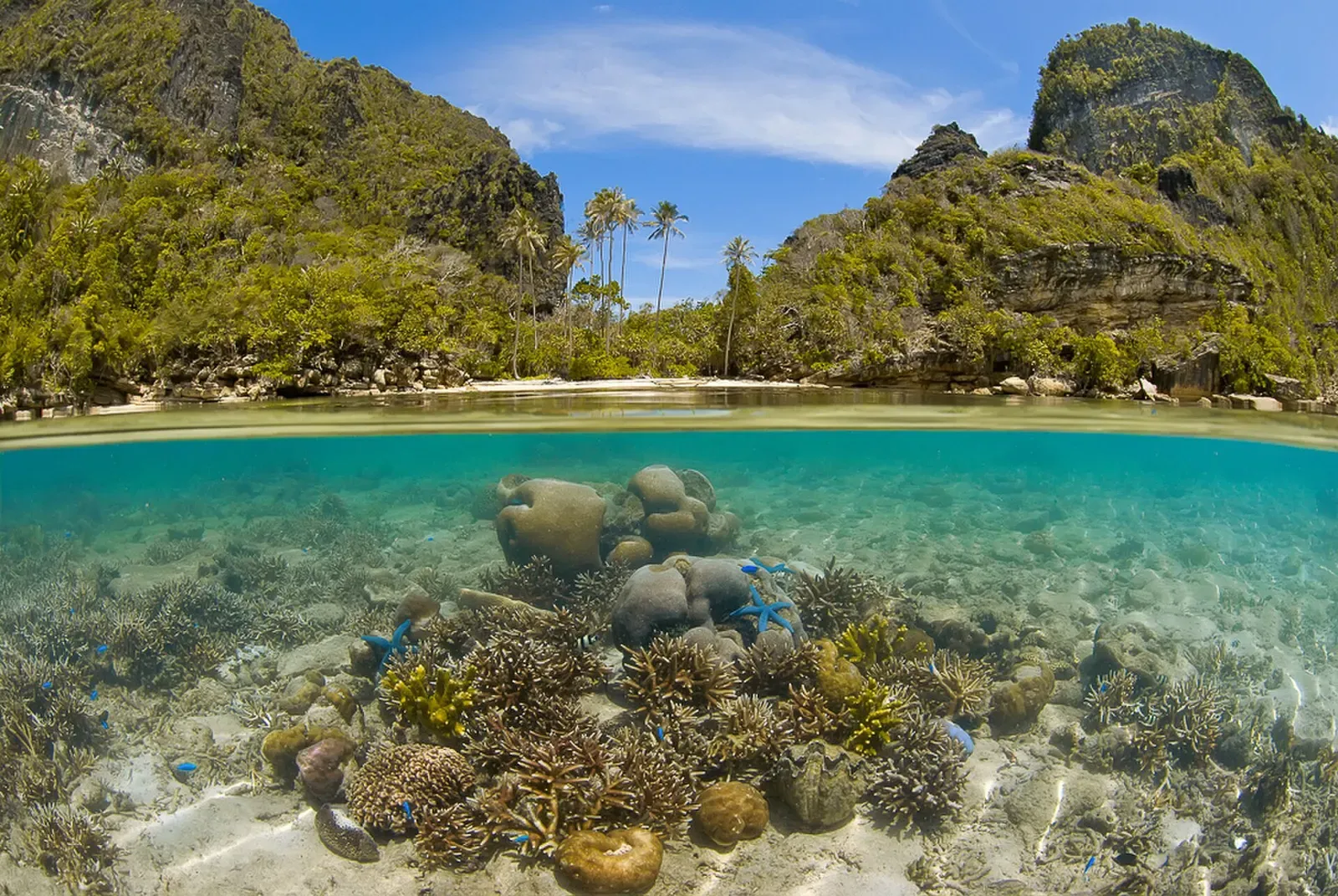
A cleaning station at 22 m ends the long ridge
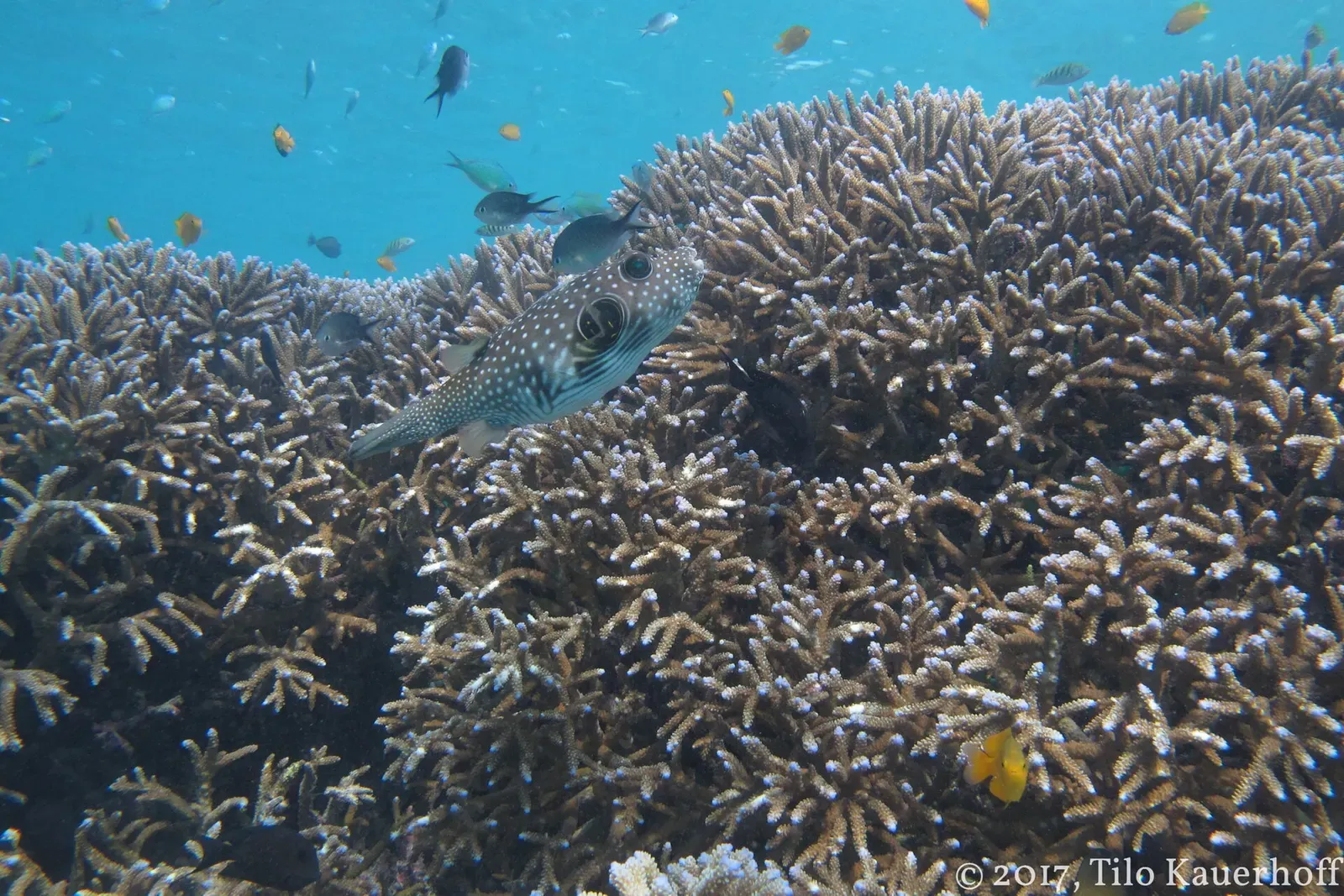
Juvenile whitetips tucked into small caves along a drifting slope


A hard drift off the point, with tuna and barracuda in the flow